Creatine for Runners: What the Research Actually Says
TL;DR
- Creatine has been underused by runners for decades due to outdated concerns about weight gain. The current research supports meaningful benefits for 5K-10K performance, sprint training, hill work, and muscle preservation during high mileage.
- Dose: 5g daily of creatine monohydrate. No loading phase needed; saturates in 3-4 weeks at this dose.
- Water retention: ~1-2 lbs intracellular water — negligible impact on running economy based on current research.
- Cognitive benefit: creatine supports brain function during long runs, cumulative impact loads, and aging — relevant to career longevity for lifelong runners.
For decades, runners have been told creatine wasn't for them — concerns about weight gain from water retention would slow pace and hurt running economy. Current research tells a more nuanced story: creatine's ~1-2 lbs of intracellular water retention has negligible impact on running performance, while the benefits include improved 5K-10K performance through enhanced anaerobic contribution, better sprint training quality, improved hill work, and muscle mass preservation during high-mileage blocks. Additionally, creatine supports cognitive function under fatigue, may have neuroprotective effects relevant to cumulative impact loading, and supports long-term brain health for career-long runners. The dose is simple: 5g of creatine monohydrate daily, every day. No loading phase needed — stores saturate in 3-4 weeks. Take at any consistent time. For most competitive runners, creatine is one of the highest-value single supplements available.
Why runners have historically skipped creatine
The water retention myth
Creatine causes ~1-2 lbs of intracellular water retention — water inside muscle cells, not bloating or extracellular water. For a 150-lb runner, that's about 0.7-1.3% body weight increase.
The concern: more weight = slower running. The reality: the performance improvements from enhanced ATP regeneration, better training quality, and muscle preservation outweigh the tiny weight penalty. Current research consistently shows runners taking creatine perform as well as or better than those who don't — the weight gain doesn't materialize as slower races.
The "creatine is for bulking" assumption
Creatine is heavily marketed to strength athletes, which created a perception that it's specifically for muscle growth. That's one effect — but creatine's core mechanism (phosphocreatine regeneration for ATP production) benefits any high-intensity work, including 5K finishing kicks, hill surges, and track intervals.
Where creatine helps runners
5K-10K performance
Sub-30-minute 5K and sub-45-minute 10K efforts include significant anaerobic contribution — particularly at the finish. Creatine's ATP-PCr support enhances final-kick power and repeated surge capacity. Effect size is modest (1-2% improvement) but meaningful at competitive paces.
Sprint and interval training quality
Track workouts (400m repeats, 800m repeats, VO2 max intervals) are ATP-PCr and glycolytic. Creatine supports higher quality of repeated sprint efforts, enabling better training adaptation over weeks of interval work.
Hill repeats and mountain running
Hill running — particularly short, steep hill repeats — is high-power ATP-PCr work. Creatine directly supports this.
Muscle preservation during high mileage
High-mileage running blocks (50+ miles/week) can produce subtle muscle loss, particularly upper-body and core muscle. Creatine helps preserve lean mass even during heavy endurance training.
Strength training complement
Runners who add 2-3 strength sessions per week for injury prevention benefit directly from creatine for those sessions — higher training quality means better strength gains in less training time.
Cognitive function and long-run focus
Avgerinos 2018 systematic review documented cognitive benefits from creatine supplementation, particularly under conditions of fatigue and stress. Long runs over 90 minutes create cognitive fatigue that affects pacing judgment and mental toughness. Creatine supports brain creatine stores that buffer this.
Neuroprotection from cumulative impact
Running involves thousands of foot strikes per session. Research on creatine's neuroprotective effects (particularly in traumatic brain injury contexts) has raised interest in its potential for protecting against sub-concussive cumulative impact. The evidence is preliminary but mechanistically plausible for distance runners over long careers.
Dosing and protocol
The simple protocol
5g creatine monohydrate daily — every day, indefinitely. Stores saturate in 3-4 weeks at this dose. No need for loading phase (20g/day for a week) unless you want faster saturation.
Time of day doesn't matter significantly. Choose a consistent moment: morning coffee, post-run shake, with dinner. Consistency beats timing.
Form: stick with monohydrate
Creatine monohydrate is the most-researched form, produces the documented benefits, and costs less than alternatives. Micronized monohydrate has better mixability; the effects are identical. Skip "buffered creatine," "creatine HCl," "creatine nitrate" — marketing-driven alternatives with weaker or no research advantage.
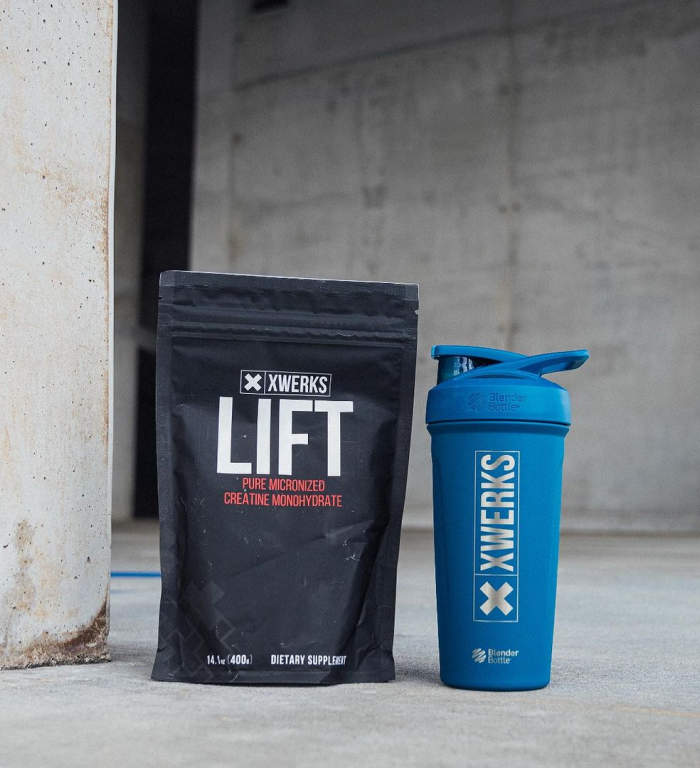
XWERKS Lift is micronized monohydrate at 5g per scoop.
What about on rest days?
Take it. Creatine works through muscle saturation, not acute effect. Daily consistency matters more than timing around workouts.
Addressing the water weight concern
What the 1-2 lbs actually is
Creatine draws water into muscle cells (intracellular), not into the bloodstream or tissue spaces. This hydration actually supports cellular function and protein synthesis. It doesn't produce bloating or puffiness.
Impact on running economy
Research has directly examined whether creatine's weight gain hurts running performance. The consistent finding: it doesn't. The ~1% body weight increase is offset by improvements in training quality and race-day physiology.
Timing around races
Some runners discontinue creatine 2-3 weeks before goal races to "lose the weight" before racing. This is generally unnecessary and may sacrifice performance. Research supports continuing creatine through the race. That said, if you're concerned, testing both approaches in tune-up races will tell you what your body responds to.
Combining creatine with other runner supplements
The evidence-backed runner stack
• Creatine monohydrate: 5g daily (XWERKS Lift)
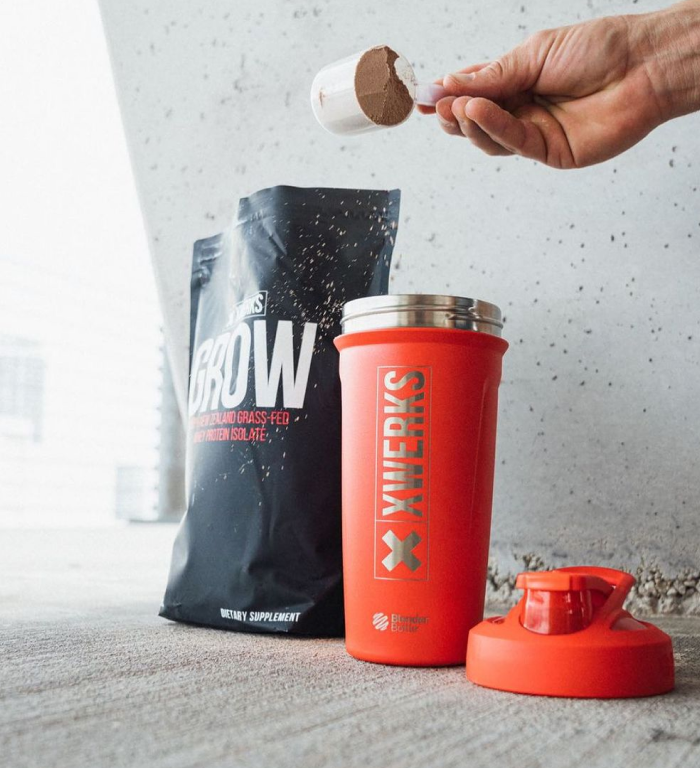
• Whey protein isolate: Hit 1.6-1.8g/kg body weight daily (XWERKS Grow)
• Intra-run carbs for long runs: 30-60g/hour for runs over 90 min (XWERKS Motion)
• Pre-workout for quality sessions: XWERKS Ignite for intervals, tempos, long runs
• Vitamin D3, omega-3s, magnesium: Foundation micronutrients
The Bottom Line
Creatine is underused by runners — outdated water-retention concerns have led many runners to skip it. Current research supports benefits for 5K-10K performance, sprint training, hills, muscle preservation, cognitive function, and potentially neuroprotection.
Dose: 5g creatine monohydrate daily, every day. Saturates muscle stores in 3-4 weeks. Stick with monohydrate; skip marketing-driven alternatives.
The 1-2 lbs of intracellular water is not a performance penalty. Research consistently shows runners on creatine perform as well as or better than those not taking it.
Creatine Monohydrate for Runners
XWERKS Lift — 5g of micronized creatine monohydrate per scoop. The same clinical dose used in hundreds of research studies, including the runner-specific research. No flavor, mixes into any shake or glass of water.
SHOP LIFT →Further Reading
Creatine in Foods: Can Diet Alone Meet Your Needs?
The Brain-Boosting Benefits of Creatine
Creatine Neuroprotective Effects
References
1. Kreider RB, et al. ISSN position stand: safety and efficacy of creatine supplementation. J Int Soc Sports Nutr. 2017;14:18.
2. Avgerinos KI, et al. Effects of creatine supplementation on cognitive function of healthy individuals: systematic review. Exp Gerontol. 2018;108:166-173.
3. Chilibeck PD, et al. Effect of creatine supplementation during resistance training on lean tissue mass. Open Access J Sports Med. 2017;8:213-226.