

TL;DR
- The research on caffeine, citrulline, and beta-alanine is just as strong in women as in men — there's no physiological reason women need a separate, weaker formula.
- Most "women's pre-workout" products are underdosed versions of regular pre-workout with pink packaging and a premium price. The pink tax is real; the ingredient advantage usually isn't.
- What does matter for women: dose caffeine by body weight (3-6mg/kg), account for hormonal cycle phase, consider iron status, and skip pre-workout during pregnancy or breastfeeding without a physician's OK.
- The evidence-backed profile for most women: 100-200mg caffeine, 3-6g citrulline malate, 1.5-3g beta-alanine (loaded), 1-2g L-tyrosine. Same ingredients as any well-formulated pre-workout — dosed appropriately for your body weight.
The supplement industry markets pre-workout to women like it's a separate product category. It isn't. Caffeine works through the same adenosine receptors in women as in men. Citrulline malate supports blood flow through the same NO pathway. Beta-alanine buffers lactate by the same carnosine mechanism. Research on these ingredients has been conducted across mixed populations, and where sex-specific studies exist, the effects hold up across both sexes at appropriately scaled doses. What actually differs for women isn't the underlying pharmacology — it's the practical application: caffeine doses scaled to typically lower body weights, caffeine sensitivity that varies across menstrual cycle phases, pregnancy and breastfeeding considerations, iron status (women are more commonly iron-deficient), and perimenopause/menopause-specific considerations for older women. This guide covers the real differences that matter, what to ignore (pink packaging, "women's formulas" that are just underdosed versions of regular pre-workout), and how to build a stack that actually works.
The "pink tax" problem in pre-workout
What "women's pre-workout" usually is
Walk through the supplement aisle and you'll see pre-workouts marketed specifically to women. Open the label and you'll usually find one of two patterns:
Pattern 1: Underdosed proprietary blend. A "women's formula" with 75mg caffeine, vague quantities of "focus blend" and "energy matrix," and a premium price. The doses are well below what research supports as effective for most ingredients.
Pattern 2: Same formula, different packaging. The same caffeine + citrulline + beta-alanine that's in the unisex version, in a pink canister with berry flavor, priced 20-40% higher for the same quantity of actives.
Why this is a problem
Under-dosing is the bigger issue. If a product has 75mg caffeine and 1g of citrulline "blend," it's not going to work any better than a cup of coffee — and you'd save money buying the coffee. The "women need gentler formulas" framing is marketing, not physiology. Women don't need gentler formulas; they need appropriately dosed ones scaled to their body weight.
Caffeine dosing: the math that actually matters
The body-weight calculation
The research-backed caffeine dose for athletic performance is 3-6mg per kg body weight. This is the single biggest place where women's pre-workout decisions differ from men's — not because caffeine works differently, but because typical body weights differ.
Example math:
• 130-lb (59kg) woman: 175-355mg caffeine (target range)
• 150-lb (68kg) woman: 205-410mg
• 180-lb (82kg) man: 245-490mg
A standard pre-workout scoop at 150mg caffeine hits the lower end of the target for most women — completely effective. There's no performance reason to seek out a 75mg "women's" formula.
Caffeine sensitivity varies — by person, not by sex
Individual caffeine sensitivity varies significantly based on genetics (CYP1A2 enzyme variants), habituation, and tolerance. Some women metabolize caffeine slowly and feel jittery at 150mg; others metabolize it fast and feel nothing at 300mg. The same variation exists in men.
Starting approach: Begin with 100mg caffeine (about 2/3 of a standard scoop) and assess how you respond. Increase to a full serving if well-tolerated. Don't assume you need less caffeine because you're a woman — assess your actual response.
The menstrual cycle and pre-workout
What changes across the cycle
Research on exercise performance across the menstrual cycle is still evolving, but some reasonably well-supported findings:
• Follicular phase (first half, menstruation to ovulation): Higher estrogen, generally strong training response. Many women report feeling strong and recovering well in this phase.
• Luteal phase (second half, ovulation to menstruation): Higher progesterone, higher body temperature, sometimes more fatigue and fluid retention. Some women report caffeine sensitivity increases in the late luteal phase.
• Menstruation: For some women, training feels harder in the first 1-2 days; others feel no difference. Iron loss matters for performance during and after heavy menstrual bleeding.
Practical cycle-aware strategies
• Track your response rather than assume. Individual variation is larger than cycle-phase variation for most women. Use a training log to notice patterns before adjusting based on theory.
• Reduce caffeine in the late luteal phase if you notice increased sensitivity (sleep disruption, anxiety, jitters) — drop to half-dose or switch to caffeine-free pre-workout options.
• During heavy menstruation, focus on iron-rich foods or iron supplementation if diagnosed deficient. No pre-workout ingredient addresses iron-deficiency fatigue.
• Hormonal contraceptives can affect caffeine metabolism — some oral contraceptives slow caffeine clearance, potentially increasing sensitivity. Account for this if you've recently started or stopped a hormonal contraceptive.
The ingredient profile that actually works
Caffeine
100-200mg · 3-6mg per kg body weightTarget 3-6mg per kg body weight. For most women, 100-200mg delivers the research-backed performance benefit (reduced perceived effort, improved endurance, enhanced focus) without excessive stimulation.
Citrulline malate
3-6g per servingSupports blood flow and muscular endurance. Research applies equally across sexes. Perez-Guisado 2010 found 8g citrulline malate improved muscular endurance in trained adults; 3g is the lower-effective dose.
Beta-alanine
1.5-3g per serving · 3-6g daily total targetLactate buffering for repeated-effort work. Full benefit requires 4-6 weeks of consistent daily loading. Hobson 2012 meta-analysis shows clear benefits for efforts of 1-4 minutes — applies to strength training sets, HIIT intervals, and mid-distance cardio. Note: the tingling sensation (paresthesia) is normal and fades with consistent use.
L-tyrosine
1-2g per servingSupports focus and cognitive performance under stress. Particularly valuable for early-morning training or mentally demanding workouts.
Rhodiola rosea (optional)
200-500mg standardized extractAdaptogenic support. Some research supports reduced perception of fatigue, particularly under stress. Not essential but a reasonable inclusion.
What to skip (regardless of sex)
• DMAA, DMHA, exotic stimulants: Cardiovascular risks, banned by most athletic organizations. Especially problematic for women with undiagnosed or developing heart conditions — which are more often missed in women than men.
• Yohimbine: Anxiety-inducing. For women who are already prone to anxiety symptoms (more common diagnostically), yohimbine compounds this unhelpfully.
• Proprietary blends: You can't dose what you can't measure. Avoid anything listing "energy matrix," "focus blend," or "pump complex" without per-ingredient quantities.
• Mega-dose niacin: "Flush" products produce visible skin reddening. Not actually performance-enhancing; just uncomfortable.
• Artificial hormones or "hormone-balancing" compounds: Many women's pre-workouts add compounds claiming to "balance hormones" or "support estrogen metabolism." These claims are usually unsupported by research and can interfere with prescribed medications.
Pre-workout during pregnancy and breastfeeding
During pregnancy: Major medical organizations (ACOG, WHO) recommend limiting caffeine to 200mg or less per day during pregnancy. Most pre-workouts deliver 150-300mg per serving — at or above the recommended pregnancy limit in a single dose. Beta-alanine, citrulline, and other pre-workout ingredients have limited pregnancy-specific safety research. Discuss pre-workout use with your OB/GYN before continuing during pregnancy. Many practitioners recommend stopping pre-workout entirely and using just a cup of coffee if caffeine is desired.
During breastfeeding: Caffeine passes into breast milk. Moderate caffeine intake (under 200-300mg daily) is generally considered compatible with breastfeeding for most infants, but some infants are more sensitive and may show fussiness or sleep disruption. Monitor your infant's response. Other pre-workout ingredients have limited lactation safety research — discuss with your pediatrician or lactation consultant.
When in doubt, choose coffee over pre-workout during these phases — the dose is easier to control and better studied.
Perimenopause and menopause considerations
What changes in your 40s and 50s
Women entering perimenopause and menopause experience hormonal shifts that affect training, recovery, and supplement response:
• Sleep often worsens due to hot flashes, night sweats, and hormonal shifts. Late-day caffeine becomes more disruptive than it was in earlier decades.
• Bone density begins to decline more rapidly — resistance training becomes more important, and supporting it with appropriate nutrition and supplementation matters more.
• Muscle preservation becomes critical due to anabolic resistance similar to what affects older men.
• Cardiovascular risk profiles shift as estrogen's protective effects decline — mega-stim pre-workouts become a higher risk than they were in younger years.
Protocol adjustments for perimenopause/menopause
• Moderate caffeine only (100-150mg) and only for morning or early-afternoon training sessions. Sleep recovery matters more than the marginal caffeine boost.
• Prioritize creatine (5g daily) for muscle and cognitive support — particularly valuable in this life phase.
• Prioritize protein at 1.8-2.0g/kg body weight due to anabolic resistance. This is often the most impactful single dietary change for women 40+.
• Consider caffeine-free pre-workout formulations for afternoon or evening training. Citrulline + tyrosine + beta-alanine still support performance without sleep disruption.
Iron status matters more for women
Why iron status affects training
Iron deficiency (with or without anemia) is substantially more common in women than men — partly from menstrual blood loss, partly from lower dietary iron intake. Symptoms include fatigue, reduced exercise capacity, poor recovery, and shortness of breath with exertion.
No pre-workout ingredient addresses iron deficiency. If you're consistently fatigued despite adequate sleep and training appropriately, a blood test to check ferritin (iron storage) and hemoglobin is worth doing. Optimal ferritin for athletic women is generally considered 50+ ng/mL; many women function with ferritin below 30 even when hemoglobin is technically normal.
What to do about it
• Heavy menstruating women should consider iron status annually — most can maintain adequate levels through diet (red meat, leafy greens, legumes paired with vitamin C) plus a daily multivitamin.
• Iron deficiency requires medical diagnosis. Don't self-supplement high-dose iron — too much iron is also a problem, and iron supplementation can mask other conditions.
• Vegan and vegetarian women face higher risk and should monitor ferritin more closely.
XWERKS Ignite vs the leading pre-workouts marketed to women — head-to-head
Now that you understand what actually matters in a pre-workout for women — appropriate caffeine, clinical doses of citrulline and beta-alanine, transparent labels, no proprietary blends — here's how the most popular options actually compare. Notice the dose pattern: many "women's" products are dramatically underdosed across the ingredients that drive performance.
| Criterion | XWERKS Ignite | Alani Nu Pre-Workout | Vega Sport Pre | FitMiss Ignite | OWYN Pre-Workout | Transparent Labs BULK Black |
|---|---|---|---|---|---|---|
| Caffeine | 150mg | 200mg | 100mg | 100mg | 100mg | 275mg |
| L-Citrulline (research dose: 6-8g) | 3g (citrulline malate) | None disclosed | None | None | None | 8g |
| Beta-Alanine (research dose: 1.5-3g) | 1.5g (CarnoSyn) | 1.6g | None | 500mg | None | 4g |
| L-Tyrosine (research dose: 1-2g) | 2g | 500mg | None | 200mg | None | 2.5g |
| Adaptogens | 500mg Rhodiola | None | Yerba mate, ginseng | None | None | None |
| Sugar | 0g | 0g | 1g | 0g | 0g | 0g |
| Calories | ~10 | 5 | 15 | 10 | 5 | ~15 |
| Sweetener | Stevia, sucralose | Sucralose, ace-K | Stevia | Sucralose, ace-K | Stevia, monk fruit | Stevia |
| Transparent dosing | ✓ Full disclosure | "Performance Blend" | Mostly disclosed | Proprietary blends | Mostly disclosed | ✓ Full disclosure |
| Cost per serving | ~$1.65 | ~$1.40 | ~$2.30 | ~$1.30 | ~$2.50 | ~$1.65 |
| "Pink tax" markup | None — unisex | Marketed female | Unisex (plant-based) | Marketed female | Unisex (plant-based) | Unisex |
The performance ingredient gap: Most products marketed specifically to women (Alani Nu, FitMiss Ignite, OWYN) include zero or token amounts of citrulline — the ingredient with the most research support for muscular endurance and pumps. XWERKS Ignite includes 3g; Transparent Labs BULK Black includes a full 8g clinical dose. The "women need gentler formulas" framing translates in practice to "underdosed performance ingredients."
Caffeine is comparable: Most women-marketed pre-workouts deliver 100-200mg caffeine — appropriate for the body-weight target of most women. Caffeine isn't where the gap is. The gap is in everything else.
Pricing reality: "Women's" pre-workouts are typically priced similarly to or higher than transparent-label unisex options, despite delivering substantially less of the active ingredients. The "pink tax" isn't always overt premium pricing — it's underdosed product at competitive pricing.
The honest framing: A 130-150 lb woman doesn't need a different formula than a 150-180 lb man — she needs an appropriately scaled serving of the same well-formulated product. Ignite at 150mg caffeine + clinical doses of citrulline, tyrosine, beta-alanine, and rhodiola hits the female body-weight target without sacrificing the ingredients that actually drive performance.
Building the stack that works
The evidence-backed women's pre-workout stack
• Pre-workout with transparent dosing: XWERKS Ignite — 150mg caffeine + 3g citrulline + 2g tyrosine + 1.5g beta-alanine + 500mg rhodiola. Full serving works for most women 130+ lbs. Use 2/3 serving if you're smaller or more caffeine-sensitive.
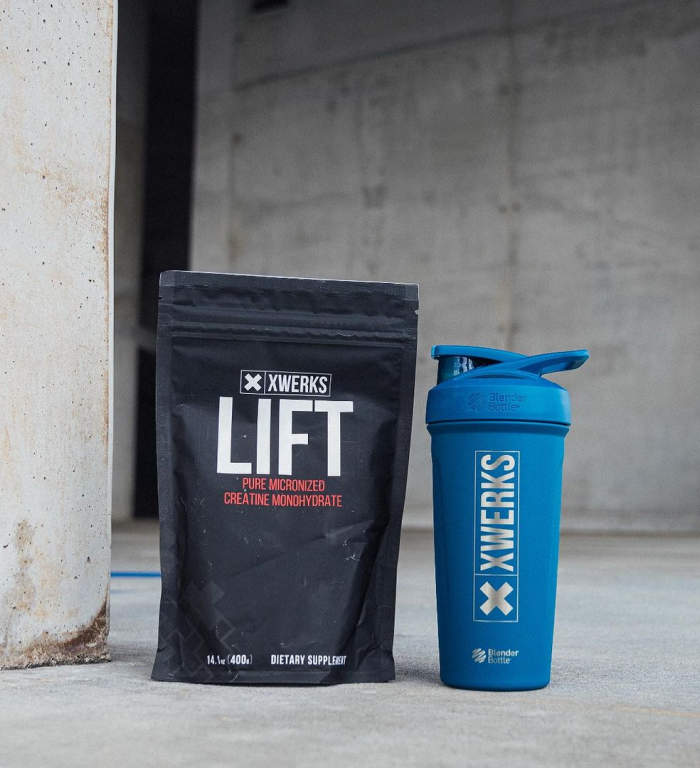
• Creatine monohydrate: 5g daily (XWERKS Lift). Yes, creatine works the same in women as men. No, it doesn't make you "bulky." It supports strength, cognitive function, muscle preservation, and — particularly relevant for women 40+ — bone density support alongside resistance training.
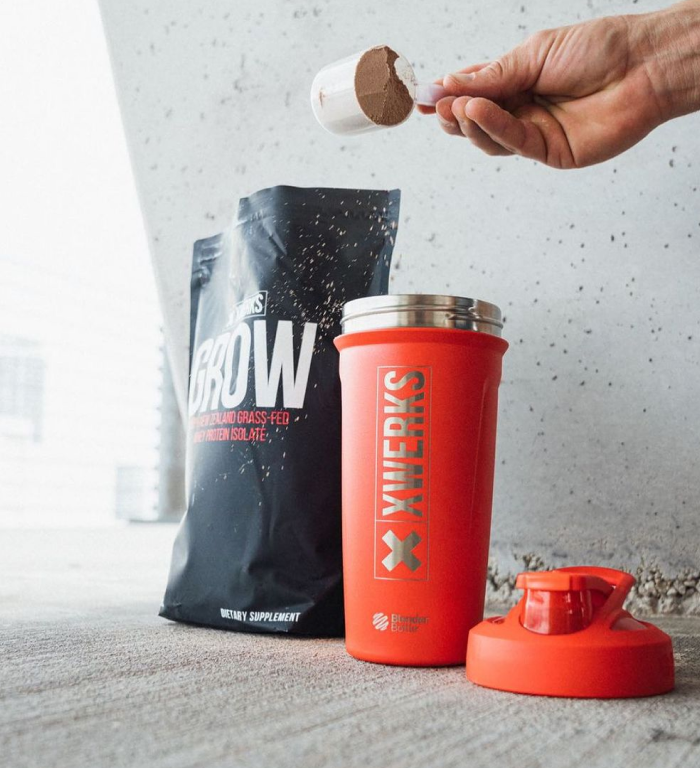
• Whey protein isolate: XWERKS Grow. Target 1.6-2.0g/kg body weight daily.
• Intra-workout carbs for long sessions: XWERKS Motion for 60+ minute workouts
• Foundation micronutrients: Vitamin D3 (2,000-4,000 IU), omega-3s (2-3g EPA+DHA), magnesium (200-400mg evening). Iron if medically diagnosed as needed.
Common questions women ask about pre-workout
"Will pre-workout make me bulky?"
No. Pre-workout ingredients don't build muscle by themselves — training does, when supported by adequate protein and recovery. Women have approximately 1/10th the testosterone of men and don't accidentally build substantial muscle mass without very intentional training and nutrition. Pre-workout ingredients support training quality; they don't force hypertrophy that wouldn't otherwise occur.
"Should I use pre-workout if I'm trying to lose weight?"
Pre-workout can support training quality during a caloric deficit — better training quality preserves muscle during weight loss, which protects your metabolism. Caffeine also modestly suppresses appetite and increases fat oxidation acutely. Just don't rely on pre-workout as a fat burner — the acute effects are small, and the long-term fat loss driver is caloric deficit plus resistance training, not any supplement.
"Is it okay to take pre-workout every day?"
Daily use is generally fine, but tolerance builds — particularly for caffeine. Many women benefit from cycling caffeine: full dose on hard training days, half dose or caffeine-free on easier days. Complete breaks (1-2 weeks off caffeine every few months) can help reset sensitivity if needed.
"What about during my period?"
No research supports avoiding pre-workout during menstruation. Many women train well during their periods; some feel more fatigued the first 1-2 days. Use pre-workout if it helps; skip it if it causes GI issues (which can be exacerbated by menstrual cramps). Listen to your body rather than following a protocol.
The Bottom Line
Pre-workout ingredients work the same in women as in men. The research on caffeine, citrulline, and beta-alanine is solid across mixed populations. There's no physiological reason women need a separate, weaker formula — just appropriate dose scaling to body weight.
Target profile: 100-200mg caffeine (3-6mg/kg), 3-6g citrulline malate, 1.5-3g beta-alanine, 1-2g L-tyrosine. Skip pink-packaged underdosed "women's" formulas and proprietary blends. Use a full-dose pre-workout with transparent labeling.
What actually matters for women: body-weight-scaled caffeine, awareness of cycle phases and individual sensitivity, iron status, and safety adjustments during pregnancy, breastfeeding, and perimenopause/menopause.
Transparent Pre-Workout, No Pink Tax
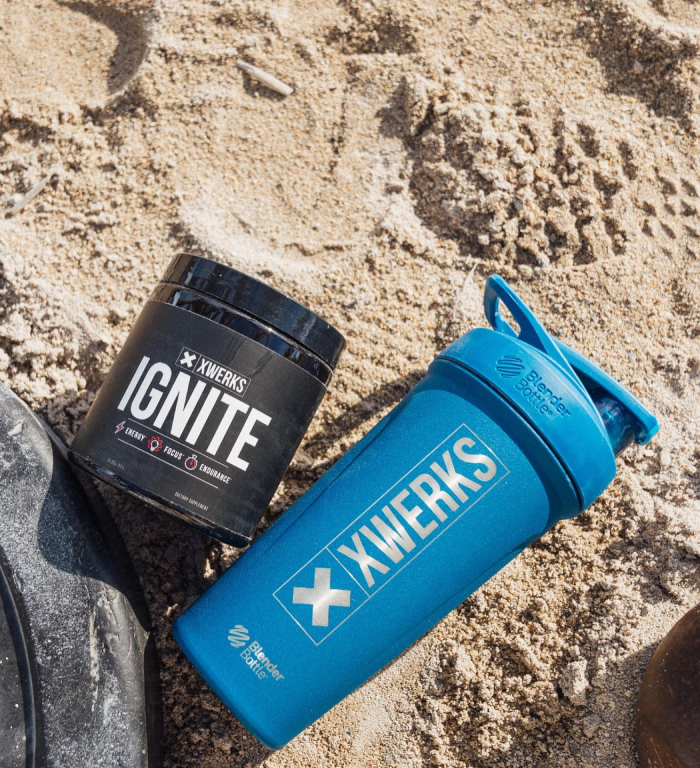
XWERKS Ignite — 150mg caffeine + 3g citrulline + 2g tyrosine + 1.5g beta-alanine + 500mg rhodiola + 200mg DMAE + 10mg BioPerine. Full ingredient disclosure, no proprietary blends, works for everyone.
Shop Ignite