Protein Timing for Athletes: When to Eat Protein for Maximum Results
Total daily protein intake matters far more than timing. That's the single most important sentence in this article. The "anabolic window" — the idea that you must consume protein within 30 minutes of training or lose your gains — is dramatically overstated. Research shows the window is at least 4-6 hours wide (and probably wider), and that distributing 25-40g of protein across 3-5 daily meals produces the best overall muscle protein synthesis outcomes. Timing has a small effect; hitting your daily target of 1.6-2.2g/kg body weight has a massive one.
Does the "anabolic window" actually exist?
Yes — but it's much wider than the supplement industry told you for two decades.
The original "anabolic window" concept came from early studies showing that muscle protein synthesis (MPS) rates were elevated after resistance exercise and that consuming protein during this period enhanced the response. This was real science. But the marketing interpretation — that you had exactly 30-60 minutes after your last rep to slam a protein shake or the workout was "wasted" — was a massive exaggeration of the actual data.
A landmark 2013 meta-analysis by Schoenfeld, Aragon, and Krieger examined whether post-exercise protein timing had a significant effect on muscle growth and strength. Their conclusion: when total daily protein intake was controlled for, timing had minimal additional effect. The apparent benefit of immediate post-workout protein in earlier studies was confounded by the fact that the timing groups also ate more total protein per day.
In other words: the people who consumed protein post-workout gained more muscle — but primarily because they ate more protein overall, not because of the specific timing.
More recent research by Morton et al. (2018) confirmed this in the largest meta-analysis ever conducted on protein supplementation and resistance training. The main driver of muscle and strength gains was total daily protein intake. Timing was a minor variable.
What actually matters: total daily protein and distribution
If timing is the minor variable, what's the major one? Two things: your total daily protein intake and how you distribute it across meals.
Total daily protein. The ISSN's 2017 position stand on protein and exercise recommends 1.6-2.2g of protein per kilogram of body weight per day for athletes and resistance-trained individuals seeking to maximize muscle protein synthesis. For a 180 lb (82 kg) athlete, that's 131-180g per day. This is the foundation — no timing strategy compensates for inadequate total intake.
Protein distribution. Research by Mamerow et al. (2014) found that distributing protein evenly across meals produced 25% more muscle protein synthesis over 24 hours than eating the same total protein in a skewed pattern (small breakfast, medium lunch, large dinner). The optimal pattern appears to be 3-5 protein-containing meals per day with 25-40g of protein each, spaced approximately 3-5 hours apart.
This distribution approach is more impactful than any specific timing hack — and it's harder for most people to execute than just drinking a post-workout shake. The typical Western eating pattern (10g at breakfast, 15g at lunch, 50g at dinner) leaves muscle protein synthesis under-stimulated for most of the day.
The leucine threshold: Why 25-40g per meal matters
Muscle protein synthesis isn't triggered by any amount of protein — it requires a threshold dose of leucine (the essential amino acid that activates the mTOR signaling pathway). Research suggests this threshold is approximately 2.5-3g of leucine per meal for young adults, and slightly higher (3-4g) for older adults due to age-related "anabolic resistance."
In food terms, 2.5-3g of leucine corresponds to roughly 25-30g of high-quality animal protein (whey, eggs, meat, fish, dairy). This is why the 25-40g per meal recommendation exists — it ensures you cross the leucine threshold at every eating occasion, maximally stimulating MPS each time.
Eating 10g of protein at breakfast doesn't meaningfully stimulate MPS because it falls below the leucine threshold. The amino acids are used for other purposes (gluconeogenesis, oxidation) rather than being directed toward muscle building. This is the primary argument for protein distribution — it's not about eating more frequently, it's about crossing the leucine threshold more often throughout the day.
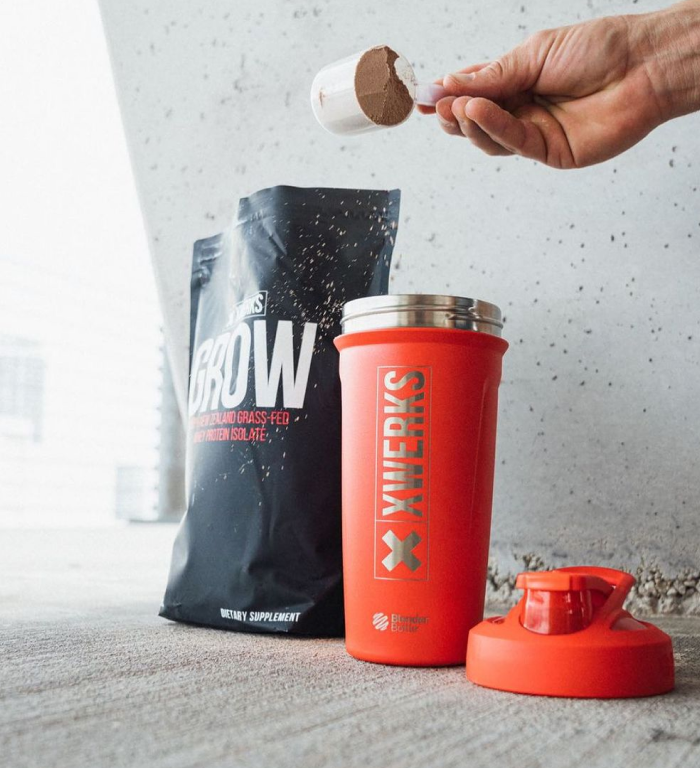
A single scoop of XWERKS Grow provides 25g of whey protein isolate with over 6g of BCAAs (including approximately 2.5-3g of leucine) — designed to cross this threshold in every serving.
Protein timing around training: The practical guide
Pre-Workout (1-3 hours before)
Goal: Ensure amino acids are available in the bloodstream during and immediately after training.
How: A protein-containing meal (25-40g protein) eaten 1-3 hours before training provides sufficient amino acid availability. If your last meal was 4+ hours ago, a whey protein shake 30-60 minutes before training bridges the gap — whey absorbs rapidly, peaking in the blood within 60-90 minutes.
If you train fasted (early morning): Either have a quick whey shake 20-30 minutes before, or accept a modest reduction in MPS during the session and prioritize protein immediately after.
Intra-Workout (during training)
Goal: For sessions under 60 minutes, intra-workout protein is unnecessary. For sessions over 60-90 minutes (endurance, Hyrox, long CrossFit sessions), intra-workout amino acids and carbohydrates support performance and recovery.
How: XWERKS Motion provides 3g BCAAs alongside 25g Cluster Dextrin and electrolytes — designed for sustained performance during long sessions. For typical 45-60 minute strength sessions, water is sufficient.
Post-Workout (within 2-3 hours after)
Goal: Provide amino acids to support the elevated MPS rates that follow resistance exercise.
How: A protein-rich meal or shake (25-40g protein) within a few hours of training. If you ate a protein-rich meal 2-3 hours before training, the urgency of post-workout protein is low — you're already covered. If you trained fasted or it's been 4+ hours since your last protein-containing meal, post-workout protein becomes more important.
Speed of absorption: Whey protein isolate is one of the fastest-absorbing protein sources available, making it ideal for post-workout if you want rapid amino acid delivery. But "rapid" vs. "slightly less rapid" (like eating chicken an hour later) makes minimal practical difference for most athletes.
Before Bed
Goal: Support overnight muscle protein synthesis during the 7-9 hour fast of sleep.
How: 30-40g of protein before bed — ideally a slow-digesting source like casein (cottage cheese) or a whey shake. A study by Res et al. (2012) found that consuming 40g of casein protein before sleep increased overnight muscle protein synthesis rates by ~22% compared to placebo. This is one of the few timing-specific findings that holds up robustly in the literature.
When timing matters more
While timing is generally the minor variable, there are specific scenarios where it becomes more important:
Training multiple times per day. If you train twice a day (e.g., 75 Hard, competitive athletes, two-a-days), recovery time between sessions is compressed. Consuming protein (and carbohydrates) within 1-2 hours of your first session accelerates glycogen replenishment and MPS initiation before your second session. In this context, timing matters more than for single-session athletes.
Training in a fasted state. If you train first thing in the morning without eating, there are no circulating amino acids from a previous meal. The MPS response to training will be blunted without protein. Either consume a small amount of protein before (a quick whey shake) or prioritize post-workout protein immediately after.
Endurance events lasting 90+ minutes. During long endurance efforts, intra-exercise protein (or BCAAs) can reduce muscle breakdown and support later recovery. Hyrox racers and marathon runners benefit from intra-race amino acid and carbohydrate intake.
Older athletes (40+). Anabolic resistance — the reduced MPS response to a given protein dose that occurs with aging — means older athletes may benefit from slightly higher per-meal protein doses (35-40g) and more precise distribution to maximize each MPS opportunity.
During a caloric deficit. When cutting, muscle preservation becomes the priority. More precise protein distribution (hitting the leucine threshold at every meal) and adequate post-workout protein help minimize muscle loss during the deficit.
When timing doesn't matter much
Single training sessions with adequate daily protein. If you eat 4 meals with 30-40g of protein each, train once per day, and one of those meals is within 2-3 hours before or after training — timing has essentially no additional impact on your results. The fundamentals are covered.
Recreational exercisers. For people doing 3-4 moderate workouts per week, timing is among the least important variables. Sleep, total protein, training quality, and consistency all matter more.
A practical daily protein schedule for athletes
Here's what an optimized day looks like for a 180 lb (82 kg) athlete targeting ~160g of protein:
7:00 AM — Breakfast: 3 eggs + 1 scoop Grow = ~43g protein. Crosses the leucine threshold. Sets up morning MPS.
12:00 PM — Lunch: 6 oz chicken breast + rice + vegetables = ~40g protein. Second MPS stimulation of the day.
3:30 PM — Pre-workout snack (if training at 4-5 PM): 1 scoop Grow or Greek yogurt = 25g protein. Ensures amino acids are circulating during and after training.
6:30 PM — Post-workout dinner: 8 oz salmon + sweet potato = ~45g protein. Third major MPS stimulation, plus post-workout recovery support.
9:30 PM — Before bed: Cottage cheese (1 cup) or 1 scoop Grow with milk = ~30g protein. Slow-release amino acids for overnight recovery.
Total: ~183g protein across 5 eating occasions, each crossing the leucine threshold, with protein flanking the training session and a pre-bed dose for overnight MPS. This covers every evidence-based timing principle without any of the stress of obsessive post-workout racing.
When does a protein shake fit into a normal day?
A shake is most useful where a meal or snack is inconvenient. For an early start, it can be part of breakfast. After training, it can bridge the gap until your next meal. In the evening, first check whether you have already reached your daily target.
Start with the practical question: identify the meal gap, then choose the format. A shake at a fashionable time is less useful than a repeatable eating pattern that meets your needs. See breakfast shakes and protein before bed for those specific situations.
The Bottom Line
Total daily protein matters most. Hit 1.6-2.2g/kg body weight per day from complete sources. This is the foundation that no timing strategy can replace.
Distribution matters second. 25-40g of protein across 3-5 meals, each crossing the leucine threshold (~2.5-3g leucine). Mamerow 2014 showed 25% more MPS from even distribution vs. the typical skewed Western pattern.
Pre-bed protein is worth adding. ~40g of slow-digesting protein before sleep increases overnight MPS by ~22% (Res 2012).
Post-workout timing is the smallest lever. The "anabolic window" is 4-6 hours wide, not 30 minutes. If you ate protein within a few hours of training, you're already covered. Racing to your shaker bottle adds stress without adding muscle.
25g of Complete Protein. 30 Seconds to Prepare.
XWERKS Grow — NZ grass-fed whey protein isolate with 25g protein, 6g+ BCAAs, and ~2.5-3g leucine per scoop. The easiest way to cross the leucine threshold at any meal or around training.
SHOP GROW →Further Reading
BCAAs vs EAAs — Why complete protein beats isolated amino acids.
High Protein Low Carb Snacks — Practical ways to distribute protein across the day.
What Is Thermogenesis? — Why protein's thermic effect matters for body composition.
How Many Calories in a Pound? — The math behind deficit eating.
Creatine vs. Protein — Two different tools for two different jobs.
Why NZ Grass-Fed Whey — Why source quality matters alongside timing.
References
1. Schoenfeld BJ, Aragon AA, Krieger JW. The effect of protein timing on muscle strength and hypertrophy: a meta-analysis. J Int Soc Sports Nutr. 2013;10(1):53.
2. Morton RW, et al. A systematic review, meta-analysis and meta-regression of the effect of protein supplementation on resistance training-induced gains in muscle mass and strength. Br J Sports Med. 2018;52(6):376-384.
3. Mamerow MM, et al. Dietary protein distribution positively influences 24-h muscle protein synthesis in healthy adults. J Nutr. 2014;144(6):876-880.
4. Res PT, et al. Protein ingestion before sleep improves postexercise overnight recovery. Med Sci Sports Exerc. 2012;44(8):1560-1569.
5. Jäger R, et al. International Society of Sports Nutrition position stand: protein and exercise. J Int Soc Sports Nutr. 2017;14:20.
6. Areta JL, et al. Timing and distribution of protein ingestion during prolonged recovery from resistance exercise alters myofibrillar protein synthesis. J Physiol. 2013;591(9):2319-2331.