Protein for GLP-1 Users: How to Prevent Muscle Loss on Ozempic, Wegovy, and Mounjaro
If you're taking a GLP-1 medication (semaglutide, tirzepatide), protein is the single most important dietary priority you have — and most users aren't getting enough. A 2025 study presented at the European Congress on Obesity found that 88% of GLP-1 users consumed below recommended protein levels, averaging just 0.6g/kg per day. At that intake, up to 25-40% of weight lost can come from lean muscle mass, not fat. Muscle loss on GLP-1s is preventable, but it requires deliberate protein targeting of 1.2-2.0g/kg of body weight per day — roughly double what most users are actually eating.
Why muscle loss on GLP-1 medications is a serious problem
GLP-1 receptor agonists like Ozempic (semaglutide), Wegovy (semaglutide), Mounjaro (tirzepatide), and Zepbound (tirzepatide) work by mimicking the natural GLP-1 hormone — suppressing appetite, increasing satiety, and slowing gastric emptying. This reduces caloric intake dramatically, producing significant weight loss. The STEP 1 trial showed an average of ~15% body weight loss with semaglutide over 68 weeks.
The problem is what that weight loss is made of. Any caloric deficit can cause muscle loss alongside fat loss — but GLP-1 users face a compounding challenge: the appetite suppression is so powerful that overall food intake drops substantially, and when food intake drops, protein intake drops disproportionately. Most people don't intuitively prioritize protein when eating less — they eat smaller portions of whatever they'd normally eat, which is usually carb-heavy and protein-light.
Research published in The Lancet Diabetes & Endocrinology (Prado et al. 2024) highlighted that GLP-1 therapies can result in lean mass losses comparable to or exceeding those seen in several forms of cancer — up to 13.9% reduction in lean mass. A study presented at ENDO 2025 (the Endocrine Society annual meeting) found that GLP-1 users who consumed less protein lost more muscle mass than those who maintained adequate protein intake, with older adults and women most vulnerable.
The Numbers That Matter
88% of GLP-1 users consume below recommended protein levels (ECO 2025 study)
0.6 g/kg/day — average protein intake of GLP-1 users vs. the recommended 1.2-2.0 g/kg/day
25-40% of weight lost on GLP-1s can come from lean muscle mass without adequate protein
86% of GLP-1 users are not meeting protein needs (GNC 2025 survey)
35% of GLP-1 users are aware of the muscle loss risk (GNC 2025 survey)
Why muscle loss matters more than most people realize
Muscle isn't just for aesthetics. It's the primary driver of resting metabolic rate — the calories your body burns at rest. When you lose muscle, your metabolic rate drops. This creates the exact condition that causes weight regain after stopping medication: you now have a lower metabolic rate, less muscle to burn calories, and the same (or increased) appetite when the drug is discontinued.
This is the "GLP-1 rebound" that concerns physicians — patients lose weight (some muscle, some fat), stop the medication, and regain the weight as fat. The result is a worse body composition than before — less muscle, same or more fat. This is sometimes called "metabolic damage," though the more accurate description is simply insufficient muscle preservation during the weight loss phase.
Muscle loss also affects functional strength, bone density (muscle pulls on bone, stimulating bone density), insulin sensitivity (muscle is the primary site of glucose disposal — less muscle means worse blood sugar management), and immune function. For GLP-1 users specifically, preserving muscle while losing fat should be the primary health outcome — not just the number on the scale.
How much protein do GLP-1 users need?
Doctors and researchers advising GLP-1 patients recommend 1.2-2.0g of protein per kilogram of body weight per day — roughly 1.5-3x the standard RDA of 0.8g/kg. The most common clinical recommendation is approximately 1g per pound of ideal body weight, which typically falls within this range.
For a 200 lb person targeting an ideal weight of 160 lbs, that's approximately 160g of protein per day. For a 150 lb person targeting 130 lbs ideal weight, approximately 130g per day.
The challenge is obvious: GLP-1 medications reduce appetite and food volume dramatically. Eating 130-160g of protein per day when you're not hungry and your stomach empties slowly is genuinely difficult. This is where protein supplementation becomes not just helpful but practically necessary for most GLP-1 users.
Why whey protein isolate is ideal for GLP-1 users
Not all protein sources are equally practical when your appetite is suppressed and your stomach empties slowly. Whey protein isolate has several specific advantages for GLP-1 users:
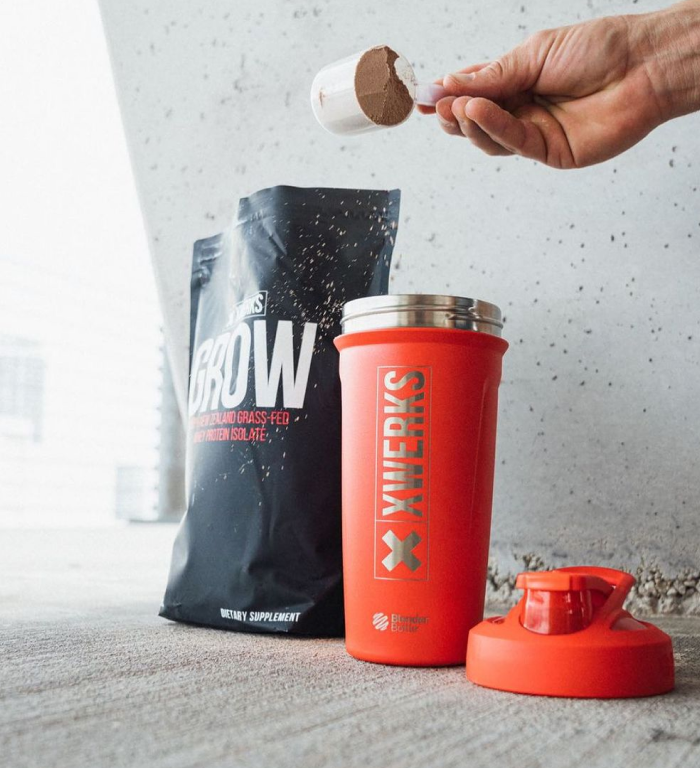
Highest protein density per calorie. A scoop of XWERKS Grow delivers 25g of protein in approximately 110 calories. That's one of the highest protein-to-calorie ratios available from any food or supplement source. When total food volume is limited by GLP-1-induced satiety, every calorie needs to pull maximum nutritional weight.
Rapid absorption, minimal GI burden. GLP-1 medications slow gastric emptying — food sits in the stomach longer. Whey protein isolate is one of the fastest-absorbing protein forms, spending less time in the stomach than solid protein sources like chicken or beef. For users experiencing nausea (a common GLP-1 side effect), liquid protein is often better tolerated than solid food protein.
Complete amino acid profile. Whey isolate provides all 9 essential amino acids in optimal ratios for muscle protein synthesis, including approximately 2.5-3g of leucine per scoop — crossing the leucine threshold that triggers the mTOR signaling pathway. This matters more, not less, when total protein intake is constrained.
Virtually lactose-free. Many GLP-1 users report increased GI sensitivity. Whey protein isolate (not concentrate) has the lactose removed through microfiltration, minimizing a common source of bloating and discomfort. Grow uses cold-processed NZ grass-fed whey isolate — no lactose, no artificial sweeteners, no fillers that could aggravate GLP-1-related GI sensitivity.
Clean ingredient profile. GLP-1 users are already putting a powerful pharmaceutical compound through their system. Minimizing additional artificial ingredients, fillers, and contaminants in food and supplements is a reasonable priority. Grow contains whey protein isolate, natural flavoring, sunflower lecithin, and stevia — four ingredients, nothing artificial.
The two-part muscle preservation strategy
Protein intake is necessary but not sufficient to preserve muscle on GLP-1 medications. The complete strategy requires two components:
1. Adequate protein intake (1.2-2.0g/kg/day). Distributed across 3-4 eating occasions with at least 25-30g of protein each to cross the leucine threshold for muscle protein synthesis. This provides the raw materials for muscle maintenance.
2. Resistance training (2-3 sessions per week). This is the signal that tells your body to preserve muscle rather than break it down. Without resistance training, your body has no reason to maintain muscle during a caloric deficit — it's metabolically expensive tissue, and the body will happily shed it to conserve energy. A 2025 systematic review found that combining exercise with GLP-1 medications produced significantly better body composition outcomes than medication alone.
The training doesn't need to be extreme. Two to three full-body sessions per week, 30-45 minutes each, focusing on compound movements (squat, deadlift/hinge, bench press/push, row/pull) with progressive overload provides sufficient stimulus. Creatine supplementation supports training performance and may offer additional muscle-protective benefits during a deficit — and creatine is zero calories, fully compatible with reduced eating.
Practical tips for getting enough protein on GLP-1s
Eat protein first at every meal. When appetite is suppressed and volume is limited, prioritize the protein source on your plate before the carbs and vegetables. If you can only eat half your meal, make sure the protein portion is what you finish.
Use liquid protein when solid food feels like too much. On days when nausea or extreme satiety makes eating difficult, a protein shake is easier to consume than chicken breast. Mixing Grow with water or unsweetened almond milk takes 30 seconds and provides 25g of complete protein in a form that most GLP-1 users tolerate well.
Front-load protein in the morning. Many GLP-1 users report better appetite in the morning than later in the day (when the medication's appetite suppression is strongest). Use that morning window to get a high-protein meal in — eggs, Greek yogurt, or a protein shake.
Don't skip meals entirely. The appetite suppression can be dramatic — some users go entire days eating very little. This is where muscle loss accelerates. Even if you're not hungry, aim for at least 2-3 protein-containing eating occasions per day to maintain muscle protein synthesis.
Track protein specifically. You don't need to track every macro, but counting protein grams for 2-3 weeks will reveal how far short most GLP-1 users fall. Most are shocked to find they're eating 40-60g when they need 120-160g.
Consider the thermic advantage. Protein has the highest thermic effect of any macronutrient — 20-30% of protein calories are burned during digestion. This means protein is the most metabolically efficient calorie you can eat during weight loss. Every gram pulls double duty: preserving muscle and costing more to process.
What about the XWERKS products alongside GLP-1s?
Grow (whey protein isolate): The primary recommendation. 25g protein, ~110 calories, fast-absorbing, easy on the stomach, and solves the core problem (insufficient protein intake). 1-2 scoops per day closes the gap for most GLP-1 users.
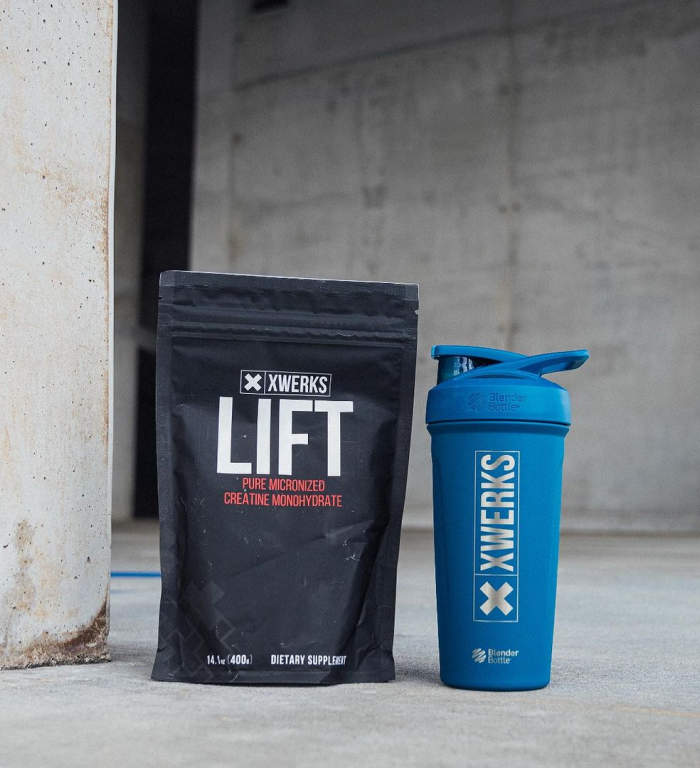
Lift (creatine monohydrate): Zero calories, supports resistance training performance, and has its own evidence base for preserving lean mass. No reason not to take it on a GLP-1 — it doesn't add calories or affect appetite.
Ashwa (ashwagandha): GLP-1 medications can elevate cortisol in some users due to the physiological stress of rapid weight loss. Ashwagandha's cortisol-modulating effect may support the hormonal environment during this transition.
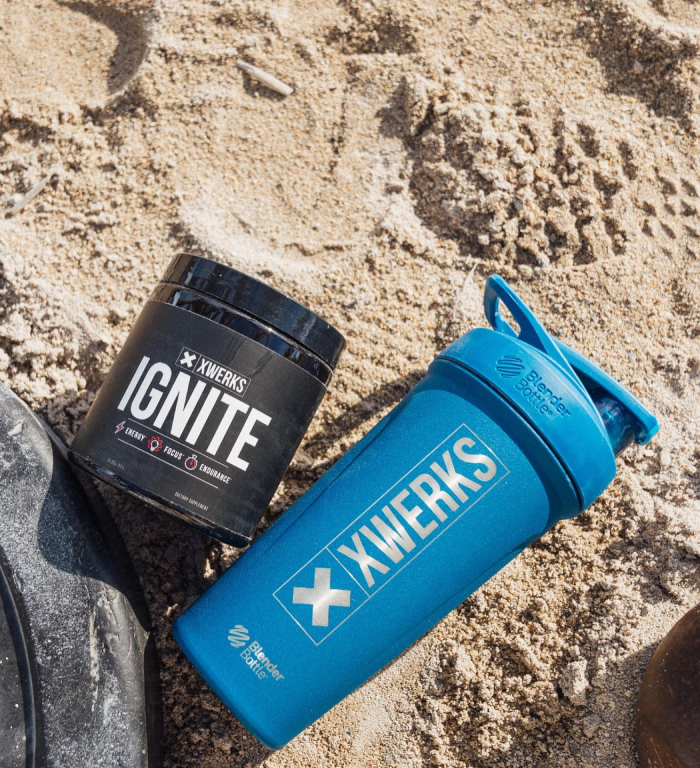
Ignite (pre-workout): For users who find motivation difficult (GLP-1s can blunt the brain's dopamine-driven reward response for physical activity), a moderate-caffeine pre-workout provides the energy and focus to get through resistance training sessions — which are essential for muscle preservation.
The Bottom Line for GLP-1 Users
The #1 risk of GLP-1 weight loss is muscle loss — and it's preventable. Up to 25-40% of weight lost can be lean mass without adequate protein and resistance training. 88% of GLP-1 users consume below recommended protein levels.
Target 1.2-2.0g of protein per kg body weight per day — roughly 1g per pound of ideal body weight. Distribute across 3-4 eating occasions with 25-30g each.
Whey protein isolate is the practical solution. XWERKS Grow delivers 25g of complete protein in ~110 calories with minimal GI burden — designed for the exact problem GLP-1 users face (high protein needs + low appetite + sensitive digestion).
Combine with resistance training 2-3x/week — the signal that tells your body to keep muscle. Without resistance training, your body will happily discard metabolically expensive muscle tissue during a deficit. Protein + training = muscle preservation. Protein alone isn't enough.
25g Protein. 110 Calories. Zero Artificial Ingredients.
XWERKS Grow — NZ grass-fed whey protein isolate. The highest protein-to-calorie ratio in the cleanest formula available. 1-2 scoops per day solves the GLP-1 protein gap.
SHOP GROW → SHOP LIFT →Further Reading
Protein Timing for Athletes — Why distributing protein across the day matters for muscle protein synthesis.
High Protein Low Carb Snacks — Easy protein sources for low-appetite days.
What Is Thermogenesis? — Protein's thermic advantage during weight loss.
BCAAs vs EAAs — Why complete protein beats isolated amino acids.
How Many Calories in a Pound? — The math behind weight loss.
How to Regulate Cortisol — Managing stress hormones during rapid weight loss.
References
1. Wilding JPH, et al. Once-weekly semaglutide in adults with overweight or obesity (STEP 1). N Engl J Med. 2021;384(11):989-1002.
2. Prado CM, et al. Muscle matters: the effects of medically induced weight loss on skeletal muscle. Lancet Diabetes Endocrinol. 2024;12(11):785-787.
3. Vinelli V, et al. Dietary behavior and nutrient intake in GLP-1 receptor agonist users: a real-world study using AI-powered nutritional tracking. Presented at European Congress on Obesity (ECO). Istanbul, Turkey. May 2026.
4. ENDO 2025. Higher protein intake prevents muscle loss in semaglutide users. Presented at the Endocrine Society Annual Meeting. San Francisco, CA. July 2025.
5. Jäger R, et al. International Society of Sports Nutrition position stand: protein and exercise. J Int Soc Sports Nutr. 2017;14:20.
6. Locatelli JC, et al. Incretin-based weight loss pharmacotherapy: Can resistance exercise optimize changes in body composition? Diabetes Obes Metab. 2024;26(11):5163-5177.