Citrulline: The Pre-Workout Ingredient That Actually Works
L-citrulline is a non-essential amino acid that increases nitric oxide production, improves blood flow, enhances the "pump" during training, reduces muscle soreness, and modestly improves both strength and endurance performance. It's one of the few pre-workout ingredients with strong clinical evidence — and it works better than its more famous predecessor, L-arginine, because of how it's absorbed and converted in the body.
What is citrulline?
L-citrulline is a non-essential amino acid (meaning your body can produce it) first isolated from watermelon — its name comes from Citrullus, the Latin genus name for watermelon. In the body, citrulline is converted to arginine, which is then converted to nitric oxide (NO). Nitric oxide is a vasodilator — it signals blood vessels to relax and widen, increasing blood flow to working muscles.
Supplements typically use one of two forms: L-citrulline (the pure amino acid) or citrulline malate (citrulline bonded to malic acid, which itself is involved in energy production through the Krebs cycle). Both forms work, but citrulline malate may have slight additional benefits from the malic acid component.
Why citrulline works better than arginine
For decades, bodybuilders supplemented with L-arginine to boost nitric oxide and enhance pumps. But research revealed a problem: arginine has poor oral bioavailability. When you swallow arginine, the majority is broken down in the gut and liver before it reaches circulation. The result: you need very large doses (10g+) to see meaningful blood arginine increases, and even then the effect is modest.
Citrulline bypasses this problem entirely. It's absorbed intact, transported to the kidneys, and then converted to arginine. Paradoxically, supplementing with citrulline raises blood arginine levels more effectively than supplementing with arginine itself. A study by Schwedhelm et al. (2008) found that 3g of citrulline raised plasma arginine levels more than 3g of arginine — and did so with better tolerability.
What the research shows
Muscle endurance and reduced soreness. A landmark 2010 study by Pérez-Guisado and Jakeman found that 8g of citrulline malate taken before a workout increased the number of repetitions performed on bench press by 52.92% and reduced muscle soreness 24 and 48 hours post-workout by 40%. This is one of the most striking single-study results in sports nutrition.
Strength and power output. Multiple studies have shown modest but consistent improvements in strength performance with citrulline supplementation. A meta-analysis by Trexler et al. (2019) pooled data across studies and found small but statistically significant improvements in strength and power performance.
Endurance performance. For cycling, running, and other endurance modalities, citrulline has been shown to improve time-to-exhaustion and reduce perceived exertion. The mechanism is likely improved oxygen delivery via enhanced blood flow, plus reduced ammonia buildup (citrulline is involved in the urea cycle, which clears ammonia from exercising muscles).
The pump. The subjective "pump" — the swollen, engorged feeling of working muscles during training — is real, and citrulline enhances it through vasodilation. This isn't just aesthetic; cellular expansion from the pump may contribute to muscle protein synthesis signaling over time.
Cerebral blood flow. Beyond muscles, citrulline-driven blood flow benefits the brain. Improved cerebral blood flow supports cognitive function during long training sessions — relevant for endurance events like Hyrox where mental clarity degrades with fatigue.
How much citrulline do you need?
Research-backed doses are:
L-citrulline (pure): 3-6g per serving. Lower doses are typically ineffective.
Citrulline malate: 6-8g per serving (the malate form is roughly 60% citrulline by weight, so the doses are higher).
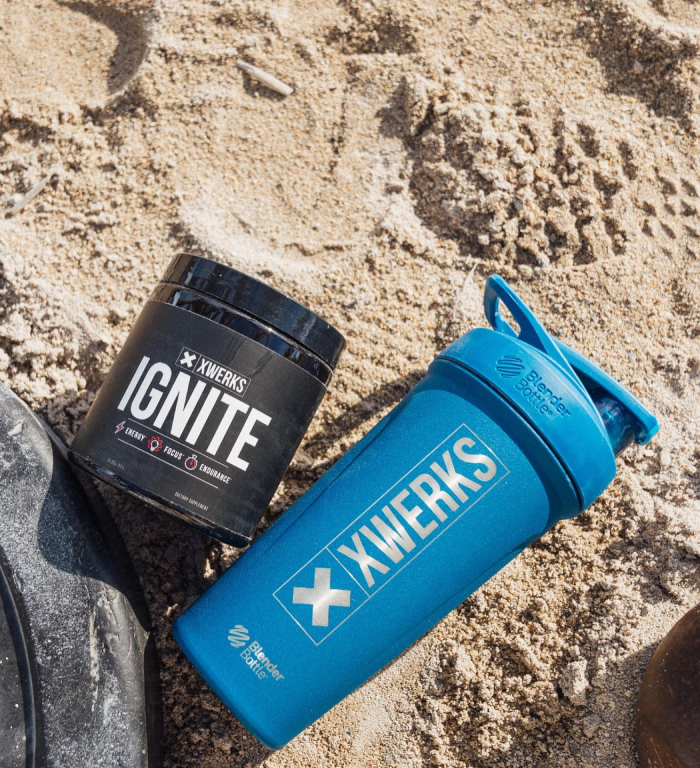
XWERKS Ignite: Contains 3,000mg (3g) of citrulline malate per serving — the lower end of the effective range, but paired with other performance ingredients (beta-alanine, caffeine, L-tyrosine, rhodiola, DMAE) that work synergistically.
Timing and absorption
Citrulline takes 30-60 minutes to peak in blood after oral ingestion, which aligns well with typical pre-workout timing. Take it 30 minutes before training for maximum effect during your session. Unlike caffeine, citrulline doesn't produce an acute subjective feeling — the benefit is physiological (blood flow, reduced fatigue, better pumps), not sensory.
Citrulline can be taken daily without tolerance buildup, unlike caffeine. Some athletes take it on non-training days for cardiovascular health benefits (improved blood pressure, endothelial function).
Food sources of citrulline
Citrulline occurs naturally in several foods, most notably watermelon. A typical serving of watermelon (about 1 cup of cubes) contains approximately 250mg of citrulline — far below the 3-8g used in research. The rind contains even more citrulline than the flesh, which is why some athletes eat watermelon rind or drink watermelon juice. But reaching research-backed doses through food alone is impractical — supplementation is more efficient.
The Bottom Line
Citrulline is one of the most evidence-backed pre-workout ingredients. It raises nitric oxide, improves blood flow to muscles and brain, enhances pumps, increases reps-to-failure, reduces post-workout soreness, and supports endurance performance. It's more effective than arginine because of superior bioavailability.
Effective doses are 3-6g of pure L-citrulline or 6-8g of citrulline malate. XWERKS Ignite contains 3g of citrulline malate alongside 5 other performance ingredients — a multi-mechanism approach to sustained, complete pre-workout performance.
Citrulline + Full Nootropic Stack
XWERKS Ignite — 3g citrulline malate, 150mg caffeine, 2g L-tyrosine, 1.5g beta-alanine, 500mg rhodiola, 200mg DMAE, 10mg BioPerine. Every dose on the label.
SHOP IGNITE →Further Reading
What Are Nootropics? — Citrulline's role in a complete pre-workout.
Low Stim Pre-Workout — Why citrulline and nootropics matter more than mega-dose caffeine.
Pre-Workout for Hyrox — Citrulline for endurance-strength hybrid events.
The Problem with Proprietary Blends — Why you need to know the exact citrulline dose.
References
1. Schwedhelm E, et al. Pharmacokinetic and pharmacodynamic properties of oral L-citrulline and L-arginine: impact on nitric oxide metabolism. Br J Clin Pharmacol. 2008;65(1):51-59.
2. Pérez-Guisado J, Jakeman PM. Citrulline malate enhances athletic anaerobic performance and relieves muscle soreness. J Strength Cond Res. 2010;24(5):1215-1222.
3. Trexler ET, et al. Effects of citrulline malate supplementation on exercise performance. J Strength Cond Res. 2019;33(9):2578-2587.
4. Bailey SJ, et al. L-citrulline supplementation improves O2 uptake kinetics and high-intensity exercise performance in humans. J Appl Physiol. 2015;119(4):385-395.