

Protein Intake for Longevity: What the Research Actually Shows
TL;DR
- The protein-longevity question is more nuanced than headlines suggest. The often-cited Levine 2014 study found high protein associated with worse outcomes for adults under 65, but better outcomes for adults over 65.
- The mTOR/IGF-1 longevity concerns from animal research don't translate cleanly to humans — particularly older adults, where sarcopenia is a far greater mortality risk than theoretical mTOR concerns.
- The PROT-AGE consensus recommends 1.0-1.2g/kg as a baseline for older adults and 1.2-1.5g/kg or higher for active older adults — significantly above the standard 0.8g/kg RDA.
- For most adults concerned about longevity, particularly those over 50: prioritize muscle preservation through adequate protein and resistance training. Frailty and sarcopenia are bigger longevity threats than higher protein intake.
The protein-longevity question generates more confusion than almost any other topic in nutrition. Headlines warn that "high protein shortens lifespan" based on animal studies of mTOR signaling, while other research consistently shows that older adults need more protein — not less — to prevent sarcopenia and maintain function. The reconciliation is found in life stage. The often-cited Levine 2014 study found high protein associated with worse outcomes for adults under 65 but better outcomes for adults over 65. The PROT-AGE consensus from leading geriatric nutrition researchers recommends 1.0-1.5g per kg body weight or higher for older adults — well above the standard 0.8g/kg RDA. The practical conclusion: for most adults concerned about longevity, particularly those over 50, sarcopenia and frailty are far greater mortality risks than theoretical mTOR concerns. Prioritize muscle preservation through adequate protein and resistance training.
The protein-longevity confusion: where it comes from
The argument that "high protein shortens lifespan" comes primarily from three lines of research:
1. Animal caloric restriction studies
Caloric restriction (CR) reliably extends lifespan in worms, flies, and rodents. Protein restriction specifically (without total calorie restriction) also extends lifespan in some animal models. The proposed mechanism: reduced mTOR signaling and IGF-1.
The translation problem: most CR research is in short-lived organisms. Effects in primates (longer-lived, more similar to humans) have been more modest and inconsistent. The two largest primate CR studies (Wisconsin and NIH) reached different conclusions about lifespan effects.
2. mTOR/IGF-1 signaling concerns
mTOR (mechanistic target of rapamycin) is a cellular pathway that promotes growth and protein synthesis. Chronic mTOR activation is theoretically associated with accelerated aging, while mTOR inhibition (e.g., with rapamycin) extends lifespan in mice. Higher protein intake activates mTOR more than lower protein intake.
The translation problem: mTOR activation isn't categorically bad — it's required for muscle protein synthesis, immune function, and tissue repair. The longevity benefits in mice come from chronic, severe mTOR inhibition, which has significant downsides (impaired wound healing, immune suppression). Whether moderate dietary protein in humans causes meaningful longevity-relevant mTOR activation is unclear.
3. The Levine 2014 paper
Levine et al. 2014 published in Cell Metabolism — one of the most-cited papers in the protein-longevity debate. The study analyzed NHANES III data (~6,800 adults aged 50+) and found:
Adults aged 50-65: High protein intake (≥20% of calories) associated with 75% greater overall mortality and 4-fold greater cancer death risk vs low protein intake.
Adults aged 65+: The relationship REVERSED. High protein intake was associated with significantly LOWER mortality and cancer death in this older group.
Headlines emphasized the under-65 finding while often omitting the over-65 finding — even though the under-65 effects largely disappeared when controlling for animal vs plant protein source.
Where the longevity research converges
Despite the headline confusion, the major research consensus is fairly consistent:
The PROT-AGE consensus (2013)
The PROT-AGE Study Group (an international consortium of geriatric nutrition researchers) published formal protein recommendations for older adults:
Healthy older adults: 1.0-1.2g per kg body weight (vs the general RDA of 0.8g/kg)
Older adults with acute or chronic disease: 1.2-1.5g per kg body weight
Older adults with severe illness, malnutrition, or sarcopenia: 1.5g per kg or higher
Subsequent research has pushed these numbers upward. Many researchers now recommend 1.6-2.2g/kg for active older adults engaged in resistance training — the same range used in younger athletes. The consensus is that the standard RDA significantly under-recommends protein for older adults.
The sarcopenia-mortality link
Multiple large cohort studies have found that low muscle mass and low grip strength are strong predictors of all-cause mortality in older adults — independent of body weight, BMI, and other risk factors. Sarcopenia significantly increases mortality risk through fall-related fractures, hospitalizations, immobility, and metabolic decline.
Practical implication: an intervention that prevents sarcopenia (adequate protein + resistance training) has clear, measurable longevity benefits. The theoretical concerns about mTOR activation pale in comparison to the demonstrated mortality risk of low muscle mass in older adults.
Athlete and active adult longevity data
Studies of older athletes consistently show better health outcomes, lower mortality, and better functional status than sedentary peers — despite typically consuming higher protein intakes. If high protein meaningfully shortened lifespan in active humans, we'd expect to see this in masters athletes. We don't.
Mediterranean and Blue Zone patterns
Some Blue Zone diets are relatively low in protein and animal foods (e.g., Sardinia, Okinawa). However, these populations also have:
- Significant manual labor and daily walking (preserving muscle without high protein)
- Strong social connections and low chronic stress
- Whole-food, minimally processed diets
- Genetic factors that may differ from typical Western populations
Cherry-picking the protein intake of these populations while ignoring the lifestyle context is misleading. Modern sedentary adults eating low-protein diets aren't replicating Blue Zone outcomes — they're getting sarcopenic and frail.
The Valter Longo perspective and counter-arguments
Valter Longo, the prominent longevity researcher who co-authored the Levine 2014 paper, has advocated for moderate-to-low protein diets (~0.8g/kg) for adults under 65, with higher protein recommended for adults over 65-70. His argument focuses on mTOR/IGF-1 signaling and the under-65 cancer risk findings.
Counter-arguments from researchers who favor higher protein intake:
The under-65 mortality effect didn't replicate. Subsequent analyses of NHANES and other large cohorts have not consistently replicated the strong under-65 protein-mortality link found in Levine 2014.
Animal protein vs plant protein matters. Many of the "high protein = mortality risk" findings disappear when adjusting for protein source. Plant proteins generally show neutral or beneficial associations.
Confounding by overall diet quality. High animal protein intake in observational studies often correlates with higher processed meat, lower fiber, lower fruit/vegetable intake — all independent mortality risks.
Active adults have different needs. Sedentary, overweight adults eating high-protein diets don't represent active adults using protein to support muscle maintenance and metabolic health.
The over-65 finding is consistent with broader literature. Higher protein intake supporting better outcomes in older adults aligns with the PROT-AGE consensus and dozens of other studies.
The practical resolution: life-stage-specific recommendations
Adults 20-50 (general population)
Sedentary: 0.8-1.2g/kg appears reasonable. Adequate for general health without theoretical concerns about over-activation of mTOR.
Active/training: 1.2-2.0g/kg supports training adaptations, body composition goals, and muscle building.
Source matters: Mix of animal and plant proteins, emphasizing whole foods, lean meats, fish, dairy, legumes. Limit highly processed meats.
Adults 50-70 (the inflection point)
Begin transitioning to higher protein intake to prevent the inflection into sarcopenia. Target 1.2-1.6g/kg. Resistance training becomes increasingly important — protein without training won't preserve much muscle.
This is the population most affected by anabolic resistance, and the failure to consume adequate protein at this life stage sets up sarcopenia in later decades.
Adults 70+ (clear higher-protein benefit)
Target 1.6-2.2g/kg per PROT-AGE recommendations and subsequent research. The mortality and morbidity risks of sarcopenia in this age group dwarf any theoretical mTOR concerns.
Practical challenge: appetite often declines with age, making whole-food protein intake difficult. Whey protein supplementation becomes particularly valuable for hitting targets.
Why sarcopenia trumps mTOR concerns in older adults
The reason higher protein is unambiguously better for older adults: the actual mortality risks of muscle loss far exceed any theoretical risks of higher protein intake.
Sarcopenia and mortality: Adults with low muscle mass have 2-3x higher all-cause mortality vs adults with adequate muscle mass, controlling for other factors.
Falls and fractures: Hip fractures in older adults have ~25% one-year mortality. Adequate muscle mass reduces fall risk significantly.
Metabolic health: Skeletal muscle is the primary site of glucose disposal. Low muscle mass increases insulin resistance and type 2 diabetes risk.
Recovery from illness: Older adults with adequate muscle reserves recover from hospitalizations, surgeries, and acute illnesses much better than those with sarcopenia.
Functional independence: Loss of strength and muscle is the primary driver of loss of independence in older adults — a major quality-of-life and mortality factor.
Compared to these massive, well-documented risks, the theoretical concern that 1.5g/kg protein might activate mTOR slightly more than 1.0g/kg becomes relatively trivial in older adults. The math clearly favors higher protein intake.
Practical protein strategies for longevity
Hit your daily target. Calculate 1.2-1.6g/kg if you're 50-70, or 1.6-2.2g/kg if you're 70+ or training hard. Track for a few weeks to confirm you're actually hitting it — most people significantly underestimate.
Distribute across 3-4 meals. Mamerow 2014 found even distribution produces 25% more daily MPS than skewed patterns (typical American eating). Each meal should hit ~30-50g of high-quality protein.
Emphasize quality. High-leucine, fast-digesting proteins (whey, fish, eggs, dairy) are particularly effective for stimulating MPS in older adults dealing with anabolic resistance.
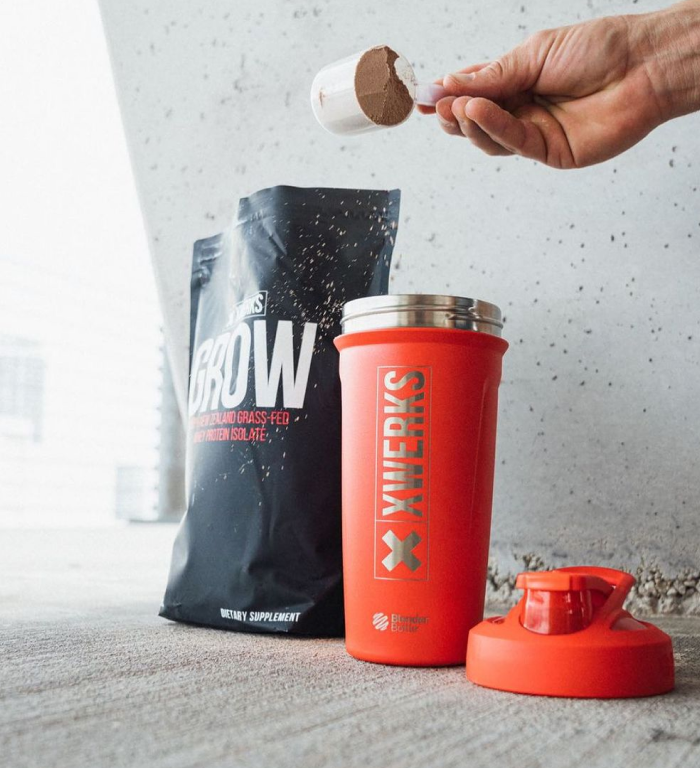
Use whey supplementation strategically. Whey isolate is the most effective single tool for hitting protein targets in older adults. XWERKS Grow provides 25g of NZ grass-fed whey isolate per scoop with ~2.5-3g leucine.
Pair with resistance training. Protein without training won't preserve much muscle. The combination is what works. 2-4x per week, heavy compound movements, progressive overload.
Include plant proteins for variety and fiber. Mix of animal and plant sources. Legumes, nuts, and quality whole grains provide protein plus fiber and phytonutrients.
Limit ultra-processed meats. The strongest "high animal protein = mortality risk" findings often center on processed meats specifically. Whole-food meats (fish, eggs, lean cuts, dairy) don't carry the same risks.
The Bottom Line
The protein-longevity question depends critically on life stage. The Levine 2014 study found high protein associated with worse outcomes for under-65 adults but BETTER outcomes for over-65 adults. The over-65 finding is consistent with the broader PROT-AGE consensus.
For older adults (50+), adequate protein is essential, not optional. Recommended intake: 1.2-1.6g/kg for adults 50-70, and 1.6-2.2g/kg for adults 70+ — significantly higher than the 0.8g/kg standard RDA.
Sarcopenia is a far greater mortality risk than theoretical mTOR concerns for older adults. The math clearly favors higher protein intake combined with resistance training to preserve muscle and function.
The full equation: adequate protein + resistance training + sleep + stress management + social engagement + whole foods. Get all of these right and longevity outcomes improve substantially. Protein alone won't extend lifespan — but inadequate protein in older adults clearly shortens it through sarcopenia and frailty.
Hit Your Protein Target with Quality
XWERKS Grow — 25g of NZ grass-fed whey isolate per scoop with ~2.5-3g leucine. The most efficient way to consistently hit protein targets that support muscle preservation through midlife and beyond.
SHOP GROW →Further Reading
Whey Protein for Preventing Muscle Loss with Age
Sarcopenia Prevention Supplements
Supplements for Muscle Preservation After 50
Best Supplements for Healthy Aging Men
How Much Protein Can Your Body Absorb?
References
1. Levine ME, et al. Low protein intake is associated with a major reduction in IGF-1, cancer, and overall mortality in the 65 and younger but not older population. Cell Metab. 2014;19(3):407-417.
2. Bauer J, et al. Evidence-based recommendations for optimal dietary protein intake in older people: a position paper from the PROT-AGE Study Group. J Am Med Dir Assoc. 2013;14(8):542-559.
3. Phillips SM, et al. Protein "requirements" beyond the RDA: implications for optimizing health. Appl Physiol Nutr Metab. 2016;41(5):565-572.
4. Cawthon PM, et al. Cutpoints for low appendicular lean mass that identify older adults with clinically significant weakness. J Gerontol A Biol Sci Med Sci. 2014;69(5):567-575.
5. Cermak NM, et al. Protein supplementation augments the adaptive response of skeletal muscle to resistance-type exercise training: a meta-analysis. Am J Clin Nutr. 2012;96(6):1454-1464.
6. Morton RW, et al. A systematic review, meta-analysis and meta-regression of protein supplementation on resistance training-induced gains in muscle mass and strength in healthy adults. Br J Sports Med. 2018;52(6):376-384.