Supplements That Support Testosterone Naturally as You Age
TL;DR
- Testosterone declines roughly 1% per year after age 30. Most "natural T support" works by addressing deficiencies and reducing cortisol — not by directly boosting T in healthy men.
- Top evidence-backed supplements: vitamin D3, zinc, magnesium, ashwagandha, Tongkat Ali, and boron. Effects are modest (5-25% T increases in deficient or stressed men) but real.
- Foundational factors matter more than supplements: sleep, resistance training, body composition, stress management. Get these right first.
- Natural support is for healthy men optimizing their levels — not a substitute for TRT in clinical hypogonadism (total T below ~300 ng/dL with symptoms). See an endocrinologist for low T.
Testosterone declines roughly 1% per year after age 30, and modern lifestyle factors (poor sleep, chronic stress, weight gain, vitamin D deficiency, sedentary behavior) accelerate the decline beyond what natural aging alone would cause. The most evidence-backed supplements for natural testosterone support work by addressing nutritional deficiencies (vitamin D, zinc, magnesium), supporting the HPA axis (ashwagandha), and providing herbs with modest direct T-supportive effects (Tongkat Ali, boron). Effects are modest — typically 5-25% increases in deficient or stressed men, smaller in already-optimized men. Foundational factors (sleep, training, body composition, stress) matter more than supplements. Natural support is appropriate for healthy men optimizing levels; men with clinical hypogonadism (total T below ~300 ng/dL with symptoms) should see an endocrinologist about TRT, which is a medical treatment, not a supplement question.
How testosterone declines with age
Total testosterone in healthy young men typically ranges from 300-1,000 ng/dL, with optimal levels generally considered 500-800+ ng/dL. After age 30, total T declines roughly 1% per year. By age 60, the average man has 30-40% lower T than at age 30.
However, this decline isn't purely "natural" or inevitable. Several factors accelerate it:
Modern lifestyle accelerators
Poor sleep: A single week of 5 hours of sleep can drop testosterone by 10-15% in healthy young men (Leproult & Van Cauter 2011). Chronic sleep deprivation has even larger effects.
Chronic stress and elevated cortisol: Cortisol and testosterone have an inverse relationship — chronically elevated cortisol suppresses T production through HPA axis effects.
Weight gain and body composition: Adipose tissue (particularly visceral fat) converts testosterone to estradiol via aromatase enzyme. Higher body fat = lower free T. Obesity is one of the strongest modern T suppressors.
Vitamin D deficiency: Affects ~42% of US adults. Vitamin D directly supports testosterone production.
Sedentary lifestyle: Lack of resistance training reduces the anabolic stimulus that supports natural T production.
Excessive alcohol: Heavy drinking suppresses T production directly and through cortisol elevation.
The clinical distinction: optimization vs. hypogonadism
Before discussing supplements, an important distinction:
Healthy testosterone optimization: Total T above 300 ng/dL but below personal optimal. Goal is to bring levels into the upper portion of normal range through lifestyle and supplementation.
Clinical hypogonadism: Total T below ~300 ng/dL with symptoms (low libido, fatigue, mood issues, muscle loss, erectile dysfunction). This is a medical condition requiring evaluation by an endocrinologist or men's health specialist.
Supplements are appropriate for the first scenario. They are not appropriate as a primary treatment for the second. Don't try to fix clinical hypogonadism with supplements — see a doctor. Testosterone replacement therapy (TRT) is a medical treatment with significant benefits and considerations that require medical management.
The evidence-backed supplements for natural T support
1. Vitamin D3 — Strongest Evidence in Deficient Men
Why: Vitamin D acts as a pro-hormone with effects throughout the body, including direct support of testosterone production. Vitamin D receptors are present in Leydig cells (testosterone-producing cells in testes).
Evidence: Pilz et al. 2011 found ~25% testosterone increase in vitamin D-deficient men supplementing with 3,332 IU daily for 12 months. Effects are largest in deficient men; smaller or absent in already-sufficient men.
Dose: 2,000-4,000 IU daily for most men. 5,000+ IU if deficient. Test 25(OH)D blood levels — target 40-60 ng/mL. ~42% of US adults are deficient, making this a high-value intervention.
2. Zinc — Critical for T Production
Why: Zinc is required for testosterone synthesis. Deficiency directly reduces T production. Zinc also inhibits aromatase (the enzyme that converts T to estradiol), supporting more favorable hormone ratios.
Evidence: Multiple trials show zinc supplementation increases T in deficient men. Effects are minimal in already-sufficient men. Athletes and active men often have higher zinc needs due to losses through sweat.
Dose: 15-30mg daily of zinc picolinate, citrate, or glycinate. Higher doses (50mg+) can interfere with copper absorption — don't exceed without medical supervision.
3. Magnesium — Foundational for Hormone Function
Why: Magnesium is required for hundreds of enzymatic reactions including those involved in testosterone production. Magnesium also reduces SHBG (sex hormone binding globulin), increasing free T availability.
Evidence: Cinar et al. 2011 found magnesium supplementation increased both total and free testosterone in young men, with effects particularly notable in active/training individuals.
Dose: 200-400mg of magnesium glycinate or citrate daily, preferably evening. Avoid magnesium oxide (poorly absorbed).
4. Ashwagandha — Cortisol Reduction → T Support
Why: Ashwagandha works primarily by reducing cortisol, which has an inverse relationship with testosterone. Particularly effective in chronically stressed men with elevated cortisol.
Evidence: Wankhede et al. 2015 found 15-18% T increase in resistance-trained men supplementing with 600mg daily for 8 weeks. Lopresti et al. 2019 found ~14% T increase in stressed overweight men aged 40-70.
Dose: 300-600mg standardized extract daily, or 1,500mg whole root from 30:1 extract. XWERKS Ashwa provides this dose.
Best for: Stressed men, men with sleep issues, men with cortisol-related T suppression.
5. Tongkat Ali (Eurycoma longifolia) — Direct T Support
Why: Traditional Southeast Asian herb with multiple proposed mechanisms — increasing free T (reducing SHBG binding), supporting Leydig cell function, and reducing cortisol.
Evidence: Multiple small trials show 10-15% T increases in deficient or stressed men. Talbott et al. 2013 found significant T increases plus cortisol reduction in stressed adults supplementing with 200mg daily.
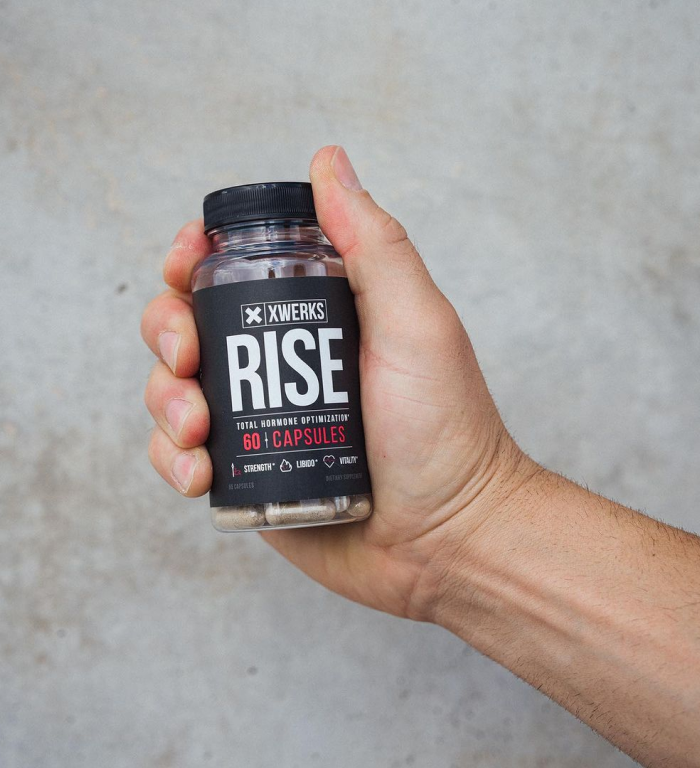
Dose: 200-400mg of standardized extract daily. XWERKS Rise provides 400mg of Tongkat Ali plus zinc, boron, and shilajit for comprehensive support.
Best for: Men noticing libido decline, fatigue, or sub-optimal T levels.
6. Boron — Underrated for Free T
Why: Boron is a trace mineral with significant effects on free testosterone via reduced SHBG binding. Often overlooked in T support discussions.
Evidence: Naghii et al. 2011 found that boron supplementation (10mg daily for 7 days) significantly increased free testosterone and decreased SHBG and inflammatory markers in healthy men.
Dose: 6-10mg daily. Often included in T-support stacks like XWERKS Rise (6mg boron).
7. Shilajit — Mitochondrial and T Support
Why: Traditional Ayurvedic compound containing fulvic acid and minerals. Has shown modest T-supportive effects in clinical trials, possibly through mitochondrial support and improved energy metabolism.
Evidence: Pandit et al. 2016 found purified shilajit (250mg twice daily for 90 days) increased total testosterone, free testosterone, and DHEA in healthy men aged 45-55.
Dose: 250-500mg daily of standardized purified shilajit. Quality matters significantly — many products contain impurities.
Supplements with weaker evidence (skip or be skeptical)
Many supplements are aggressively marketed for T support but have minimal evidence. To be honest:
D-Aspartic Acid (DAA): Initial trials were promising but subsequent research has been mixed at best. Some studies showed no effect or even decreases in T after 90 days. Not a reliable T booster.
Tribulus Terrestris: Despite decades of marketing, multiple controlled trials show no significant effect on testosterone in healthy men. May modestly improve libido through other mechanisms.
Fenugreek: Mixed evidence. Some studies show modest free T increases; others show no effect. Possibly useful but not a top choice.
Most "T-booster" proprietary blends: Combine multiple ingredients at sub-therapeutic doses (often "fairy dusting" with 50mg of an ingredient that requires 500mg for any effect). You're better off buying individual evidence-backed components at proper doses.
Horny Goat Weed, Maca, Saw Palmetto: May have effects on libido or other symptoms but minimal direct T effects in controlled trials.
The foundational factors (more important than supplements)
1. Sleep — The Single Biggest Factor
Testosterone production peaks during deep sleep. A single week of restricted sleep (5 hours/night) drops T by 10-15% in healthy young men. Chronic sleep deprivation has larger effects. Target 7-9 hours of quality sleep nightly. No supplement compensates for chronic sleep loss.
2. Resistance Training
Heavy compound lifting (squats, deadlifts, presses) acutely raises T after sessions and supports long-term T levels through improved body composition and metabolic health. Train 2-4x per week with progressive overload. Cardio is good for health but doesn't have the same T-supportive effect as resistance training.
3. Body Composition
Adipose tissue (especially visceral fat) converts testosterone to estradiol via aromatase. Higher body fat = lower free T and worse T:E ratio. Losing excess body fat is one of the most effective interventions for natural T optimization in overweight men. Don't try to be lean to the extreme — very low body fat (sub-10%) can also suppress T.
4. Stress Management
Cortisol and testosterone have an inverse relationship. Chronic stress chronically suppresses T. Strategies: meditation, time outdoors, social connection, adequate recovery from training, work-life boundaries. Ashwagandha helps but addresses the symptom, not the source.
5. Adequate Calorie and Fat Intake
Severe caloric restriction and very low-fat diets both suppress T production. Cholesterol is the precursor to testosterone. If you're dieting aggressively, T may temporarily drop. Don't be afraid of dietary fat for T support — saturated and monounsaturated fats specifically support T.
6. Limit Alcohol
Heavy alcohol consumption suppresses T directly and through cortisol elevation. Moderate consumption (1-2 drinks occasionally) has minimal effect. Daily heavy drinking has substantial effect.
The complete natural T support stack
Daily essentials
Vitamin D3: 2,000-4,000 IU daily (test blood levels, target 40-60 ng/mL)
Magnesium glycinate: 200-400mg evening
Zinc: 15-30mg daily (often included in multivitamin)
Quality multivitamin: Insurance against multiple micronutrient deficiencies
Strong adds for direct T support
XWERKS Rise: 400mg Tongkat Ali + 15mg zinc + 6mg boron + 250mg shilajit — comprehensive T support stack at evidence-backed doses
XWERKS Ashwa: 1,500mg ashwagandha for cortisol reduction and modest T support
Foundation supplements (for healthy aging more broadly)
Whey protein: Body composition support through adequate protein intake
Creatine monohydrate: 5g daily for training performance and body composition
Omega-3 fish oil: 2-3g EPA+DHA for inflammation control and cardiovascular health
When to see a doctor about TRT instead
Natural T support has limits. If you have these signs, get blood work and discuss with a men's health specialist or endocrinologist:
Total testosterone consistently below 300 ng/dL on multiple morning blood draws.
Significant symptoms: persistent low libido, erectile dysfunction unresponsive to lifestyle changes, profound fatigue, depression, significant muscle loss despite training, cognitive decline.
Free testosterone significantly low even if total T is borderline.
You've optimized lifestyle factors (sleep, training, body composition, stress, supplementation) and symptoms persist.
TRT is a legitimate medical treatment with substantial benefits for hypogonadal men. It's not a supplement question and shouldn't be self-administered. A qualified doctor can evaluate whether TRT is appropriate, manage dosing, monitor labs, and address any side effects.
The Bottom Line
Natural T support works best for optimization, not treatment. Supplements address deficiencies and reduce cortisol — they don't dramatically transform low T into high T.
Top evidence-backed supplements: vitamin D3 (~25% T increase in deficient men), zinc, magnesium, ashwagandha (15-18% T increase in stressed men), Tongkat Ali, boron, and shilajit.
Foundation matters more than supplements: 7-9 hours of sleep, resistance training 2-4x/week, healthy body composition, stress management, adequate calories and fat. Get these right first.
For clinical hypogonadism (T below 300 ng/dL with symptoms), see an endocrinologist. TRT is a medical treatment, not a supplement question. Don't waste time trying to fix true low T with supplements alone.
Comprehensive Natural T Support
XWERKS Rise — 400mg Tongkat Ali + 15mg zinc + 6mg boron + 250mg shilajit, all at evidence-backed doses. Plus XWERKS Ashwa for cortisol management. The complete natural T support stack.
SHOP RISE → SHOP ASHWA →Further Reading
Normal Testosterone Levels by Age
5 Benefits of Ashwagandha for Men
Best Supplements for Healthy Aging Men
Keto, Testosterone, and Cortisol
References
1. Pilz S, et al. Effect of vitamin D supplementation on testosterone levels in men. Horm Metab Res. 2011;43(3):223-225.
2. Wankhede S, et al. Examining the effect of Withania somnifera supplementation on muscle strength and recovery: a randomized controlled trial. J Int Soc Sports Nutr. 2015;12:43.
3. Lopresti AL, et al. A randomized, double-blind, placebo-controlled, crossover study examining the hormonal and vitality effects of ashwagandha in aging, overweight males. Am J Mens Health. 2019;13(2):1557988319835985.
4. Talbott SM, et al. Effect of Tongkat Ali on stress hormones and psychological mood state in moderately stressed subjects. J Int Soc Sports Nutr. 2013;10(1):28.
5. Naghii MR, et al. Comparative effects of daily and weekly boron supplementation on plasma steroid hormones and proinflammatory cytokines. J Trace Elem Med Biol. 2011;25(1):54-58.
6. Pandit S, et al. Clinical evaluation of purified Shilajit on testosterone levels in healthy volunteers. Andrologia. 2016;48(5):570-575.
7. Leproult R, Van Cauter E. Effect of 1 week of sleep restriction on testosterone levels in young healthy men. JAMA. 2011;305(21):2173-2174.