

TL;DR
- Creatine for marathon runners is counterintuitive but research-backed. Most distance runners assume creatine "is for lifters" and skip it. The research shows benefits for recovery, late-race anaerobic effort, muscle preservation during high-volume training, and cognitive function during long efforts.
- Dose: 3-5g creatine monohydrate daily. Same as for any other athlete. Marathon runners under 130 lbs can use 3g; runners 130+ lbs use 5g.
- The "creatine = water weight" concern: real but minimal. Most runners gain 1-2 lbs of intracellular water in the first 2-3 weeks, which is hydrated muscle (not bloat). For race-day weight-sensitive runners, the trade-off is generally favorable.
- Particularly valuable during high-volume training blocks (peak weeks of 60-80+ miles) where muscle damage compounds and recovery becomes the limiting factor.
- Skip: loading phases (unnecessary; produces more dramatic water weight gain that distance runners don't want), exotic creatine forms at premium pricing, "endurance-specific" creatine products (just regular monohydrate at clinical doses).
"Should marathon runners take creatine?" is one of the most contested supplement questions in the endurance community. The conventional wisdom — "creatine is for lifters" — has kept many distance runners off one of the most well-researched performance supplements available. The honest picture: creatine has documented benefits for marathon runners that are typically overlooked. The relevant research extends beyond strength sports into recovery from high-volume training, late-race anaerobic effort (the final kick, hill climbs, surges), muscle preservation during caloric deficit and heavy training blocks, and cognitive function during sustained efforts. The trade-off — 1-2 lbs of intracellular water in the first 2-3 weeks of supplementation — is real but small compared to the documented benefits. This guide covers what the research supports, why the "water weight" concern is overstated, dosing protocols specific to marathon runners, when creatine matters most, and what to skip.

Why marathon runners have ignored creatine
The "creatine is for lifters" framing has dominated endurance communities for decades. The reasoning: creatine works through ATP-PCr energy systems, which power 0-15 second efforts (sprints, jumps, lifts). Marathon running is sustained aerobic effort. Therefore, creatine doesn't apply to marathoners.
This reasoning misses several things:
1. Marathon running isn't purely aerobic. Hill climbs, race surges, the final 2K kick, and tactical mid-race accelerations all involve significant anaerobic effort that draws on phosphocreatine reserves. Creatine supplementation supports these efforts even within a primarily aerobic event.
2. Recovery is creatine-responsive. Marathon training produces substantial muscle damage from repeated eccentric loading (each foot strike). Creatine supports faster recovery between sessions — meaning more sustainable training volume across weeks of marathon prep.
3. Creatine has cognitive benefits. The cognitive demands of marathon running — pacing decisions, when to surge, when to back off, race tactics — depend on cognitive function under fatigue. Research documents creatine's cognitive benefits, with the clearest effects appearing under sleep deprivation and mental fatigue.
4. Muscle preservation matters during marathon training. 60-80+ mile weeks combined with marathon-runner-typical caloric intake often produces meaningful muscle loss. Creatine + adequate protein + resistance training supports lean mass preservation through training blocks.
Research-backed benefits for marathon runners
Late-race anaerobic effort
Final kick, surges, hillsMarathons aren't pure steady-state — race tactics involve surges (responding to other runners), hill climbs that demand additional power, the final 2K kick that requires near-anaerobic effort, and mid-race accelerations. Creatine supports these specific efforts even within an aerobic-dominant event. The improvement creatine produces in repeated short efforts can mean the difference between holding or losing contact with a goal pace group at mile 22.
Recovery between sessions
Critical during peak trainingMarathon training peaks at 60-80+ miles per week with 2-3 quality sessions (long runs, tempo, intervals). Creatine supports faster recovery between sessions through enhanced phosphocreatine resynthesis and reduced markers of training-induced muscle damage. Translates to more consistent quality across the training block — fewer "cooked" days where you can't hit prescribed paces.
Muscle preservation during high-volume training
Particularly relevant for high-mileage athletesHigh-mileage marathon training combined with typical runner caloric intake (often less than energy expenditure during peak weeks) produces real muscle loss for many runners. Creatine combined with adequate protein and 1-2 weekly resistance training sessions supports lean mass preservation through training blocks. Research consistently documents creatine's muscle-preservation benefits.
Cognitive function during sustained effort
Decision-making at mile 22Marathon racing is cognitively demanding — pacing strategy, hydration and fueling decisions, when to push, when to recover, response to race conditions. Creatine supports cognitive function particularly under fatigue and sleep deprivation, which is where systematic reviews have found the most consistent effects. The decision quality at mile 22, when cognitive function is most compromised, directly affects finishing performance.
Bone density support
Particularly relevant for runnersDistance running is associated with bone density concerns, particularly for high-mileage athletes, female runners with energy availability issues, and aging runners. Creatine combined with resistance training appears to support bone mineral density — relevant for injury prevention and long-term health beyond just performance.
Running economy — the honest version
Unproven, don't count on itYou'll see claims that creatine improves running economy. The evidence for this specific outcome is thin and inconsistent — some small studies suggest a neuromuscular efficiency effect, others find nothing, and it's the weakest claim in this entire article.
Treat any economy benefit as a possible bonus rather than a reason to supplement. The recovery, late-race power, and muscle preservation cases are far better supported and are why creatine is worth taking.
The water weight question — addressing the main concern
The most common reason marathon runners avoid creatine: concern about gaining 1-2 lbs of water weight that will hurt running performance. Let's address this honestly.
What actually happens:
• 1-2 lbs of intracellular water gained over 2-3 weeks at standard 5g daily dosing. This is water inside muscle cells, not "bloated" water weight.
• The water is in muscle, which functions well hydrated. This isn't dead weight in the way a heavy pack or extra body fat would be.
• The increase plateaus. No additional water gain after the first 3 weeks at maintenance dose.
• For lighter runners, this can represent 0.5-1% of body weight — enough to be noticed but small in performance terms.
The performance math:
• Cost: 1-2 lbs additional weight is roughly 0.5-1% of a typical 130-180 lb runner. Using the common rule of thumb that each pound affects marathon pace by about 2 seconds per mile, that's a theoretical 1-3 sec/mile. Treat that as a rough heuristic rather than a precise figure — it varies by runner and pace.
• Benefit: Faster recovery between sessions (allowing more quality training), better late-race effort, cognitive support, and muscle preservation across training blocks.
• Net: The benefits outweigh the small weight cost for most marathon runners. The runners who should genuinely weigh this trade-off are elite competitors at goal race weights where every gram is managed — a conversation for them and their coach.
Skip the loading phase. Loading (20g/day for 5-7 days) produces faster saturation and more dramatic water weight gain (3-5 lbs in a week). For marathon runners, skip loading entirely — let saturation occur over 3-4 weeks at 5g daily, producing the modest 1-2 lb increase rather than the loaded version.
How marathon runners should dose creatine
| Runner weight | Daily dose | Loading? | Timing |
|---|---|---|---|
| Under 130 lbs | 3g | No | Any consistent time |
| 130-160 lbs | 4g | No | Any consistent time |
| 160+ lbs | 5g | No | Any consistent time |
| Rest days | Same dose | — | Same time |
| Race day | Same dose | — | Normal routine |
Standard daily dose: 3-5g creatine monohydrate
Body-weight scaled · same dose every dayTake at any consistent time. Training days, rest days, race days — same dose. Creatine works through saturation, requiring daily consistency. No loading phase necessary.
Form: creatine monohydrate
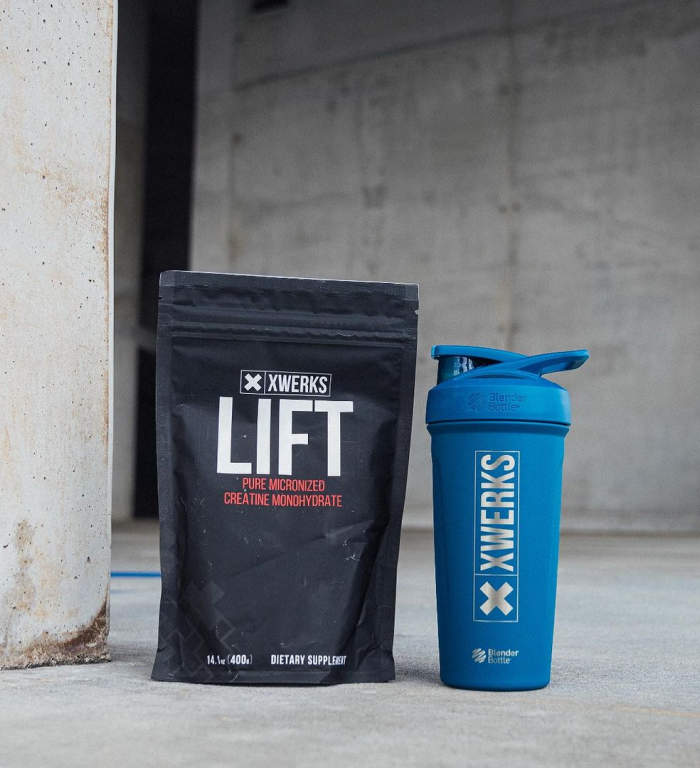
Stick with monohydrateThe most-researched form by a wide margin. Other forms (HCl, Kre-Alkalyn, ethyl ester) cost more without research evidence of superiority. XWERKS Lift is micronized monohydrate. Creatine gummies (XWERKS Build) deliver the same compound — choose based on convenience preference.
Timing
Any consistent timeDoesn't significantly matter. Morning, post-run, with dinner, in coffee — research doesn't support meaningful timing differences. Choose what produces best consistency. Many marathon runners take creatine in their post-run protein shake.
Hydration
Maintain adequate intakeCreatine modestly increases intracellular water needs. Marathon runners already hydrate well during training; standard fluid intake supports creatine use without a specific increase. Hot weather training requires the usual elevated hydration regardless of creatine status — see our hot weather training supplementation guide.
When creatine matters most for marathon runners
Peak training blocks (60-80+ mile weeks)
The window where creatine's recovery benefits matter most. High-volume weeks combined with quality sessions produce substantial muscle damage and inflammatory load. Creatine supports faster between-session recovery and helps you string together more consistent quality across weeks. Particularly valuable in weeks 8-14 of a typical marathon block when accumulated fatigue is highest.
Caloric deficit cycles
Marathon runners often run substantial caloric deficits during base-building and pre-race periods (intentional or unintentional). Creatine plus adequate protein supports muscle preservation during these periods.
Worth naming the risk here: chronic under-fuelling in endurance sport is a genuine problem, associated with bone stress injuries, hormonal disruption, and long-term performance decline. No supplement fixes an energy deficit. If you're consistently losing weight during a training block or your performance is going backwards, that's a nutrition and medical conversation, not a supplement one.
Aging marathoners (40+)
Older runners face accelerated muscle loss with high-volume training plus age-related anabolic decline. Creatine becomes increasingly valuable for muscle preservation, recovery, and cognitive function. Many of the strongest benefits documented in research occur in older athlete populations.
Race week — but not race day
Continue normal creatine dose during taper week. Don't suddenly increase or decrease — the saturation has built up over weeks and disruption serves no purpose. Race day: take your normal creatine dose at your normal time. No race-day-specific creatine protocols are needed.
When creatine matters less
Recreational marathoners running 25-40 miles per week
Lower training volumes produce less muscle damage and recovery demand. Creatine still provides benefits but the magnitude is smaller relative to higher-mileage athletes. Still worth taking; just less critical.
Marathoners with elite weight requirements
Elite competitors with strict weight management protocols and goal race weights may legitimately weigh the small water weight trade-off. If you're at a goal racing weight where 2 lbs would meaningfully affect performance, discuss it with your coach.
Runners with kidney disease or specific medical conditions
Healthy marathon runners can use creatine without kidney concerns — long-term research supports safety. Runners with pre-existing kidney conditions should consult their physician before taking any supplement.
The marathon runner's complete supplement framework
The evidence-based marathon stack
• Creatine monohydrate (3-5g daily): XWERKS Lift for powder, Build for gummies. The performance and recovery foundation most marathon runners skip.
• Whey protein (1.4-1.8g/kg daily): XWERKS Grow. Higher than general population recommendations due to high training volume. See our protein for marathon runners guide.
• Carbohydrate fueling (Cluster Dextrin during long runs): XWERKS Motion for sustained intra-run energy. See our carbs for marathon runners guide.
• Pre-workout (harder sessions, race day): XWERKS Ignite with moderate caffeine. See our pre-workout for marathon runners guide.
• Vitamin D3 (2,000-4,000 IU): Bone health, immune function, recovery
• Omega-3 EPA+DHA (2-3g daily): Supports management of training-induced inflammation
• Iron (only if indicated by ferritin testing): Critical for endurance performance and runners are at higher risk of deficiency — but iron should not be supplemented blind. Excess iron is harmful. Test first, supplement under guidance.
• Magnesium glycinate (200-400mg evening): Sleep, muscle function, recovery
Common questions about creatine and marathon running
Will creatine make me slower?
The 1-2 lb water weight gain carries a theoretical pace cost of a few seconds per mile. The benefits — faster recovery, better late-race effort, cognitive support, muscle preservation — typically more than offset this. Most marathon runners who use creatine through a full training block report better training quality and equivalent or better race performance.
Should I cycle off creatine before my marathon?
No. Cycling off doesn't provide benefits and may produce a small recovery decrement during taper. Continue normal dosing through taper and race day.
Should I take creatine during my marathon?
No. Creatine doesn't have acute mid-race effects — it works through chronic saturation. Don't try to load or take extra creatine in the days before or during a race.
Will creatine cause cramping?
No good evidence supports this concern. Some older sports folklore associated creatine with cramping; research has consistently failed to support it. Cramping during marathons is more commonly associated with fatigue, pacing, and electrolyte or hydration status — see our hot weather supplementation guide.
Will creatine affect my hydration during long runs?
Marginal effect. Creatine modestly increases intracellular water needs, which means slightly higher baseline hydration requirements. For marathon runners already practicing good hydration, no specific adjustment is needed beyond maintaining your usual intake.
How long until I notice benefits?
Subjective recovery improvements often appear in 2-4 weeks (better between-session feel, more consistent quality). Saturation completes in 3-4 weeks at 5g daily. Performance benefits build gradually over months as you stack better training quality on a saturated baseline.
Should female marathon runners take creatine?
Yes. Research in women documents the same core benefits. Particularly relevant for perimenopausal and postmenopausal runners, where bone density support and muscle preservation become more critical. See our creatine for women guide.
The Bottom Line
Creatine has documented benefits for marathon runners — recovery from high-volume training, late-race anaerobic effort, muscle preservation, cognitive function, and bone density support. The "creatine is for lifters" framing is outdated and incomplete.
The water weight concern is overstated. 1-2 lbs of intracellular water over 2-3 weeks, with a theoretical pace cost of a few seconds per mile that the recovery and performance benefits typically more than offset.
Dose: 3-5g creatine monohydrate daily, scaled to body weight. No loading phase needed — skipping it produces less water weight gain. Same dose every day: training days, rest days, race day.
When it matters most: peak training blocks (60-80+ mile weeks), caloric deficit cycles, aging marathon runners (40+), and race week — where the instruction is simply to change nothing.
Skip: loading phases, exotic creatine forms, "endurance-specific" creatine products, and the assumption that creatine is only for lifters. Also skip counting on a running economy benefit — that claim is the weakest one in the category.
Dig deeper: protein for marathon runners · carbs for marathon runners · pre-workout for marathon runners · creatine for women