Creatine Neuroprotective Effects: What the Research Actually Shows
TL;DR
- Creatine has demonstrated neuroprotective effects in research on Parkinson's disease, Huntington's disease, ALS, traumatic brain injury, and Alzheimer's models — though clinical evidence varies by condition.
- The mechanism: creatine supports mitochondrial function and ATP production in stressed neurons, helping prevent the energy crisis that drives neurodegeneration.
- Strongest clinical evidence is in traumatic brain injury (Sakellaris 2006: improved recovery in pediatric TBI) and depression augmentation (Lyoo 2012: enhanced SSRI response in women).
- Standard dose: 5g daily for general neuroprotection. Higher doses (10-20g) used in clinical trials for specific conditions, under medical supervision.
Creatine has emerged as one of the most promising candidates for neuroprotection in research on neurodegenerative disease. The mechanism is straightforward: creatine supports mitochondrial function and ATP production in neurons, helping prevent the energy crisis that drives cell death in conditions like Parkinson's, Huntington's, ALS, traumatic brain injury, and Alzheimer's. Clinical evidence varies by condition — strongest for traumatic brain injury (Sakellaris 2006) and depression augmentation (Lyoo 2012), more preliminary for chronic neurodegenerative diseases. The standard 5g daily dose used for muscle building also provides general neuroprotective benefits. Higher doses (10-20g) have been used in clinical trials for specific conditions, but require medical supervision.
The mechanism: how creatine protects neurons
To understand creatine's neuroprotective effects, you have to understand how neurons die in neurodegenerative diseases. Most neurodegeneration shares common features:
Mitochondrial dysfunction. Damaged mitochondria can't produce enough ATP, leaving neurons in chronic energy deficit.
Oxidative stress. Failing mitochondria produce excess reactive oxygen species (ROS) that damage cellular structures.
Calcium dysregulation. Without adequate ATP, neurons can't pump calcium properly, leading to toxic calcium accumulation that triggers cell death pathways.
Apoptosis (programmed cell death). The combination of energy crisis, oxidative damage, and calcium dysregulation eventually triggers cell death programs.
Creatine intervenes at multiple points in this cascade:
1. ATP buffering through phosphocreatine
Creatine is stored in cells as phosphocreatine. When ATP is consumed (becoming ADP), phosphocreatine donates a phosphate group to regenerate ATP — providing a rapid energy buffer. In neurons under stress, this buffering capacity helps maintain ATP levels long enough for cells to survive transient energy crises.
2. Mitochondrial membrane stabilization
Creatine has been shown to stabilize the mitochondrial membrane and reduce the opening of the mitochondrial permeability transition pore (mPTP) — a key event in apoptosis. Stabilizing this pore prevents the release of cytochrome c and other pro-apoptotic factors that trigger neuronal death.
3. Antioxidant effects
Creatine has demonstrated antioxidant activity, both directly (scavenging some ROS) and indirectly (supporting mitochondrial efficiency, which reduces ROS production at the source). This helps prevent the oxidative damage that accumulates in neurodegeneration.
4. Calcium homeostasis support
Maintaining ATP levels supports proper function of calcium pumps that prevent toxic calcium accumulation. This is one of the most critical mechanisms — calcium dysregulation is a final common pathway in many forms of neuronal death.
The clinical evidence by condition
Traumatic Brain Injury (TBI) — Strongest Clinical Evidence
Sakellaris et al. 2006 conducted a randomized trial in children and adolescents with traumatic brain injury, finding that creatine supplementation (0.4g/kg/day for 6 months) significantly improved recovery outcomes — including reduced post-traumatic amnesia, faster recovery of consciousness, fewer headaches, less dizziness, and better disability scores compared to placebo.
The proposed mechanism: TBI causes acute disruption of brain energy metabolism, and creatine helps restore mitochondrial function and ATP production during recovery.
Practical implication: Creatine is increasingly being studied and recommended for concussion recovery and post-concussive syndrome. Athletes, military personnel, and others at risk of head injury may benefit from baseline creatine supplementation as well as elevated doses during recovery from concussion.
Depression — Promising Evidence, Particularly in Women
Lyoo et al. 2012 conducted a randomized trial of creatine augmentation (5g daily) in women with major depressive disorder taking escitalopram (Lexapro). The creatine group showed significantly faster and greater improvement in depression scores compared to placebo + SSRI.
The mechanism: depression has been linked to reduced brain energy metabolism and mitochondrial dysfunction. Creatine appears to address these underlying deficits, particularly in women (who have lower baseline brain creatine than men).
Practical implication: Creatine may be a useful adjunct for depression treatment, particularly in women on SSRIs. This isn't a replacement for medication or therapy — but it's a low-cost, low-risk addition with emerging evidence of benefit.
Parkinson's Disease — Mixed But Mechanistically Sound
Multiple trials have investigated creatine for Parkinson's disease. The largest (Long-term Study 1, NIH-funded, ~1,700 participants) was halted early for futility — creatine didn't significantly slow disease progression compared to placebo. However, smaller trials and meta-analyses suggest modest benefits on motor symptoms and quality of life.
Why mixed results? Likely because Parkinson's pathology involves multiple mechanisms beyond just mitochondrial dysfunction (alpha-synuclein aggregation, dopaminergic neuron loss, etc.). Creatine addresses one piece of a complex puzzle.
Practical implication: Creatine isn't a Parkinson's treatment, but it's safe to use in Parkinson's patients and may provide modest benefits on top of standard care. Worth discussing with a neurologist.
Huntington's Disease — Some Evidence
Huntington's disease involves significant mitochondrial dysfunction in vulnerable neurons. Multiple trials have shown creatine reduces oxidative stress markers and may modestly slow disease progression in early-stage Huntington's. The CREST-E trial (large RCT of 8g/day creatine in early Huntington's) was halted early for futility on primary endpoints, though some secondary measures showed benefit.
Practical implication: Mixed evidence. Creatine may have modest benefits in early-stage Huntington's, particularly for symptom management. Not a disease-modifying treatment.
ALS (Amyotrophic Lateral Sclerosis) — Limited Benefit
Multiple trials of creatine in ALS have shown disappointing results — modest improvements in some measures but no significant impact on disease progression or survival. The neuronal damage in ALS appears too rapid and severe for creatine to meaningfully intervene.
Practical implication: Limited role for creatine specifically as ALS treatment. May still have value as a general nutritional support.
Alzheimer's Disease — Promising but Preliminary
Animal studies and small human trials suggest creatine may support cognitive function and reduce amyloid burden in Alzheimer's models. The brain creatine deficit observed in Alzheimer's is consistent with the broader "energy crisis" hypothesis of the disease.
Clinical trials in established Alzheimer's are limited but ongoing. Creatine's role may be more in prevention (maintaining brain energy metabolism in midlife) than treatment of established disease.
Practical implication: Insufficient clinical evidence to recommend creatine specifically for Alzheimer's treatment. Reasonable as part of a broader brain health strategy in adults at elevated risk.
Stroke and Cerebral Ischemia — Animal Evidence Strong
Animal studies consistently show creatine pre-treatment reduces brain damage from induced stroke and cerebral ischemia. Human clinical evidence is limited, but the mechanism (energy buffering during oxygen deprivation) is compelling.
Practical implication: Creatine may provide some baseline neuroprotection against future cerebrovascular events. Consistent supplementation in midlife may reduce stroke-related brain damage if a stroke occurs.
Dosing for neuroprotective effects
General neuroprotection / prevention: 5g daily of creatine monohydrate. The same dose used for muscle building. Brain creatine accumulates over 4-8 weeks of consistent supplementation.
Higher doses for specific conditions: Clinical trials have used 8-20g daily for conditions like Parkinson's, Huntington's, and traumatic brain injury. These higher doses appear safe for extended periods but should be discussed with a physician for specific conditions.
Pediatric TBI dosing: Sakellaris used 0.4g/kg/day, which would be roughly 30g daily for a 75kg adult. This is significantly higher than typical adult supplementation.
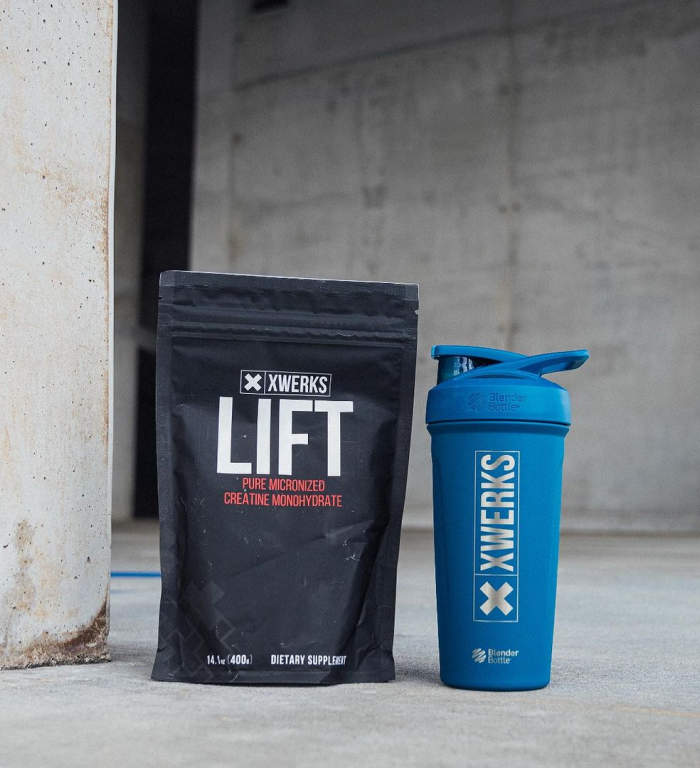
Form: Creatine monohydrate. The most studied form with the strongest evidence base. Don't waste money on "advanced" forms — research consistently shows they're no more effective. XWERKS Lift uses micronized monohydrate.
Timing: Doesn't matter for neuroprotective effects. Take consistently every day; brain creatine accumulates and reaches steady state.
Who should consider creatine for brain health
Athletes in contact sports. Football, hockey, MMA, rugby, soccer (heading), and other sports with concussion risk. Baseline creatine supplementation may reduce TBI severity if a concussion occurs.
Military personnel. Risk of blast injury and TBI. Creatine is being studied as a baseline supplementation strategy for military populations.
Adults with family history of neurodegeneration. Family history of Alzheimer's, Parkinson's, or other neurodegenerative conditions. Creatine is a low-risk addition to a comprehensive brain health strategy.
Adults with depression or treatment-resistant depression. Particularly women on SSRIs. Creatine augmentation may enhance treatment response. Discuss with prescribing physician.
Older adults. Aging brains have reduced creatine stores and impaired energy metabolism. Creatine supports cognitive function in older adults and may reduce neurodegenerative risk.
Vegetarians and vegans. Lower baseline brain creatine due to absence of dietary creatine. May see larger benefits from supplementation than omnivores.
Anyone serious about long-term brain health. Creatine is one of the most evidence-supported, lowest-risk supplements for cognitive aging. Reasonable addition to a brain health strategy starting in midlife.
Important caveats
To be honest about limitations:
Creatine is not a treatment for neurodegenerative diseases. The clinical evidence for treating established Parkinson's, Huntington's, ALS, or Alzheimer's is mixed at best. Don't replace medical treatment with creatine.
Effects are likely larger in prevention than treatment. Maintaining brain energy metabolism in midlife appears more impactful than trying to rescue neurons that are already dying.
Effects are subtle. Don't expect dramatic cognitive transformation from creatine. Expect modest improvements in mental fatigue resistance, slight memory improvements (particularly under stress), and long-term metabolic support.
Combine with other brain health interventions. Sleep, exercise, omega-3s, Mediterranean diet, social engagement, cognitive challenge, stress management. Creatine is one component of a comprehensive approach.
The Bottom Line
Creatine has demonstrated neuroprotective effects across multiple conditions — traumatic brain injury, depression, Parkinson's, Huntington's, and Alzheimer's models — through mitochondrial support and ATP buffering in stressed neurons.
Strongest clinical evidence: traumatic brain injury (Sakellaris 2006: improved recovery in pediatric TBI) and depression augmentation in women (Lyoo 2012: enhanced SSRI response).
Standard dose 5g daily for general neuroprotection. Higher doses (10-20g) used in clinical trials for specific conditions under medical supervision.
Best as prevention, not treatment. Maintaining brain energy metabolism through midlife appears more impactful than trying to rescue established neurodegeneration. Combined with sleep, exercise, omega-3s, and Mediterranean diet, creatine is one of the most rational additions to a long-term brain health strategy.
5g of Daily Brain Insurance
XWERKS Lift — micronized creatine monohydrate, 5g per scoop, 80 servings per bag. The most studied form for both muscle and brain benefits, at the dose used in research.
SHOP LIFT →Further Reading
Creatine for Cognitive Function and Aging
Best Supplements for Healthy Aging Men
Sarcopenia Prevention Supplements
Best Supplements for Men Over 50
References
1. Sakellaris G, et al. Prevention of complications related to traumatic brain injury in children and adolescents with creatine administration: an open label randomized pilot study. J Trauma. 2006;61(2):322-329.
2. Lyoo IK, et al. A randomized, double-blind placebo-controlled trial of oral creatine monohydrate augmentation for enhanced response to a selective serotonin reuptake inhibitor in women with major depressive disorder. Am J Psychiatry. 2012;169(9):937-945.
3. Hersch SM, et al. The CREST-E study of creatine for Huntington disease: a randomized controlled trial. Neurology. 2017;89(6):594-601.
4. Bender A, Klopstock T. Creatine for neuroprotection in neurodegenerative disease: end of story? Amino Acids. 2016;48(8):1929-1940.
5. Forbes SC, et al. Effects of creatine supplementation on brain function and health. Nutrients. 2022;14(5):921.
6. Kreider RB, et al. International Society of Sports Nutrition position stand: safety and efficacy of creatine supplementation in exercise, sport, and medicine. J Int Soc Sports Nutr. 2017;14:18.