

TL;DR
- Pre-workout for marathon runners is fundamentally different from pre-workout for lifters or sprinters — GI tolerance over 3-5 hours, sustained energy, and avoiding ingredients that elevate heart rate unnecessarily matter more than maximum stimulation.
- Target profile: moderate caffeine (150-300mg, scaled to body weight), citrulline (3-6g), L-tyrosine (1-2g), low beta-alanine (under 2g per serving).
- Race-day strategy: 3-5mg caffeine per kg body weight, taken 45-60 minutes before start. Caffeine peaks around 30-90 minutes — covering the early miles when you need to lock into goal pace.
- Critical rule: test everything in training, especially long runs that simulate race conditions. Race day is not for experimentation.
- Skip: mega-stim products (400mg+ caffeine), high beta-alanine (over 2g per serving), niacin-flush products, fat-burner pre-workouts with secondary stimulants, and anything new in the last 4 weeks before race day.
Pre-workout for marathon runners requires a different approach than pre-workout for any other sport. The 26.2-mile distance and 3-5 hour duration creates constraints that change which ingredients matter and which become liabilities. GI tolerance is the dominant variable — a pre-workout that's perfect for an hour of lifting can produce mid-race GI disaster. Sustained cardiovascular load means mega-stim caffeine compounds the heart rate elevation already occurring from running. Mental performance over hours matters more than acute stimulation. And the pre-race meal interaction becomes critical — combining unfamiliar pre-workout with race-day nerves and pre-race eating produces unpredictable outcomes. This guide covers what the research supports, training-day versus race-day protocols, what to test, and how to think about this differently than a lifter would.

What makes marathon pre-workout different
Sustained 3-5 hour effort. Most pre-workouts are designed for 30-90 minute sessions. The marathon distance creates challenges that don't exist for shorter efforts: caffeine's roughly 5-hour half-life means mid-race caffeine levels are still meaningful; beta-alanine tingling that lasts an hour becomes tiresome across four; and electrolyte shifts that don't matter in short sessions become critical.
GI tolerance under maximum stress. Running redirects blood away from the gut more than most endurance activities. Ingredients tolerated fine while lifting can produce GI urgency at mile 18. Beta-alanine, high citrulline doses, multiple stimulants, and niacin all carry higher GI risk for runners than for other athletes.
Race-day pre-meal complications. Most marathon runners eat 2-3 hours before start. Adding pre-workout to that meal creates interactions that need testing — pre-workout on top of race nerves and an unfamiliar breakfast can produce distress nothing in training predicted.
Cardiovascular sustainability vs acute output. Marathon pace is submaximal but sustained. Heart rate elevation that's manageable for 30 minutes compounds unhelpfully across four hours.
Cognitive performance across hours. Marathon racing involves continuous decision-making — pacing, hydration, fueling, responding to other runners. Moderate caffeine and tyrosine support this; mega-stim formulas that produce jitters work against it.
The marathon-relevant ingredient profile
Caffeine — the primary ergogenic
3-5mg per kg body weight for marathonThe most-researched performance supplement for endurance. The ISSN position stand on caffeine documents meaningful endurance improvements at clinical doses. For marathon runners the sweet spot is 3-5mg/kg — slightly conservative against the 3-6mg/kg general recommendation, to avoid sustained heart rate elevation across hours of effort.
| Runner weight | 3mg/kg (conservative) | 5mg/kg (upper) |
|---|---|---|
| 130 lb / 59 kg | 175mg | 295mg |
| 150 lb / 68 kg | 205mg | 340mg |
| 165 lb / 75 kg | 225mg | 375mg |
| 180 lb / 82 kg | 245mg | 410mg |
A practical way to hit these numbers without committing to a high-caffeine product: a moderate pre-workout (150-200mg) plus a cup of coffee earlier in the morning reaches the middle of the range while keeping the formula itself conservative.
L-citrulline — blood flow support
3-6g per servingSupports blood flow and oxygen delivery during sustained aerobic work. The research base is stronger for resistance training than endurance, so treat this as well-tolerated and plausible rather than proven for marathon performance. For runners, 3g works well; pushing to 8g clinical doses sometimes produces GI issues during long efforts.
L-tyrosine — focus across hours
1-2g per servingParticularly relevant for marathons. The cognitive demands of pacing, fueling decisions, and tactical responses across hours benefit from sustained cognitive support, and Jongkees et al. 2015 documents benefits for cognitive performance specifically under stress and fatigue. Effects are subtle.
Beta-alanine — keep it low for marathons
Under 2g per serving · loaded chronically to 3-6g dailyBeta-alanine buffers hydrogen ion accumulation and primarily benefits 1-4 minute high-intensity efforts. Its application to a marathon is limited — sustained submaximal pace doesn't generate the accumulation beta-alanine addresses.
The bigger marathon issue is practical: doses over 2g per serving produce tingling lasting an hour or more, which is unpleasant across a long run. The smart approach is a low per-serving amount in your pre-workout combined with separate chronic daily loading over 4-6 weeks, which builds the benefit for surges and the final kick without race-day discomfort.
Rhodiola rosea (optional)
200-500mg standardized extractAdaptogenic herb with research support for reduced perceived fatigue, particularly under stress. Reasonable inclusion for runners managing high training volumes plus race-day stress, though the evidence is moderate rather than strong.
Race-day protocol
Caffeine peaks in blood plasma roughly 30-90 minutes after ingestion. For marathon racing you want that peak arriving during the early miles, when locking into goal pace matters most.
3 hours before: Pre-race meal (75-125g carbs, low fiber, low fat). Begin hydration with electrolytes.
45-60 minutes before start: Pre-workout with a small amount of water.
30 minutes before: Final hydration, restroom, light dynamic warm-up.
Race start: Caffeine ramping toward peak through the opening miles.
Mid-race top-up (optional): Some runners take a caffeinated gel around the 16-mile mark for closing-mile focus. Test it in training before relying on it — and count it toward your total caffeine, not on top of it.
What not to do on race day: don't try a new product, don't exceed the dose you've tested, don't add unfamiliar caffeine sources, and don't pile on stimulants at the start line because you feel flat — caffeine taken five minutes before the gun won't peak until you're miles in.
Training-day protocol
Quality sessions (intervals, tempo, race-pace work)
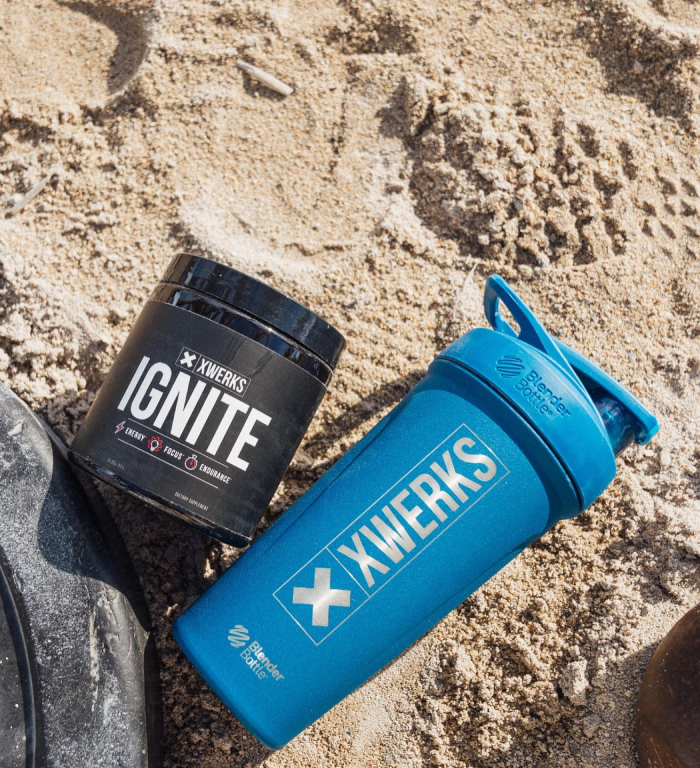
Full pre-workout dose 30-45 min before. Caffeine, citrulline, and tyrosine support the high-output efforts that drive fitness gains. XWERKS Ignite at 150mg works well; add coffee earlier to reach the upper range for your hardest sessions.
Long runs
Half dose or full dose depending on tolerance and intensity. The longer the run, the more conservative the caffeine. For 18-22 milers, 100-200mg is appropriate.
Long runs are also your critical testing ground. Use your planned race-day pre-workout, with your planned race-day breakfast, on several long runs before race day. This is where GI surprises get found and eliminated.
Easy and recovery runs
Skip pre-workout entirely. Recovery runs are sub-threshold; the caffeine just costs you sleep quality without providing benefit. Coffee or nothing.
Taper week
Match your established patterns. Don't stop a pre-workout you've been using consistently — abrupt changes affect race-day response. Continue the normal protocol; just train less.
What to avoid
• Mega-stim pre-workouts (400mg+ caffeine). Compound cardiovascular load across hours. Benefit plateaus well below this; additional caffeine adds risk without return.
• High beta-alanine (over 2g per serving). Tingling across marathon distance is genuinely unpleasant, and higher doses raise GI risk during sustained running.
• Niacin-flush products. Skin flushing during a marathon, particularly on a warm day, is uncomfortable and unhelpful for heat management.
• Fat-burner pre-workouts with yohimbine, synephrine, or higenamine. Secondary stimulants compound heart rate elevation and anxiety. Higenamine is WADA-banned.
• Sugar-laden pre-workouts (30g+ carbs). Blood sugar spike-and-crash patterns in the opening miles when you should be settling into pace.
• High-dose glycerol. Fine for lifting; can cause GI urgency during long runs.
• "Nootropic" pre-workouts with racetams or unusual compounds. Phenylpiracetam and similar are prohibited under WADA-aligned rules. If you're racing anywhere with testing — championships, elite fields, some qualifiers — verify against the current prohibited list yourself rather than trusting an article.
• Anything new in the final 4 weeks. Race-day GI distress almost always traces to a recent change. Lock the protocol in early and don't experiment during the taper.
Testing protocol — the part that actually matters
The most important pre-workout decision isn't which product — it's whether you've tested it enough under race-simulating conditions.
8+ weeks out: Test on hard sessions and 12-16 mile long runs. Start at half a scoop and work up. Note GI issues, jitters, and sleep disruption.
4-8 weeks out: Test the exact race-day protocol — same pre-workout, same pre-race meal, same timing, on 18-22 mile runs with marathon-pace segments. Replicate race morning as closely as you can.
Final 2 weeks: No new products, no changes. Continue what you've tested.
Race week: Everything locked. Race day uses the protocol that worked in testing.
Pre-workout vs intra-race fuel
Pre-workout (45-60 min before start): caffeine, citrulline, tyrosine. Acute focus and output support before you start.
Intra-race fuel (during): carbohydrate (commonly 60-90g/hour for marathon, built up through training) plus electrolytes for sustained energy and hydration — XWERKS Motion and similar products.
Don't combine the two functions. Pre-workouts shouldn't carry heavy carb or electrolyte loads, and intra-race products shouldn't carry significant caffeine, since multiple servings across a race stack up quickly. Deep dive in our carbs for marathon runners guide.
Race morning timeline
24 hours before
Reduce fiber and fat; emphasise familiar carb-heavy foods. Hydrate with electrolytes. Skip alcohol. Lay everything out. Aim for good sleep, while accepting that race-eve sleep is often poor — the night two evenings before matters more.
3 hours before
Pre-race meal: 75-125g carbs (oatmeal, toast, bagel, banana), modest protein, low fat, low fiber. 16-24 oz fluid with electrolytes. Coffee if it's part of your normal routine.
45-60 minutes before
Pre-workout with 8-12 oz water. Begin gentle warm-up. Restroom.
30 minutes before
Final hydration top-up. Dynamic warm-up. Settle into your pacing plan.
The Bottom Line
Marathon pre-workout is a different problem than pre-workout for any other sport. GI tolerance across hours and cardiovascular sustainability matter more than maximum stimulation.
Target: moderate caffeine (3-5mg/kg), citrulline 3-6g, L-tyrosine 1-2g, beta-alanine under 2g per serving.
Race-day timing: 45-60 minutes before start, so caffeine peaks through the opening miles.
Skip: mega-stim formulas, high beta-alanine, niacin flush, fat-burner stimulant stacks, sugar-heavy pre-workouts, and anything new in the final four weeks.
Test rigorously. The product matters less than whether you've run your exact race-day protocol on several long runs first.
Dig deeper: creatine for marathon runners · protein for marathon runners · carbs for marathon runners · pre-workout for running