Creatine for Cognitive Function and Aging: What the Research Shows
TL;DR
- Creatine isn't just for muscles — your brain uses creatine for ATP production, and supplementation can improve memory, processing speed, and mental fatigue resistance, particularly in older adults.
- The cognitive benefits of creatine are most pronounced in vegetarians, sleep-deprived individuals, and adults over 60 — populations with lower baseline brain creatine stores.
- Standard dose for cognitive benefits: 5g per day, same as for muscle. Some research suggests higher doses (10g) may produce greater brain effects, but evidence is preliminary.
- Creatine has potential neuroprotective effects — research in Parkinson's, Alzheimer's, and traumatic brain injury models shows promise, though clinical evidence is still developing.
Creatine is best known as a muscle-building supplement, but your brain uses creatine just as much as your muscles do — both rely on creatine to regenerate ATP (the body's energy currency). Research over the past two decades has shown that creatine supplementation can improve memory, processing speed, and mental fatigue resistance, with the most pronounced effects in older adults, vegetarians, and sleep-deprived individuals. The standard 5g per day dose used for muscle building also delivers cognitive benefits. While the neuroprotective evidence (Alzheimer's, Parkinson's, traumatic brain injury) is still developing, the existing data is strong enough that creatine has emerged as one of the most promising supplements for cognitive aging.
How creatine works in the brain
Creatine plays the same role in your brain that it plays in your muscles: it serves as a rapid energy buffer for ATP regeneration. Brain cells (neurons and glial cells) have extraordinarily high energy demands — your brain accounts for roughly 20% of your body's resting energy expenditure despite being only 2% of body weight.
When neurons fire, they consume ATP rapidly. Creatine, stored in brain tissue as phosphocreatine, donates a phosphate group to ADP to regenerate ATP — providing a fast energy buffer that supports continued neuronal activity. Without adequate creatine, brain cells run into energy bottlenecks during demanding cognitive tasks, particularly during stress, sleep deprivation, or aging.
The brain synthesizes some of its own creatine (it has the necessary enzymes), but it also imports creatine from the bloodstream through specialized transporters. Dietary creatine — primarily from red meat and fish, or from supplementation — increases brain creatine stores, particularly in regions involved in memory and executive function (hippocampus, prefrontal cortex).
The research on creatine and cognitive function
Memory and intelligence
Multiple controlled trials have shown creatine supplementation improves working memory and intelligence test performance, particularly under demanding conditions. Rae et al. 2003 (vegetarians, 5g/day for 6 weeks) found significant improvements in working memory and intelligence test scores. McMorris et al. 2007 found creatine supplementation reduced cognitive decline associated with sleep deprivation.
Mental fatigue and cognitive demand
Creatine appears to be most effective when the brain is under stress — sleep deprivation, mental fatigue, hypoxia, or demanding cognitive tasks. Watanabe et al. 2002 found that creatine supplementation reduced mental fatigue during prolonged calculation tasks. The effect is consistent with creatine's role as an energy buffer: when ATP demand is high and supply is limited, creatine helps bridge the gap.
Older adults and cognitive aging
This is where creatine becomes particularly interesting for the over-50 demographic. McMorris et al. 2007 in older adults (76-year-old participants) found that creatine supplementation (20g/day for 7 days) significantly improved performance on tasks involving forward and backward number recall, spatial recall, and long-term memory.
Aging brains often show reduced creatine stores and impaired energy metabolism, which may contribute to age-related cognitive decline. Restoring brain creatine through supplementation appears to partially compensate for these changes. Multiple subsequent studies have confirmed cognitive improvements in older adults, particularly in tests requiring rapid mental processing.
Sleep deprivation
Sleep deprivation is one of the most common causes of cognitive impairment in modern life. Cook et al. 2011 found that creatine supplementation significantly attenuated cognitive impairment from 24 hours of sleep deprivation. The effect makes mechanistic sense: sleep deprivation impairs brain energy metabolism, and creatine provides additional energy buffering capacity.
Stress resilience
Creatine appears to support cognitive performance under various forms of stress — sleep loss, hypoxia, mental fatigue, and possibly emotional stress. Roitman et al. 2007 found that creatine supplementation improved depression symptoms in women with treatment-resistant depression, suggesting effects on mood-related brain energy metabolism. This is an area of active research.
Creatine for neuroprotection
Beyond enhancing cognitive performance in healthy people, creatine has shown neuroprotective effects in research on neurodegenerative diseases. The clinical evidence is still developing, but the mechanistic case is strong:
Alzheimer's and dementia
Brain creatine and energy metabolism are impaired in Alzheimer's disease. Animal studies have shown that creatine supplementation can reduce amyloid plaque burden and improve cognitive function in Alzheimer's models. Human clinical trials are limited but promising. The aging brain's reduced creatine status appears to be one component of the broader energy crisis seen in dementia.
Parkinson's disease
Multiple trials have investigated creatine for Parkinson's disease, with mixed but generally positive results. The largest trial (Long-term Study 1, NIH-funded) was halted early for futility, but smaller trials and meta-analyses suggest modest benefits on motor symptoms and disease progression. Creatine appears safe at high doses (10g+) in this population for extended periods.
Traumatic brain injury
Sakellaris et al. 2006 found that creatine supplementation in pediatric TBI patients improved recovery outcomes. The proposed mechanism: TBI causes acute disruption of brain energy metabolism, and creatine helps restore mitochondrial function and ATP production during recovery. Creatine is increasingly being studied as a potential intervention for concussion and post-concussive syndrome.
Depression
Several small trials have shown creatine supplementation improves depression symptoms, particularly in combination with SSRIs. The effect appears strongest in women, possibly related to lower baseline creatine stores in women compared to men. Lyoo et al. 2012 found that creatine augmentation of escitalopram improved treatment response in women with major depression.
Dosing creatine for cognitive benefits
The good news: the dose for cognitive benefits is the same as for muscle.
Standard dose: 5g per day, every day. Same as for muscle building. Take it consistently — timing doesn't matter (morning, with food, with a workout — all work).
Higher dose for brain effects: Some recent research suggests that 10g per day may produce greater brain creatine accumulation than 5g, particularly for cognitive applications. The evidence is still preliminary, but if you're specifically targeting cognitive benefits and not seeing what you expect at 5g, 10g is a reasonable upgrade with no known safety issues.
Loading phase: Optional and not necessary. You can either load (20g/day for 5-7 days, then 5g/day maintenance) for faster brain saturation, or just take 5g daily and reach steady state in 3-4 weeks. Most people skip the loading phase.
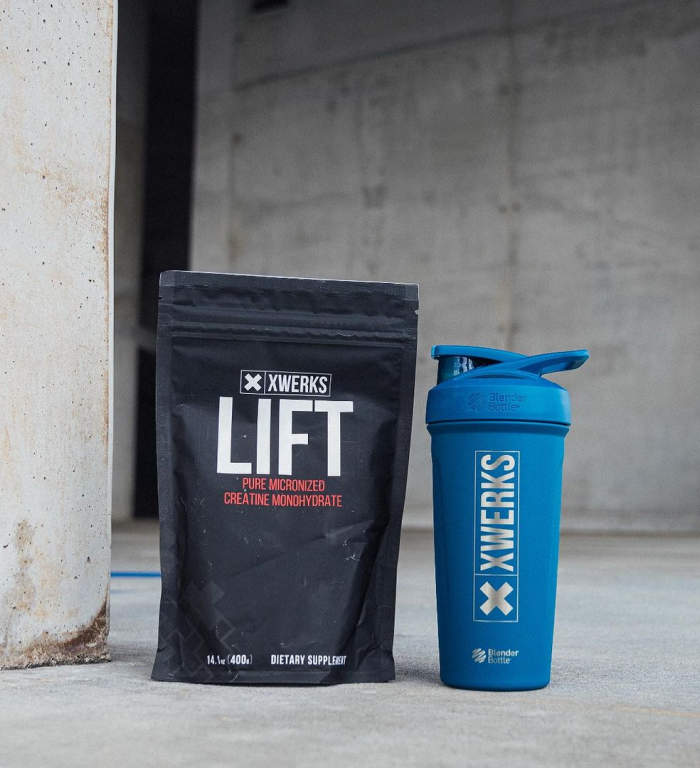
Form: Creatine monohydrate. The most studied form, the most affordable, and the most effective. Don't waste money on "advanced" creatine forms (HCL, ethyl ester, buffered) — research has consistently shown they're no more effective than monohydrate. XWERKS Lift uses micronized monohydrate for better solubility.
Consistency: Brain creatine accumulates over weeks. Don't expect to take creatine for 3 days and feel a cognitive transformation — give it 4-8 weeks of consistent daily use.
Who benefits most from creatine for cognition?
Adults over 50. Aging brains have reduced creatine stores and impaired energy metabolism. Creatine supplementation appears to partially compensate. This is one of the most evidence-supported applications.
Vegetarians and vegans. Lower baseline brain creatine due to absence of dietary creatine sources. Show the largest cognitive improvements from supplementation in research.
People with high cognitive demand jobs. Demanding mental work depletes brain ATP. Creatine helps maintain performance under sustained cognitive load.
People with chronic sleep deprivation. Sleep loss impairs brain energy metabolism. Creatine partially compensates and helps maintain cognitive function during sleep restriction.
Athletes recovering from concussion or TBI. Emerging evidence supports creatine's role in brain recovery after traumatic injury. Talk to a sports medicine doctor for individualized advice.
People with family history of neurodegeneration. While creatine is not a preventative treatment, it's a low-risk addition to a brain health strategy if you have concerns about cognitive aging.
Combining creatine with other brain health strategies
Creatine works best as part of a comprehensive cognitive health approach:
Sleep. 7-9 hours per night. Sleep is when the brain clears metabolic waste (via the glymphatic system) and consolidates memory. No supplement compensates for chronic sleep deprivation.
Exercise. Both aerobic and resistance training support brain health, BDNF (brain-derived neurotrophic factor), and cognitive function. The combination of exercise + creatine appears synergistic.
Omega-3 fatty acids. 2-3g of EPA+DHA daily supports brain cell membrane health, reduces neuroinflammation, and is associated with better cognitive aging.
Mediterranean-style diet. The most evidence-backed dietary pattern for cognitive health. Emphasizes vegetables, fruits, whole grains, fish, olive oil, nuts, and moderate dairy.
Cognitive engagement. Use it or lose it. Reading, learning new skills, social engagement, and mental challenges support cognitive reserve.
Stress management. Chronic stress accelerates cognitive aging. Meditation, exercise, time outdoors, and social connection help manage stress.
The Bottom Line
Creatine isn't just for muscles — it's for the brain too. Brain cells use creatine to regenerate ATP, and supplementation improves memory, processing speed, and mental fatigue resistance.
Benefits are largest in vegetarians, older adults, and sleep-deprived individuals — populations with lower baseline brain creatine stores.
Standard dose is 5g per day of creatine monohydrate (same as for muscle). Higher doses (10g) may produce greater brain effects, but evidence is preliminary.
Neuroprotective potential exists for Alzheimer's, Parkinson's, traumatic brain injury, and depression — though clinical evidence is still developing. Creatine is one of the most promising and lowest-risk supplements for cognitive aging.
5g of Brain-Boosting Creatine Daily
XWERKS Lift — micronized creatine monohydrate, 5g per scoop, 80 servings per bag. The most studied form of creatine for both muscle and brain benefits.
SHOP LIFT →Further Reading
Creatine Neuroprotective Effects
Best Supplements for Healthy Aging Men
Sarcopenia Prevention Supplements
Best Supplements for Men Over 50
References
1. Rae C, et al. Oral creatine monohydrate supplementation improves brain performance: a double-blind, placebo-controlled, cross-over trial. Proc Biol Sci. 2003;270(1529):2147-2150.
2. McMorris T, et al. Creatine supplementation, sleep deprivation, cortisol, melatonin and behavior. Physiol Behav. 2007;90(1):21-28.
3. Watanabe A, et al. Effects of creatine on mental fatigue and cerebral hemoglobin oxygenation. Neurosci Res. 2002;42(4):279-285.
4. Cook CJ, et al. Skill execution and sleep deprivation: effects of acute caffeine or creatine supplementation. J Int Soc Sports Nutr. 2011;8:2.
5. Sakellaris G, et al. Prevention of complications related to traumatic brain injury in children and adolescents with creatine administration. J Trauma. 2006;61(2):322-329.
6. Lyoo IK, et al. A randomized, double-blind placebo-controlled trial of oral creatine monohydrate augmentation for enhanced response to a selective serotonin reuptake inhibitor in women with major depressive disorder. Am J Psychiatry. 2012;169(9):937-945.
7. Forbes SC, et al. Effects of creatine supplementation on brain function and health. Nutrients. 2022;14(5):921.