TL;DR
- Basketball is a textbook repeated-sprint sport — hundreds of explosive efforts per game (sprints, jumps, cuts, drives) make it one of the most creatine-responsive team sports.
- Documented benefits: improved vertical jump, enhanced sprint performance, better repeated-sprint capacity, greater lean mass gains alongside strength training, and cognitive support under fatigue.
- Dose: 5g daily of creatine monohydrate. Every day, including game days and rest days. Saturates in 3-4 weeks.
- Creatine is permitted by the NBA, NCAA, and FIBA. For high school players, rules vary by state association and this is a decision for parents and a doctor, not something to start on your own.
Basketball is close to an ideal creatine-responsive sport. Movement-pattern research on elite players documents very high numbers of discrete high-intensity efforts per game — sprints, jumps, cuts, drives, rebound battles, defensive closeouts — with a change of activity every couple of seconds. Each explosive effort draws on the ATP-PCr system, which is precisely the system creatine supports. The research on creatine and basketball-relevant performance consistently documents benefits: improved vertical jump height, faster sprint times, better repeated-sprint capacity, greater lean mass gains from concurrent strength training, and cognitive support during sustained play. Dose: 5g of creatine monohydrate daily, every day — game days, rest days, off-season. No loading phase needed. For a basketball player at any level looking for a single high-value supplement decision, creatine is likely the best-supported choice available.

Why basketball responds so well to creatine
Repeated-sprint profile
Basketball's movement demands are textbook ATP-PCr repeated-sprint work: brief near-maximal efforts (sprints, jumps, cuts) separated by brief partial recoveries (walking, standing, set plays). Time-motion research on elite players documents around a thousand discrete movements per game with activity changing every couple of seconds — a large share of them high-intensity.
Vertical jump
Research on creatine and vertical jump performance consistently documents improvements in trained and recreational athletes. For basketball — where rebounding, shot blocking, and finishing depend on vertical — even small improvements matter.
Recovery between plays
Creatine supports faster phosphocreatine resynthesis between efforts. In a fast-paced game with limited bench time, that shows up as better effort quality on the 30th sprint compared to the first.
Muscle mass for physical play
Modern basketball is physical — post play, driving through contact, rebounding all benefit from muscle. Meta-analysed research consistently shows creatine combined with resistance training produces greater lean mass gains than training alone.
Cognitive function
Late-game basketball is cognitive as much as physical — reading the defense, decisions on the final possession, split-second choices on drives. Systematic review evidence supports creatine's cognitive benefits, with the clearest effects appearing under sleep deprivation and mental fatigue.
Dosing for basketball players
The simple protocol
5g creatine monohydrate daily, every dayMuscle stores saturate in 3-4 weeks. Take it at any consistent time — morning shake, post-practice drink, with dinner. Consistency matters more than timing. A loading phase (20g/day for 5-7 days) isn't necessary and produces a more noticeable water weight jump; skipping it gets you to the same place.
Form: creatine monohydrate
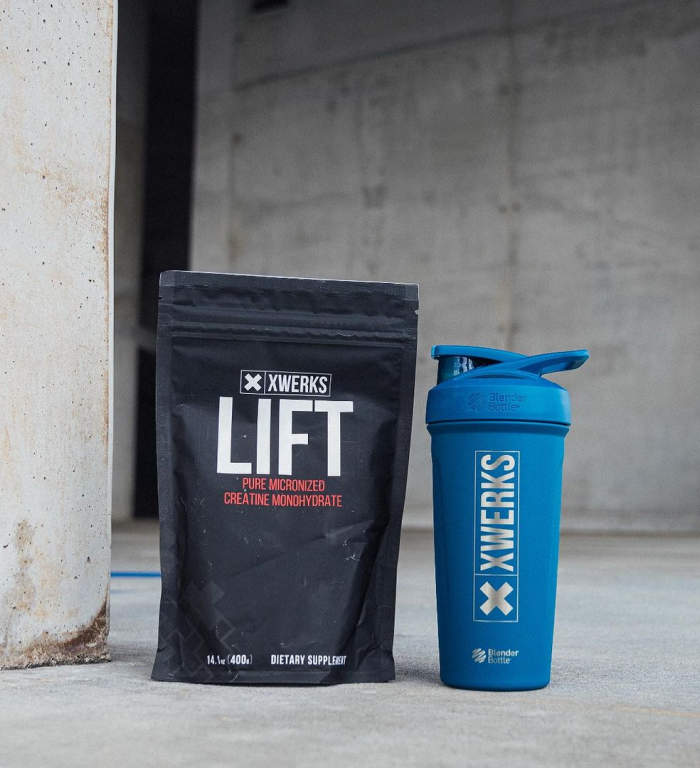
Stick with monohydrateThe most-researched form by a wide margin, and cheaper than the alternatives. XWERKS Lift provides 5g of micronized monohydrate per scoop.
Game days vs rest days
Same dose, every dayCreatine works through saturation, not an acute effect. There's no benefit to timing it around tip-off, and no reason to skip it on off days.
Addressing common concerns
"Will creatine make me gain weight?"
About 1-2 lbs of intracellular water — water inside muscle cells, not fat. For basketball this is generally a fine trade against the performance benefits. Some players notice feeling "fuller" for the first 2-3 weeks; that settles.
"Does creatine hurt my shooting?"
No evidence supports this. Creatine doesn't affect fine motor control, arm mechanics, or release. Muscle fullness doesn't meaningfully alter shooting form.
"I'm a guard — does it still help?"
Yes. Sprint speed, first-step explosiveness, and repeated high-intensity effort matter at every position. Guards benefit from the vertical improvements too, for finishing and contesting shots.
"Will creatine cause cramping or dehydration?"
Research has consistently failed to support this long-standing concern. Cramping in basketball is more closely associated with fatigue, conditioning, and hydration or electrolyte status than with creatine use. Maintain normal fluid intake — particularly in hot gyms and tournament weekends.
High school and youth players — read this part
Creatine is one of the most-studied supplements available and major position stands have not identified health concerns at standard doses in healthy adults. Evidence in adolescent athletes is more limited than in adults, which is the honest state of it.
What that means practically for a high school player:
• Talk to your parents and your doctor first. Not your teammates, not a forum, not this article. A physician who knows your health history is the right person to clear this.
• Check your state association's rules. High school federations differ — some require parental consent, some restrict what schools and coaches can provide or recommend. Your athletic director will know.
• Food and sleep come first. Most high school athletes have far more to gain from eating enough, sleeping 8-9 hours, and training consistently than from any supplement. Creatine doesn't compensate for missing those.
• Third-party tested products only. If it's cleared and you proceed, look for NSF Certified for Sport or Informed Sport certification.
The NCAA permits creatine but rules restrict what institutions may provide to athletes, so college players should check with their compliance and sports nutrition staff rather than assuming.
The basketball supplement stack
The core stack
• Creatine monohydrate: 5g daily — XWERKS Lift
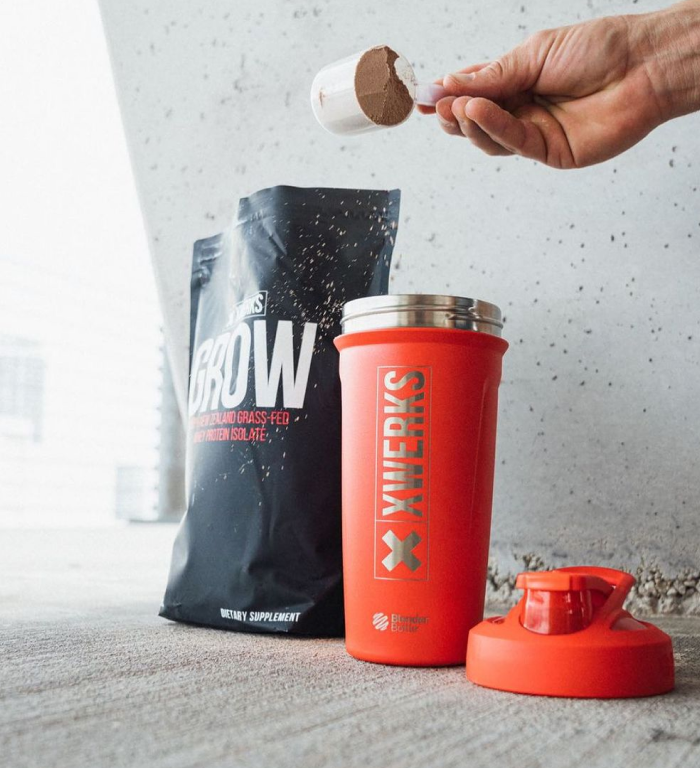
• Whey protein isolate: toward a 1.6-2.2g/kg daily target — XWERKS Grow
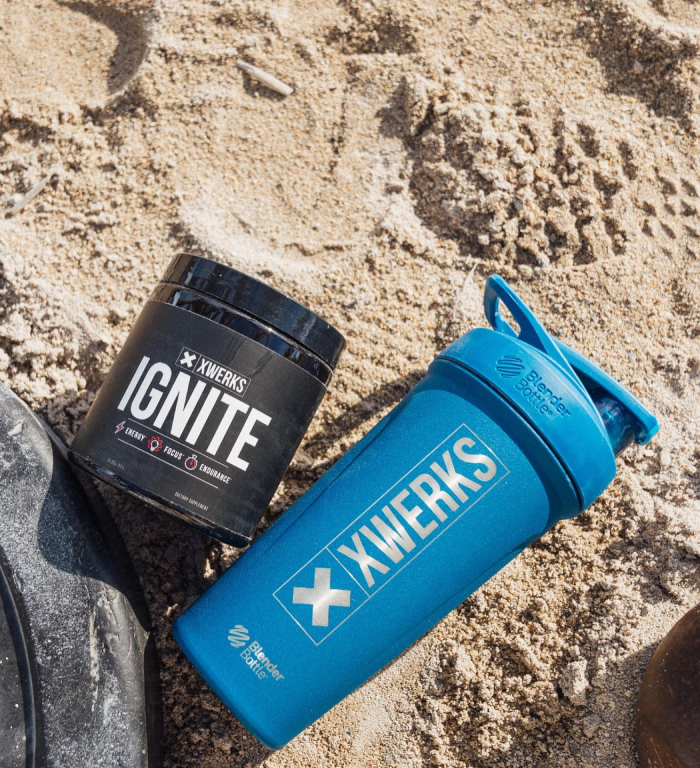
• Pre-workout: moderate-stim for games and hard practices — XWERKS Ignite
• Intra-game carbs and electrolytes: XWERKS Motion for long practices, tournaments, and hot gyms
• Foundation micronutrients: vitamin D3, omega-3s, magnesium — worth attention if intake or blood levels are low
Note that stimulant pre-workouts are a different conversation for minors than creatine is. Under-18 players should skip them.
The Bottom Line
Basketball is one of the most creatine-responsive team sports. Hundreds of repeated-sprint efforts per game make the ATP-PCr benefits directly applicable — vertical jump, sprint performance, repeated-sprint capacity, and lean mass.
Dose: 5g monohydrate daily, every day. Saturates in 3-4 weeks. No loading phase, no game-day timing tricks.
The 1-2 lb water gain is intracellular — inside muscle, not fat, and it doesn't affect your shot.
If you're in high school, this goes through your parents and your doctor first, and check your state association's rules. Food, sleep, and consistent training matter more than any supplement at that stage.