TL;DR
- Soccer's 90-minute repeated-sprint demand makes it one of the best-researched team sports for creatine. Multiple studies specifically on soccer players document improvements in sprint performance, jump height, and repeated sprint capacity.
- Eijnde et al. 2001 is the classic soccer-specific study — creatine supplementation produced measurable performance improvements in trained soccer players.
- Dose: 5g creatine monohydrate daily. Every day — saturation takes 3-4 weeks.
- Legal at all levels: FIFA, UEFA, NCAA, US Soccer, and professional leagues all permit creatine. Safe and effective for youth, collegiate, and professional players.
Soccer is among the most-researched team sports for creatine supplementation. The sport's physiological profile — 90+ minutes of sustained running punctuated by 150-250 discrete high-intensity efforts (sprints, jumps, challenges) — maps directly onto what creatine supports. Multiple studies on trained soccer players have documented performance improvements: Eijnde et al. 2001 found creatine improved repeated sprint and jump performance in elite soccer players; subsequent research has confirmed benefits across youth, collegiate, and professional populations. The mechanism: creatine enhances ATP regeneration for explosive efforts (sprints, shots, challenges), supports muscle power maintenance across 90 minutes, and aids recovery between matches during compressed schedules. Dose: 5g of creatine monohydrate daily, every day, indefinitely. Saturates muscle stores in 3-4 weeks. Creatine is permitted by FIFA, UEFA, NCAA, US Soccer, and all professional leagues — safe and effective for players at any level.
Why soccer responds well to creatine
Repeated-sprint profile across 90 minutes
Elite soccer match-play research documents 150-250 discrete high-intensity efforts per match — sprints, accelerations, jumps, tackles. Each effort draws on ATP-PCr reserves. Creatine supports faster regeneration between efforts, meaning the 200th sprint of the match looks more like the 20th.
Sprint speed and explosiveness
Research on soccer players consistently shows creatine improves 5m, 10m, and 20m sprint times — the exact distances that matter for beating defenders, closing down attackers, and winning 50/50 balls.
Vertical jump for aerial duels
Heading, aerial challenges, and goalkeeping all benefit from vertical jump performance. Creatine's documented vertical jump improvements apply directly.
Muscle mass for physical play
Modern soccer is increasingly physical — body duels, tackle challenges, shielding the ball. Creatine combined with resistance training supports greater lean mass gains than training alone.
Recovery between matches
Club schedules with midweek matches, international duty, and tournament formats demand rapid recovery. Creatine supports glycogen replenishment and reduces training-induced muscle damage markers.
Cognitive function late in matches
Late-match decisions — final-third passes, defensive positioning, finishing — depend on cognitive function under fatigue. Avgerinos 2018 documented creatine's cognitive benefits, particularly under fatigue and stress.
Soccer-specific research
Eijnde 2001 — the classic soccer study
Elite male soccer players supplementing with creatine showed improvements in repeated sprint performance and jump height compared to placebo. One of the first well-controlled studies specifically in soccer athletes. Since replicated across multiple research groups.
Youth soccer research
Subsequent studies have specifically examined youth and academy players, finding creatine produces similar performance benefits without adverse effects. Safe for athletes 14+ at standard dosing.
Female soccer players
Women's soccer research similarly documents creatine benefits. Creatine is not a male-only supplement — female athletes benefit through the same mechanisms and experience similar performance improvements.
Dosing protocol for soccer players
Standard dose: 5g daily
5g creatine monohydrate daily, every dayMatch days, training days, off-season — same dose. Creatine works through muscle saturation, which requires daily consistency. Saturates in 3-4 weeks without loading. If you want faster saturation before a tournament or season, consider a 5-7 day loading phase (20g/day split across 4 doses), then drop to 5g maintenance.
Form: creatine monohydrate
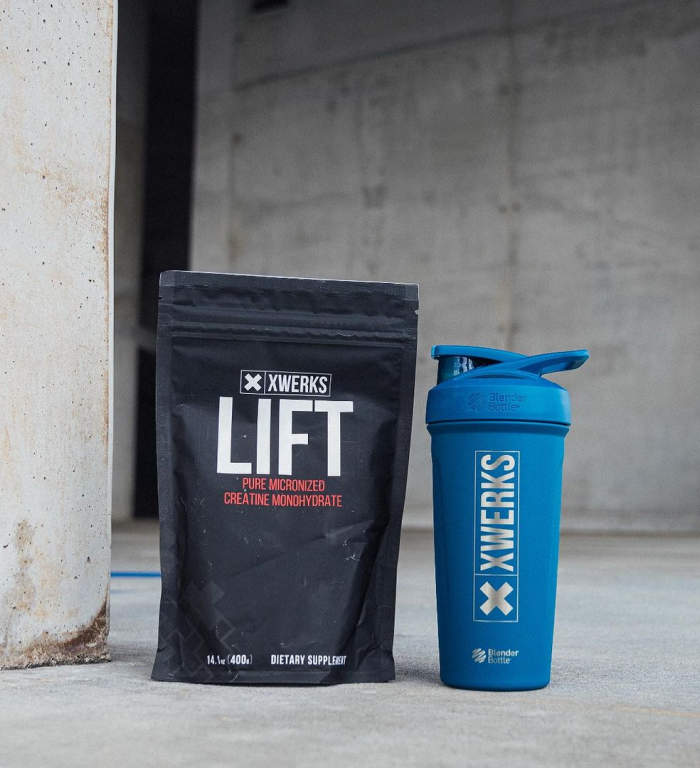
Most-researched formStick with monohydrate — the most-researched form with the strongest evidence base. XWERKS Lift provides 5g micronized monohydrate per scoop.
Timing
Any consistent timeMost convenient: morning shake, post-training drink, or with dinner. No evidence that timing matters for benefit.
Creatine regulations and safety
Legal at all levels
• FIFA/UEFA: Permitted (not on WADA prohibited list)
• Major professional leagues (Premier League, La Liga, MLS, etc): Permitted
• NCAA: Permitted, though NCAA institutions cannot provide it to athletes (players must purchase themselves)
• Youth and high school: Generally permitted; some state HS associations require parental consent for minors. Check local rules.
Safety for youth athletes
The ISSN position stand (Kreider 2017) notes no health concerns at standard doses (5g/day) in healthy adolescent athletes. Research specifically on youth soccer populations supports this. Adequate hydration and using reputable products (third-party tested) is prudent practice.
Combining creatine with other soccer supplements
The core soccer stack
• Creatine monohydrate: 5g daily (XWERKS Lift)
• Whey protein: 1.6-2.0g/kg daily (XWERKS Grow)
• Pre-match/training: Moderate pre-workout for matches (XWERKS Ignite)
• Intra-match hydration: Electrolytes + carbs (XWERKS Motion) for tournaments and hot-weather matches
• Foundation micronutrients: Vitamin D3, omega-3s, magnesium
The Bottom Line
Soccer is among the best-researched team sports for creatine — 150-250 high-intensity efforts across 90 minutes make ATP-PCr benefits directly applicable. Eijnde 2001 and subsequent research document improvements in sprint performance, vertical jump, and repeated sprint capacity.
Dose: 5g creatine monohydrate daily, every day. Saturates muscle in 3-4 weeks. No loading phase needed unless you want faster saturation before a key period.
Permitted at all levels — FIFA, UEFA, NCAA, professional leagues, and most youth associations allow creatine. Safe and effective for male and female players from 14+ through professional levels.
Creatine for the 90-Minute Game
XWERKS Lift — 5g micronized creatine monohydrate per scoop. The form used in Eijnde 2001 and subsequent soccer research. Mixes instantly.
Shop Lift