11 High-Protein Foods (Ranked by Practical Use)
TL;DR
- The government RDA (46g women, 56g men) is set for sedentary adults. Active adults and athletes need 1.6-2.2g per kg body weight daily — often 2-3x the RDA.
- Top animal sources by protein density: chicken breast (26g/3oz), lean beef (25g/3oz), Greek yogurt (23g/cup), salmon (22g/3oz), eggs (6g each, complete amino profile).
- Top plant sources: lentils (18g/cup), tempeh (15g/half-cup), tofu (10g/half-cup), quinoa (8g/cup). Leucine content matters — plant-based athletes need higher total intake.
- Protein powder fills the gaps when food intake falls short — particularly post-workout, during travel, and when appetite is suppressed.
Protein is the macronutrient most people underconsume relative to their actual needs. The government RDA of 46g (women) and 56g (men) is set for sedentary adults at minimum — active adults and athletes require 1.6-2.2g per kg body weight daily, often 2-3x the RDA. Hitting these targets consistently requires knowing which foods deliver the most protein per calorie, per dollar, and per practical effort. This guide ranks 11 high-protein foods by actual usefulness in a real diet — not just "what's high in protein" in abstract, but which foods do the work for an active person trying to hit 150-200g daily without spending hours on meal prep. Each entry includes the protein amount per standard serving, key nutritional context, and where it fits in the daily protein puzzle. Spoiler: the winners are what they've always been — lean animal protein, eggs, dairy, legumes, and whey isolate for gap-filling. What's changed is how much we need relative to old recommendations.
Why the RDA is too low for active adults
The government RDA (46g for women, 56g for men) represents the minimum needed to prevent deficiency in sedentary adults — not the optimal intake for muscle building, recovery, or long-term body composition. Current research (Morton 2018, Thomas 2016 ACSM position stand) supports much higher intakes for anyone training seriously:
Daily protein targets by activity level
• Sedentary adult: 0.8g/kg (the RDA)
• Recreationally active: 1.2-1.4g/kg
• Endurance athletes: 1.4-1.8g/kg
• Strength athletes: 1.6-2.2g/kg
• Older adults (40+): 2.0-2.2g/kg due to anabolic resistance
• Cutting phase: 1.8-2.2g/kg to preserve muscle
Calculate your exact target: XWERKS Protein Calculator →
For a 180-lb (82kg) active adult, that's 130-180g daily — roughly triple the RDA. Hitting those targets with real food is the task this guide addresses.
The 11 highest-utility protein foods
1. Lean Meats (chicken, turkey, lean beef, pork loin) ~25-26g / 3oz
The foundation of most high-protein diets. Chicken breast: 26g protein, 128 cal per 3oz. Lean beef (93/7 ground or sirloin): 25g protein, 160 cal. Turkey breast: 26g protein, 125 cal. Pork loin: 23g protein, 150 cal.
Why it works: highest protein-per-calorie ratio of whole foods, complete amino acid profile, high leucine (the MPS trigger), affordable, easy to batch-cook. Two servings per day alone can cover 50g+ of protein from animal sources.
2. Seafood (salmon, tuna, halibut, shrimp, cod) ~20-25g / 3oz
Salmon: 22g protein per 3oz plus 1.5-2g of omega-3s (EPA+DHA). Canned tuna (in water): 20g protein per 3oz at ~100 cal — one of the most protein-dense foods by calorie. Shrimp: 20g per 3oz at 85 cal. Cod: 20g per 3oz at 90 cal (very lean).
Why it works: complete amino acid profile, omega-3 content from fatty fish supports recovery and inflammation management, very low fat for white fish. Canned tuna is the underrated travel/road protein — shelf-stable, cheap, 20g of protein per pouch.
3. Eggs 6g per large egg
One large egg: 6g protein, 70 cal, all 9 essential amino acids. Egg whites alone: 3.5g protein, 17 cal — used when you want protein without fat/calories. Three whole eggs deliver 18g protein.
Why it works: one of the highest biological values of any protein source (the gold standard against which others are measured), versatile and cheap, complete amino acid profile, rich in choline (brain health), B12, and selenium. The yolk is where most of the nutrition lives — don't skip it unless specifically cutting calories.
4. Greek Yogurt and Dairy 15-25g / cup
Plain non-fat Greek yogurt: 23g protein, 130 cal per cup. Cottage cheese (low-fat): 28g protein per cup — quietly one of the highest-protein foods available. 1% milk: 8g protein per cup. Skyr (Icelandic-style yogurt): 18-20g per serving.
Why it works: slow-digesting casein blend in dairy provides sustained amino acid release — useful pre-bed for overnight muscle protein synthesis. Rich in calcium and vitamin D. Lactose-intolerant individuals should note that Greek yogurt and hard cheeses are lower in lactose than milk.
5. Legumes (lentils, beans, chickpeas, peas) 15-18g / cup cooked
Cooked lentils: 18g protein, 230 cal per cup, plus 16g of fiber. Black beans: 15g protein, 15g fiber per cup. Chickpeas: 15g protein, 13g fiber per cup. Split peas: 16g protein, 16g fiber per cup.
Why it works: high protein AND high fiber — a combination rare in animal proteins. Cheap, shelf-stable, plant-based. Note: plant proteins are lower in leucine than animal sources, so plant-based athletes should target higher total protein (1.8-2.0g/kg) to compensate.
6. Nuts and Seeds (almonds, peanuts, pumpkin seeds, hemp seeds) 5-9g / oz
Almonds: 6g protein per oz (164 cal). Peanuts: 7g protein per oz. Hemp seeds: 9g protein per 3 tbsp — one of the highest plant-based protein densities by weight. Pumpkin seeds (pepitas): 7g per oz.
Why it works: healthy fats, fiber, vitamins E and magnesium. Caveat: nuts are calorie-dense (150-200 cal per oz), so they're snacks and meal additions rather than primary protein sources. A cup of almonds is 800 calories and "only" 30g protein — compare to a cup of Greek yogurt at 130 cal for 23g protein.
7. Soy Products (tofu, tempeh, edamame) 10-20g / serving
Firm tofu: 10g protein per 1/2 cup. Tempeh: 15g protein per 1/2 cup (higher because it's fermented and denser). Edamame: 17g protein per cup shelled. Soy milk (unsweetened): 7-8g per cup.
Why it works: only complete plant protein besides quinoa — contains all essential amino acids in adequate proportions. Higher leucine than most other plant sources. Ideal for plant-based athletes trying to hit the leucine threshold without relying on multiple incomplete sources.
8. Quinoa and Protein-Forward Grains 8g / cup cooked
Cooked quinoa: 8g protein, 220 cal per cup. Buckwheat: 6g protein per cup. Spelt: 11g protein per cup cooked. Farro: 7g per cup.
Why it works: quinoa is a complete protein (unusual for a grain), gluten-free, provides carbs and protein together — useful as a bowl base. Grain protein alone won't hit training targets, but it adds meaningful protein to vegetable-heavy meals that would otherwise be protein-light.
9. Protein-Dense Vegetables (spinach, broccoli, Brussels sprouts, peas) 4-9g / cup cooked
Cooked spinach: 5g protein per cup (41 cal). Broccoli: 4g per cup. Green peas: 9g per cup (134 cal — one of the highest-protein vegetables). Brussels sprouts: 4g per cup.
Why it works: fills daily protein rounding errors, adds fiber, vitamins, minerals. Vegetables aren't primary protein sources, but noting that a large salad with spinach + broccoli + peas adds 10g+ protein on top of the animal protein topping changes the daily math.
10. Lean Game Meats (bison, venison, elk) 20-25g / 3oz
Bison: 24g protein per 3oz, 122 cal — leaner than beef. Venison: 26g per 3oz, 135 cal. Elk: 26g per 3oz, 125 cal.
Why it works: even leaner than conventional beef, similar or higher iron content, grass-fed by default (game meat always is), often sourced from less-industrialized supply chains. Usually more expensive than chicken or commodity beef, but a worthwhile rotation for flavor variety and macronutrient efficiency.
11. Whey Protein Isolate 25g / scoop
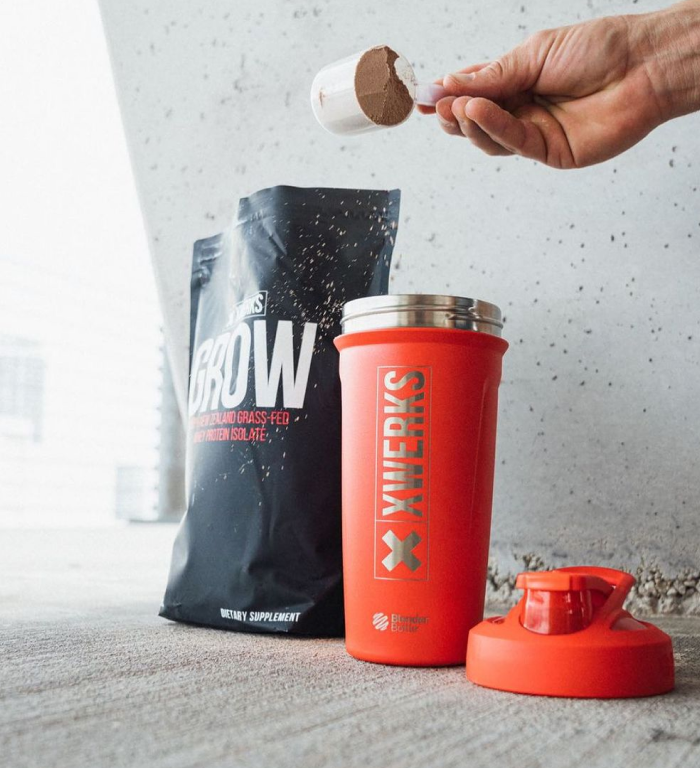
High-quality whey isolate (like XWERKS Grow): 25g protein per scoop, ~120 cal, 2.5-3g leucine, complete amino acid profile. Digests in 1-2 hours — fastest of any complete protein source.
Why it works: solves the practical problem of hitting protein targets daily. Fast-digesting for post-workout timing, travel-friendly, zero prep time, GI-tolerant when appetite is suppressed after hard training. Not a replacement for whole food — an efficient supplement to it. Most active adults benefit from 1-2 shakes daily to close the gap between whole-food protein and their 1.6-2.2g/kg target.
Building a real day with these foods
• Breakfast: 3 whole eggs + 1 cup Greek yogurt = 41g
• Post-workout: XWERKS Grow shake = 25g
• Lunch: 6oz chicken breast + 1 cup quinoa + vegetables = 58g
• Snack: 1 cup cottage cheese + 1 oz almonds = 34g
• Dinner: 5oz salmon + 1 cup lentils = 55g
Daily total: ~210g protein. Overshooting target slightly is the norm — missing by 20-30g daily adds up to muscle loss or blunted recovery over months.
The plant-based protein problem
Why plant-based athletes need more protein
Plant proteins have lower leucine content and lower digestibility than animal proteins. The leucine in whey isolate is 10-12% by weight; plant proteins typically run 6-8%. For plant-based athletes, this means:
• Target higher total protein: 1.8-2.0g/kg (vs 1.6-1.8g/kg for omnivores)
• Prioritize complete plant proteins: Soy (tofu, tempeh, edamame) and quinoa are complete. Most other plant sources are incomplete and should be combined (rice + beans, pea + rice protein powders)
• Consider larger per-meal doses: 30-40g plant protein per meal to reach leucine threshold, vs 25-30g for animal sources
• Diversify sources: No single plant protein covers everything — legumes, soy, grains, nuts, seeds together deliver what animal protein does alone
Common high-protein mistakes
Overcounting mixed foods
A "high-protein" smoothie with 1/4 cup Greek yogurt, a banana, peanut butter, and almond milk is mostly carbs — maybe 10-15g protein. Adding a scoop of whey isolate makes it an actual high-protein smoothie. Check actual macros, not marketing claims.
Relying on nuts as a protein source
An ounce of almonds provides 6g protein and 164 calories. Relying on nuts to hit protein targets means consuming massive calories. They're a good snack; they're not a primary protein source.
Ignoring biological value / digestibility
Not all protein is equivalent. 25g from whey isolate stimulates muscle protein synthesis differently than 25g from pea protein, and differently again from 25g spread across bread, lettuce, and vegetables in a sandwich. Quality and concentration matter for training adaptation.
Under-distributing throughout the day
Eating 150g of protein in a single dinner doesn't produce the same muscle protein synthesis as 150g distributed across 4-5 meals. Aim for 25-40g per meal, 3-5 meals/shakes per day.
The Bottom Line
The RDA is set for sedentary adults. Active adults and athletes need 1.6-2.2g protein per kg body weight daily — often 2-3x the RDA. Hitting these targets requires intent.
The 11 highest-utility protein foods rank by actual daily usefulness: lean meats, seafood, eggs, Greek yogurt/dairy, legumes, soy, quinoa, nuts/seeds, protein-dense vegetables, game meats, and whey isolate. Each fits a different slot in the daily protein puzzle.
Whey isolate fills the practical gap. XWERKS Grow provides 25g of fast-digesting protein in 60 seconds — the difference between hitting daily targets consistently and missing by 20-30g most days.
The Gap-Filler
XWERKS Grow — 25g of NZ grass-fed whey isolate per scoop. Complete amino acid profile, 2.5-3g leucine, fast-digesting. The shake that makes daily protein targets realistic.
SHOP GROW →Further Reading
Top 5 High-Protein Fast Food Orders
Protein Powder for Bodybuilders Over 40
Whey Protein: What It's Made Of
References
1. Morton RW, et al. A systematic review, meta-analysis and meta-regression of the effect of protein supplementation on resistance training-induced gains in muscle mass and strength. Br J Sports Med. 2018;52(6):376-384.
2. Thomas DT, et al. ACSM Joint Position Statement: Nutrition and Athletic Performance. Med Sci Sports Exerc. 2016;48(3):543-568.
3. Moore DR, et al. Protein ingestion to stimulate myofibrillar protein synthesis requires greater relative protein intakes in healthy older versus younger men. J Gerontol A Biol Sci Med Sci. 2015;70(1):57-62.
4. Phillips SM, et al. Protein "requirements" beyond the RDA: implications for optimizing health. Appl Physiol Nutr Metab. 2016;41(5):565-572.
Macronutrient values compiled from USDA FoodData Central. Values are approximate and may vary by brand or preparation method.