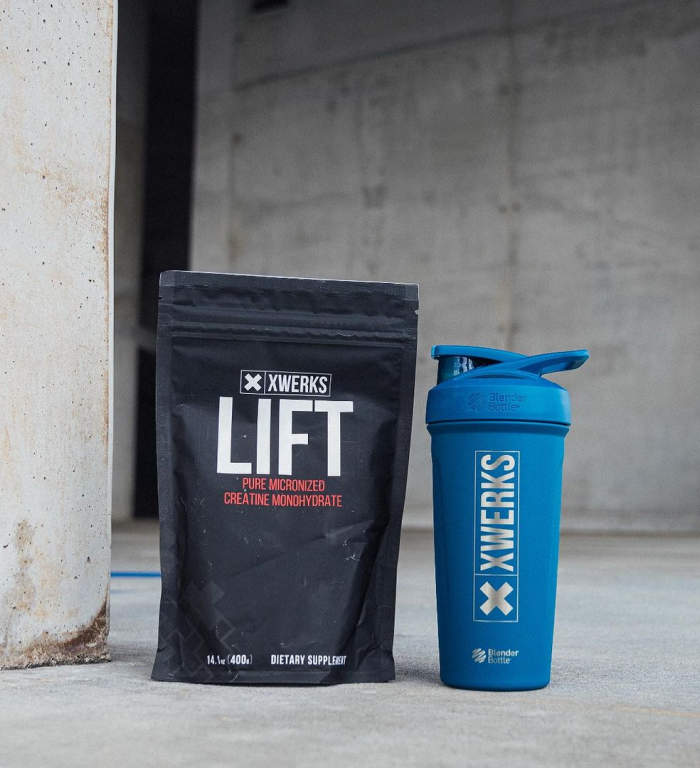


Our pick for a longer ruck when you want carbohydrate in your bottle is XWERKS Motion, with 25 grams per serving. If food already covers your fuel needs, an electrolyte-focused option may fit better. For a short, easy outing, water and your normal meals may be sufficient. Choose around the route, not just the weight in your pack.
Rucking can mean a neighborhood walk with a light pack or several hours over demanding terrain. Those outings should not share one automatic drink prescription. The first decision is whether your bottle needs to provide energy, electrolytes, or simply drinking water.
Which drink fits your ruck?
Use the nutrition label to separate carbohydrate content from sodium content. More of either is not automatically better for every outing.
| Product | What the label contributes | Best fit |
|---|---|---|
| XWERKS Motion | 25 g carbohydrate per serving; includes electrolytes | Adding carbohydrate to a planned bottle |
| Skratch Hydration Sport Drink Mix | About 19–20 g carbohydrate and 400 mg sodium per serving | A carbohydrate-electrolyte option with a stated sodium amount |
| LMNT electrolyte drink mix | 1,000 mg sodium per stick; sugar-free | An electrolyte-focused choice when that sodium amount fits your plan |
Why Motion fits a fuel-carrying bottle
Motion lets the bottle make a known carbohydrate contribution while you walk. That can be convenient when stopping to eat is awkward or when you want to distribute food and drink across the route. Its 25-gram serving is easy to count alongside snacks.
Do not interpret that serving as a complete fueling plan for every long ruck. The relevant calculation is how much carbohydrate you actually consume over time. A bottle you carry but barely drink contributes little fuel, and a bottle finished quickly does not automatically cover the rest of the route.
Start with duration, terrain, and access
Estimate moving time, the difficulty of the route, expected conditions, and where you can refill with safe drinking water. Pack weight is one input, but it is not enough to determine a drink choice on its own. A steep, exposed route creates different logistics from a flat loop near home.
Decide what food you will carry and when you can comfortably eat it. A drink can supplement that plan, but it does not have to replace it. On long outings, familiar snacks can also provide variety when you become tired of drinking the same flavor.
Keep carbohydrate and sodium as separate decisions
Motion, Skratch, and LMNT are not interchangeable simply because they are sold for active people. Motion contributes a measured carbohydrate serving. Skratch’s hydration mix combines carbohydrate with a stated sodium amount. LMNT is an electrolyte-focused product, not a substantial source of carbohydrate fuel.
A high-sodium stick is not a universal requirement for walking with a pack. Match the sodium amount to your established needs and the rest of your intake. Likewise, a carbohydrate drink is not automatically a complete sodium replacement plan. Read both parts of the label and avoid layering several products without adding up their contributions.
A bottle is a container, not a fixed time unit
For illustration, one Motion serving supplies 25 grams of carbohydrate whether the bottle takes 30 minutes or 90 minutes to finish. Over 90 minutes, that averages about 17 grams per hour. This is arithmetic to help you track intake, not a recommended fueling target.
Use that same approach for every product. Write down servings per bottle, planned refill points, and any food you will eat. Do not force extra fluid solely to reach a carbohydrate number; if fuel and fluid needs do not align, adjust the food or drink plan rather than treating them as one fixed requirement.
Test the setup on an ordinary training ruck
Try the mix at its labeled dilution with the bottle or hydration system you actually use. Check access while walking, flavor preference, cleanup, and whether powder is easy to portion for refills. Carry a practical way to obtain plain water when the route requires it.
Our rucking guide covers the activity itself. For hydration planning, read sweat rate versus sweat sodium; the distinction helps explain why one electrolyte amount cannot fit every athlete.
Connect the drink plan to the route
Mark the expected duration, climbing or uneven terrain, places to stop, and dependable water access. Include the time you may spend waiting, navigating, or regrouping. A route that usually takes an hour can become a different outing when conditions or the group change.
Then decide what the bottle needs to contribute. If it carries carbohydrate, count that separately from snacks. If it mainly serves hydration, check the relevant electrolyte information instead of assuming that every sports drink provides the same amount of sodium.

| Time to consume 25 g carbohydrate | Average carbohydrate rate |
|---|---|
| 30 minutes | 50 g/hour |
| 60 minutes | 25 g/hour |
| 90 minutes | 16.7 g/hour |
Convert a serving into a rate correctly
Use the carbohydrate you actually consume divided by the elapsed hours. One 25-gram serving finished over an hour contributes an average of 25 grams per hour. The same serving consumed over 90 minutes contributes about 16.7 grams per hour.
Finishing it in 30 minutes gives an average of 50 grams per hour over that half-hour period. That calculation does not instruct you to drink faster, and it does not mean the next hour is automatically covered. Keep the time window visible when comparing numbers.
Food belongs in the same accounting. If you eat a snack during the route, add its actual carbohydrate to the amount consumed in the relevant period. Do not count a snack still in the pack or a partly finished bottle as if both were fully consumed.
Keep a practical route worksheet
Write down your planned departure, approximate finish, water access, drink portions, and familiar foods. Mark the point at which you expect to reassess the route or supplies if the outing is taking longer than planned.
Pack a way to keep powder portions identifiable and protected according to the product's directions. If you carry more than one type of mix, label them clearly. A fatigue-filled stop is a poor time to guess which bag contains which serving.
Check that the bottle is easy to reach with your pack on. A theoretically good drink plan can fail if you avoid stopping to remove the pack every time you want a sip. Practice the access and refill process on an ordinary route.
Common errors to catch on a training ruck
Counting bottles instead of grams. Two bottles can contain different amounts of carbohydrate. Record the mix and serving count, then note how much was left.
Treating pack weight as the entire plan. Duration, terrain, pace, weather, food, and fluid access also change the practical problem. A heavier pack does not by itself specify a drink concentration.
Putting all decisions into one mix. Fuel and sodium are separate label questions. Check both and choose a combination that fits your established plan; do not assume extra scoops solve every need.
Use the return home as a review point
Note what you finished, what you carried back, and which parts of preparation were inconvenient. Compare those notes with the actual route duration and conditions. They will help you choose a useful serving format for the next outing.
Motion is relevant when counted carbohydrate in the bottle solves a real route-planning need. Keep the final choice tied to the whole outing, including the food and water you can actually access.
Frequently asked questions
Is an electrolyte drink enough to fuel a long ruck?
Only if the rest of your food and drink supplies the needed energy. Electrolytes and carbohydrate serve different roles; check the actual carbohydrate content.
Does a heavier pack always mean I need a stronger drink?
No. Consider duration, terrain, pace, conditions, and your food plan. Do not change concentration beyond product directions simply because the pack is heavier.
Can I use Motion alongside snacks?
Yes. Count the carbohydrate from both. Motion supplies 25 grams per serving, while your snacks contribute the amounts listed on their labels.
How do I calculate carbohydrate per hour from a bottle?
Divide the grams actually consumed by the elapsed time in hours. For example, 25 grams over 90 minutes is 25 ÷ 1.5, or about 16.7 grams per hour.
Should I drink faster to make the hourly number higher?
No. The calculation describes intake; it is not a drinking instruction. Plan fuel and fluid around your needs, conditions, tolerance, and the product directions.
Our recommendation
Choose XWERKS Motion when carbohydrate in the bottle makes your ruck easier to fuel. Choose an electrolyte-focused product when that is the specific gap, and plan water access before you leave.
How we chose these products
This guide is published by XWERKS, which sells one of the products compared. We evaluated current manufacturer information for carbohydrate contribution, labeled sodium where available, product purpose, and ruck logistics. These are editorial recommendations based on labels and intended use; they do not represent hands-on testing or a clinical comparison of brands. Product details were checked on September 10, 2026. Check the current label for your chosen flavor and size.