Rucking 101: The Complete Beginner's Guide
TL;DR
- Rucking is walking with a weighted backpack — typically 10-50 lbs. It blends strength, Zone 2 cardio, and mental conditioning into a single low-impact workout with minimal injury risk.
- Caloric burn: rucking with 20-35 lbs burns 2-3x more calories than walking at the same pace — roughly 400-600 calories per hour for most people, depending on load and terrain.
- Start with 10-20 lbs, 1-2 miles, flat terrain, 2x per week. Add only one variable per week (weight, distance, pace, or incline) to let connective tissue adapt without injury.
- Supplement support: creatine (5g daily) for endurance and recovery, whey protein (1.6-1.8g/kg) for posterior chain recovery, and hydration with sodium for longer rucks.
Rucking — walking with a weighted backpack, borrowed from military conditioning — has become one of the fastest-growing fitness movements in America. The appeal is simple: rucking delivers strength + Zone 2 cardio + mental conditioning in a single workout, with dramatically lower injury risk than running, less equipment burden than lifting, and almost no barrier to entry. Research confirms the benefits: rucking with 20-35 lbs increases caloric expenditure 2-3x compared to walking at the same pace, significantly engages the posterior chain (glutes, hamstrings, lower back, traps, core), improves cardiovascular fitness in the Zone 2-3 range, and builds mental grit through sustained effort under load. Beginners should start with 10-20 lbs, 1-2 miles, flat terrain, 2x per week, and progress by adding only one variable at a time. For most people over 35 looking for sustainable fitness, rucking beats running for joint longevity while beating walking for stimulus — the sweet spot that's made it a go-to tool for athletes, executives, and anyone who wants results without injury.
What is rucking?
The definition
Rucking comes from the military term "ruck march" — marching with a heavy pack (a "rucksack"). In a fitness context, it's simply walking while carrying weight in a backpack. The concept is ancient, the physiological payoff is significant, and the equipment cost is essentially zero if you already own a backpack.
The sweet spot
Rucking sits in a physiological sweet spot between walking and running:
• More demanding than walking — significantly higher caloric burn, more muscular engagement, better cardiovascular stimulus
• Less joint-stressing than running — no impact forces from airborne phases, dramatically lower injury risk
• Added strength stimulus that neither walking nor running provides — posterior chain, traps, core, and postural muscles all work under sustained load
It's strength + cardio + conditioning combined, which makes it unusually time-efficient for people with limited training hours.
The science: why rucking works
1. Elevated caloric burn without impact
Research on weighted walking consistently shows 2-3x higher energy expenditure compared to unloaded walking at the same pace. A 180-lb person walking at 3 mph burns roughly 250 cal/hour; add a 30-lb pack and that jumps to 450-550 cal/hour depending on terrain.
The key point: you reach running-like caloric burn rates without running's impact forces. Pollock et al. research on load carriage has documented the metabolic cost of weighted walking is proportional to both the load carried and the pace — two levers you can adjust as fitness improves.
2. Comprehensive posterior chain engagement
Unloaded walking is primarily driven by quads and calves. Add 30 lbs to your back and the stimulus shifts dramatically. Active muscle groups during rucking:
• Glutes: hip extension under load — the most underused muscle group in sedentary adults
• Hamstrings: hip extension and knee stability
• Lower back (erector spinae): isometric hold maintaining upright posture under load
• Upper back and traps: stabilizing the pack, resisting shoulder protraction
• Core: continuous anti-extension and anti-rotation work
Over months of consistent rucking, posterior chain strength and muscular endurance improve meaningfully — a training adaptation that translates to better posture, reduced back pain risk, and improved athletic performance in other contexts.
3. Cardiovascular development in Zone 2-3
Most rucking falls naturally into heart rate Zone 2 (60-70% of max HR) to low Zone 3 (70-80%). This is the sweet spot for building aerobic base, improving mitochondrial density, and developing fat oxidation capacity without excessive recovery cost.
Recent research on Zone 2 training (popularized by Inigo San Millan's work with Tour de France athletes) has reinforced that significant time in Zone 2 is foundational for long-term cardiovascular health and performance. Rucking is an almost ideal delivery mechanism for Zone 2 volume — you can accumulate 60-120 minutes per session without the joint cost of running.
4. Dramatically lower injury risk than running
Running produces ground reaction forces of 2-3x body weight per footstrike, multiplied by 800-1,200 footstrikes per mile. Rucking produces ground reaction forces of roughly 1.2-1.5x body weight with no airborne phase — the limb never leaves contact with the ground simultaneously.
The practical result: common running injuries (shin splints, runner's knee, plantar fasciitis, IT band syndrome, stress fractures) are uncommon in rucking. For adults over 35, those returning to fitness, or those with joint histories, rucking offers a way to train at meaningful intensity without the joint cost.
5. Potential bone density benefits
Weight-bearing exercise supports bone mineral density. Rucking provides a stronger bone-loading stimulus than walking (because of the added weight) without the high-impact stress that can aggravate joints. For postmenopausal women, older adults, and anyone concerned about osteoporosis risk, rucking represents a bone-friendly alternative to both sedentary life and high-impact training.
6. Mental conditioning
Carrying weight over distance builds something harder to quantify but undeniably real: mental toughness. The sustained effort of a long ruck, particularly in weather or over varied terrain, develops the willingness to keep moving forward under low-grade discomfort. Military training has used rucking for this psychological benefit as much as the physiological one — and many civilian ruckers report similar mental benefits carrying over to other areas of life.
How to start rucking (the beginner's protocol)
Step 1: Your pack
Start with what you have. Any backpack with proper shoulder straps and a hip belt will work for the first 4-6 weeks. Don't spend $200+ on a dedicated rucking pack before you know whether you'll stick with it.
After you've ruckd 10-15 times and committed, consider upgrading to:
• A dedicated rucking pack (GORUCK, 5.11, or similar) — built for stability with heavy loads, durable shoulder and hip support
• Weighted plate inserts — designed to sit flat against your back rather than bouncing
• A hip belt that transfers weight to your hips (critical for longer rucks over 1 hour)
Step 2: Starting weight
| Starting Profile | Starting Weight |
|---|---|
| Deconditioned / new to exercise | 10-15 lbs |
| Recreationally active | 15-25 lbs |
| Strength-trained / athletic background | 20-30 lbs |
| Highly conditioned | 30-45 lbs |
Counterintuitively, many athletic people start too heavy. Rucking uses muscles and joints differently than gym training — posterior chain and trap endurance often lag behind general fitness. Err on the lower end to start.
Step 3: Distance and pace
First ruck target:
• 1-2 miles total
• Flat terrain (paved trail, neighborhood sidewalks)
• Easy, conversational pace (can speak in full sentences)
• Finish feeling good, not exhausted
Target pace: 15-20 minutes per mile for your first month. Speed comes later.
Step 4: Frequency
Start with 2 rucks per week in Week 1. The day-after stiffness (particularly in traps, upper back, and calves) will tell you how your connective tissue is adapting. Don't ruck two days in a row during your first 4-6 weeks.
After 4-6 weeks, you can scale to 3-4 rucks per week if recovery permits.
How to progress (without getting hurt)
The golden rule of rucking progression: add only ONE variable per week. The four levers you can pull are weight, distance, pace, and incline.
The single-variable progression rule
Each week, change only one of:
• +5 lbs (weight)
• +0.5-1 mile (distance)
• Faster pace (speed)
• More incline (hills or treadmill grade)
Never increase multiple variables simultaneously. Connective tissue (tendons, ligaments, fascia) adapts more slowly than muscles and cardiovascular system. Pushing too much too fast creates tendinopathies (particularly in the Achilles, IT band, and lower back) that can derail training for weeks or months.
The 10% rule
As a general guideline, total weekly ruck volume (weight × distance) shouldn't increase more than ~10% week-over-week during the first 3 months. After you've built a base, progression can be more aggressive, but early on, slow is faster.
Deload weeks
Every 4-6 weeks, include a deload week where you reduce weight by 20-30% or cut one ruck. This allows full connective tissue recovery and prevents chronic overuse. Athletic adaptation happens during recovery, not during the work itself.
Rucking form: what actually matters
Rucking form is simpler than running form but still has key elements that distinguish a sustainable ruck from an injury-creating one.
Pack positioning
The pack should sit high on the back, with weight close to your shoulders rather than sagging low on your lumbar spine. Low-hanging weight pulls you into poor posture, strains the lower back, and increases injury risk.
For dedicated rucking packs: position the load so it sits against the upper back, shoulder straps snug (not cutting into shoulders), hip belt (if available) resting on hip bones — not waist — taking 20-30% of the load.
Posture
Stand tall. Shoulders back and down, chest open, core lightly engaged. A slight forward lean (from the ankles, not the waist) is natural when carrying load. Avoid rounded shoulders or hunched posture — these signal that your pack is too heavy for current conditioning.
Stride
Normal walking stride. Don't try to extend stride to move faster — it's less efficient and increases joint stress. To go faster with a ruck, take more steps per minute, not longer steps.
Foot strike
Heel-to-toe rolling foot strike, as in natural walking. Don't overthink it. Properly fitted supportive shoes (running shoes, trail runners, or sturdy walking shoes) handle most of the mechanics.
Breathing
Nasal breathing if pace allows (Zone 2). If you're mouth-breathing heavily, slow down — you're working too hard for effective aerobic development. The ability to carry a conversation is a reasonable signal that pace is appropriate.
Common rucking mistakes
1. Starting too heavy. 45 lbs on day one when you haven't trained your traps, posterior chain, and postural muscles for sustained loading creates injury risk. Start 10-20 lbs, progress gradually.
2. Progressing multiple variables at once. Adding weight AND distance AND pace in the same week is the fastest route to tendinopathy. One variable per week.
3. Low-positioned pack weight. Weight that sags on your lumbar spine causes back pain and forces postural compensation. Use a proper pack or weight distribution that keeps load high.
4. Ignoring footwear. Running shoes built for unloaded stride often feel inadequate under 30+ lbs. Sturdier trail runners or hiking shoes provide better support for loaded walking.
5. Skipping warm-up. Even though rucking is low-impact, cold muscles and joints don't respond well to immediate loading. 5 minutes of unloaded walking + basic mobility work before picking up the pack goes a long way.
6. Rucking every day. Early-stage adaptation requires recovery days. Even experienced ruckers typically rest one day between harder efforts.
7. Treating rucking as the only training. Rucking is excellent, but not comprehensive. Complement it with strength training (particularly for upper body and single-leg work) and mobility work for complete fitness development.
8. Neglecting recovery nutrition. An hour of rucking with 30 lbs is a substantial training stimulus. Adequate protein intake and sleep matter as much as they would for any other training session.
The 4-week beginner rucking plan
Week 1 — Baseline
• Weight: 15-20 lbs
• Frequency: 2 rucks (e.g., Monday and Thursday)
• Distance: 1-2 miles per ruck
• Pace: Easy, conversational (18-20 min/mile)
• Terrain: Flat
Goal: finish each ruck feeling like you could have done more. Build the habit.
Week 2 — Add distance
• Weight: Same as Week 1 (15-20 lbs)
• Frequency: 2-3 rucks
• Distance: 2-3 miles per ruck
• Pace: Same as Week 1
• Terrain: Flat
Goal: extend time under load without adding stress from other variables.
Week 3 — Add weight
• Weight: +5 lbs (so 20-25 lbs)
• Frequency: 3 rucks
• Distance: 2-3 miles per ruck
• Pace: Easy to moderate
• Terrain: Flat, with one ruck on mild incline (neighborhood hill or trail)
Goal: increase loading stimulus while holding distance stable.
Week 4 — Add terrain and one faster ruck
• Weight: 25-30 lbs (stays similar to Week 3)
• Frequency: 3 rucks
• Distance: 3-4 miles per ruck
• Pace: 2 easy, 1 slightly faster (16-18 min/mile)
• Terrain: Mixed, including one ruck with meaningful hills
Goal: introduce variety without overwhelming adaptation.
Who should ruck?
Particularly well-suited
• Adults over 35 seeking meaningful conditioning without the joint cost of running
• Lifters needing cardio that complements (rather than conflicts with) strength work
• Athletes returning from injury who can't run yet but need conditioning
• Military / law enforcement / firefighters preparing for occupational demands
• Hyrox, OCR, and Spartan athletes — load-carriage capacity transfers directly
• People managing weight who want higher caloric burn per hour than walking provides
• Busy professionals who want efficient multi-benefit workouts
Approach with caution
• Those with acute back injuries — consult a physician before loading the spine
• People with significant knee osteoarthritis — start very light (5-10 lbs) and progress slowly
• Pregnant women — discuss with obstetrician; many are advised to avoid heavy weighted walking in later trimesters
• Those recovering from hernia repair or abdominal surgery — seek medical clearance
Supplement support for rucking
Rucking creates a unique combination of demands: prolonged aerobic work, sustained posterior chain loading, and caloric deficit (especially on longer rucks). The supplement priorities reflect this:
Pre-ruck: moderate pre-workout
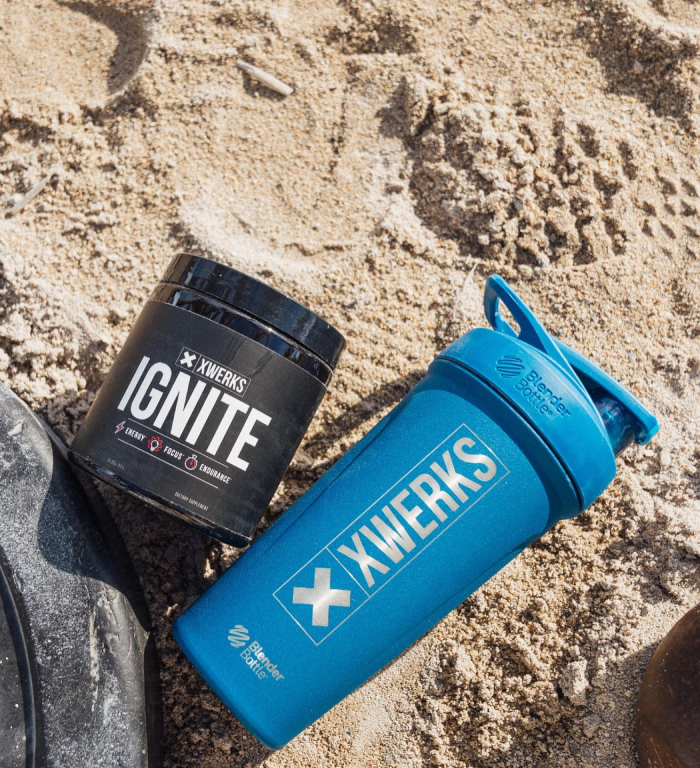
XWERKS Ignite — 150mg caffeine + citrulline + tyrosine + rhodiola. Clean energy for morning or after-work rucks without the jitters that make long sustained efforts uncomfortable. Take 30-45 min before heading out.
For shorter rucks (under 45 min), plain coffee works fine. Pre-workout earns its place on longer rucks or when you're ticking one off after a long work day.
Daily: creatine monohydrate
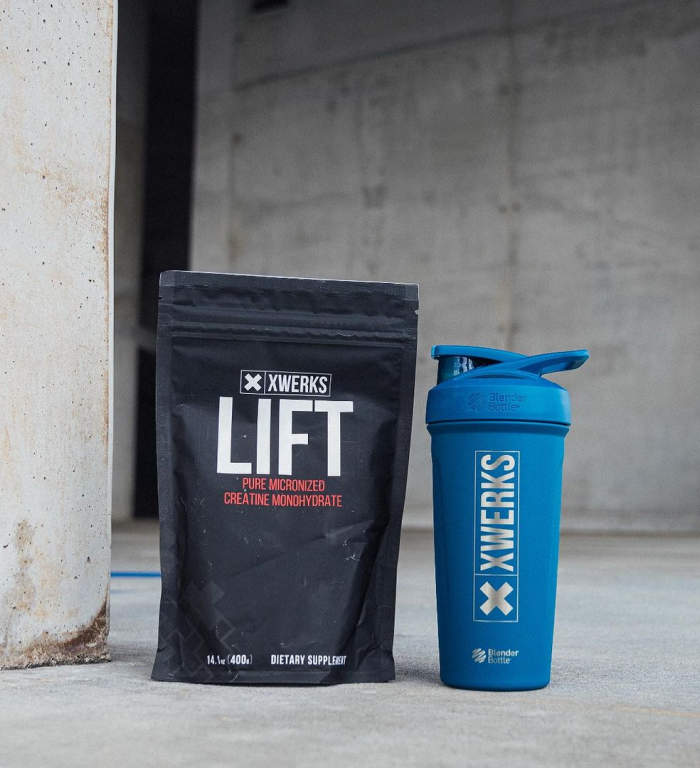
XWERKS Lift — 5g daily. Supports the strength aspect of rucking (particularly on hills and with heavier loads), enhances recovery between sessions, and provides cognitive benefits during longer sustained efforts. 5g daily regardless of whether you ruck that day.
Post-ruck: whey protein isolate
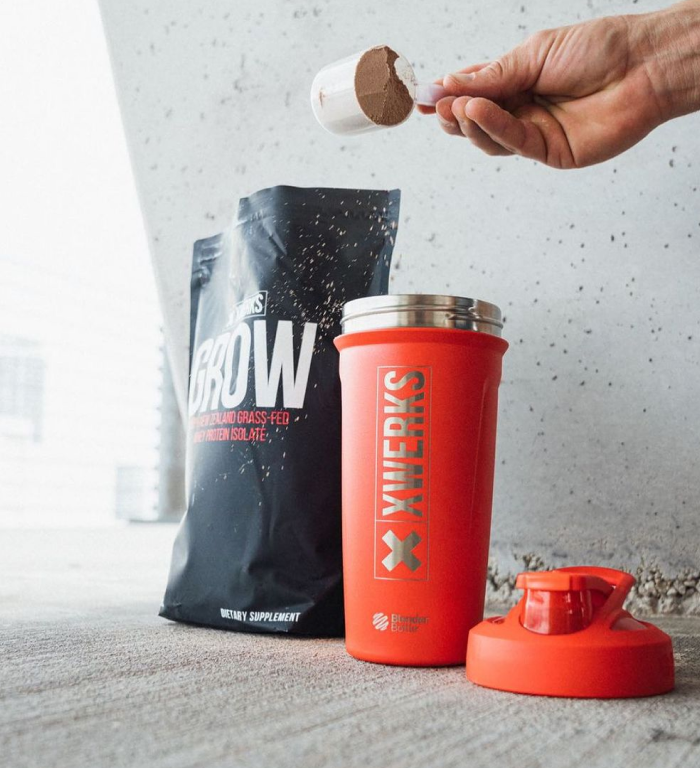
XWERKS Grow — 25g within 60-90 minutes post-ruck. Rucking's load-bearing nature creates real muscular damage in the posterior chain and traps — protein supports recovery and adaptation.
Daily target: 1.6-1.8g protein per kg body weight. A 180-lb rucker would target 130-150g daily, distributed across 3-4 meals.
Long rucks (60+ minutes): intra-ruck fueling
For rucks over 60-75 minutes, particularly in heat, intra-ruck hydration with carbohydrates and electrolytes improves performance meaningfully. XWERKS Motion (25g Cluster Dextrin + electrolytes) in a hydration bladder or bottle works well.
Target 30-45g carbs per hour and 400-600mg sodium per hour for long efforts.
Stress and recovery: ashwagandha
XWERKS Ashwa — for athletes using rucking as part of a high-training-load program, ashwagandha supports cortisol regulation and sleep quality. Most valuable when daily stress (training + work + life) is high and you want to preserve long-term adaptation capacity.
Rucking vs. running vs. walking: how they compare
| Metric | Walking | Rucking (30 lbs) | Running |
|---|---|---|---|
| Calories/hour (180-lb person) | ~250 | 450-600 | 700-900 |
| Joint impact | Very low | Low | High |
| Strength stimulus | Minimal | Moderate (posterior chain) | Low to moderate (legs) |
| Cardiovascular zone | Zone 1-2 | Zone 2-3 | Zone 2-5+ |
| Injury risk | Very low | Low | Moderate to high |
| Barrier to entry | None | Very low | Low-moderate |
| Sustainability long-term | Very high | Very high | Moderate (joint wear) |
Rucking's value isn't that it's better than running at everything — it isn't. Running produces higher caloric burn per hour and develops higher-intensity cardiovascular capacity. But rucking offers most of running's benefits at a fraction of the joint cost, which makes it sustainable year-round for decades where running is often not. For most adults, the right answer isn't "either/or" — it's using rucking for the bulk of aerobic volume with occasional running or other modalities mixed in.
The Bottom Line
Rucking is walking with a weighted backpack — typically 10-50 lbs. It delivers strength + Zone 2 cardio + mental conditioning in one workout, with 2-3x the caloric burn of unloaded walking at the same pace and a fraction of the injury risk of running.
Start with 10-20 lbs, 1-2 miles, flat terrain, easy pace, 2x per week. Add only ONE variable per week (weight, distance, pace, or incline). Connective tissue adapts slower than muscles — patience prevents injury.
Form essentials: pack high on back (not sagging low), good posture with slight forward lean from ankles, normal walking stride, heel-to-toe foot strike, nasal breathing when possible.
Supplement support: creatine (5g daily) for endurance and recovery, whey protein (1.6-1.8g/kg) for posterior chain repair, moderate pre-workout for longer rucks, intra-ruck electrolytes + carbs for efforts over 60 minutes. For most adults over 35 seeking sustainable fitness, rucking beats running for joint longevity and walking for stimulus — the sweet spot.
The Rucking Performance Stack
XWERKS Lift (5g creatine) + Grow (25g whey isolate) + Ignite (moderate-stim pre-workout) + Motion (intra-ruck fueling for longer efforts). Four products covering pre-ruck energy, recovery protein, daily strength support, and long-ruck fueling. Built for sustainable training across years.
SHOP LIFT → SHOP GROW →Further Reading
Best Supplements for Spartan Race Training
Supplement Guide for Hyrox Athletes
Protein Powder for Obstacle Course Racing
Best Supplements for Healthy Aging Men
Supplements for Muscle Preservation After 50
References
1. Knapik JJ, et al. Soldier load carriage: historical, physiological, biomechanical, and medical aspects. Mil Med. 2004;169(1):45-56.
2. Pollock RD, et al. The metabolic cost of walking with and without load in relation to body weight. J Sports Sci. 2015.
3. Kreider RB, et al. International Society of Sports Nutrition position stand: safety and efficacy of creatine supplementation in exercise, sport, and medicine. J Int Soc Sports Nutr. 2017;14:18.
4. Morton RW, et al. Protein supplementation on resistance training-induced gains in muscle mass and strength. Br J Sports Med. 2018;52(6):376-384.
5. Thomas DT, et al. American College of Sports Medicine Joint Position Statement: Nutrition and Athletic Performance. Med Sci Sports Exerc. 2016;48(3):543-568.
6. Seiler S. What is best practice for training intensity and duration distribution in endurance athletes? Int J Sports Physiol Perform. 2010;5(3):276-291.
7. Guest NS, et al. International society of sports nutrition position stand: caffeine and exercise performance. J Int Soc Sports Nutr. 2021;18(1):1.