

The best protein powder for baking is the type your recipe was designed to use. Our pick for a flavored whey-isolate recipe is XWERKS Grow. Choose unflavored casein for a recipe that specifies casein, or an appropriate plant protein for a vegan recipe. A successful substitution depends on the whole recipe, not just the protein number on the tub.
Baking is a different buying problem from making a shake. Flavor, sweetness, powder weight, liquid, and the other ingredients all contribute to the final result. The most useful recommendation starts with the food you want to make.
Which powder fits the recipe?
These products provide different starting ingredients. The table does not claim they can be exchanged scoop for scoop.
| Product | Protein type and serving information | Recipe fit |
|---|---|---|
| XWERKS Grow | Flavored whey isolate; 25 g protein in most flavors, 23 g in peanut butter | Recipes designed for flavored whey isolate |
| Naked Whey, unflavored | Single-ingredient whey; 25 g protein | Whey recipes where you want control over sweetness |
| Naked Casein, unflavored | Micellar casein; 26 g protein | Recipes that specifically call for casein |
| Naked Pea, unflavored | Pea protein; 27 g protein | Plant-based recipes developed with pea protein |
Why the recipe should choose the protein type
A recipe developed around one powder has already made assumptions about how that ingredient behaves alongside flour, eggs, fat, and liquid. Changing from whey to casein or pea protein changes the ingredient, even if you keep the same protein grams. Start with a recipe that names the type you own or intend to buy.
Do not replace all the flour with protein powder by default. Flour and protein powder serve different roles in a batter or dough. A one-for-one swap may change structure, moisture, flavor, and the amount of food the recipe produces. Follow a tested recipe’s stated substitutions when they are available.
When Grow is a useful choice
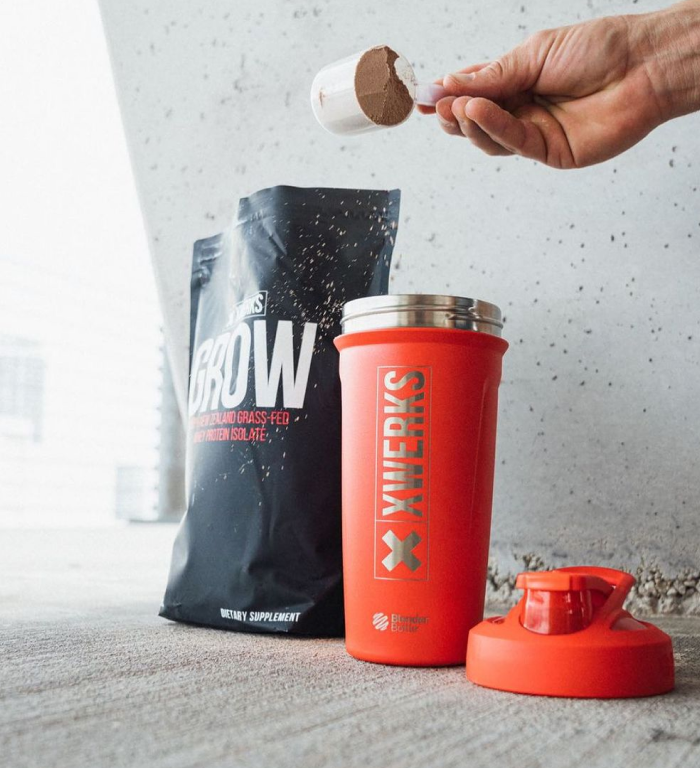
Grow is a practical choice when a recipe calls for flavored whey isolate and the flavor matches the food. Vanilla can fit a recipe designed for vanilla protein; chocolate can fit a chocolate recipe. The point is to select deliberately, not assume that every flavor works in every batter.
Grow is sweetened with stevia, so account for the fact that the powder already contributes sweetness. Do not automatically remove all the recipe’s sugar: sugar can affect more than sweetness, and a recipe may rely on its other functions. Use the recipe’s guidance or make a small test batch before a major adjustment.
When an unflavored powder is the better purchase
Choose an unflavored, unsweetened powder when you want control over the flavor and sweetening ingredients. That can be useful for a recipe with a carefully balanced flavor or for a savory application. It also makes the powder easier to use across several recipes that do not share one flavor.
If a recipe specifies casein, Naked Casein gives you a clearly identified micellar casein ingredient. If you need a plant-based recipe, Naked Pea is a relevant option to compare. Neither choice guarantees that an existing whey recipe will behave identically after substitution.
Use grams to make the result repeatable
Follow ingredient weights when the recipe supplies them. A scoop is a serving tool for one product, not a universal baking measurement. Changing brands can change scoop volume, powder weight, and the amount of protein in that scoop.
Keep a short note with the powder, flavor, amount used, and any changes to liquid or cooking time. Change one variable at a time when adapting a recipe. A small batch is a useful way to learn before committing a full bag of ingredients to an unfamiliar substitution.
Calculate protein per serving from the whole recipe
Add the protein supplied by every ingredient, then divide by the number of portions you actually make. For example, if the powder contributes 50 grams and the other ingredients contribute 22 grams, the batch contains about 72 grams. Divided into 12 equal muffins, that is about 6 grams per muffin.
This is an illustrative calculation, not a tested recipe or a claim about a particular muffin. Use your current labels and measured ingredient amounts. Adding a full scoop to a batch does not mean every serving contains a full scoop’s worth of protein.
For a starting point, explore our protein pancake guide and guide to adding protein to oatmeal. Match the stated protein type and preparation before experimenting with substitutions.
Compare protein per portion without misleading yourself
First calculate the protein in the whole batch from the measured ingredients. Then divide by the actual number of portions. Keep both numbers in your recipe notes so a larger piece does not get mistaken for an improved formula.
In the earlier illustrative batch, 72 grams of total protein divided into 12 equal muffins gives about 6 grams each. Divide that same batch into eight equal portions and the result is 9 grams each; six equal portions would provide 12 grams each. The batch did not gain protein when the portions became larger.

| Equal portions from a 72 g protein batch | Protein per portion |
|---|---|
| 6 | 12 g |
| 8 | 9 g |
| 12 | 6 g |
Separate powder weight from protein weight
If a recipe calls for a measured amount of powder, use that powder weight. The nutrition panel's protein grams describe one part of the powder, not the total ingredient weight to add to the bowl.
For label arithmetic, divide the protein per labeled serving by the powder weight per serving, then multiply by the powder weight used in the recipe. This works as an estimate when the current label provides both values. Add protein from the remaining ingredients before dividing the batch into portions.
Write down the flavor too. Changing from one flavor to another can change the listed nutrition and the final taste. A brand-wide headline is not a substitute for the panel on the bag used in the recipe.
Run a small, useful baking comparison
Begin with a recipe that specifies the protein category you have. Make a small batch according to its directions before adjusting ingredients. Record the powder and flavor, ingredient weights, pan or portion size, oven setting, and actual cooking time.
If you change something, change one variable in the next batch. Replacing the protein type, removing sweetener, changing the flour, and reducing the liquid together makes an unexpected result difficult to diagnose.
Describe the outcome plainly: easy to portion, too dry for your preference, too sweet, or a flavor you would repeat. These notes are more useful than declaring a product the best baking powder after an unrecorded substitution.
Troubleshoot the recipe before blaming the product
The portions came out differently sized. Divide the batter more evenly if you want comparable nutrition per piece. An average per-serving calculation does not mean every uneven muffin contains that exact amount.
The flavor is too strong. Check whether the recipe assumed an unflavored powder or a different flavor. A suitable unsweetened ingredient may be easier to adapt than trying to cancel an unwanted flavor with more additions.
The texture changed after a substitution. Compare the new ingredients and measurements with the original recipe. A whey, casein, or plant protein swap changes the ingredient choice; it is not simply exchanging matching scoop numbers.
Buy for the recipes you will make again
If your reliable recipes call for flavored whey isolate, Grow can serve a clear purpose in the pantry. If you mostly make recipes designed for casein or plant protein, select that type instead.
Keep one successful recipe card with the exact product and measured amounts. That turns the next purchase into a repeatable choice and gives you a useful baseline if you later experiment with another flavor.
Frequently asked questions
Can I replace flour with whey protein?
Only use the amount and substitution approach a suitable recipe supports. Treating protein powder as a universal flour replacement is unlikely to give predictable results.
Is flavored or unflavored protein better for baking?
Flavored powder is convenient when the recipe is designed around that flavor and sweetness. Unflavored, unsweetened powder offers more control.
Is Grow suitable for vegan baking?
No. Grow is milk-derived whey isolate. Choose a vegan recipe and an appropriate plant-based protein instead.
Does making fewer muffins increase the protein in the batch?
No. It increases the average protein per muffin by making fewer, larger portions. The batch total stays the same unless the ingredients change.
How can I estimate protein when I use less than a full scoop?
Use the label's protein grams and powder weight per serving to calculate the protein in the measured powder amount. Then add the other ingredients' protein before dividing by the actual yield.
Our recommendation
Buy XWERKS Grow for recipes designed around flavored whey isolate. For casein or plant-based baking, match that ingredient instead. The most reliable purchase is the one that fits a recipe you are ready to make.
How we chose these products
This guide is published by XWERKS, which sells one of the products compared. We evaluated current manufacturer information for protein type, flavor and sweetener information, manufacturer serving values, and compatibility with the recipe category. These are editorial recommendations based on labels and intended use; they do not represent hands-on testing or a clinical comparison of brands. Product details were checked on September 10, 2026. Check the current label for your chosen flavor and size.