Best Protein Powder for Women: What Actually Matters
Short answer: the best protein powder for women is the same as the best protein powder for men — a clean, high-quality whey isolate with a complete amino acid profile. There is no physiological reason women need a separate "women's protein." What matters is quality, digestibility, and what's not in the tub. Here's how to choose, and why the "for women" marketing is mostly noise.
Walk down any supplement aisle and you'll find protein powders marketed specifically "for women" — usually in pastel packaging, often with added "toning" or "slimming" claims, sometimes with lower protein per scoop and a higher price per gram. The uncomfortable truth: protein metabolism doesn't differ by sex in any way that requires a different protein powder. A gram of high-quality whey isolate builds and repairs muscle identically whether the person drinking it is a man or a woman. What actually matters is the quality of the protein and the cleanliness of the formula — and on those metrics, the best choice for women is the same as the best choice for anyone.

TL;DR
- There's no biological need for a sex-specific protein. Muscle protein synthesis works the same way in women and men. "Protein for women" is a marketing category, not a nutritional one.
- Whey isolate is the best all-around choice — highest protein per calorie, complete amino acid profile, low lactose, fast absorption. Grass-fed sourcing and minimal ingredients are the real quality markers.
- Watch for the "women's protein" traps: underdosed protein (15-18g vs 25g), added "fat burners" (green tea extract, CLA, L-carnitine at ineffective doses), extra sugar, and a higher price for less product.
- Protein needs scale with body weight and activity, not sex. Most active women are under-eating protein — aim for roughly 0.7-1g per pound of body weight if training regularly.
- Plant protein is a valid choice for vegans or those with dairy allergies — but requires blends (pea + rice) to complete the amino acid profile, and typically needs a slightly higher dose to match whey's leucine content.
Why "protein for women" is mostly marketing
The supplement industry segments products by demographic because it sells — not because the biology demands it. Muscle protein synthesis, the process by which your body uses dietary protein to build and repair muscle tissue, is driven by the same mechanisms in women and men: adequate total protein, sufficient leucine (the amino acid that triggers the process), and a training stimulus. None of these mechanisms are sex-specific.
What women's protein products often do differently is not an advantage:
Lower protein per serving. Many "women's" formulas contain 15-18g of protein per scoop instead of the 24-25g in a standard isolate, on the assumption that women need less. But protein needs scale with body weight and activity level, not sex — and most active women benefit from the same 25g dose that optimally triggers muscle protein synthesis.
Added "toning" and "fat-burner" ingredients. Green tea extract, CLA, L-carnitine, and raspberry ketones frequently appear in women's protein powders. At the doses included, these have minimal to no evidence of meaningful fat-loss or "toning" effect. They add cost and label clutter without adding benefit.
Higher price per gram of protein. Between the lower protein dose and the premium "women's wellness" positioning, these products often cost more per actual gram of protein delivered.
What actually matters when choosing a protein powder
1. Protein quality and source
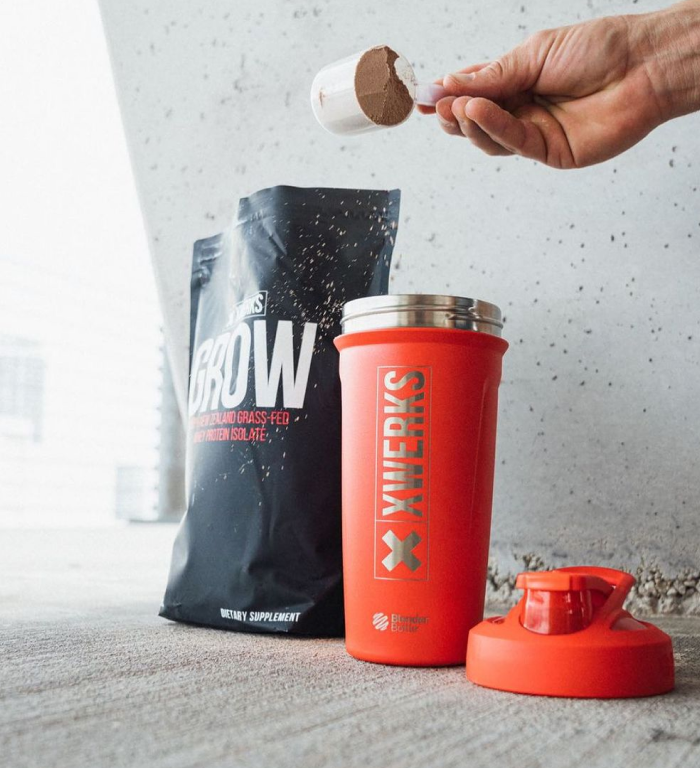
Whey protein isolate is the gold standard for most people: it has the highest protein-per-calorie ratio, a complete essential amino acid profile, and the highest leucine content of common protein sources — which makes it especially effective at triggering muscle protein synthesis. Grass-fed sourcing (like the New Zealand whey in Grow) means the raw material comes from cows raised without added hormones or routine antibiotics.
2. A short, clean ingredient list
The fewer ingredients, the better. A quality isolate needs little more than the protein itself, a natural flavoring, and a natural sweetener. Long ingredient lists with gums, artificial sweeteners, added sugars, and "proprietary blends" are red flags — they usually indicate a cheaper base protein dressed up with additives.
3. Low lactose and good digestibility
Roughly 65% of adults have some degree of lactose malabsorption, and women frequently report bloating from protein powders. This is almost always the lactose in cheap whey concentrate, not the whey protein itself. A quality whey isolate has less than 1% lactose — typically under 0.5g per serving — which resolves the issue for the vast majority of people. (More on this in our protein for sensitive stomachs guide.)
4. Sweetener choice
Naturally sweetened proteins (stevia, monk fruit) avoid the artificial sweeteners (sucralose, acesulfame-K) that some people find cause GI distress or an unpleasant aftertaste over time. Grow uses stevia only.
5. Adequate protein dose
Look for 24-25g per serving. This is the amount that reliably maximizes the muscle protein synthesis response per meal for most adults. Don't accept an underdosed "women's" formula at 15-18g.
How the main protein types compare
| Protein type | Best for | Notes |
|---|---|---|
| Whey isolate | Most women | Highest protein/calorie, low lactose, fast-absorbing, complete profile. The default best choice. |
| Whey concentrate | Budget option | Cheaper but higher lactose and fat; more likely to cause bloating. |
| Casein | Nighttime / satiety | Slow-digesting; good before bed or for fullness. Not ideal post-workout. |
| Pea + rice blend | Vegan / dairy allergy | Complete profile only when blended; needs slightly higher dose to match whey's leucine. |
| Collagen | Skin/joints (not muscle) | Incomplete protein, low leucine — poor for muscle building. Fine as a supplement, not a primary protein. |
See our full breakdown: collagen vs whey protein
How much protein do women actually need?
The RDA of 0.36g per pound of body weight is a bare minimum to prevent deficiency — not an optimal target for active women. Research on body composition and muscle maintenance supports considerably higher intakes:
Generally active women: roughly 0.55-0.7g per pound of body weight.
Women training regularly / building muscle: roughly 0.7-1g per pound of body weight.
Women in a fat-loss phase: the higher end (0.8-1g/lb) helps preserve muscle in a calorie deficit and increases satiety.
For a 140-lb woman training regularly, that's roughly 98-140g of protein per day. Most women fall well short of this from food alone, which is exactly where a clean protein powder earns its place — it makes hitting the target practical without adding much in the way of calories. One scoop of Grow adds 25g of protein for only 110 calories.
Common questions
Will protein powder make me bulky?
No. This is one of the most persistent myths in women's fitness. Building large amounts of muscle requires a significant calorie surplus, years of dedicated heavy training, and the hormonal profile (notably far higher testosterone) that most women don't have. Protein powder simply helps you meet your protein target. Combined with training, it helps you build the lean, strong physique most women are actually after — not bulk.
Is whey protein safe during pregnancy or breastfeeding?
Whey protein is food, and protein needs increase during pregnancy and breastfeeding. A clean isolate with minimal additives is generally considered fine, but you should always confirm with your OB/GYN or midwife, since individual circumstances vary and some added ingredients (certain herbs, high caffeine, etc.) are best avoided.
Can I use protein powder to lose weight?
Protein supports fat loss indirectly — it's the most satiating macronutrient, helps preserve muscle in a deficit, and has a higher thermic effect than carbs or fat. A protein shake can be an effective, low-calorie way to control hunger. But the powder itself isn't a "fat burner" — fat loss comes from the overall calorie deficit. See whey protein for weight loss.
What's the best time to take it?
Total daily protein matters far more than timing. That said, convenient windows include post-workout, with breakfast (a common protein-light meal), or as a snack to bridge the gap to your daily target. A shake before bed can also help with overnight recovery.
The Bottom Line
The best protein powder for women isn't a special "women's formula" — it's a clean, high-quality whey isolate with an adequate protein dose and a short ingredient list. The biology of building and maintaining muscle is the same regardless of sex, so the quality markers that matter are universal: grass-fed source, 24-25g protein per serving, low lactose, natural sweeteners, and no unnecessary fillers or ineffective "fat-burner" add-ins.
Avoid the common "protein for women" traps: underdosed protein, added toning/slimming ingredients that don't work, extra sugar, and a higher price for less. And don't fear that protein will make you bulky — it won't. It helps you hit your protein target, which supports a lean, strong physique when paired with training.
XWERKS Grow checks every box that actually matters: 25g of grass-fed New Zealand whey isolate, 110 calories, stevia-sweetened, four ingredients, under 0.5g lactose. No gimmicks, no gender marketing — just clean, effective protein.
Clean Protein. No Gimmicks.
XWERKS Grow — 25g grass-fed New Zealand whey isolate, 110 calories, four ingredients, naturally sweetened. The quality that matters, for women and men alike.
Shop GrowFurther Reading
Best-Tasting Whey Protein — Independent reviewer rankings and what makes protein taste good.
Whey Protein Isolate Benefits — Why isolate beats concentrate for most people.
Creatine for Menopause — Why creatine is one of the most valuable supplements for women over 40.
Supplements for Women Over 40 — The short list that's actually worth taking.
Does Protein Build Muscle? — How muscle protein synthesis actually works.
References
1. Morton RW, et al. A systematic review, meta-analysis and meta-regression of the effect of protein supplementation on resistance training-induced gains in muscle mass and strength. Br J Sports Med. 2018;52(6):376-384.
2. Phillips SM, Van Loon LJC. Dietary protein for athletes: from requirements to optimum adaptation. J Sports Sci. 2011;29(sup1):S29-S38.
3. Moore DR, et al. Ingested protein dose response of muscle and albumin protein synthesis after resistance exercise in young men. Am J Clin Nutr. 2009;89(1):161-168.
4. Wolfe RR. The role of dietary protein in optimizing muscle mass, function and health outcomes in older individuals. Br J Nutr. 2012;108(S2):S88-S93.
5. Leidy HJ, et al. The role of protein in weight loss and maintenance. Am J Clin Nutr. 2015;101(6):1320S-1329S.