Best Protein Powder for Muscle Gain: What the Research Actually Supports
Short answer: for building muscle, the best protein powder is a whey isolate with a high leucine content and roughly 25g of protein per serving. Whey's superior leucine and fast absorption make it the most effective protein for triggering muscle protein synthesis — the process that actually builds muscle. Here's what matters, how much you need, and why the protein is only half the equation.
If your goal is gaining muscle, the protein powder you choose does matter — but probably not for the reasons the marketing suggests. It's not about exotic ingredients or "anabolic" blends. It comes down to two things: the leucine content (the amino acid that switches on muscle protein synthesis) and hitting an adequate total protein intake across the day. Whey protein isolate happens to be exceptional at both. Let's break down why, how much you actually need, and the supporting supplements that genuinely help.

TL;DR
- Whey isolate is the best protein for muscle gain — highest leucine content of common proteins, fast absorption, and a complete amino acid profile. Leucine is the trigger for muscle protein synthesis, and whey delivers more of it per gram than casein or plant proteins.
- Aim for ~25g per serving and ~2.5-3g of leucine. That's the amount shown to maximally stimulate muscle protein synthesis per meal for most adults.
- Total daily protein is what actually drives growth: roughly 0.7-1g per pound of body weight per day, spread across 3-5 meals. The powder's job is to make that total easy to hit.
- Protein alone doesn't build muscle — you need progressive resistance training and (for maximal gain) a slight calorie surplus. Powder is a tool to hit protein targets, not a substitute for training.
- Creatine is the single best add-on for muscle gain — the most well-researched supplement for increasing strength and lean mass. Whey + creatine is the highest-value muscle-building stack.
Why whey isolate is best for building muscle
Muscle growth is governed by muscle protein synthesis (MPS) — the process of building new muscle protein. When MPS exceeds muscle protein breakdown over time, you gain muscle. Two things about a protein determine how well it drives MPS: its leucine content and its digestion speed.
Leucine is the trigger. Of the three branched-chain amino acids, leucine is the one that directly activates the mTOR pathway that switches on muscle protein synthesis. Research points to a "leucine threshold" of roughly 2.5-3g per meal to maximally stimulate MPS. Whey protein is about 10-11% leucine by weight — the highest of the common protein sources — so a standard 25g serving comfortably clears that threshold.
Fast absorption creates a strong MPS spike. Whey is rapidly digested, producing a fast, high rise in blood amino acids — a sharp "pulse" that drives a robust MPS response. This is ideal around training. (Casein, by contrast, digests slowly and is better suited to sustained overnight amino acid delivery.)
How the protein types rank for muscle gain
| Protein | Leucine (per 25g) | Digestion | Muscle-gain rating |
|---|---|---|---|
| Whey isolate | ~2.7g | Fast | Best |
| Whey concentrate | ~2.5g | Fast | Excellent |
| Casein | ~2.3g | Slow | Good (nighttime) |
| Egg | ~2.1g | Moderate | Good |
| Pea + rice blend | ~2.0g | Moderate | Good (needs higher dose) |
| Collagen | ~1.1g | Moderate | Poor (incomplete) |
Leucine values are approximate and vary by product. Whey's high leucine per serving is the key reason it tops the list for muscle gain.
How much protein you need to gain muscle
The protein powder is a tool for hitting your daily total — and the daily total is what actually drives growth. The research-backed target for building muscle is roughly 0.7-1g of protein per pound of body weight per day (about 1.6-2.2g/kg). Going meaningfully higher doesn't produce more muscle; this range is where the benefit plateaus.
For a 180-lb person, that's roughly 126-180g of protein per day. Distributing it across 3-5 meals of 25-40g each keeps muscle protein synthesis elevated throughout the day. Most people can get most of this from whole foods — the powder fills the gaps, especially post-workout and at protein-light meals like breakfast.
The protein is only half the equation
No protein powder builds muscle on its own. The three non-negotiables for muscle gain are:
1. Progressive resistance training. Muscle grows in response to a training stimulus that progressively increases over time. Without it, extra protein is just extra calories.
2. Adequate total protein (the 0.7-1g/lb covered above).
3. Sufficient energy. Building muscle maximally requires eating at maintenance or a slight surplus (roughly 200-400 calories above maintenance). You can build some muscle in a deficit — especially as a beginner or when returning from a layoff — but maximal growth needs the fuel. For the fat-loss-while-gaining scenario, see body recomposition.
The best add-on: creatine
If you want to add one supplement to whey for muscle gain, make it creatine monohydrate. It's the most-researched sports supplement in existence, with a large body of evidence showing increased strength, power, and lean muscle mass when combined with resistance training. It works by replenishing ATP (your muscles' rapid energy currency), letting you train harder and recover faster between sets — which drives greater training adaptations over time.
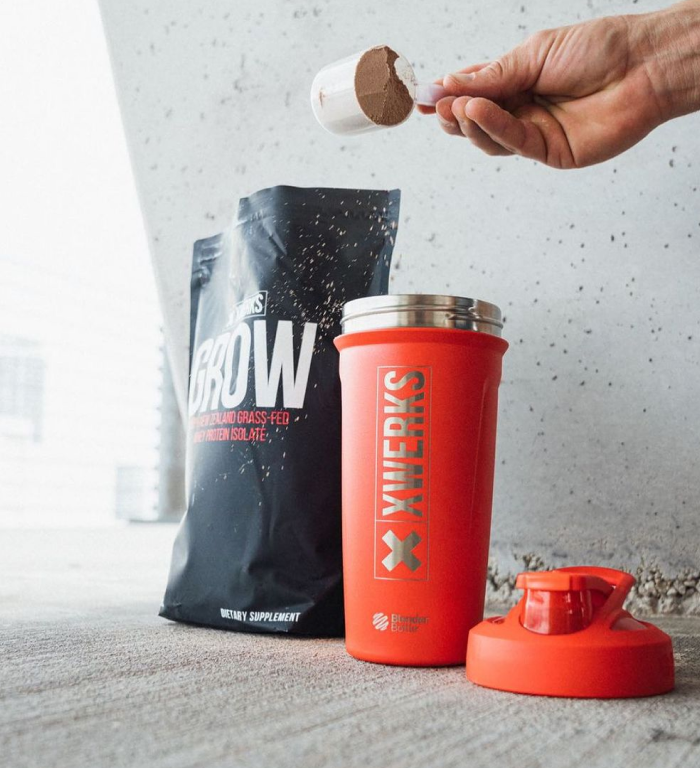
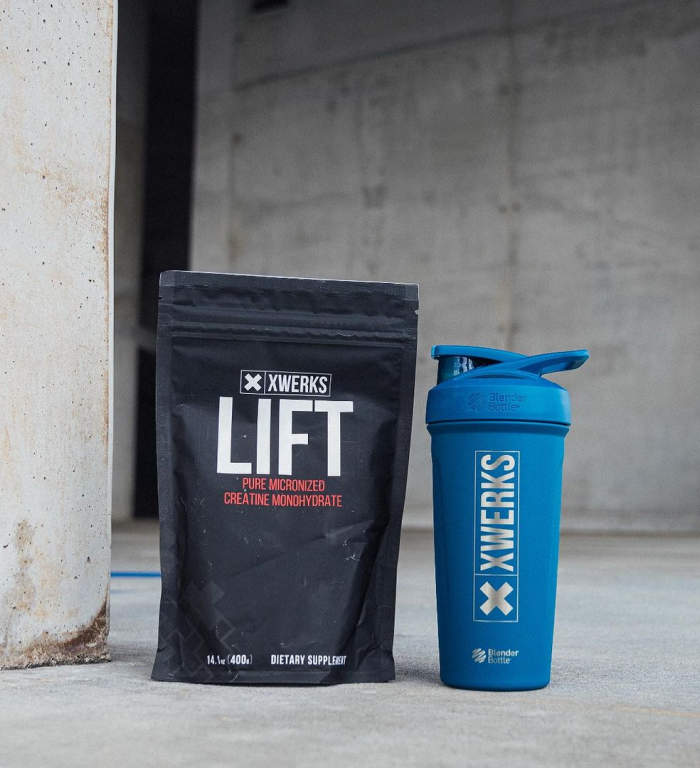
Whey + creatine is the highest-value, best-evidenced muscle-building stack available. Whey supplies the building blocks and the MPS trigger; creatine improves the training that stimulates growth. XWERKS Lift is pure micronized creatine monohydrate at the research-backed 5g dose — it mixes cleanly into a Grow shake.
What to look for in a muscle-gain protein
~25g protein per serving to clear the leucine threshold in one scoop. Whey isolate base for the highest leucine and cleanest profile. Grass-fed sourcing for a cleaner raw material. Short ingredient list — no need for added sugars or "anabolic" proprietary blends that don't do anything. Good mixability and taste so you'll actually drink it consistently, since consistency is what compounds into results. Grow was named best-tasting whey by Garage Gym Reviews after testing 100+ products, which matters more than it sounds — the best protein for muscle gain is the one you'll take every day.
The Bottom Line
The best protein powder for muscle gain is a whey isolate with a high leucine content and about 25g of protein per serving. Whey's leucine content and fast absorption make it the most effective protein for triggering muscle protein synthesis — the process that builds muscle. Isolate edges out concentrate for lean gains thanks to its higher protein-per-calorie ratio.
But the powder is a tool, not magic. Muscle gain requires progressive resistance training, an adequate daily protein total (0.7-1g per pound of body weight), and sufficient calories. The protein powder's job is to make hitting your protein target easy and consistent.
For the best results, pair whey with creatine monohydrate — the most well-researched muscle-building supplement. XWERKS Grow (25g grass-fed whey isolate, high leucine) plus XWERKS Lift (5g micronized creatine) is the simplest, best-evidenced muscle-gain stack available.
The Muscle-Gain Stack
XWERKS Grow — 25g grass-fed whey isolate, high leucine, 110 calories. XWERKS Lift — 5g pure micronized creatine monohydrate. Whey supplies the building blocks; creatine powers the training that builds muscle.
Shop Grow Shop LiftFurther Reading
Does Protein Build Muscle? — The muscle protein synthesis mechanism explained.
How Much Protein Do I Need? — Daily targets by body weight and goal.
Best-Tasting Whey Protein — Why taste drives the consistency that builds muscle.
Whey Protein Isolate Benefits — Why isolate is the best base for lean gains.
Body Recomposition — How to gain muscle and lose fat simultaneously.
References
1. Morton RW, et al. A systematic review, meta-analysis and meta-regression of the effect of protein supplementation on resistance training-induced gains in muscle mass and strength. Br J Sports Med. 2018;52(6):376-384.
2. Tang JE, et al. Ingestion of whey hydrolysate, casein, or soy protein isolate: effects on mixed muscle protein synthesis at rest and following resistance exercise. J Appl Physiol. 2009;107(3):987-992.
3. Jager R, et al. International Society of Sports Nutrition Position Stand: protein and exercise. JISSN. 2017;14:20.
4. Norton LE, Layman DK. Leucine regulates translation initiation of protein synthesis in skeletal muscle after exercise. J Nutr. 2006;136(2):533S-537S.
5. Kreider RB, et al. International Society of Sports Nutrition position stand: safety and efficacy of creatine supplementation. JISSN. 2017;14:18.
6. Schoenfeld BJ, Aragon AA. How much protein can the body use in a single meal for muscle-building? JISSN. 2018;15:10.