Which Countries Have the Highest Testosterone Levels?
Available data suggest that men in Mongolia, Ethiopia, Nigeria, and Pakistan have some of the highest average testosterone levels in the world, while men in the United States, Canada, Brazil, and Australia tend to fall significantly lower. But this data comes with major caveats — and the factors driving the differences tell you more about your own testosterone than the numbers themselves.
The data: Top 10 countries by average testosterone
The following rankings are compiled from various clinical studies conducted between 2010 and 2022. It's important to note upfront that these are ecological averages — they represent population-level data, not standardized measurements using identical methods across all countries. We'll address the limitations below.
| Rank |
Country |
Avg. Testosterone (ng/dL) |
| 1 |
Mongolia |
693 |
| 2 |
Ethiopia |
671 |
| 3 |
Nigeria |
649 |
| 4 |
Pakistan |
635 |
| 5 |
Egypt |
623 |
| 6 |
Russia |
619 |
| 7 |
Saudi Arabia |
605 |
| 8 |
Poland |
595 |
| 8 |
Kyrgyzstan |
595 |
| 10 |
Sudan |
589 |
| — |
China |
480 |
| — |
India |
474 |
| — |
United States |
420-459 |
| — |
Canada |
402 |
Data compiled from various studies dated 2010-2022 | Source: World Population Review, multiple clinical studies | Normal reference range for young healthy men (19-39): 264-916 ng/dL (Travison et al., 2017) | These are ecological averages and should not be used for individual diagnosis
Important limitations of this data: These numbers are compiled from different studies using different lab methods, different assay calibrations, different sample sizes, and different age ranges. A study measuring 50 men in one Ethiopian clinic is not directly comparable to a large-scale American population survey. Countries with younger median populations will naturally average higher (testosterone declines with age). Countries with lower obesity rates will also average higher. This data is useful for generating hypotheses about lifestyle and hormonal health — not for drawing firm conclusions about genetic differences between populations.
Why do some countries average higher?
The gap between Mongolia (693 ng/dL) and the United States (~420-459 ng/dL) is substantial — roughly 50% higher. The most likely explanations are not primarily genetic. They're lifestyle, metabolic, and demographic.
Obesity rates
This is almost certainly the single largest factor. Adipose tissue contains aromatase, the enzyme that converts testosterone to estrogen. Higher body fat means more testosterone lost to this conversion. The United States has an adult obesity rate of approximately 42%. Mongolia's is around 20%. Ethiopia's is under 5%. Nigeria's is approximately 8.9%.
The correlation between national obesity rates and average testosterone levels is remarkably strong. Countries at the top of the testosterone list tend to have low obesity rates. Countries at the bottom — the US, Canada, Australia, much of Western Europe — tend to have high ones. This single variable likely explains the majority of the difference.
Age demographics
Testosterone declines naturally with age — approximately 1-1.5% per year after age 30. Countries with younger median populations will naturally average higher testosterone. Ethiopia's median age is approximately 19 years. Nigeria's is around 18. The United States' median age is approximately 38. This demographic difference alone could account for a significant portion of the gap without invoking any lifestyle, genetic, or dietary factors.
Physical activity patterns
Many of the highest-ranking countries have populations with significantly higher levels of daily physical activity — not gym workouts, but physically demanding occupations, walking-based transportation, manual labor, and agricultural work. The sedentary lifestyle common in highly developed nations (desk jobs, car commutes, screen-based entertainment) is associated with lower testosterone through multiple pathways: reduced muscle mass, increased fat mass, and lower overall metabolic demand.
Diet composition
Traditional diets in many high-testosterone countries share several characteristics that support hormonal health: lower processed food consumption (less refined sugar, fewer trans fats, fewer ultra-processed calorie-dense foods), adequate dietary fat from whole food sources (animal fats, nuts, seeds, cooking oils), higher intake of zinc-rich foods (red meat, organ meats, legumes) — zinc is a direct precursor for testosterone synthesis, more whole foods and fewer calorie-dense but nutrient-poor processed products, and lower alcohol consumption in some populations (particularly Muslim-majority countries like Pakistan, Egypt, Saudi Arabia, and Sudan where alcohol use is restricted).
This aligns with the evidence from our review of testosterone-killing foods: the dietary patterns most harmful to testosterone are exactly the ones most prevalent in Western nations — excess sugar, ultra-processed foods, chronic alcohol consumption, and caloric surplus leading to fat gain.
Vitamin D and sunlight exposure
Vitamin D is a steroid hormone precursor that plays a direct role in testosterone production. Countries closer to the equator or with outdoor-dominant lifestyles generally have higher vitamin D status. Many of the top 10 countries (Ethiopia, Nigeria, Egypt, Saudi Arabia, Sudan, Pakistan) are in equatorial or sub-tropical regions where sunlight exposure is high year-round. By contrast, vitamin D deficiency is endemic in Northern nations — an estimated 42% of American adults are vitamin D deficient.
Environmental endocrine disruptors
Industrialized nations have higher exposure to environmental chemicals that can disrupt hormonal function: BPA and phthalates (from plastics, food packaging, personal care products), pesticide residues in the food supply, PFAS and other "forever chemicals" in water and consumer products, and microplastics (now detected in human blood, placental tissue, and testicular tissue). Research on the direct testosterone impact of these exposures is still developing, but the Endocrine Society has classified several of these compounds as endocrine-disrupting chemicals (EDCs) with potential effects on male reproductive health. Countries with less industrialization and less plastic/chemical exposure may face lower EDC burden.
The Western testosterone decline
The conversation about global testosterone differences is closely related to a well-documented trend: average testosterone levels in American and European men have been declining for decades. A landmark study by Travison et al. (2007) found that age-matched testosterone levels dropped by roughly 1% per year between the 1980s and 2000s — meaning a 50-year-old man in 2000 had significantly lower testosterone than a 50-year-old man in 1980. This decline isn't explained by aging alone, since the comparison was age-adjusted.
The likely drivers are the same factors that explain the cross-country differences: rising obesity rates, more sedentary lifestyles, increased processed food consumption, higher exposure to endocrine disruptors, chronic stress, sleep disruption, and declining smoking rates (nicotine temporarily raises testosterone, so declining tobacco use paradoxically contributes to lower population averages).
What this means for you: You can't change your country, your age, or your genetics. But the modifiable factors that drive the gap between high-testosterone and low-testosterone nations are the same ones you can address individually: maintain a healthy body composition (the biggest single lever), stay physically active, eat a whole-food diet adequate in fat, protein, zinc, and vitamin D, minimize processed food and excess sugar, limit alcohol, manage stress and
cortisol levels, and address specific nutritional gaps through targeted supplementation.
What you can actually control
The cross-country data is interesting, but the practical takeaway is individual. The lifestyle factors that separate high-testosterone populations from low-testosterone ones are largely within your control:
Body composition: Maintain a healthy body fat percentage. This is the single most impactful variable for testosterone.
Training: Resistance training and high-intensity exercise directly stimulate testosterone production and maintain the muscle mass that supports healthy hormonal function.
Nutrition: Eat adequate fat (25-30% of calories), sufficient protein, and prioritize whole foods over processed. Minimize the dietary patterns that suppress testosterone.
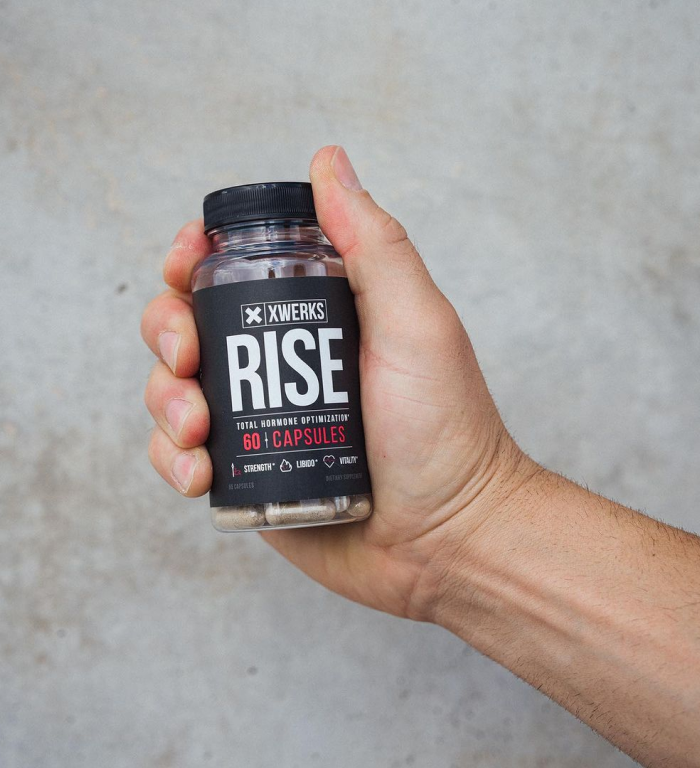
Micronutrient optimization: Zinc (critical for testosterone synthesis — most Western diets fall short), vitamin D (42% of Americans are deficient), magnesium (involved in over 300 enzymatic reactions including testosterone production), and boron (shown to increase free testosterone and reduce SHBG). XWERKS Rise provides 15mg zinc, 6mg boron, plus 400mg Tongkat Ali and 250mg Shilajit — addressing the supplementation side of the equation.
Stress management: Chronic cortisol elevation directly suppresses the HPG axis. Ashwagandha and Tongkat Ali both have evidence for cortisol modulation.
Sleep: Testosterone production peaks during deep sleep. Chronic sleep restriction (under 6 hours) is associated with significantly lower testosterone.
The Bottom Line
The countries with the highest testosterone levels tend to share common characteristics: younger populations, lower obesity rates, more physically active lifestyles, traditional whole-food diets, higher sunlight exposure, and lower exposure to endocrine-disrupting chemicals. The countries with the lowest levels — including the United States — have the opposite profile.
The gap isn't destiny. The same factors driving the national-level differences are individually modifiable: body composition, physical activity, diet quality, micronutrient status, stress, and sleep. You can't move to Mongolia, but you can adopt the lifestyle patterns that countries with higher testosterone share — and supplement the specific nutrients (zinc, vitamin D, boron, Tongkat Ali) where Western diets consistently fall short.
Address the Gaps Western Diets Create
XWERKS Rise — 400mg Tongkat Ali, 15mg Zinc, 6mg Boron, 250mg Shilajit, 10mg BioPerine. Targeted testosterone support for the nutrients your diet is missing.
SHOP RISE →
Further Reading
Testosterone-Killing Foods: What the Research Actually Shows — The dietary patterns that suppress testosterone, rated by evidence strength.
Tongkat Ali FAQ — The most evidence-backed natural testosterone-support ingredient, explained.
Cortisol vs. Testosterone — How chronic stress suppresses testosterone and what to do about it.
Low Testosterone: What Are the Symptoms? — How to recognize the signs of declining T.
Unhealthy Lifestyle Habits and Low Testosterone — The complete lifestyle picture.
References
1. Travison TG, et al. A population-level decline in serum testosterone levels in American men. J Clin Endocrinol Metab. 2007;92(1):196-202.
2. Travison TG, et al. Harmonized reference ranges for circulating testosterone levels in men of four cohort studies. J Clin Endocrinol Metab. 2017;102(4):1161-1173.
3. Bhasin S, et al. Testosterone therapy in men with hypogonadism: an Endocrine Society clinical practice guideline. J Clin Endocrinol Metab. 2018;103(5):1715-1744.
4. World Population Review. Testosterone levels by country. 2024-2026 compilation from multiple clinical studies.
5. Gore AC, et al. EDC-2: The Endocrine Society's second scientific statement on endocrine-disrupting chemicals. Endocr Rev. 2015;36(6):E1-E150.
6. Pilz S, et al. Effect of vitamin D supplementation on testosterone levels in men. Horm Metab Res. 2011;43(3):223-225.