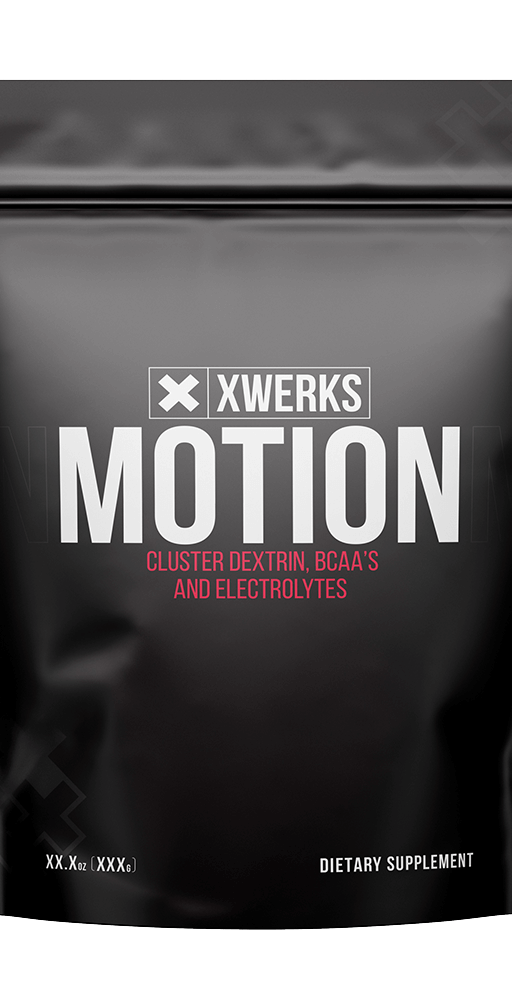
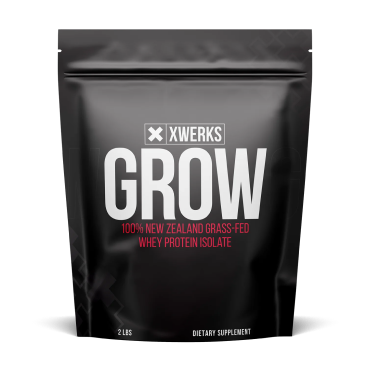
Xwerks Grow - 100% New Zealand grass-fed whey protein isolate.
Our protein is sourced from naturally raised grass-fed cows that naturally graze on the countryside of New Zealand, one of the strictest countries in the world when it comes to dairy quality. Meaning no hormones, antibiotics or pesticides that can be passed on to you.
Whey isolate means our whey is "isolated" through micro filtration to almost totally pure protein at25g of protein and over 6g of BCAA's per servingwith no lactose, carbs or fats (Peanut Butter contains 23g of Protein, 2g fat and 2g carbs). Our unique protein formula contains only whey protein isolate and is not blended with lesser quality whey.
Grow is naturally sweetened and flavored making it truly the cleanest protein available.
Made from grass-fed, pasture raised cows in New Zealand
100% whey protein isolate
Cold pressed, non ion-exchange filtering
No artificial sweetners, flavors or coloring
Soy and Gluten free
Processed acid and bleach free
Amazing rich flavor with no aftertaste
Raw whey is rich in protein substances, called native micro fractions. These include; alpha lactalbumin, beta-lactoglobulin, glycomacropeptide, immunoglobulins, serum albumin, lactoferrin, lactoperoxidase.
Our micro filtration process helps preserve these important biological nutrients while removing unwanted fats and carbohydrates (such as lactose).
This means our whey has the following benefits and more:
Muscle growth and repair
Strengthens and boosts the immune system
Anti-oxidant properties
Easily digestible, no bloat
Fantastic flavor
No clumping
FAQ
WHAT CAN I EXPECT FROM USING GROW
Increased muscle repair and recovery
No bloated feel
Great flavor with no after taste
Instant mixing with no clumping
HOW MANY SERVINGS IS GROW One bag contains 30 servings.
WHAT IS THE DIFFERENCE BETWEEN YOUR PROTEIN AND OTHERS We have a couple blog posts that may help answer that:
IS GROW DAIRY FREE No, but it does not contain lactose due to our microfiltration process.
DOES GROW CONTAIN SUGAR No, it is naturally sweetened with Stevia.
DOES GROW CONTAIN PEANUTS Only Peanut Butter PR contains peanuts.
WHAT IS GROW FLAVORED WITH Cocoa bean for Chocolate Cream, vanilla bean for Vanilla Victory and peanut butter powder and cocoa bean for Peanut Butter PR.
HOW MUCH IS SHIPPING $5, or free for orders over $75
IS GROW KETO FRIENDLY Yes it is, our low carb formula is perfect for anyone following the keto diet
Sourcing, dosing, timing, and how protein actually builds muscle.
Last reviewed: April 2026 · ~11 min read
TL;DR
Whey protein isolate is a high-quality, fast-digesting dairy protein containing 90%+ protein by weight with minimal fat and lactose. For muscle building, aim for 1.6–2.2g of total protein per kg of bodyweight per day, distributed across 3–5 meals. Grass-fed New Zealand whey offers stricter dairy standards and a cleaner sourcing story than most commodity whey — the muscle-building performance is equivalent gram-for-gram.
What is whey protein isolate?
Whey protein isolate (WPI) is a dairy protein powder produced by filtering liquid whey — the byproduct of cheese production — to remove most of the fat, lactose, and non-protein solids. The resulting powder is typically 90% or more protein by weight, with a complete amino acid profile and high concentrations of branched-chain amino acids, particularly leucine, which is the primary trigger of muscle protein synthesis.
Because isolate is processed further than concentrate, it delivers more protein per gram, fewer calories from fat and carbs, and meaningfully less lactose — making it the preferred form for people who are lactose-sensitive, tracking macros, or looking for the cleanest possible protein source.
Whey is also a complement to other supplements like creatine. If you're not already taking it, see our complete guide to creatine monohydrate — creatine and whey together are the most evidence-backed pairing in sports nutrition.
Isolate vs. concentrate vs. hydrolysate
The three main forms of whey differ primarily in processing and protein density. Concentrate is the least processed (70–80% protein), isolate is more filtered (90%+ protein), and hydrolysate is enzymatically pre-digested for faster absorption. All three are effective for muscle protein synthesis — the differences matter most for tolerance, calorie control, and cost.
Form
Protein %
Lactose
Cost
Best For
Concentrate
70–80%
Higher
$
Budget, bulk use
Isolate
90%+
Minimal
$$
Lean protein, lactose-sensitive
Hydrolysate
90%+
Minimal
$$$
Fastest absorption, highest cost
Research comparing isolate and hydrolysate for long-term muscle growth has shown essentially equivalent outcomes in trained lifters, suggesting the premium for hydrolysate is not justified by additional muscle-building benefit for most users. For almost everyone, isolate is the sweet spot of quality, tolerance, and value.
Why grass-fed New Zealand whey?
Grass-fed New Zealand whey comes from cows raised on pasture under New Zealand's strict dairy standards, which prohibit rBGH growth hormones and maintain tight controls on herd health and feed. The resulting whey tends to have a slightly better omega-3 to omega-6 fatty acid ratio, higher conjugated linoleic acid (CLA) content, and a cleaner sourcing story than commodity whey from large industrial dairies.
The muscle-building performance of grass-fed vs. conventional whey is essentially equivalent gram-for-gram — the leucine content and amino acid profile are similar. The reasons to choose grass-fed are sourcing transparency, avoidance of synthetic hormones, and environmental standards, not a meaningful acute performance difference.
How much protein per day?
For adults engaged in resistance training and targeting muscle growth, research supports 1.6 to 2.2 grams of protein per kilogram of bodyweight per day (0.7 to 1.0 g per pound). Most people land in the middle — around 1.8 g/kg — with higher intakes offering diminishing returns. Spreading protein across 3 to 5 meals of roughly 0.4 g/kg each optimizes muscle protein synthesis.
Daily Protein Target by Bodyweight
Based on Morton et al. meta-analysis, British Journal of Sports Medicine (2018)
Protein timing: does the anabolic window exist?
The anabolic window is real but much wider than once believed — typically 3 to 5 hours around training rather than the 30-minute window popularized in the 1990s. A 2013 meta-analysis by Schoenfeld found that total daily protein intake was a stronger predictor of muscle growth than precise post-workout timing, meaning you do not need to race home to drink a shake the moment your last set ends.
Muscle Protein Synthesis After a Protein Dose
Source: Schoenfeld et al., J Int Soc Sports Nutr (2013)
Practical guidance: aim to have a protein-containing meal or shake within a few hours before or after training, and focus on hitting your daily total across consistent, evenly-spaced meals. The rigid "30 minutes post-workout or it's wasted" rule has not held up under scrutiny.
Whey for specific populations
Adults over 50
Older adults face anabolic resistance — the same protein dose produces a smaller muscle protein synthesis response than in younger adults. The practical fix is to aim for the upper end of the protein range (2.0–2.2 g/kg) and to ensure each meal contains at least 30–40 grams of high-quality protein, with leucine-rich sources like whey being particularly effective at crossing the threshold needed to trigger MPS.
GLP-1 medication users
People on semaglutide, tirzepatide, and similar GLP-1 receptor agonists face a documented risk of losing significant lean mass alongside fat during rapid weight loss — some trials show up to 40% of weight lost comes from lean tissue. Maintaining protein intake at the upper end of the range (2.0 g/kg or higher of goal bodyweight) and pairing with resistance training is the most evidence-backed strategy to preserve muscle through GLP-1-driven weight loss. A protein shake is often the most practical way to hit the target when appetite is suppressed.
Women
The research on protein requirements applies equivalently to women, and the old concern that whey would cause women to "bulk up" has no physiological basis — whey is just a high-quality protein source, not a hormonal supplement. Women benefit from the same 1.6–2.2 g/kg range and the same leucine thresholds to trigger muscle protein synthesis.
Common concerns addressed
Does whey cause acne?
Some individuals report increased acne when consuming whey regularly, and there is plausible biological rationale: whey's insulinotropic effect and impact on IGF-1 signaling can influence sebum production in susceptible people. The effect is not universal, and many people consume whey without any skin changes. See our full evidence review on whey and acne. If you notice a correlation, switching to isolate (lower in the bioactive fractions most implicated), reducing serving size, or trialing a plant-based alternative are reasonable steps.
Does whey cause bloating?
Bloating from whey is typically caused by lactose in concentrate rather than the protein itself. Switching to isolate — which contains minimal lactose — resolves the issue for most people. Rarer causes include individual sensitivity to specific whey fractions like beta-lactoglobulin.
Is whey safe for kidneys?
In healthy adults, high-protein diets including whey supplementation do not harm kidney function. A 2018 meta-analysis found no adverse effect on glomerular filtration rate or other renal markers. The "protein damages kidneys" concern applies only to individuals with pre-existing kidney disease, who should work with a physician on protein targets.
How to choose a whey protein isolate
Protein per serving — look for 24g+ per scoop. Below that, you're paying for filler.
Source transparency — grass-fed, New Zealand or equivalent strict-standard dairy is preferable for sourcing, not performance reasons.
Minimal ingredient list — protein, natural flavor, a small amount of lecithin for mixing, stevia or monk fruit. Avoid artificial dyes and proprietary blends.
Third-party tested — certificates of analysis for heavy metals and banned substances.
No amino spiking — some cheap products add free amino acids like glycine and taurine to inflate the protein content measured by nitrogen testing.
Who should take whey protein?
Anyone struggling to hit their daily protein target through whole foods alone.
Resistance-training athletes looking to maximize muscle growth and recovery.
Adults over 50, who need higher per-meal protein to overcome anabolic resistance.
How many grams of protein should I drink in one sitting?
Research suggests roughly 0.4 g of protein per kg of bodyweight per meal is an effective target for maximizing muscle protein synthesis — typically 25–40 grams depending on body size. Larger amounts are still used, just at a diminishing rate.
Can I take whey protein without working out?
Yes. Whey is simply a concentrated protein source. If you struggle to hit your daily protein target through whole foods, whey is a convenient option regardless of whether you train that day.
Is whey protein good for weight loss?
Higher protein intake increases satiety and helps preserve lean mass during a caloric deficit. Whey isolate is particularly useful during weight loss because it's high in protein and low in calories per gram compared to most protein sources.
Can I mix whey with water or milk?
Both work. Water keeps calories and carbs lower. Milk adds protein, calories, and a creamier texture — a good choice if you're trying to gain weight.
Does whey expire?
Sealed whey typically has a 2-year shelf life. Once opened, use within 6–12 months and store in a cool, dry place. Clumping usually indicates moisture exposure; off smells indicate it's past usable.
XWERKS GROW
100% grass-fed New Zealand whey protein isolate. 25g protein per serving. No fillers, no amino spiking, third-party tested.
Morton RW, Murphy KT, McKellar SR, et al. A systematic review, meta-analysis and meta-regression of the effect of protein supplementation on resistance training-induced gains in muscle mass and strength in healthy adults. Br J Sports Med (2018). PubMed →
Schoenfeld BJ, Aragon AA, Krieger JW. The effect of protein timing on muscle strength and hypertrophy: a meta-analysis. J Int Soc Sports Nutr (2013). Full text →
Jäger R et al. International Society of Sports Nutrition Position Stand: Protein and exercise. J Int Soc Sports Nutr (2017). Full text →
Devries MC, Sithamparapillai A, Brimble KS, et al. Changes in kidney function do not differ between healthy adults consuming higher- vs. lower- or normal-protein diets: a systematic review and meta-analysis. J Nutr (2018). PubMed →
Wilding JPH et al. Once-weekly semaglutide in adults with overweight or obesity (STEP 1). N Engl J Med (2021). PubMed →
Phillips SM, Van Loon LJC. Dietary protein for athletes: from requirements to optimum adaptation. J Sports Sci (2011). PubMed →