

TL;DR
- Women need the same research-backed protein intake as men by body weight: 1.6–2.2g per kg body weight daily for active women. The RDA (0.8g/kg) is a minimum to prevent deficiency, not an optimum for training, body composition, or healthy aging.
- Whey protein does not make women bulky. It's a concentrated protein source — not a hormonal supplement. The "bulking" concern is the most common reason women under-eat protein, and it's physiologically unfounded.
- Protein needs shift across life stages: higher during the luteal phase, pregnancy, breastfeeding, perimenopause, and menopause. Women 40+ need 1.8–2.2g/kg with 30–40g per meal to counter anabolic resistance.
- For women on GLP-1 medications (semaglutide, tirzepatide): protein becomes non-negotiable — research documents 20–40% of weight lost comes from lean mass unless protein intake and resistance training are prioritized.
- Practical target: 4–5 meals per day at 25–35g of quality protein each. A morning whey shake closes the biggest gap most women have.
Women are systematically under-protein-ed by the mainstream nutrition industry. The RDA (0.8g per kg body weight) was established as a minimum to prevent deficiency — not as an optimum for muscle maintenance, body composition, healthy aging, or training performance. Meanwhile, decades of marketing have told women that protein powder will make them "bulky," that they need smaller portions, that protein shakes are for bodybuilders. None of this is supported by research. Women respond to protein the same way men do per kilogram of body weight — the leucine thresholds, muscle protein synthesis response, satiety benefits, and body composition effects apply equivalently. What actually differs for women is practical application: doses scaled to lower average body weights, protein needs that shift across the menstrual cycle, substantially elevated requirements during pregnancy and breastfeeding, and the muscle preservation challenge of perimenopause and menopause. This guide covers what the research supports, what to ignore, and how to build a protein intake that actually supports the outcomes most women want.
The "women get bulky" myth
This is the single biggest reason women under-eat protein. It's also physiologically unfounded.
Women have approximately 1/10th to 1/20th the testosterone of men. Testosterone is the primary driver of rapid muscle hypertrophy — which is why elite male bodybuilders can gain muscle mass at rates that aren't achievable for women without pharmaceutical intervention.
Whey protein is a concentrated protein source, not a hormonal supplement. It provides amino acids (particularly leucine) that support muscle protein synthesis — the same process that happens when you eat chicken, eggs, or fish. Drinking a whey shake does not alter hormones, estrogen metabolism, or cause muscle mass to accumulate beyond what training + calories naturally produce.
Women who lift seriously and eat in a caloric surplus for years can build meaningful muscle — but it's a slow, deliberate process that requires intentional training and eating. It doesn't happen by accident from adding a protein shake to your day.
The "toned" look most women want — defined shoulders, lifted glutes, flat stomach, visible arm definition — is produced by exactly the same combination that builds male muscle: resistance training + adequate protein + appropriate calories. You can't "tone" muscle you don't have. Under-eating protein actively works against the body composition most women are training for.
How much protein do women actually need?
Sedentary / general health
0.8–1.2g per kg body weight dailyThe RDA of 0.8g/kg is the minimum to prevent frank deficiency in sedentary adults. Most women functioning at this level feel chronically hungry, have poor body composition outcomes, and lose muscle mass faster with age. Aim for at least 1.0–1.2g/kg even without exercise.
Active / training for body composition
1.6–2.0g per kg body weight dailyThe research-backed range for adults pursuing muscle gain, fat loss, or body composition improvements (Morton 2018 meta-analysis). This applies equivalently to women and men — the per-kg target doesn't differ by sex. For a 140-lb (64kg) active woman, that's 102–128g daily.
Women 40+ or during caloric deficit
1.8–2.2g per kg body weight dailyAnabolic resistance (reduced muscle protein synthesis response to protein) affects women as they age — often becoming noticeable in perimenopause. Larger total intake plus larger per-meal doses (30–40g instead of 20–25g) compensates. During a cut, higher protein preserves muscle mass and improves satiety.
Pregnancy and breastfeeding
1.2–1.7g per kg body weight daily (discuss with OB/GYN)Protein requirements increase substantially during pregnancy (particularly the second and third trimesters) and breastfeeding. Most obstetric guidance now recommends 1.2–1.5g/kg during pregnancy and up to 1.7g/kg during breastfeeding, which is well above the general RDA. Discuss your specific needs with your OB/GYN, especially if you have kidney concerns or gestational complications.
Protein distribution matters — 4-5 meals at 25-35g each
Total daily protein is the biggest driver of body composition, but distribution matters too. Each meal above roughly 0.3–0.4g per kg body weight (about 20-30g for most women, 30-40g for women 40+) triggers a distinct muscle protein synthesis pulse lasting 2–4 hours. More pulses per day = more cumulative MPS stimulation.
The most common protein distribution mistake women make:
- Breakfast: 10-15g (coffee + oatmeal, smoothie without protein, toast with nut butter)
- Lunch: 20-30g (salad with small chicken portion, soup + sandwich)
- Dinner: 30-50g (main protein + sides)
Total: 60-95g. For a 140-lb woman, that's roughly 0.9-1.4g/kg — below even the general active baseline. And the breakfast is usually below the MPS threshold entirely, meaning the anabolic response starts at lunch instead of morning.
The fix: hit each meal
Target 4-5 eating occasions with 25-35g protein each (30-40g for women 40+):
• Breakfast: 3 eggs + Greek yogurt, or whey shake + oatmeal, or cottage cheese bowl → 25-35g
• Mid-morning snack or lunch: Greek yogurt, cottage cheese, or protein-forward meal → 25-30g
• Lunch (or post-workout): Chicken, fish, tuna salad, whey shake → 30-40g
• Afternoon snack: Jerky, hard-boiled eggs, cheese + small portion nuts → 15-25g
• Dinner: Salmon, beef, tofu, chicken with sides → 30-40g
The menstrual cycle and protein needs
The menstrual cycle affects energy expenditure, protein oxidation, and recovery in ways that are underappreciated in mainstream nutrition guidance.
Follicular phase (menstruation through ovulation)
Lower progesterone, higher estrogen. Resting metabolic rate is typically at its lowest point. Recovery tends to be good, training feels strong. Standard protein targets apply.
Luteal phase (ovulation through menstruation)
Higher progesterone. Resting metabolic rate increases by ~100-300 calories daily. Protein oxidation (protein used for energy rather than muscle building) increases. Research suggests slightly higher protein needs during this phase — aim for the upper end of your range (2.0-2.2g/kg) rather than the lower end.
Many women also experience increased appetite and carb cravings during the luteal phase. This is normal physiological response to elevated metabolic rate, not lack of willpower. Protein helps manage appetite more effectively than carbs or fats.
Menstruation
Iron loss from menstrual bleeding doesn't directly affect protein needs, but pairing iron-rich protein sources (red meat, leafy greens with beans) with vitamin C helps iron absorption. For heavy bleeders, annual ferritin testing is wise — iron deficiency impairs exercise performance and recovery significantly.
Pregnancy and breastfeeding
Protein requirements increase substantially during pregnancy — one of the few true sex-specific protein increases. Current obstetric guidance has moved away from the older RDA (which set pregnancy protein at 1.1g/kg) toward 1.2-1.5g/kg during pregnancy, with some researchers arguing for 1.5-1.7g/kg during late pregnancy and breastfeeding.
Why pregnancy needs more protein
Protein is required for building fetal tissue, placental development, increased maternal blood volume, and preparing for lactation. Under-eating protein during pregnancy has been associated with lower birth weights and gestational complications in some research.
Breastfeeding
Breast milk production increases protein demands further. Target 1.5-1.7g/kg during active breastfeeding. Adequate protein also supports postpartum recovery, muscle recomposition, and satiety (which can help with the very real fatigue of new motherhood).
Whey protein during pregnancy and breastfeeding
Whey protein isolate is generally considered safe during pregnancy and breastfeeding — it's food, not a drug. It's often the most practical way to hit elevated protein targets when appetite is variable (pregnancy nausea) or time is scarce (newborn phase). Discuss any supplement use with your OB/GYN, particularly if you have kidney concerns, gestational diabetes, or other pregnancy complications.
Avoid pre-workouts and products containing caffeine, creatine at high doses, or herbal stimulants during these phases without physician approval.
Perimenopause and menopause — the muscle preservation imperative
Perimenopause (typically starting in the 40s) and menopause bring hormonal changes that accelerate muscle loss. Estrogen decline specifically affects muscle protein synthesis, recovery, and body composition. This is the period when women's protein needs rise meaningfully above what worked in their 20s and 30s.
What changes biologically
• Anabolic resistance develops: The same protein dose produces a smaller MPS response than it did earlier in life
• Muscle mass declines faster: Sarcopenia accelerates around menopause, with roughly 1-2% muscle loss per year without training and adequate protein
• Body fat redistributes: Often shifts toward visceral storage, which increases cardiometabolic risk
• Recovery slows: Sleep often worsens, cortisol response changes, training volume that worked before may need adjustment
The adjustments that matter
• Protein target: 1.8-2.2g/kg body weight daily
• Per-meal dose: 30-40g per meal to cross the elevated leucine threshold
• Resistance training becomes non-negotiable: No amount of protein preserves muscle without the training stimulus
• Creatine monohydrate (5g daily): Research specifically supports creatine in postmenopausal women for muscle and bone density alongside training (Candow 2019 review). Creatine is not just a "men's supplement."
• Vitamin D3, calcium, magnesium: Bone density becomes a critical concern post-menopause
Women on GLP-1 medications (Ozempic, Wegovy, Mounjaro, Zepbound)
Women are disproportionately represented among GLP-1 users — roughly 60-65% of prescriptions in most analyses. The muscle preservation problem with these medications is severely under-discussed in patient education, and it affects women more than men because women have less baseline muscle to begin with.
Research on semaglutide (Wilding 2021 STEP 1 trial) documented roughly 40% of weight lost came from lean mass in some subgroup analyses. Tirzepatide trials show similar patterns. For a woman losing 30 lbs on a GLP-1, that could mean 10-12 lbs of muscle loss — which affects metabolic rate, strength, bone density, and long-term weight maintenance.
Appetite suppression from GLP-1s makes hitting protein targets harder (you're not hungry) while simultaneously making protein more important (because muscle is being lost faster).
GLP-1 protocol for women
• Protein target: 2.0-2.4g/kg of goal body weight (not current weight if you're significantly overweight)
• Whey protein becomes essential: When solid food intake drops to 2-3 small meals daily, shakes are often the most practical way to hit targets
• Resistance training 2-3x weekly: The training stimulus tells your body to preserve muscle during rapid weight loss. Without it, your body will preferentially burn muscle alongside fat.
• Don't rely on appetite as a protein signal: Force-eating protein becomes a daily habit you have to maintain intentionally, not something you do when hungry
• Consider liquid calories from protein sources: Protein smoothies, Greek yogurt, cottage cheese, bone broth blends — easier to consume when appetite is suppressed
Practical protein sources for women
Animal sources (highest leucine density)
• Whey protein isolate: 25g protein per scoop, highest leucine content (10-12%), fastest-digesting — closes the breakfast gap, post-workout, or between meals
• Greek yogurt (plain, nonfat): ~23g per cup. Pair with berries or protein granola
• Cottage cheese: ~28g per cup. Often overlooked; mixes with fruit sweet or vegetables savory
• Chicken breast: ~31g per 4oz
• Canned tuna: ~25g per can, cheap, portable
• Eggs: 6g each; 3-egg breakfast = 18g
• Salmon: ~25g per 4oz, plus omega-3 fats
• Lean ground beef / turkey: ~25-28g per 4oz
Plant-based sources (larger doses needed)
Plant proteins have lower leucine content (5-8% vs 10-12% for whey), so per-meal doses should be higher (30-40g plant protein per meal vs 25g animal):
• Soy protein isolate / tofu: Highest-quality plant protein; complete amino acid profile
• Lentils: ~18g per cup cooked; pair with rice for complete amino profile
• Pea + rice protein blends: Combined amino profile approaches whey quality
• Tempeh: ~31g per cup; also provides fiber and prebiotic benefits
• Edamame: ~17g per cup; great snack option
• Hemp seeds: ~10g per 3 tbsp; good for smoothies
Common concerns addressed
"Will protein hurt my kidneys?"
No — in healthy adults, high-protein diets do not harm kidney function. A 2018 meta-analysis (Devries et al.) found no adverse effects on glomerular filtration rate or other renal markers. The "protein damages kidneys" concern applies only to people with pre-existing kidney disease — and in those cases, you should be working with a physician on protein targets regardless of sex.
"Does whey cause acne?"
Some women report skin changes with whey consumption. The mechanism is plausible — whey's insulinotropic effect and impact on IGF-1 signaling can influence sebum production in susceptible individuals. If you notice a correlation, options include switching to whey isolate (lower in the bioactive fractions most implicated), reducing serving size, or trying a plant-based protein like soy or pea+rice.
"Will protein make me gain weight?"
Protein doesn't cause weight gain — excess calories from any source cause weight gain. Protein is actually the most satiating macronutrient (higher thermic effect of digestion, greater impact on fullness hormones) and is associated with better weight management outcomes in research, not worse. Replacing carbs with protein at matched calories typically improves body composition.
"Is 40g per meal too much for me as a smaller woman?"
For a 110-lb (50kg) woman, 30g per meal is roughly 0.6g/kg — well above the MPS threshold and appropriate. Smaller women can absolutely hit their per-meal targets; the research is based on body weight relative to dose, not absolute amounts. If you're petite, aim for 25-30g per meal rather than 40g — the principle of hitting the threshold consistently matters more than maxing out each meal.
"I'm not hungry at breakfast — how do I add protein there?"
This is the single most common problem. A whey shake solves it. Drinking 25g of protein in a shake doesn't require the appetite that eggs do. For women who genuinely can't stomach breakfast, a protein shake 60-90 minutes after waking still hits the first-meal anabolic response.
• Collagen protein marketed as muscle-building: Collagen has legitimate uses (skin, joints, tendons) but is incomplete protein — low in leucine and missing tryptophan. Don't count collagen toward your muscle protein targets.
• Low-protein "women's" products: "Women's protein powder" at 12g per scoop is underdosed. The ingredient isn't different; it's just less of it at a higher price. Use any quality whey and scale serving size appropriately.
• Proprietary "fat-burner" protein blends: Added herbal stimulants, thyroid compounds, or "metabolism boosters" in protein powders usually aren't backed by research and can cause side effects. Choose transparent-dosed plain protein.
• "Hormone-balancing" protein claims: Protein doesn't balance hormones. Products claiming to support menopause, thyroid, or adrenal function through protein are marketing unsupported claims.
Building your protein stack
Most women's protocol
• Calculate your target: Body weight (lb) × 0.75-0.9 for active women (gives you grams of protein daily). For a 140-lb active woman: 105-126g.
• Distribute across 4-5 meals: Aim for 25-35g per meal (30-40g if you're 40+)
• Close the breakfast gap: This is where 80% of women fall short. A whey shake or 3-egg breakfast solves it
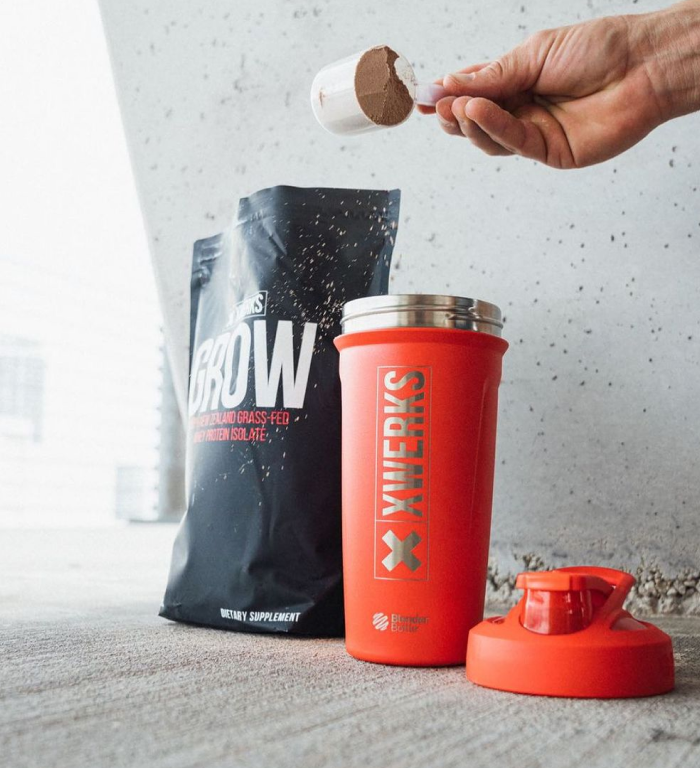
• Hit the post-workout window: 25-30g within 1-2 hours of training (XWERKS Grow = 25g whey isolate per scoop)
• Evening protein if you need it: Greek yogurt, cottage cheese, or a casein shake if your dinner was light on protein
For women 40+ or in perimenopause/menopause
• Protein target: body weight (lb) × 0.9-1.0 (1.8-2.2g/kg)
• Per-meal dose: 30-40g
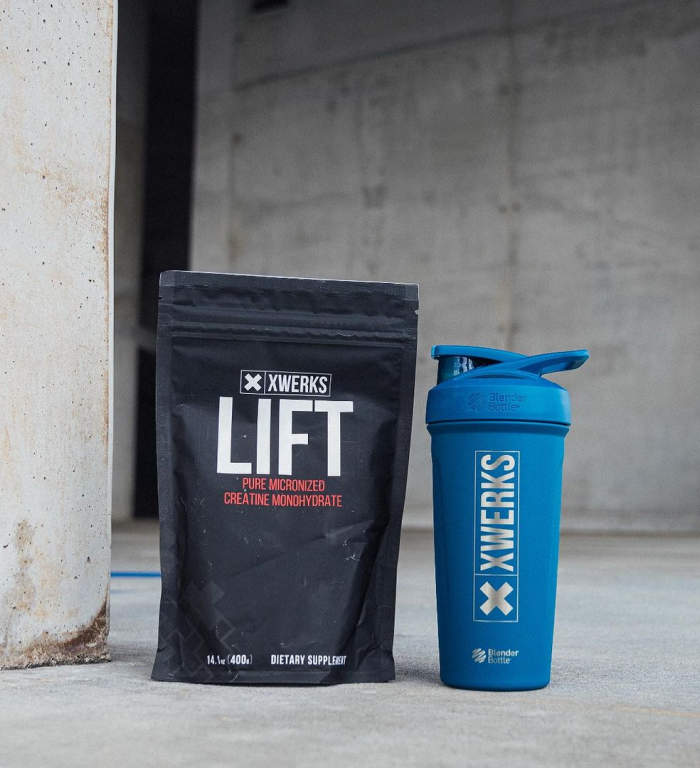
• Add creatine monohydrate 5g daily (XWERKS Lift) — research supports muscle and bone benefits in postmenopausal women
• Add resistance training 2-3x weekly if not already doing so — this is non-negotiable for muscle preservation
For women on GLP-1 medications
• Protein target: 2.0-2.4g/kg of goal body weight
• Rely heavily on whey for practical intake when appetite is suppressed
• Resistance training becomes essential — not optional
• Discuss protein targets with your prescribing physician, especially if you have kidney concerns
Calculate your exact target: XWERKS Protein Calculator →
The Bottom Line
Women respond to protein the same way men do per kilogram of body weight. The RDA (0.8g/kg) is a minimum to prevent deficiency, not an optimum for training, body composition, or healthy aging. Active women should target 1.6-2.2g/kg daily.
Whey protein does not make women bulky. It's food, not hormones. The muscle "tone" most women want requires protein, not less of it.
Life-stage adjustments matter: elevated protein during the luteal phase, pregnancy, and breastfeeding; 1.8-2.2g/kg with 30-40g per meal in perimenopause and menopause; 2.0-2.4g/kg on GLP-1 medications.
Distribute across 4-5 meals at 25-35g each. Close the breakfast gap with a whey shake — it's the single highest-leverage change most women can make.
Whey Protein That Works
XWERKS Grow — 100% grass-fed New Zealand whey isolate, 25g protein + 2.5-3g leucine per scoop. No proprietary blends, no "women's formula" pink tax, no hormonal claims. Just the protein source with the highest research base for body composition outcomes.
Shop Grow