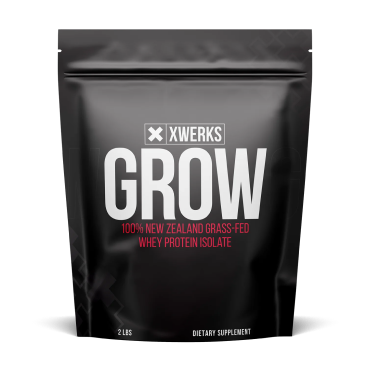
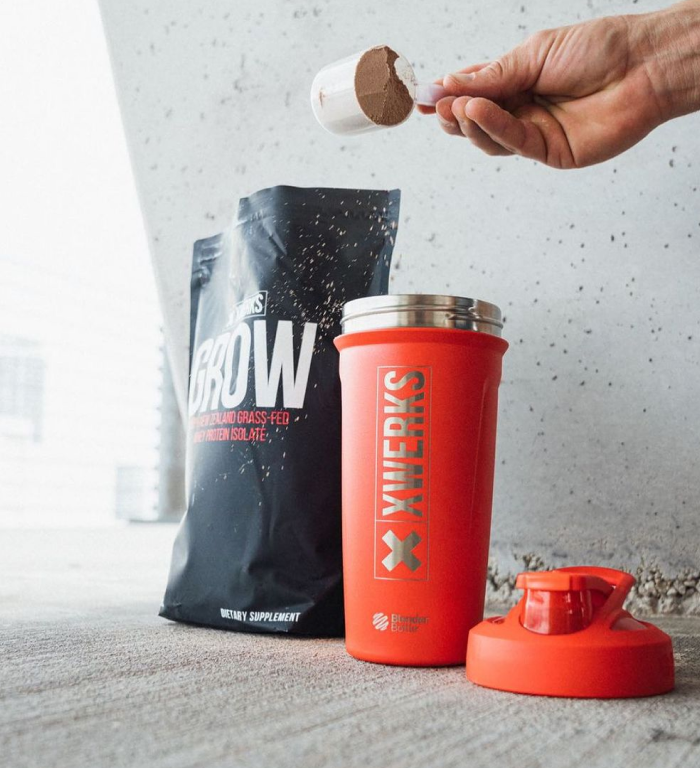
Xwerks Grow - 100% New Zealand grass-fed whey protein isolate.
Our protein is sourced from naturally raised grass-fed cows that naturally graze on the countryside of New Zealand, one of the strictest countries in the world when it comes to dairy quality. Meaning no hormones, antibiotics or pesticides that can be passed on to you.
Whey isolate means our whey is "isolated" through micro filtration to almost totally pure protein at25g of protein and over 6g of BCAA's per servingwith no lactose, carbs or fats (Peanut Butter contains 23g of Protein, 2g fat and 2g carbs). Our unique protein formula contains only whey protein isolate and is not blended with lesser quality whey.
Grow is naturally sweetened and flavored making it truly the cleanest protein available.
Made from grass-fed, pasture raised cows in New Zealand
100% whey protein isolate
Cold pressed, non ion-exchange filtering
No artificial sweetners, flavors or coloring
Soy and Gluten free
Processed acid and bleach free
Amazing rich flavor with no aftertaste
Raw whey is rich in protein substances, called native micro fractions. These include; alpha lactalbumin, beta-lactoglobulin, glycomacropeptide, immunoglobulins, serum albumin, lactoferrin, lactoperoxidase.
Our micro filtration process helps preserve these important biological nutrients while removing unwanted fats and carbohydrates (such as lactose).
This means our whey has the following benefits and more:
Muscle growth and repair
Strengthens and boosts the immune system
Anti-oxidant properties
Easily digestible, no bloat
Fantastic flavor
No clumping
FAQ
WHAT CAN I EXPECT FROM USING GROW
Increased muscle repair and recovery
No bloated feel
Great flavor with no after taste
Instant mixing with no clumping
HOW MANY SERVINGS IS GROW One bag contains 30 servings.
WHAT IS THE DIFFERENCE BETWEEN YOUR PROTEIN AND OTHERS We have a couple blog posts that may help answer that:
IS GROW DAIRY FREE No, but it does not contain lactose due to our microfiltration process.
DOES GROW CONTAIN SUGAR No, it is naturally sweetened with Stevia.
DOES GROW CONTAIN PEANUTS Only Peanut Butter PR contains peanuts.
WHAT IS GROW FLAVORED WITH Cocoa bean for Chocolate Cream, vanilla bean for Vanilla Victory and peanut butter powder and cocoa bean for Peanut Butter PR.
HOW MUCH IS SHIPPING $5, or free for orders over $75
IS GROW KETO FRIENDLY Yes it is, our low carb formula is perfect for anyone following the keto diet
Tongkat Ali and SHBG: How Freeing Bound Testosterone Works
Your total testosterone number on a blood test doesn't tell the whole story. A large portion of circulating testosterone is bound to Sex Hormone Binding Globulin (SHBG) and is biologically inactive. Tongkat Ali appears to reduce SHBG levels, effectively increasing the "free" testosterone available for your muscles, brain, and libido to use — even without increasing total testosterone production.
What is SHBG and why does it matter?
Sex Hormone Binding Globulin (SHBG) is a glycoprotein produced by your liver that binds to three hormones: testosterone, dihydrotestosterone (DHT), and estradiol (estrogen). When testosterone is bound to SHBG, it's essentially locked up — unavailable to interact with androgen receptors in your muscles, brain, bones, or reproductive tissue. Think of SHBG as a storage locker: testosterone inside the locker exists on your blood test but can't do its job.
Only about 2-3% of your total testosterone circulates as truly "free" testosterone — unbound and immediately bioavailable. Another 25-40% is loosely bound to albumin (and somewhat available). The remaining 60-70% is tightly bound to SHBG and functionally inactive.
This means two men can have identical total testosterone levels but very different functional testosterone status depending on their SHBG levels. A man with total testosterone of 600 ng/dL and low SHBG may feel sharp, strong, and energetic. A man with the same 600 ng/dL but high SHBG may feel fatigued, low-libido, and weak — because much less of his testosterone is actually available for use.
What causes high SHBG?
SHBG levels increase with aging (roughly 1-2% per year after 40), hyperthyroidism, liver disease, low calorie or very low carbohydrate diets, estrogen dominance, and certain medications (particularly anticonvulsants and some antidepressants). Lifestyle factors like chronic undereating and excessive endurance training can also elevate SHBG.
SHBG tends to decrease with obesity (paradoxically — obese men often have low SHBG but also low free testosterone due to other mechanisms), insulin resistance, hypothyroidism, and anabolic steroid use.
How Tongkat Ali affects SHBG
Tongkat Ali (Eurycoma longifolia) appears to influence testosterone availability through multiple pathways, and SHBG reduction is one of the most significant.
SHBG reduction. Multiple studies and conference presentations have reported that Tongkat Ali supplementation decreases circulating SHBG levels. By reducing the amount of SHBG available to bind testosterone, a greater proportion of total testosterone remains in its free, bioavailable form. This effect appears most pronounced in men with elevated SHBG — as noted by Dr. Andrew Huberman, the SHBG-lowering effect is "more substantial in individuals with abnormally high levels of this protein."
LH stimulation. Tongkat Ali's bioactive compound eurycomanone acts on the hypothalamic-pituitary-gonadal (HPG) axis to increase luteinizing hormone (LH) release, which signals the testes to produce more testosterone. This is a direct production pathway, distinct from the SHBG mechanism.
Weak aromatase inhibition. Tongkat Ali may inhibit aromatase (the enzyme that converts testosterone to estrogen), though this effect appears to be modest compared to pharmaceutical aromatase inhibitors. By reducing estrogen conversion, more testosterone remains intact.
Cortisol reduction. Tongkat Ali has documented effects on reducing cortisol — the stress hormone that directly suppresses the HPG axis and inhibits testosterone production. Lower cortisol creates a more favorable hormonal environment for testosterone synthesis.
What the research shows
A 2022 meta-analysis of 9 randomized controlled trials confirmed that Tongkat Ali significantly increased serum testosterone (SMD = 1.352, p = 0.001). While the meta-analysis focused on total testosterone, the individual studies within it — and additional conference-presented data by Dr. Tambi and colleagues — reported SHBG reductions as a contributing mechanism.
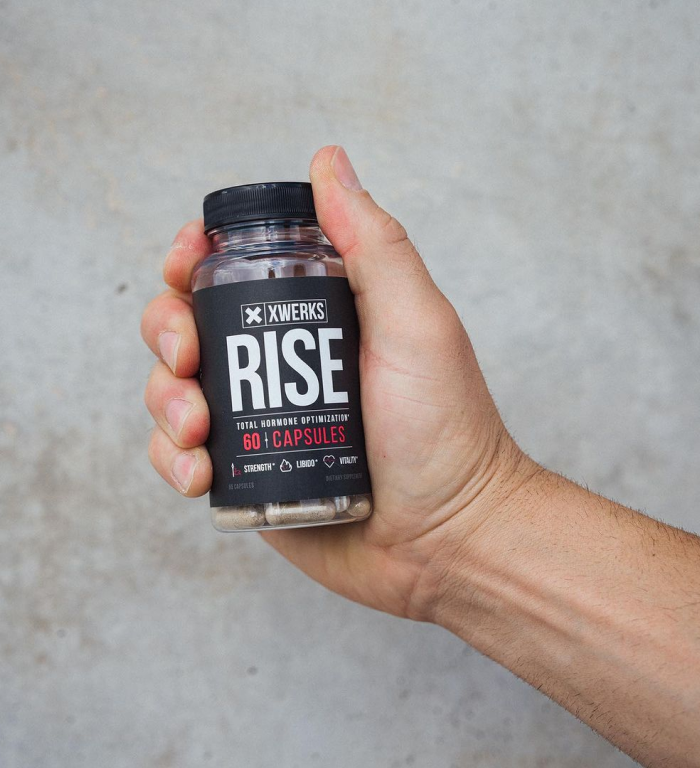
The effect appears dose-dependent, with most studies using 200-400mg per day of standardized extract. XWERKS Rise contains 400mg — the upper end of the research-validated range.
Other ingredients that affect SHBG:XWERKS Rise also contains Boron (6mg) — shown in clinical studies to increase free testosterone and reduce SHBG — and Zinc (15mg), which is directly involved in testosterone synthesis. The combination of Tongkat Ali for SHBG reduction + LH stimulation, Boron for SHBG reduction, and Zinc for direct synthesis support addresses testosterone availability from multiple angles simultaneously.
Who benefits most from SHBG reduction?
Men with high SHBG and normal total testosterone benefit the most. This profile is common in men over 40, men on very low-carb diets, lean men with low body fat, and men with thyroid imbalances. If your blood work shows total testosterone in the "normal" range but free testosterone is low, SHBG is likely the bottleneck.
Men with already low SHBG (common with obesity and insulin resistance) are less likely to see dramatic benefit from SHBG-targeting interventions because their SHBG isn't the limiting factor. For these men, the LH-stimulation and cortisol-reduction pathways of Tongkat Ali may be more relevant.
Important limitations
Much of the SHBG-specific data for Tongkat Ali comes from conference presentations rather than peer-reviewed publications, making it lower on the evidence hierarchy than the total testosterone data from the 2022 meta-analysis. The SHBG mechanism is biologically plausible and supported by the free testosterone improvements seen in published studies, but direct, large-scale, peer-reviewed SHBG measurement data remains limited.
Additionally, SHBG serves a protective function — it prevents testosterone from being cleared too quickly and helps regulate hormonal balance. Extremely low SHBG (as seen with insulin resistance) is not desirable. The goal is optimal SHBG, not minimal SHBG.
The Bottom Line
SHBG determines how much of your total testosterone is actually available for your body to use. Tongkat Ali appears to reduce SHBG levels, increase LH-driven testosterone production, weakly inhibit aromatase, and reduce cortisol — all of which contribute to greater bioavailable testosterone.
The effect is strongest in men with elevated SHBG (common with aging, lean body composition, and low-carb diets). At 200-400mg/day, Tongkat Ali is the most evidence-backed natural compound for addressing the SHBG-to-free-testosterone bottleneck. Combined with Boron and Zinc, it provides multi-pathway testosterone support.
1. Leisegang K, et al. Eurycoma longifolia (Jack) improves serum total testosterone in men: a systematic review and meta-analysis of clinical trials. Medicina. 2022;58(8):1047.
2. Talbott SM, et al. Effect of Tongkat Ali on stress hormones and psychological mood state in moderately stressed subjects. JISSN. 2013;10(1):28.
3. Tambi MI, Imran MK. Eurycoma longifolia Jack in managing idiopathic male infertility. Asian J Androl. 2010;12(3):376-380.
4. Hammond GL. Diverse roles for sex hormone-binding globulin in reproduction. Biol Reprod. 2011;85(3):431-441.
5. Naghii MR, et al. Comparative effects of daily and weekly boron supplementation on plasma steroid hormones and proinflammatory cytokines. J Trace Elem Med Biol. 2011;25(1):54-58.
Unlock Exclusive Offers and Fitness Tips!
Subscribe to the XWERKS newsletter to stay in the loop with the latest product releases, exclusive offers, and expert fitness tips that will elevate your performance to new heights!