

Supplements for Muscle Preservation After 50
TL;DR
- Adults lose 3-8% of muscle mass per decade after age 30, accelerating to 1-2% per year after age 60. Without intervention, this leads to sarcopenia, falls, frailty, and reduced independence.
- The non-negotiable supplements for muscle preservation after 50: whey protein (1.6-2.2g/kg daily), creatine monohydrate (5g daily), vitamin D3 (2,000-4,000 IU), and omega-3s (2-3g EPA+DHA).
- Older adults need ~40g of protein per meal to overcome "anabolic resistance" — the age-related blunting of muscle protein synthesis response.
- Supplements only work alongside resistance training. No supplement preserves muscle without the training stimulus to maintain it.
Adults begin losing muscle mass and strength after age 30, with the rate accelerating dramatically after 50-60 — typically 3-8% per decade in midlife, then 1-2% per year past 60. Without intervention, this leads to sarcopenia, frailty, increased fall risk, and loss of independence. The good news: this loss is not inevitable. The most evidence-backed supplements for muscle preservation after 50 are whey protein (especially leucine-rich isolate), creatine monohydrate, vitamin D3, and omega-3 fatty acids — all of which have specific mechanisms supporting muscle synthesis and reducing breakdown in older adults. Critical caveat: supplements only work alongside resistance training. There's no pill that preserves muscle without the training stimulus.
The biology: why muscle loss accelerates after 50
Sarcopenia (age-related muscle loss) results from several interacting mechanisms:
Anabolic resistance
Older muscles are less responsive to protein intake. A 25-year-old gets a strong muscle protein synthesis response from 20g of protein per meal. A 65-year-old needs roughly 40g of protein in the same meal to produce a comparable response. This is called "anabolic resistance" — the body literally requires more protein input to produce the same anabolic signal.
Reduced testosterone, growth hormone, and IGF-1
The anabolic hormonal environment declines with age. Testosterone declines roughly 1% per year after age 30. Growth hormone production drops 50% or more by age 60. IGF-1 (insulin-like growth factor) follows similar patterns. These hormones support muscle maintenance, and their decline reduces the body's ability to maintain lean mass.
Mitochondrial dysfunction
Aging muscle cells have fewer and less efficient mitochondria, reducing energy production capacity. This contributes to fatigue, reduced exercise tolerance, and impaired protein synthesis.
Chronic low-grade inflammation
"Inflammaging" — chronic elevation of inflammatory markers — directly suppresses muscle protein synthesis and accelerates breakdown. Modern lifestyles (poor sleep, high stress, processed foods, low omega-3 intake) all contribute.
Reduced physical activity
Most people become less active with age. Loss of training stimulus accelerates muscle loss directly through "use it or lose it" effects, and indirectly through reduced appetite, lower protein intake, and reduced insulin sensitivity.
Reduced motor neuron count
The number of motor neurons (nerves controlling muscle fibers) declines with age. When motor neurons die, the muscle fibers they controlled become orphaned and atrophy. This is one reason older adults lose more type II (fast-twitch) muscle fibers — the powerful fibers used for explosive movement and heavy lifting.
The evidence-backed supplements for muscle preservation
1. Whey Protein (the foundation)
Why it matters most: Older muscles need more protein per meal to overcome anabolic resistance. Hitting the daily target (1.6-2.2g per kg body weight) is logistically difficult through whole food alone for most older adults, especially those with reduced appetite.
Why whey specifically: Whey has the highest leucine content of any common protein source. Leucine is the primary trigger for muscle protein synthesis — older adults need approximately 3g of leucine per meal to maximally stimulate MPS, which means roughly 40g of high-quality protein per serving.
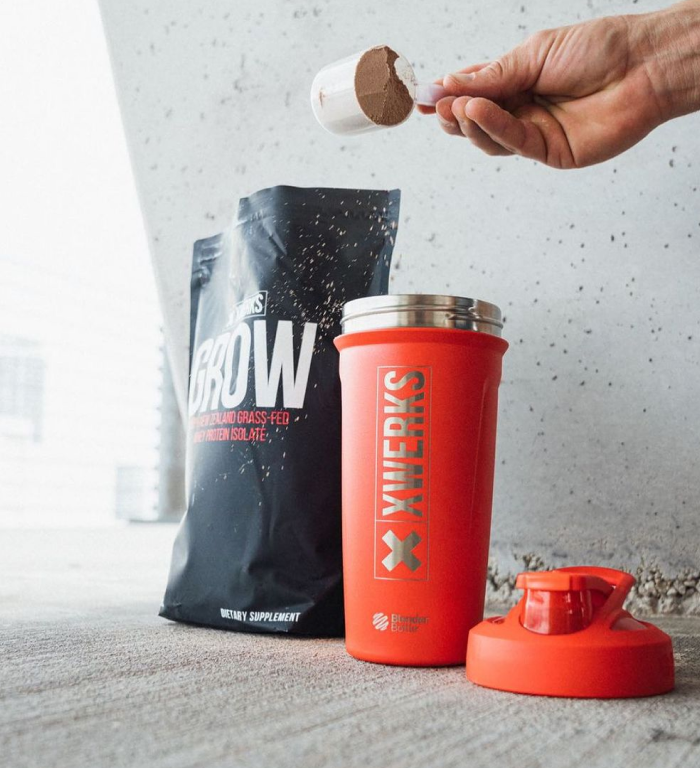
Dose: 25-50g of whey isolate per serving, 1-3 servings per day depending on whole-food protein intake. XWERKS Grow provides 25g of NZ grass-fed whey isolate with ~2.5-3g leucine per scoop.
Timing: Spread protein evenly across 3-4 meals throughout the day — Mamerow 2014 found that even distribution produces 25% more daily MPS than skewed patterns. This is particularly important for older adults.
2. Creatine Monohydrate
Why it works in older adults: Creatine has been studied extensively in older populations and consistently shows benefits for both muscle mass and strength preservation. Chilibeck et al. 2017 meta-analysis found that creatine supplementation combined with resistance training in older adults produced significantly greater gains in muscle mass and strength than training alone.
Bonus benefits: Creatine also supports cognitive function, bone health (some evidence), and may reduce fall risk through improved muscle function. The supplement essentially has multiple anti-aging effects in a single daily dose.
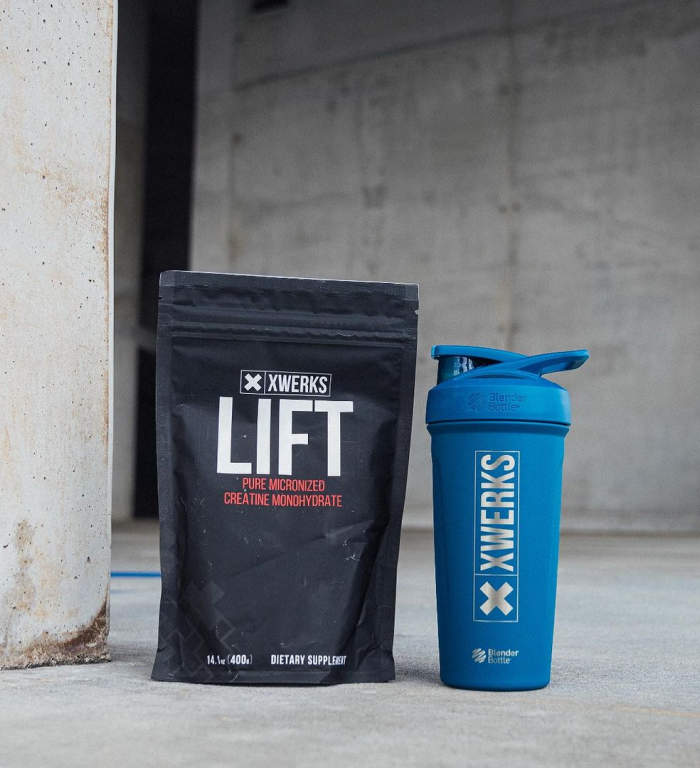
Dose: 5g per day of creatine monohydrate. No loading phase needed. XWERKS Lift provides 5g micronized monohydrate per scoop.
Safety: Extensively studied in older adults. Safe for kidneys in healthy individuals. No known significant side effects at standard doses.
3. Vitamin D3
Why it matters: Vitamin D plays a direct role in muscle function — vitamin D receptors are present in muscle tissue, and deficiency is associated with reduced strength, increased fall risk, and accelerated muscle loss in older adults. Roughly 42% of US adults are vitamin D deficient, with rates higher in older populations.
Effects on muscle: Multiple trials have shown vitamin D supplementation improves muscle strength in deficient older adults, reduces fall risk, and supports muscle protein synthesis. Beaudart et al. 2014 meta-analysis confirmed strength benefits in vitamin D-deficient older adults.
Dose: 2,000-4,000 IU daily for most adults. Higher doses (5,000-10,000 IU) may be needed if deficient. Test 25(OH)D blood levels — target 40-60 ng/mL. Also supports testosterone in deficient men.
4. Omega-3 Fatty Acids (EPA/DHA)
Why it matters: Omega-3 supplementation appears to directly enhance muscle protein synthesis in older adults — Smith et al. 2011 and 2015 found that omega-3 supplementation increased the muscle protein synthesis response to amino acids in older adults, partially overcoming anabolic resistance.
Anti-inflammatory effects: EPA and DHA reduce chronic inflammation that contributes to muscle loss. They also support cardiovascular health, brain health, and joint function — all important for staying active enough to maintain muscle.
Dose: 2-3g of combined EPA+DHA daily. Choose fish oil supplements with high concentration per capsule (at least 500-700mg combined EPA+DHA per softgel) to avoid taking 6+ pills per day.
5. HMB (β-Hydroxy β-Methylbutyrate) — for specific situations
What it is: A metabolite of leucine that may reduce muscle protein breakdown. Useful in specific scenarios: hospitalization, bed rest, or severe muscle loss in frail older adults.
Evidence: Mixed for healthy active older adults. Stronger evidence in clinical settings (post-surgery, bed rest, severe sarcopenia). For most healthy older adults exercising regularly, adequate protein intake makes HMB redundant.
When to consider: Recovery from surgery or extended bed rest. Frail older adults with significant sarcopenia. Skip it if you're healthy and training regularly.
Daily protein math for older adults
This is worth working through in detail because most older adults significantly under-eat protein:
Body weight 150 lbs (68 kg): Target 1.6-2.2g/kg = 110-150g protein per day
Body weight 180 lbs (82 kg): Target 1.6-2.2g/kg = 130-180g protein per day
Body weight 200 lbs (91 kg): Target 1.6-2.2g/kg = 145-200g protein per day
For comparison, the FDA's "general population" RDA of 0.8g/kg (which translates to about 60g for a 165 lb person) is significantly inadequate for muscle preservation in older adults. That number was set decades ago for "minimum to prevent deficiency" — not for optimal health, and especially not for older adults dealing with anabolic resistance.
Practical example for a 180 lb (82 kg) man targeting 145g protein per day across 4 meals:
Breakfast: 4 eggs + 1 scoop whey in coffee = 40g protein
Lunch: 6 oz chicken breast + Greek yogurt = 50g protein
Pre-workout shake: 1 scoop XWERKS Grow + milk = 35g protein
Dinner: 6 oz salmon = 35g protein
Total: ~160g protein — comfortably above the muscle preservation target.
Critical reality: supplements don't replace training
This needs to be stated clearly: no supplement preserves muscle in the absence of resistance training. The muscle preservation strategy is:
Resistance training, 2-4x per week. Heavy compound movements (squats, deadlifts, presses, rows, pulls) using progressive overload. Even simple programs (push-pull-legs, full body 3x/week) work. Older adults absolutely can and should lift heavy — research consistently shows older adults can build muscle and strength well into their 80s when training appropriately.
Adequate volume. 10-15 working sets per muscle group per week is the minimum effective dose for hypertrophy. Most older adults need to push past initial conservative recommendations.
Recovery. 7-9 hours of sleep. Adequate calories (don't try to lose weight while preserving muscle — pick one focus at a time). Stress management.
Protein at every meal. Don't save your protein for one big dinner — distribute it across 3-4 meals throughout the day.
Then add supplements. Whey + creatine + vitamin D + omega-3s on top of the training and protein foundation.
The complete muscle preservation stack for adults over 50
Daily essentials
Whey protein (XWERKS Grow): 1-3 scoops daily to hit 1.6-2.2g/kg target
Creatine (XWERKS Lift): 5g daily, taken consistently (timing doesn't matter)
Vitamin D3: 2,000-4,000 IU daily (test blood levels, target 40-60 ng/mL)
Omega-3 fish oil: 2-3g combined EPA+DHA daily
Strong adds
Magnesium glycinate: 200-400mg evening (sleep quality, muscle function)
Ashwagandha (XWERKS Ashwa): 1,500mg daily for cortisol management and modest testosterone support
Vitamin K2 (MK-7): 100-200mcg with vitamin D3 for bone and cardiovascular health
Situational
HMB: 3g daily during recovery from surgery or extended bed rest
Collagen: 10-20g daily for joint and connective tissue support (note: doesn't replace whey for muscle protein synthesis)
Multivitamin: Useful insurance against multiple micronutrient deficiencies common in older adults
The Bottom Line
Muscle loss after 50 is preventable — but it requires deliberate intervention. Adults lose 3-8% of muscle per decade in midlife, accelerating to 1-2% per year past 60 without action.
Non-negotiable supplements: whey protein (1.6-2.2g/kg daily), creatine monohydrate (5g daily), vitamin D3 (2,000-4,000 IU), and omega-3 fish oil (2-3g EPA+DHA).
Older adults need ~40g of protein per meal to overcome anabolic resistance — significantly more than younger adults. Distribute across 3-4 meals throughout the day.
Supplements don't work without training. Resistance training (2-4x per week, progressive overload, heavy compound movements) is the foundation. Supplements are the multiplier on top of that foundation.
The Muscle Preservation Stack
XWERKS Grow (25g whey isolate) + Lift (5g creatine) — the two most evidence-backed supplements for preserving muscle mass and strength after 50.
SHOP GROW → SHOP LIFT →Further Reading
Sarcopenia Prevention Supplements
Whey Protein for Preventing Muscle Loss with Age
Best Supplements for Healthy Aging Men
Best Supplements for Men Over 50
References
1. Bauer J, et al. Evidence-based recommendations for optimal dietary protein intake in older people: a position paper from the PROT-AGE Study Group. J Am Med Dir Assoc. 2013;14(8):542-559.
2. Chilibeck PD, et al. Effect of creatine supplementation during resistance training on lean tissue mass and muscular strength in older adults: a meta-analysis. Open Access J Sports Med. 2017;8:213-226.
3. Smith GI, et al. Dietary omega-3 fatty acid supplementation increases the rate of muscle protein synthesis in older adults: a randomized controlled trial. Am J Clin Nutr. 2011;93(2):402-412.
4. Beaudart C, et al. The effects of vitamin D on skeletal muscle strength, muscle mass, and muscle power: a systematic review and meta-analysis of randomized controlled trials. J Clin Endocrinol Metab. 2014;99(11):4336-4345.
5. Mamerow MM, et al. Dietary protein distribution positively influences 24-h muscle protein synthesis in healthy adults. J Nutr. 2014;144(6):876-880.
6. Morton RW, et al. A systematic review, meta-analysis and meta-regression of protein supplementation on resistance training-induced gains in muscle mass and strength. Br J Sports Med. 2018;52(6):376-384.