

Shilajit Benefits: The Himalayan "Destroyer of Weakness"
TL;DR
- Shilajit is a natural resin from Himalayan rocks with 3,000+ years of Ayurvedic use and growing modern research support.
- Pandit 2015 showed 250mg twice daily for 90 days increased total testosterone by ~20% in healthy men aged 45-55.
- Biswas 2010 found shilajit supplementation increased sperm count by 61% in men with oligospermia.
- Additional benefits: mitochondrial energy support via fulvic acid, 85+ trace minerals in ionic form, antioxidant and anti-inflammatory effects. 250mg/day in XWERKS Rise.
Shilajit is a natural resin that oozes from cracks in high-altitude Himalayan rocks, formed over centuries from decomposed plant matter. It's been used in Ayurvedic medicine for thousands of years — and modern research has validated several of its key benefits: increases total testosterone (by 20% in a 90-day study of healthy volunteers), supports mitochondrial energy production via fulvic acid content, improves male fertility and sperm quality, provides 85+ trace minerals in ionic form, and has strong antioxidant and anti-inflammatory effects. The name "shilajit" translates roughly from Sanskrit as "destroyer of weakness" — and for men seeking natural testosterone and energy support, the research suggests the traditional name isn't far off.
What is shilajit?
Shilajit (sometimes called mumijo or mineral pitch) is a blackish-brown, tar-like substance that seeps from cracks in rocks in high-altitude mountain ranges — primarily the Himalayas, but also the Altai, Caucasus, and other similar ranges. It's formed over hundreds of years through the gradual decomposition of plant material compressed by layers of rock, mineralized by the surrounding geology, and modified by microbial activity. The resulting substance is rich in fulvic acid, humic acid, dibenzo-alpha-pyrones (DBPs), and 85+ trace minerals in ionic form.
Shilajit has been used in Ayurvedic medicine for over 3,000 years as a rasayana (rejuvenator) — prescribed for everything from fatigue and sexual dysfunction to altitude sickness and chronic disease. Modern research has validated several of these traditional uses and identified the bioactive compounds responsible.
The 5 key benefits of shilajit
1. Increases total testosterone
This is shilajit's most famous modern use case. A 2015 study by Pandit et al. in the journal Andrologia found that 250mg of purified shilajit twice daily for 90 days increased total testosterone by approximately 20% in healthy adult volunteers aged 45-55, with corresponding increases in DHEA, FSH, and LH. This is one of the more robust testosterone studies for any natural compound — particularly notable because the mechanism appears to involve support for the entire HPG axis rather than direct hormone mimicry.
Follow-up research has confirmed testosterone-supporting effects, particularly in men with borderline-low levels. Shilajit is one of the ingredients in XWERKS Rise specifically because of this evidence base, alongside Tongkat Ali, Zinc, and Boron.
2. Supports mitochondrial energy production
Shilajit's high fulvic acid content supports mitochondrial function — the cellular machinery that produces ATP for energy. A study by Bhattacharyya et al. showed that shilajit supplementation improved muscle performance by enhancing mitochondrial energy production and reducing markers of fatigue in trained athletes. The mechanism appears to involve fulvic acid's ability to shuttle electrons and support the electron transport chain.
This is particularly relevant for aging — mitochondrial function declines with age, contributing to the fatigue, muscle loss, and reduced exercise capacity that characterize the aging process. Shilajit may offer some protection against mitochondrial decline, particularly when combined with exercise and adequate sleep.
3. Improves male fertility and sperm quality
A study by Biswas et al. (2010) examined the effects of shilajit in men with oligospermia (low sperm count). After 90 days of 100mg twice daily, participants showed a 61% increase in total sperm count, a 12% increase in sperm motility, and improvements in testosterone, LH, and FSH levels. This is a striking result — few natural supplements have demonstrated fertility improvements of this magnitude.
The mechanisms likely involve the combined effects of antioxidant protection (sperm are highly susceptible to oxidative damage), testosterone support, and direct support for testicular function through trace mineral provision.
4. Provides 85+ trace minerals in ionic form
Shilajit contains an unusually broad spectrum of trace minerals — estimates range from 60 to 85+ different minerals, including iron, calcium, magnesium, potassium, sodium, zinc, copper, manganese, and many more exotic trace elements. More importantly, these minerals are present in ionic form bound to fulvic acid, which may enhance their bioavailability and cellular uptake compared to traditional mineral supplements.
While the total amount of any single mineral is modest, the broad-spectrum nature of shilajit's mineral content makes it an interesting "insurance policy" for men whose diets may be missing trace minerals that don't show up on standard nutritional panels.
5. Antioxidant and anti-inflammatory effects
Fulvic acid — one of shilajit's primary bioactive compounds — has demonstrated antioxidant and anti-inflammatory effects in multiple studies. Research has shown that shilajit reduces oxidative stress markers, inhibits inflammatory cytokines, and may protect against oxidative damage to cells and tissues. For athletes and aging men, chronic low-grade inflammation is a major contributor to reduced performance and accelerated aging — and shilajit's anti-inflammatory effects may support long-term health outcomes.
Preliminary research also suggests neuroprotective effects — shilajit may support cognitive function and protect against age-related cognitive decline, though the human research in this area is still developing.
What to look for in a shilajit supplement
Purified shilajit. Raw shilajit can contain heavy metals (lead, mercury, arsenic) absorbed from the mineral-rich environment where it forms. Look for purified/processed shilajit that has been tested for heavy metal content. Reputable brands third-party test for contaminants.
Standardized for fulvic acid content. High-quality shilajit should be standardized for fulvic acid — typically 40-60% fulvic acid content. Lower-quality products may not specify fulvic acid content or contain much less.
Resin, powder, or capsule form. Shilajit is available as a raw resin (traditionally dissolved in warm water), a standardized powder, or encapsulated. All forms can be effective if properly processed, but capsules offer the most convenient dosing and taste-avoidance (raw shilajit has a strong bitter/smoky flavor).
Dose range. Research-backed doses are 250-500mg daily, typically taken in one or two doses. The Pandit 2015 study used 250mg twice daily (500mg total).
Who benefits most from shilajit?
Men over 40 with borderline testosterone. The Pandit 2015 study showed the strongest effects in men aged 45-55 — exactly the demographic most likely to benefit from natural testosterone support.
Athletes seeking recovery and energy support. Mitochondrial support may benefit athletes who train frequently and need efficient cellular energy production.
Men with fertility concerns. Based on the Biswas 2010 fertility study, men with low sperm count or motility may see meaningful improvements.
People on restrictive diets. Shilajit's trace mineral content provides broad-spectrum coverage that may be lacking in restrictive or low-variety diets.
Anyone seeking an evidence-backed addition to a testosterone stack. Shilajit fits well alongside Tongkat Ali, zinc, boron, and ashwagandha in a comprehensive approach to natural hormonal optimization.
The Bottom Line
Shilajit is a natural resin from Himalayan rocks with 3,000+ years of traditional use and growing modern research support. The key benefits: 20% testosterone increase over 90 days (Pandit 2015), mitochondrial energy support via fulvic acid, improved sperm count and motility (Biswas 2010), 85+ trace minerals in ionic form, and antioxidant/anti-inflammatory effects.
At 250mg daily (as in XWERKS Rise), shilajit provides complementary testosterone support through mechanisms distinct from Tongkat Ali, Zinc, and Boron — making it a valuable addition to a multi-pathway natural optimization stack. Choose purified, standardized sources tested for heavy metals.
Shilajit + Tongkat Ali + Zinc + Boron
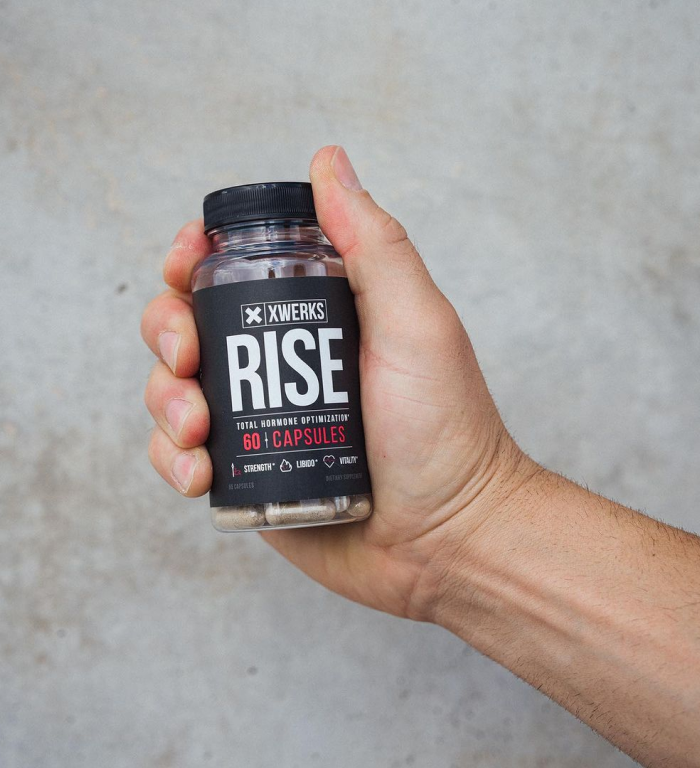
XWERKS Rise — 400mg Tongkat Ali, 15mg Zinc, 6mg Boron, 250mg Shilajit, 10mg BioPerine. Multi-pathway testosterone support with clinically-studied ingredients at evidence-backed doses.
SHOP RISE →Further Reading
Tongkat Ali FAQ — The primary ingredient in Rise.
Benefits of Boron — Another key Rise ingredient.
Does Zinc Increase Testosterone?
Does Ashwagandha Increase Testosterone?
Low Testosterone in Young Males
References
1. Pandit S, et al. Clinical evaluation of purified Shilajit on testosterone levels in healthy volunteers. Andrologia. 2016;48(5):570-575. (PubMed)
2. Biswas TK, et al. Clinical evaluation of spermatogenic activity of processed Shilajit in oligospermia. Andrologia. 2010;42(1):48-56. (PubMed)
3. Keller JL, et al. The effects of Shilajit supplementation on fatigue-induced decreases in muscular strength and serum hydroxyproline levels. J Int Soc Sports Nutr. 2019;16(1):3.
4. Carrasco-Gallardo C, et al. Shilajit: a natural phytocomplex with potential procognitive activity. Int J Alzheimers Dis. 2012;2012:674142.
5. Stohs SJ. Safety and efficacy of Shilajit (mumie, moomiyo). Phytother Res. 2014;28(4):475-479.