Protein Powder in Coffee: How to Add It Without Clumping
TL;DR
- Yes — protein powder in coffee works, but requires the right technique to avoid clumping and denaturation.
- The key problems: hot liquids denature whey proteins (turning them into lumpy curds) and protein powder doesn't dissolve well in plain coffee without mechanical mixing.
- Best methods: cool the coffee to 140°F or below, blend with milk/cream, or dissolve protein in cold water first then add to hot coffee.
- Nutritionally: protein in coffee gives you sustained morning energy, better satiety, and hits your protein target before 9am. A proper "proffee" is one of the best ways to start a training day.
Adding protein powder to coffee — sometimes called "proffee" — is one of the best ways to combine your morning caffeine with 25g of protein, turning a plain coffee into a near-meal replacement that supports muscle protein synthesis and keeps you full for hours. The two main challenges: whey protein clumps in hot liquid (because heat denatures the proteins), and it doesn't dissolve without mechanical agitation. Fortunately, both problems are easy to solve with the right technique — cooling the coffee, using a blender or milk frother, or dissolving protein in cold liquid first.
Why add protein powder to coffee?
The morning is often the worst-protein meal of the day for most people. Breakfast might be toast, cereal, a pastry, or just coffee — rarely anything approaching the 25-40g of protein per meal that optimizes muscle protein synthesis. Adding a scoop of whey to your existing morning coffee solves this without requiring any additional meal prep.
Benefits of protein in coffee:
Hits protein targets earlier. Starting your day with 25g of protein immediately sets you up to hit your daily total (usually 1.6-2.2g/kg). Front-loading protein is easier than playing catch-up in the evening.
Better satiety. Protein produces significantly more satiety than carbs or fats, keeping you fuller longer. A protein coffee holds you for 2-3 hours, compared to a plain coffee + pastry which leaves you hungry within an hour.
Stable energy. The caffeine provides alertness, the protein provides amino acids, and you avoid the blood sugar crash that comes from eating sugary breakfast pastries.
Convenient for fasted training. If you train in the early morning, a protein coffee 30 minutes before your workout provides amino acids + caffeine without the digestive weight of a full breakfast.
Mamerow 2014 protein distribution benefit. Research shows that evenly distributing protein across the day produces 25% more daily muscle protein synthesis than skewed patterns. A protein coffee adds a morning stimulus that most people miss.
The problem: heat + whey protein
The biggest challenge with protein in coffee is heat denaturation. Whey protein is made up of folded protein molecules — alpha-lactalbumin, beta-lactoglobulin, and other fractions. When exposed to high heat (above ~150°F/65°C), these proteins begin unfolding and aggregating together, forming visible clumps or "curds" (the same process that happens when you heat milk too quickly).
This causes three problems:
1. Visual clumping. Your coffee ends up with floating curds instead of a smooth texture. Unappetizing.
2. Texture change. The denatured protein forms a slimy, grainy texture that's unpleasant to drink.
3. Taste change. Denatured whey can taste slightly off — cooked or stale compared to the original flavor.
Importantly, denaturation doesn't destroy the protein's nutritional value. The amino acids are still there, and your body will still digest and absorb them normally. Denaturation is a texture and taste issue, not a nutrition issue. That said, it's much more pleasant to drink a smooth protein coffee than a curdled one.
Method 1: Cool the coffee (simplest)
Wait 3-5 minutes, then stir in the protein
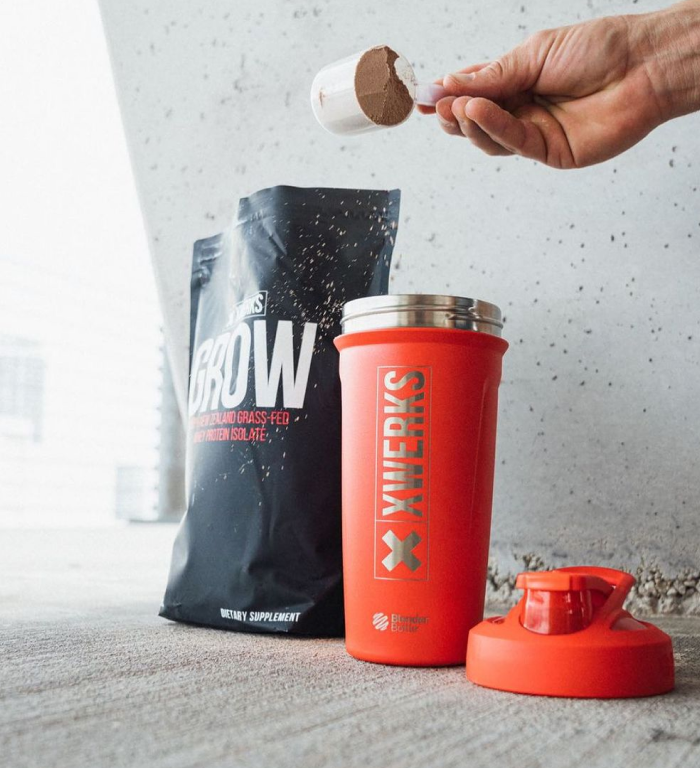
The easiest approach. After brewing your coffee, let it cool for 3-5 minutes — it should be hot enough to drink comfortably but not scalding. Then add your scoop of XWERKS Grow, stir vigorously with a spoon or small whisk, and drink.
Pros: No equipment needed. Works with any coffee.
Cons: May still clump slightly if coffee isn't cool enough. Plain stirring isn't as effective as mechanical mixing.
Tip: Add 1-2 ice cubes to cool the coffee faster. Some of the volume is lost but you maintain caffeine content.
Method 2: Blend it (most reliable)
Use a blender bottle or milk frother
Pour your (slightly cooled) coffee into a blender bottle with a wire mixing ball, add the scoop of protein, shake for 20-30 seconds. The mechanical agitation dissolves the powder completely, even in warm liquid.
Handheld milk frother (the small whisk-style tool) is even better — plunge it into the coffee cup for 15-20 seconds and you'll get a perfectly smooth protein coffee with slight foam.
Full blender is the gold standard — adds ice, milk, sweetener, and protein all together for a smooth protein iced coffee. Takes 60 seconds including cleanup.
Pros: Fully smooth result, no clumping, works reliably every time.
Cons: Requires equipment (blender bottle or milk frother).
Method 3: Dissolve in cold water first
Mix protein with cold water, then add to coffee
Add 1 scoop of protein to 2-3 oz of cold water in a cup, stir until completely dissolved (or use a shaker bottle), then pour your hot coffee over it. The brief exposure to hot liquid after the protein is already hydrated minimizes denaturation.
Pros: Smooth result, works with very hot coffee.
Cons: Extra step, slight dilution of coffee flavor, requires two containers.
Method 4: Iced protein coffee (easiest of all)
Cold brew + protein in a shaker bottle
If you drink cold brew or iced coffee, adding protein is trivial — no heat means no denaturation. Just add cold brew + 1 scoop of XWERKS Grow + ice + a splash of milk to a shaker bottle, shake for 15 seconds, and drink.
This is arguably the best method for protein coffee overall — smoother, easier, and you can make it in 30 seconds. During warm months, iced protein coffee is the default for a lot of fitness people.
Pros: Smoothest result, no heat concerns, fastest preparation.
Cons: Only works if you're willing to drink cold coffee.
Recipe: The "Protein Bulletproof" Coffee
A modified version of the classic bulletproof coffee, rebuilt around whey protein instead of just fat:
Morning Protein Coffee (~300 calories, 28g protein)
• 10-12 oz freshly brewed coffee (cooled 3-5 minutes)
• 1 scoop XWERKS Grow (25g protein, ~110 cal)
• 1-2 tbsp whole milk, half-and-half, or heavy cream (50-100 cal)
• Optional: 1 tsp MCT oil or 1 tbsp unsalted butter (bulletproof-style, 50-100 cal)
• Optional: pinch of cinnamon, dash of vanilla, stevia to taste
Blend or froth for 15-20 seconds for a smooth, foamy result.
Nutrition: ~300 cal, 28g protein, 2g carbs, 20g fat. A near-perfect fasted training fuel or morning meal replacement.
Flavor considerations: which whey flavors work in coffee?
Vanilla is the most versatile — plays well with coffee's natural flavors and creates something close to a vanilla latte taste.
Chocolate works too, creating a mocha-style drink. Rich and satisfying, though the combined flavors can be intense.
Peanut butter (XWERKS Grow PB flavor) creates an unusual but genuinely good peanut butter coffee — think a peanut butter mocha. Not for everyone, but fans love it.
Unflavored works if you want to preserve the coffee's own flavor. Less pleasant to drink than flavored versions but most neutral.
Strawberry and other fruit flavors generally don't pair well with coffee. Avoid these.
Common mistakes to avoid
1. Adding protein to very hot coffee without mixing. This is the #1 cause of clumpy protein coffee. Always cool the coffee first or use mechanical mixing.
2. Using cheap whey concentrate. Higher lactose content makes it more likely to clump and produce digestive issues. Whey isolate dissolves better and digests cleaner.
3. Using too little liquid. If you try to add a scoop of protein to a small espresso shot (2 oz), it won't dissolve properly. Use at least 8-10 oz of coffee, or dilute with milk/water.
4. Mixing with a spoon only. Plain stirring isn't effective enough. Use a blender bottle, milk frother, or blender for best results.
5. Letting it sit. Protein coffee is best drunk fresh. Letting it sit for 10+ minutes causes settling and potential clumping. Drink it within a few minutes of making it.
Coffee + protein: nutritional considerations
A few things to be aware of when making protein coffee a daily habit:
Caffeine timing. If you're making large protein coffees (16+ oz) with 200mg+ of caffeine, keep the 5-hour half-life in mind. A large morning protein coffee at 8am is fine. One at 3pm may interfere with sleep.
Hydration. Coffee is mildly diuretic, and a protein coffee isn't a substitute for water intake. Aim for 3-4L of plain water per day in addition to coffee.
Calcium and iron absorption. Coffee polyphenols can slightly reduce iron absorption from plant sources. If you're supplementing iron or have low iron status, take iron supplements at a different time than your protein coffee.
Empty stomach considerations. Some people find protein on an empty stomach + caffeine slightly acidic or irritating. If you experience this, adding milk or having a small snack beforehand usually resolves it.
Three more protein coffee recipes
Use the iced or cold-slurry method above. The nutrition depends on your powder, milk, and serving sizes.
Mocha protein coffee
Mix one labeled serving of vanilla or chocolate protein powder with about 4 ounces of cold milk and a teaspoon of unsweetened cocoa. Add a cup of cooled coffee and ice.
Cinnamon vanilla latte
Mix vanilla protein powder into cold milk until smooth, add a pinch of cinnamon, then gradually add coffee that is no longer piping hot. A frother can help with the texture.
Blended protein frappe
Blend chilled coffee, cold milk, a labeled serving of protein powder, and ice until smooth. Adjust the liquid to get the texture you prefer. Include the milk and other additions when calculating the finished drink's nutrition.
The Bottom Line
Yes, you can add protein powder to coffee — it's one of the best ways to hit 25g of protein first thing in the morning. The technique matters: heat denatures whey protein, causing clumping and texture issues.
Best methods: (1) Cool coffee to 140°F or below, (2) blend or froth with a milk frother, (3) dissolve protein in cold water first then add coffee, or (4) use cold brew / iced coffee for the easiest result.
Recipe: 10-12 oz coffee + 1 scoop XWERKS Grow (vanilla or chocolate) + splash of milk or cream, blended for 15-20 seconds. ~300 calories, 28g protein, perfect morning fuel.
Benefits: Hit protein targets early, better satiety, stable energy, and a morning MPS stimulus that most people miss entirely. A protein coffee is one of the highest-value changes you can make to your morning routine.
Clean Whey That Mixes Smoothly
XWERKS Grow — Vanilla, Chocolate, Peanut Butter, and Strawberry. 25g of NZ grass-fed whey isolate that blends cleanly into coffee without clumping (when you use the right technique).
SHOP GROW →Further Reading
How Long Does Caffeine Wear Off
References
1. Mamerow MM, et al. Dietary protein distribution positively influences 24-h muscle protein synthesis in healthy adults. J Nutr. 2014;144(6):876-880.
2. Dissanayake M, Vasiljevic T. Functional properties of whey proteins affected by heat treatment and hydrodynamic high-pressure shearing. J Dairy Sci. 2009;92(4):1387-1397.
3. Paddon-Jones D, et al. Protein, weight management, and satiety. Am J Clin Nutr. 2008;87(5):1558S-1561S.
4. Morton RW, et al. Protein supplementation and resistance training-induced gains in muscle mass and strength. Br J Sports Med. 2018;52(6):376-384.