

Protein Powder for Cyclists: The Recovery Guide
TL;DR
- Cyclists need more protein than commonly cited — target 1.6-1.8g per kg body weight daily, higher during big training blocks (1.8-2.0g/kg).
- Whey protein isolate is optimal: fast-digesting, high-leucine, low-volume, GI-tolerant after hard rides.
- Timing: 25-30g within 60 min post-ride. High-volume riders should add pre-bed protein (20-30g) for overnight recovery.
- Power-to-weight concerns: protein supplementation doesn't cause meaningful muscle gain in isolation (requires resistance training). Worry about total caloric intake, not protein itself.
Cyclists often underestimate their protein needs. The standard RDA (0.8g/kg) is set for sedentary adults — cyclists training seriously need 1.6-1.8g per kg body weight daily, and 1.8-2.0g/kg during high-volume training blocks, stage races, or cutting phases. Research on endurance athletes supports higher intake for muscle preservation, recovery between sessions, and training adaptation. Whey protein isolate is ideal for cyclists: fast-digesting during post-ride recovery windows, high in leucine (muscle protein synthesis driver), low-volume (important when appetite is suppressed after hard efforts), and GI-tolerant (blood flow redirected away from gut during long rides compromises digestion temporarily). Target 25-30g of whey isolate within 60 minutes post-ride. For high-volume cyclists doing big training weeks or stage races, add pre-bed protein to support overnight repair. Power-to-weight concerns are largely unfounded — protein supplementation doesn't cause bulking in isolation; you'd need heavy resistance training to build meaningful muscle mass beyond what endurance cycling produces.
Why cyclists need more protein
Endurance training protein demands
• Muscle damage repair: Long rides and hard efforts create microtrauma requiring amino acid availability
• Amino acid oxidation during exercise: Particularly during glycogen-depleted states (fasted rides, bonk moments)
• Mitochondrial biogenesis: Endurance training's aerobic adaptations require protein synthesis
• Immune function: High training loads compromise immune function; protein supports recovery
• Muscle preservation during deficit: Cyclists often chase lower body weight; protein preserves muscle
Daily targets by training load
• Recreational cyclist (5-8 hours/week): 1.2-1.4g/kg
• Serious amateur (8-15 hours/week): 1.4-1.6g/kg
• High-volume (15-25+ hours/week): 1.6-2.0g/kg
• Stage race or cutting weight: Add 0.2g/kg to above targets
Practical numbers
A 70kg (155-lb) cyclist training 10 hours/week (target 1.5g/kg): 105g daily. A 75kg (165-lb) cyclist in stage race build (target 2.0g/kg): 150g daily.
Calculate your exact daily protein target based on body weight and training load: XWERKS Protein Calculator →
Why whey isolate for cyclists
Post-ride GI tolerance
After a hard ride, GI blood flow is still recovering. Heavy solid food can sit poorly. A whey isolate shake goes down easily — no digestion struggle during the critical first hour post-ride.
Fast digestion
Whey isolate delivers amino acids to muscle within 1-2 hours — matching the primary muscle protein synthesis window post-training.
Low volume matters
Appetite is often suppressed after long rides (4+ hour efforts in particular). Getting 25-30g of protein from whole food means 5 oz of chicken — not always appealing immediately post-ride. A shake in 8-12 oz of liquid is easier.
High leucine for muscle preservation
Whey isolate contains 10-12% leucine — the amino acid most directly driving muscle protein synthesis. Particularly important for cyclists who want to preserve muscle while chasing lower body weight.
Power-to-weight and protein — the reality
Will more protein make me bulkier?
Not in isolation. Muscle growth requires sustained heavy resistance training plus caloric surplus. Cyclists eating 25-30g of whey post-ride while doing endurance training don't build significant muscle mass — the training stimulus is wrong direction for hypertrophy.
What higher protein does: preserves the muscle you have (critical during cutting phases), supports recovery between rides, improves endurance training adaptations.
Protein during cutting
When cutting weight for race season, protein needs rise to 1.8-2.0g/kg (even 2.2g/kg for short aggressive cuts). This is counterintuitive — eat less, but keep protein the same or higher. High protein during cutting is what preserves muscle and protects power-to-weight.
Timing protocol for cyclists
Post-ride (0-60 min)
25-30g whey isolate within 60 minutes of finishing. Pair with carbs (0.8-1.2g/kg within 2 hours) for glycogen replenishment.
Between back-to-back sessions
Post-AM session: whey + carbs. Between sessions: additional snack with protein 2-3 hours before PM session. Without this, PM quality suffers.
Pre-bed for high volume
During 15+ hour weeks, 20-30g protein before bed supports overnight muscle protein synthesis. Casein (slow-digesting) is traditional here; whey also works and is more cost-effective.
Throughout the day
Don't backload all protein to post-ride. Distribute 25-35g per meal across 3-4 meals for optimal muscle protein synthesis across the day.
On-the-bike fueling vs post-ride protein
During rides: carbs, not protein
On-bike nutrition for rides over 90 minutes should focus on carbs (30-90g/hour depending on intensity) + electrolytes. Protein during rides is generally not useful — digestive priority is glycogen replenishment, not protein synthesis. XWERKS Motion is carb + electrolyte, not protein, for this reason.
Post-ride: protein + carbs
Once off the bike, combine 25-30g whey + 60-100g carbs within 60 min. The combination supports both muscle recovery and glycogen replenishment.
The Bottom Line
Cyclists need 1.6-1.8g protein per kg daily — significantly higher than standard RDA. Higher during big training blocks (1.8-2.0g/kg) and cutting phases (up to 2.2g/kg).
Whey isolate is ideal — fast-digesting, GI-tolerant post-ride, high-leucine, low-volume. 25-30g within 60 min post-ride.
Power-to-weight concerns are largely unfounded. Protein supplementation doesn't cause bulking without resistance training — it preserves muscle and supports recovery. During cutting phases, higher protein intake protects power-to-weight.
Protein for Riders
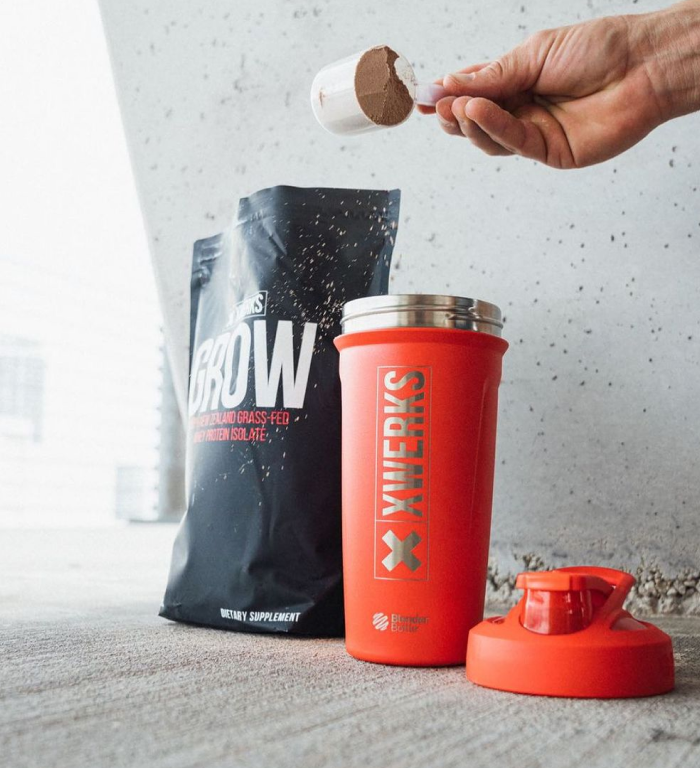
XWERKS Grow — 25g grass-fed NZ whey isolate per scoop. Fast-digesting, GI-tolerant, mixes in 8 oz of liquid. The recovery shake serious cyclists use.
SHOP GROW →Further Reading
Pre-Workout for Mountain Biking
References
1. Thomas DT, et al. ACSM Joint Position Statement: Nutrition and Athletic Performance. Med Sci Sports Exerc. 2016;48(3):543-568.
2. Moore DR, et al. Beyond muscle hypertrophy: why dietary protein is important for endurance athletes. Appl Physiol Nutr Metab. 2014;39(9):987-997.
3. Morton RW, et al. Protein supplementation and resistance training-induced gains. Br J Sports Med. 2018;52(6):376-384.