TL;DR
- For pure caffeine effects, coffee and pre-workout perform similarly at matched caffeine doses. The research doesn't support large performance differences when caffeine is the only variable.
- Coffee wins when: cost matters, you want something familiar, you're training before a meeting/meal, or you need small doses (100-150mg caffeine). A large coffee delivers what you need for most training sessions.
- Pre-workout wins when: you need citrulline (for pumps/vasodilation), beta-alanine (for sustained training volume), or consistent precise dosing — which coffee can't provide.
- For lifting: pre-workout with citrulline + beta-alanine + caffeine gives meaningful advantages over coffee. For steady-state cardio or general fitness: coffee is usually fine.
- The worst option: "stim-loaded" pre-workouts with 350mg+ caffeine plus proprietary stimulant blends. More caffeine isn't better; it's just more jittery.
"Pre-workout vs coffee" is one of the most common questions in training nutrition — and most articles answer it badly. The supplement industry pushes pre-workout as dramatically superior to coffee; the "coffee is all you need" crowd dismisses pre-workouts as overpriced caffeine. The research tells a more nuanced story: for caffeine-only effects, they're equivalent at matched doses. What actually differs is the non-caffeine ingredients — citrulline, beta-alanine, tyrosine, and others — that some pre-workouts include and coffee doesn't. Whether those extras matter depends entirely on what you're training for. This guide covers the actual evidence on caffeine from both sources, when coffee is genuinely sufficient, when pre-workout earns the upgrade, and what to look for (and avoid) in either option.
The caffeine question — which is better?
Research comparing caffeine from coffee to caffeine from anhydrous sources (capsules, pre-workouts) at matched doses consistently finds similar effects on performance — strength, endurance, power output, perceived exertion, and time to fatigue. Your body absorbs both effectively. Blood caffeine concentrations peak at similar times (30-60 minutes post-ingestion).
One older study (Graham et al., 1998) suggested that caffeine from coffee might be slightly less ergogenic than caffeine anhydrous, possibly due to other coffee compounds interfering. But subsequent research and meta-analyses haven't consistently reproduced this finding. At the practical level, if you drink a coffee with 200mg of caffeine or take a pre-workout with 200mg of caffeine, your workout will feel similar.
The real difference between coffee and pre-workout isn't the caffeine — it's everything else.
Caffeine doses that actually matter
The research-supported range for ergogenic caffeine is 3-6mg per kg body weight (ISSN position stand, 2021). For a 180-lb (82kg) adult, that's 245-490mg. Most people don't need the top of that range — 150-250mg is often plenty, and side effects (jitters, elevated heart rate, anxiety, sleep disruption) climb faster than benefits past 300mg.
What's in pre-workout besides caffeine — and does it matter?
This is the actual differentiator. Coffee gives you caffeine plus some antioxidants. Quality pre-workouts add specific compounds targeting different aspects of training performance. Whether each matters depends on what you're training for.
L-Citrulline (or Citrulline Malate)
6-8g citrulline OR 8-10g citrulline malateWhat it does: Citrulline increases nitric oxide production, which causes vasodilation — the "pump" feeling, plus improved blood flow to working muscles. Research supports effects on training volume, reps-to-failure, and post-workout muscle soreness.
Evidence: Wax et al. (2015) and subsequent research has shown citrulline supplementation at clinical doses improves rep performance on bench press, leg extension, and other resistance exercises. Effects are modest but consistent.
Coffee equivalent: None. You cannot get citrulline from coffee at any meaningful dose.
Who benefits: Lifters, bodybuilders, and anyone doing volume-based resistance training where extra reps matter. Endurance athletes see some benefit but effects are more modest.
Beta-Alanine
1.5-3g per serving · 3-6g daily for loadingWhat it does: Beta-alanine increases muscle carnosine, which buffers hydrogen ion accumulation during high-intensity efforts. This translates to better performance in the 1-4 minute work capacity range — lifting sets of 8-30 reps, CrossFit metcons, sprints, team sports.
Evidence: The ISSN position stand on beta-alanine (2015) supports ergogenic effects on high-intensity exercise performance. Effects require consistent daily loading for 4-6 weeks to saturate muscle carnosine stores — acute pre-workout doses don't do much on day one.
Coffee equivalent: None.
Who benefits: CrossFitters, team sport athletes, bodybuilders doing higher-rep work, anyone training in the 60 seconds to 4 minutes effort range. Minimal benefit for pure strength (1-3 reps) or long endurance work.
Note: Causes harmless tingling sensation (paresthesia) at higher doses. Not a sign of it "working" — just a neurological side effect.
L-Tyrosine
1-2g per servingWhat it does: Amino acid precursor to dopamine, norepinephrine, and epinephrine. Supports cognitive performance under stress, mental focus, and potentially motivation. Effects are most notable in cognitively demanding or stressful situations — harder lifts, complex movements, fatigued training.
Evidence: Research supports tyrosine for cognitive performance under sleep deprivation, cold exposure, and acute stress. Training-specific evidence is more limited but mechanistically plausible.
Coffee equivalent: None.
Who benefits: Lifters doing complex movements (Olympic lifts, technical work), athletes training while fatigued or sleep-deprived, people who find it hard to get focused for workouts.
Rhodiola Rosea
200-500mg standardized extractWhat it does: Adaptogenic herb with research support for reducing fatigue, managing stress, and improving cognitive performance under stress. In pre-workout context, may help with training while under-recovered or in stress periods.
Evidence: Moderate. Not a dramatic stimulant; more of a capacity supporter.
Coffee equivalent: None, though the cognitive-performance-under-stress effects overlap somewhat with caffeine's benefits.
BCAAs / EAAs (often added but often not needed)
Often included · often unnecessaryHonest assessment: If you're consuming adequate protein throughout the day (1.6-2.2g/kg), adding BCAAs to your pre-workout is redundant. BCAAs are useful if you're training fasted and won't eat protein for several hours after. For most people training within 2-3 hours of a meal, BCAA additions don't add meaningful benefit over the protein they're already eating.
Some pre-workouts use BCAAs as a label-dressing ingredient without clinical doses.
When coffee is genuinely sufficient
You're doing steady-state cardio or general fitness
For a 45-minute run, bike ride, or moderate-intensity general fitness session, caffeine is the main compound that affects performance. A 12oz coffee (150-200mg) provides exactly that. The pump effects from citrulline don't matter for endurance work, and the beta-alanine benefits are modest at sub-maximal intensities.
You need small caffeine doses
If 100-150mg is your sweet spot (common for women with lower body weights, caffeine-sensitive individuals, or people training later in the day), coffee gives you granular control. A standard pre-workout scoop typically delivers 150-250mg, which may be too much for you. Half-scoops lose the intended dosing on other ingredients.
Budget matters
A tub of pre-workout is $35-60 for 30 servings ($1.15-2 per serving). Quality coffee at home is $0.20-0.50 per cup. Over a year, that's a meaningful difference — $300-500+ for pre-workout vs $75-150 for coffee. If you're training consistently 4-5x weekly, this adds up.
You train mornings and already drink coffee
Most people have their morning coffee anyway. Training shortly after — rather than adding another caffeine source on top — is simpler and avoids over-caffeinating.
You like the ritual
Coffee is a ritual for many people. The warm cup, the smell, the familiarity — these aren't nothing psychologically. If coffee puts you in a pre-training mindset more effectively than mixing a pre-workout drink, that matters.
When pre-workout genuinely outperforms coffee
You're doing volume-based resistance training
For lifters doing 3+ sets of 6-15 reps on compound movements, citrulline matters. Research consistently shows 6-8g citrulline (or 8-10g citrulline malate) improves rep performance, which translates to more training volume over time — the #1 driver of hypertrophy. Coffee doesn't give you this.
You're training in the 1-4 minute high-intensity work range
CrossFit metcons, high-rep lifting, team sports, sprint intervals, certain combat sports — all benefit from beta-alanine saturation. Daily loading matters more than the pre-workout dose specifically, but a pre-workout that contains 2-3g beta-alanine in every serving builds and maintains muscle carnosine over time. Coffee can't.
You need consistent dosing
Coffee caffeine varies wildly — 80mg to 300mg depending on brew method, bean, roast, and serving size. If you're serious enough about training to care about the difference between a good day and a great one, variable caffeine dosing adds noise. Pre-workout delivers a known dose every time.
You're training late and can't tolerate full caffeine doses
Quality pre-workouts formulated without caffeine (or with small doses under 100mg) still provide citrulline, beta-alanine, and other ingredients. If you train evenings and caffeine disrupts sleep, a low-stim or stim-free pre-workout gives you the non-caffeine benefits without the sleep cost. Coffee doesn't scale down this way.
You dislike coffee or it upsets your stomach
Some people don't tolerate coffee well — acid reflux, jitters, digestive issues, or just preference. Pre-workout in water avoids these issues for many.
The hybrid approach
Many lifters get the best of both by combining reduced-caffeine pre-workout with coffee, or by stacking specific ingredients with coffee:
Coffee + citrulline powder: Take 6-8g pure citrulline (cheap, sold plain) with your morning coffee 30-60 minutes before lifting. Gets you pump benefits for $0.25-0.50 per serving on top of the coffee you're already drinking.
Coffee + beta-alanine: Take 2-3g beta-alanine daily (doesn't have to be pre-workout timed — just consistent daily loading), continue drinking coffee as usual. Combines beta-alanine's long-term benefits with the simplicity of coffee pre-training.
Low-caffeine pre-workout + small coffee: Use a pre-workout with 100mg caffeine plus your usual coffee. Gets you full citrulline/beta-alanine/tyrosine doses without over-caffeinating.
What to skip in either option
• Mega-dose "stim-heavy" pre-workouts (350mg+ caffeine): More caffeine past your individual tolerance gives diminishing returns and escalating side effects. Industry trend toward 350-500mg pre-workouts is marketing, not performance.
• Proprietary "thermogenic" or "fat-burner" pre-workout blends: Usually contain undisclosed doses of stimulants (DMHA, yohimbine, synephrine) in addition to caffeine. Risk profile is higher than benefit.
• Pre-workouts with underdosed "label-dressing" ingredients: 500mg of citrulline (when 6-8g is the clinical dose) or 500mg of beta-alanine (when 2-3g per serving is the target) is marketing. Check doses, not just ingredient lists.
• Multiple caffeine sources simultaneously: Pre-workout + coffee + energy drink + caffeine gum = way too much caffeine for most people. Pick your primary source.
• Using caffeine late in the day: Caffeine has a ~5-hour half-life (longer in slow metabolizers). A 4pm 200mg pre-workout leaves meaningful caffeine in your system at bedtime, impairing sleep quality. Better sleep > slightly better afternoon lift.
• Daily high-dose caffeine without tolerance management: Tolerance builds quickly. After 2-3 weeks of daily high caffeine, you need more to feel the same effect. Periodic de-loads (1-2 weeks at half dose or caffeine-free) restore sensitivity.
Decision framework
Choose coffee if:
• You're doing endurance training, steady-state cardio, or general fitness
• You already drink coffee and train in the morning
• You're sensitive to high caffeine doses (100-150mg is your range)
• Budget matters
• You like the simplicity
Choose pre-workout if:
• You're doing serious resistance training (3+ sets, 6-15 rep ranges)
• You're doing high-intensity conditioning in the 1-4 minute work range
• You want consistent dosing across workouts
• You dislike coffee or don't tolerate it
• You need to train later in the day (use low-stim or stim-free options)
Hybrid approach if:
• You want pump benefits without leaving coffee: coffee + 6-8g citrulline
• You want beta-alanine without pre-workout cost: 2-3g daily beta-alanine + your usual coffee
• You train in multiple modalities (lifting + running): use pre-workout for lifting days, coffee for cardio days
What to look for in a quality pre-workout
Green flags: Transparent labeling (no "proprietary blends"), clinical doses of citrulline (6-8g) and beta-alanine (2-3g), moderate caffeine (150-250mg), simple ingredient list.
Red flags: Proprietary blends hiding individual doses, more than 350mg caffeine per serving, undisclosed stimulants (DMHA, DMAA, synephrine at high doses), more than 10 ingredients (usually means none are properly dosed), aggressive "stim" marketing, flavoring that requires a "tingly" sensation claim.
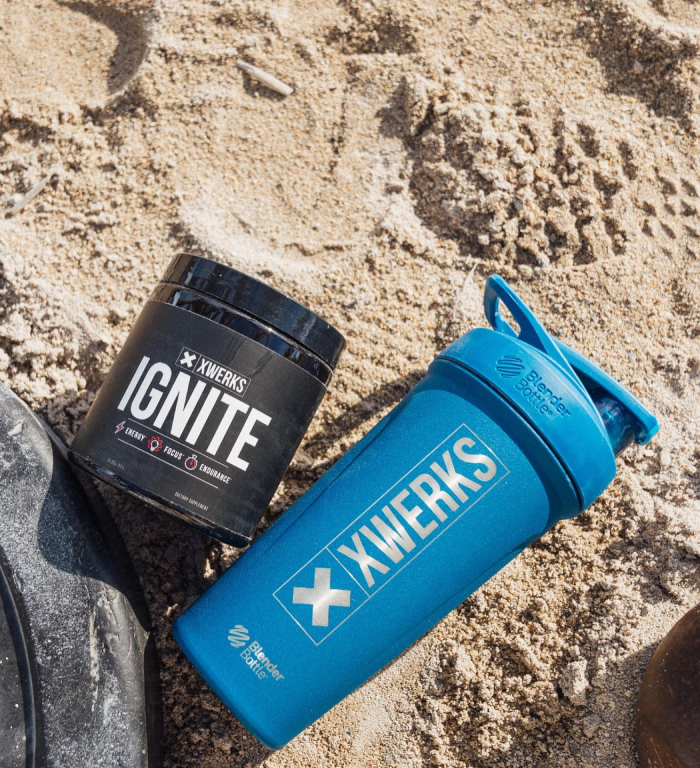
XWERKS Ignite example: 150mg caffeine, 3g citrulline malate, 2g L-tyrosine, 1.5g beta-alanine, 500mg rhodiola rosea, 200mg DMAE, 10mg BioPerine. Moderate caffeine, transparent doses, no proprietary blends.
The Bottom Line
For pure caffeine effects, coffee and pre-workout perform similarly at matched doses. The research doesn't support dramatic performance differences.
The real difference is non-caffeine ingredients. Citrulline (for pumps/volume), beta-alanine (for high-intensity capacity), and tyrosine (for focus) matter for serious lifters and high-intensity athletes. Coffee doesn't provide these.
Choose coffee for endurance work, general fitness, morning training ritual, lower caffeine tolerance, or budget constraints.
Choose pre-workout for serious resistance training, high-intensity conditioning, consistent dosing, or late-day training with low-stim options.
Or combine them: coffee + 6-8g citrulline is a cost-effective hybrid that gets you most of the benefit of both.
Skip: stim-loaded pre-workouts (350mg+ caffeine), proprietary blends, and stacking multiple caffeine sources. More caffeine isn't better; it's just more jittery and worse for sleep.
Pre-Workout Without the Stim Trap
XWERKS Ignite — 150mg caffeine, 3g citrulline malate, 2g L-tyrosine, 1.5g beta-alanine, 500mg rhodiola. Transparent doses, no proprietary blends, no 350mg caffeine mega-stim nonsense. The ingredients that actually matter at the doses that actually work.
Shop Ignite