TL;DR
- "Cortisol belly" is real but oversimplified. Chronic elevated cortisol does preferentially deposit visceral fat — but in most people searching this term, the bigger drivers are caloric intake, sleep debt, alcohol, under-training, and perimenopause/menopause.
- The interventions that actually work: fix the sleep problem, reduce alcohol, eat adequate protein, lift weights 2-4x weekly, manage chronic stress. These address both cortisol and body composition simultaneously.
- Ashwagandha (300-600mg standardized extract daily) has research support for reducing elevated cortisol. Magnesium supports sleep quality. These are legitimate. "Cortisol blocker" proprietary blends and "belly fat detox" products are marketing.
- Severe abdominal fat gain with purple stretch marks, round face, easy bruising, or rapid weight gain warrants a physician visit, not supplements — these can indicate Cushing's syndrome.
- You cannot spot-reduce abdominal fat. Fat loss occurs systemically based on energy balance, genetics, and sex hormones. "Cortisol belly burners" targeting just midsection fat don't exist physiologically.
"Cortisol belly" has become one of the most successful marketing frames in the supplement industry — a tidy narrative that your stubborn abdominal fat is caused by one villain (cortisol), and that one pill or powder can make it go away. The honest science is both more interesting and less convenient: chronic cortisol elevation really does affect where your body stores fat, preferentially depositing it in the abdominal and visceral compartments. That part is legitimate physiology. But "cortisol belly" as popularly used conflates several different situations — genuine cortisol dysregulation (rare), chronic stress-related cortisol elevation (common but hard to isolate), menopause-driven body composition changes, sleep-debt-induced cortisol effects, alcohol consumption patterns, and general caloric surplus with sedentary living. In most cases, the "cortisol belly" people are searching to fix is actually driven by 3-5 lifestyle factors that happen to also affect cortisol — making the supplement industry's "block cortisol, lose the belly" framing both incomplete and sometimes actively misleading. This guide covers what the actual research supports, what the real interventions are, and when abdominal weight gain warrants a physician rather than another supplement.
What "cortisol belly" actually is
Cortisol is a glucocorticoid hormone produced by the adrenal glands. It's essential — regulates blood sugar, immune function, blood pressure, and the stress response. Acute elevations are normal and beneficial. The problem is chronic elevation outside the normal circadian pattern.
Chronically elevated cortisol does several things that affect body composition: (1) promotes visceral fat deposition (fat around your organs, inside the abdominal wall), (2) breaks down muscle tissue (catabolic effect), (3) raises blood sugar and insulin, which favors fat storage, (4) increases appetite for calorie-dense foods, and (5) impairs sleep quality, which itself raises next-day cortisol — creating a feedback loop.
So yes, cortisol affects where and how you store fat. But calling abdominal fat "cortisol belly" implies cortisol is the primary cause, when in most people it's one of several contributing factors — and often a downstream effect of other issues rather than the root cause.
The drivers that actually cause abdominal fat gain
In order of impact for most adults — not necessarily the order marketing emphasizes:
1. Caloric surplus
The largest and most common driverTotal body fat gain — including abdominal — fundamentally requires consuming more calories than you expend over time. Someone gaining 10 lbs over a year is in a small but persistent caloric surplus. No amount of cortisol management will override this. Sugar, alcohol, restaurant meals, late-night snacking, and portion sizes that have grown 20% over decades all drive this.
The test: when people track food accurately for 2-3 weeks, most are surprised by the calorie total. "I don't eat that much" rarely survives contact with a food log.
2. Sleep deprivation
The hidden multiplierChronic sleep restriction (below 7 hours) is one of the strongest non-dietary drivers of abdominal fat gain. Sleep loss raises cortisol, increases ghrelin (hunger hormone), decreases leptin (satiety hormone), impairs insulin sensitivity, and reduces motivation to exercise. Research shows that dieting with insufficient sleep results in 55% less fat loss and 60% more muscle loss compared to adequate sleep at the same calorie intake.
If you're sleeping 5-6 hours and trying to fix "cortisol belly" with supplements, you're patching a symptom while the root cause compounds daily.
3. Alcohol consumption
Particularly for abdominal fat specificallyAlcohol has a unique relationship with abdominal fat. It's 7 calories per gram (more than carbs or protein), suppresses fat oxidation while your body metabolizes it, disrupts sleep quality significantly, often accompanies additional calorie-dense food, and has some research suggesting preferential abdominal fat deposition independent of calories. Regular drinkers — even "moderate" 1-2 drinks most nights — often see dramatic improvements in abdominal composition with 30 days of abstinence.
4. Perimenopause and menopause (women)
Often mistaken for "cortisol belly"Estrogen decline during perimenopause and menopause shifts fat storage patterns away from the hips and thighs toward the abdomen — including visceral fat. This is hormonal but not primarily cortisol-driven. Many women in their late 40s and 50s gain abdominal weight despite relatively unchanged lifestyles and assume it's "cortisol belly" when it's actually estrogen-mediated fat redistribution. The intervention is different: resistance training becomes critical, protein needs increase to 1.8-2.2g/kg, and hormone replacement therapy is a legitimate medical option to discuss with a physician.
5. Aging and sedentary behavior
Slow but compoundingMuscle mass declines roughly 1% per year after age 30 without resistance training. Less muscle means lower resting metabolic rate, which means the calories that maintained weight at 25 produce weight gain at 45 — often abdominally. This isn't cortisol; it's sarcopenia plus unchanged eating.
6. Genuine chronic stress
Real contributor, rarely the sole causeChronic psychological stress — work overwhelm, caregiving, grief, financial pressure, abusive relationships — does elevate cortisol and contribute to abdominal fat. This is the "cortisol belly" that marketing focuses on. In practice, it's usually one of several drivers rather than the exclusive cause. Addressing the actual stressor matters more than any supplement.
7. Chronic low-calorie dieting
Paradoxical but commonAggressive caloric restriction maintained for months raises cortisol substantially. Women who've been "on a diet" for years — eating 1,200 calories, doing daily cardio, and still not losing abdominal fat — are often stuck in a stress response from chronic under-eating. Ironically, eating more (with adequate protein and strength training) often produces better abdominal composition than continuing to restrict. This is counterintuitive but well-documented.
How to test whether cortisol is actually your issue
Low likelihood "cortisol belly": Abdominal fat developed gradually over years, you've had life changes (kids, sedentary job, aging), your sleep is 6 hours or less most nights, you drink 1-2+ drinks most days, your diet has drifted toward more calorie-dense foods, you're in or past perimenopause. Address these first.
Higher likelihood cortisol-driven: Rapid abdominal fat gain (weeks to months) during a specific stress period, accompanied by poor sleep that's clearly stress-related, no major dietary/activity changes, feelings of being "wired but tired," maintained under-restriction that isn't producing fat loss despite the deficit.
Medical red flags: Rapid abdominal fat gain with purple stretch marks, round/moon face appearance, easy bruising, thin arms and legs relative to trunk, muscle weakness, high blood pressure, or new diabetes. See a physician — these can indicate Cushing's syndrome or other endocrine disorders.
The interventions that actually work
These address both the cortisol component and the primary drivers of abdominal fat simultaneously. They're not glamorous but they're what the research supports.
1. Sleep — the single highest-leverage intervention
Target 7-9 hours consistently. Dark cool room, consistent bedtime, no screens 30-60 minutes before bed, limit late-day caffeine. If you snore loudly, have witnessed breathing pauses, or wake unrefreshed despite adequate sleep hours, get evaluated for sleep apnea — untreated sleep apnea causes dramatic overnight cortisol spikes and severe body composition consequences.
2. Reduce alcohol
A 30-day alcohol-free trial is one of the most predictable body composition improvements available. Many people who "can't lose abdominal fat" discover that 1-2 drinks most nights was the main issue. If abstaining isn't realistic, cap at 2-3 drinks per week.
3. Strength training 2-4x weekly
Resistance training builds muscle (which raises resting metabolic rate), improves insulin sensitivity, reduces visceral fat independent of calorie changes, and is specifically beneficial for perimenopausal and postmenopausal women who are losing muscle to estrogen decline. No amount of cardio substitutes for resistance training for abdominal composition.
4. Protein at 1.6-2.2g/kg body weight
Higher protein supports muscle preservation during any weight loss, increases satiety (reduces the caloric surplus that drives fat gain), and has a higher thermic effect than carbs or fats. For a 160-lb person, that's 116-160g daily. Most people searching "cortisol belly" are eating roughly half of this.
5. Manage actual stressors
Supplements don't supplement away an abusive job, caregiver burnout, or chronic relationship stress. The intervention that matters is changing the underlying situation — through boundaries, therapy, job change, relationship work — not buying another adaptogen stack. Daily walks, breathwork, and meditation have research support for cortisol reduction that often exceeds what supplements provide.
6. Moderate caloric intake (not aggressive restriction)
If weight loss is the goal, a 10-20% deficit works better than a 30-40% deficit for body composition — particularly for abdominal fat. Aggressive restriction raises cortisol and often produces muscle loss with preserved or increased abdominal fat. "Eat less, do more cardio" is not the answer for stubborn abdominal composition.
Supplements with legitimate research support
With the lifestyle foundation addressed, these have research support for cortisol modulation. Effects are real but modest — they accelerate what lifestyle is already producing, not replace it.
Ashwagandha (Withania somnifera)
300-600mg standardized extract dailyStrongest evidence of any cortisol-modulating supplement. Research shows meaningful cortisol reductions:
• Chandrasekhar 2012: ~27.9% cortisol reduction over 60 days in chronically stressed adults.
• Lopresti 2019: Cortisol and stress score improvements at 240mg daily.
• Salve 2019: Dose-dependent cortisol reductions with KSM-66.
Important caveat: Ashwagandha lowers cortisol, but lowering cortisol alone doesn't produce weight loss or spot-reduce abdominal fat. If you're eating in a surplus, sleeping 5 hours, and drinking daily, ashwagandha won't offset those factors. It complements a proper lifestyle protocol; it doesn't replace one.
Forms: KSM-66 (most-studied standardized extract), Shoden (higher-concentration extract), or traditional 30:1 root extracts with 3-5% withanolides like XWERKS Ashwa. Quality brands: Jarrow Formulas, Himalaya, Thorne, Pure Encapsulations.
Cautions: Can interact with thyroid medications, immunosuppressants, sedatives. Avoid during pregnancy.
Magnesium (Glycinate)
200-400mg daily, eveningMost adults under-consume magnesium. Supplementation has research support for sleep quality improvement — which in turn reduces next-day cortisol and supports body composition. Glycinate form is well-absorbed and has mild calming effects for evening use. Quality brands: Pure Encapsulations, Thorne, Natural Vitality Calm, Doctor's Best.
Omega-3 (EPA+DHA)
2-3g combined EPA+DHA dailyResearch supports attenuating stress-induced cortisol responses and supporting metabolic health generally. Not a "cortisol blocker" but part of a foundational stack. Quality brands: Nordic Naturals, Carlson Labs, Thorne.
Creatine Monohydrate
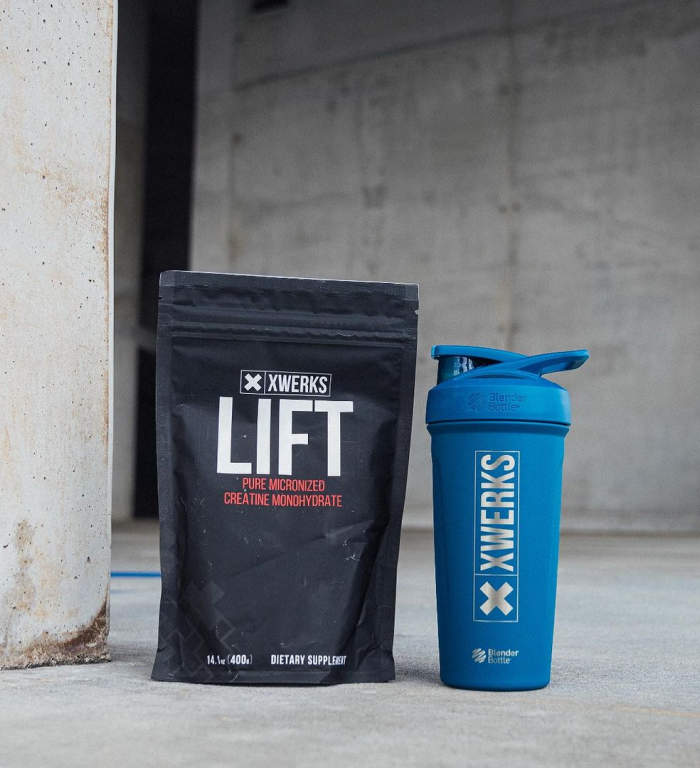
5g dailyNot a cortisol-modulating supplement directly, but creatine supports muscle preservation during caloric deficits, improves training quality (more muscle built from the same sessions), and has cognitive benefits under stress. Muscle gain is one of the most effective interventions for abdominal composition over time. Quality brands: Creapure-certified products, XWERKS Lift, Optimum Nutrition, BulkSupplements.
What to skip
• "Cortisol blocker" supplements: Proprietary blends claiming to "block" cortisol at the cellular level rarely deliver what they promise. Your body needs cortisol for basic physiology — fully "blocking" it isn't the goal or physiologically possible.
• "Belly fat burner" and "targeted fat loss" products: You cannot spot-reduce fat. Fat loss is systemic — the amount and location are determined by energy balance, genetics, and sex hormones, not by ingredients that "target" specific areas.
• "Detox teas" and cleanses for belly fat: No evidence base. Often contain stimulants (caffeine, green tea) and diuretics that cause temporary water loss mistaken for fat loss.
• Waist trainers and "sweat belts": Compressing the abdomen doesn't burn fat. Sweating more doesn't mean losing more fat (it means losing water). Some of these products actively interfere with breathing and core function.
• Proprietary "adrenal support" or "HPA axis" blends: Usually combine ashwagandha + rhodiola + other herbs at undisclosed doses. The one or two effective ingredients are shortchanged to fit 8-12 ingredients on the label.
• DHEA or pregnenolone supplementation without testing: Both are actual hormones with real effects. Supplementing without blood levels can push hormones outside normal ranges. Medical guidance required.
• High-dose licorice root products: Glycyrrhizin actually inhibits cortisol breakdown — can raise cortisol and blood pressure, opposite of the marketed effect.
• "Cortisol belly" 30-day programs or meal plans: Marketing frame; the underlying advice (eat protein, sleep more, exercise) is free and doesn't require a branded program.
When to see a physician
Certain presentations of abdominal weight gain warrant medical evaluation rather than supplement protocols. See a physician — endocrinologist or primary care — if you experience:
- Rapid abdominal weight gain (significant change in weeks or a few months) without dietary changes
- Purple stretch marks (striae) on the abdomen, thighs, or upper arms
- Round "moon" face appearance
- Thin arms and legs relative to truncal size (central obesity with peripheral wasting)
- Easy bruising, slow wound healing
- Proximal muscle weakness (difficulty rising from chairs, climbing stairs)
- New-onset high blood pressure or diabetes
- Irregular or absent menstrual periods in women, erectile dysfunction or low libido in men
- Persistent fatigue with these physical changes
These can indicate Cushing's syndrome, adrenal tumors, pituitary disorders, or other conditions requiring medical diagnosis and treatment. Supplements are not the answer.
Building your protocol
Foundation (address these before anything else)
• 7-9 hours of sleep consistently
• Alcohol reduced to 2-3 drinks per week or abstinence
• Strength training 2-4x weekly
• Protein at 1.6-2.2g/kg body weight
• Moderate caloric intake (10-20% deficit if losing weight, not aggressive restriction)
• Stress management practice daily (walks, breathwork, meditation, therapy)
Research-backed supplement additions
• Ashwagandha: 300-600mg daily (XWERKS Ashwa or quality KSM-66), evening for sleep benefits
• Magnesium glycinate: 200-400mg evening for sleep support
• Omega-3: 2-3g EPA+DHA daily
• Creatine monohydrate: 5g daily for muscle preservation
• Run this protocol for 8-12 weeks before assessing results
For women in perimenopause or menopause
• Everything above, plus:
• Protein target raised to 1.8-2.2g/kg
• Strength training becomes non-negotiable (2-4x weekly with compound lifts)
• Discuss hormone replacement therapy with a physician — estrogen decline is the primary driver of menopausal abdominal fat redistribution, and HRT is a legitimate medical option
• Sleep quality often degrades in this life stage; magnesium becomes particularly valuable
The Bottom Line
"Cortisol belly" is real but oversimplified. Chronic elevated cortisol does preferentially deposit visceral fat, but in most people, the bigger drivers of abdominal fat are caloric surplus, sleep debt, alcohol, under-training, aging, and menopause — which also raise cortisol, making causation circular.
What actually works: consistent sleep, reduced alcohol, strength training 2-4x weekly, protein at 1.6-2.2g/kg, moderate (not aggressive) caloric management, and addressing actual life stressors. These fix both the cortisol picture and the body composition picture simultaneously.
Legitimate supplement additions: ashwagandha (300-600mg standardized extract), magnesium glycinate, omega-3s, creatine. Modest effects, useful alongside a proper protocol.
Skip: "cortisol blocker" proprietary blends, "belly fat detox" teas, waist trainers, targeted fat-loss products, DHEA/pregnenolone without testing, high-dose licorice, branded 30-day "cortisol" programs.
See a physician if: rapid abdominal fat gain with purple stretch marks, round face, easy bruising, muscle weakness, or new high blood pressure/diabetes — these can indicate Cushing's syndrome.
Ashwagandha That's Clinically Dosed
XWERKS Ashwa — 1,500mg Withania somnifera root from 30:1 extract, standardized to 3% withanolides. The form with the strongest research base for cortisol modulation and sleep quality. No proprietary "cortisol complex" marketing, no unsupported "belly fat burning" claims — just ashwagandha at an effective dose.
Shop Ashwa