TL;DR
- CrossFit is one of the most pre-workout-responsive sports — combining explosive Olympic lifts, sustained metcons, gymnastics skill work, and strength work means caffeine, citrulline, and beta-alanine all hit different parts of the workout.
- The right profile: moderate caffeine (150-250mg), citrulline malate (3-6g), beta-alanine (1.5-3g per serving), L-tyrosine (1-2g). Avoid mega-stim products that hurt skill work — jitters wreck Olympic lifts and gymnastics.
- Timing: 30-45 minutes before class. For evening classes (5-7pm), reduce caffeine to 75-100mg or skip entirely. Late-day caffeine disrupts sleep more than the marginal performance boost is worth.
- Common mistake: stacking pre-workout + coffee + caffeine gum = 500+ mg total caffeine, which produces jitters that compromise technical movements. Total daily caffeine should stay under 6mg/kg body weight.
- For Open competition or multi-day events: practice your exact race-day pre-workout protocol during training. Don't experiment in competition.
CrossFit is one of the most pre-workout-responsive sports in fitness — and one where ingredient choice matters more than for most other training contexts. A typical CrossFit class blends explosive Olympic lifts, sustained metabolic conditioning, gymnastics skill work, and strength work into 45-60 minutes of varied effort. Each component responds to different pre-workout ingredients: caffeine and tyrosine for the focus heavy lifts demand, citrulline for blood flow and sustained pump, beta-alanine for the lactate buffering metcons require, and the entire profile for the cumulative cognitive demand of executing technical movements while fatigued. But CrossFit's skill demands also create a specific risk profile that lifters and runners don't face. Mega-stim pre-workouts that work fine for pure strength training often actively hurt CrossFit performance — the jitters, anxiety, and elevated heart rate from 350mg+ caffeine compromise the precision needed for clean barbell technique and gymnastics movements. The right CrossFit pre-workout sits in the moderate-stim category with research-backed performance ingredients at clinical doses. This guide covers the energy systems CrossFit taxes, the ingredient profile that supports them, what to avoid, sport-specific scenarios (Open competition, multi-day events, evening class timing), and how Ignite compares against the other quality options targeting the CrossFit audience.
Why CrossFit responds well to pre-workout
Most sports tax one or two energy systems primarily. CrossFit taxes all three across a single hour — and pre-workout ingredients map onto each:
ATP-PCr system (0-15 seconds): Olympic lifts, max-effort sets, heavy snatches and cleans, plyometrics. Caffeine improves power output and force production at this end of the spectrum. Citrulline supports blood flow during repeated heavy efforts.
Anaerobic glycolytic system (15 sec - 2 min): Sets of pull-ups, wall balls, kettlebell swings, sprints, AMRAP intervals. Beta-alanine buffers the hydrogen ion accumulation that produces "the burn" and limits sustained high-intensity output. Hobson 2012 meta-analysis documents clear performance benefits in this 1-4 minute window.
Aerobic system (sustained efforts): Long AMRAPs, chippers, hero WODs, conditioning pieces. Caffeine reduces perceived effort and supports sustained output. Citrulline supports oxygen delivery.
Cognitive demands across the full hour: Skill execution under fatigue (muscle-ups when your grip is gone, snatches when your legs are cooked), pacing decisions in for-time WODs, transition timing in chippers. L-tyrosine and moderate caffeine support cognitive function under accumulating fatigue.
This is why CrossFit benefits more from a comprehensive pre-workout than sports that tax just one energy system. A pure strength athlete can argue for caffeine alone; a pure endurance athlete might do fine with caffeine + citrulline. CrossFit hits all the bases — and the right pre-workout supports all of them simultaneously.
The CrossFit-specific risk profile
The pre-workout decision for pure powerlifters or bodybuilders is largely "more caffeine = more performance." CrossFit doesn't work this way. The skill demands of Olympic lifts, gymnastics movements, and barbell technique create a specific failure mode for mega-stim products:
Jitters compromise fine motor control. A clean snatch requires precise bar path, accurate timing of the second pull, and clean hip extension. Jitters from 400mg+ caffeine introduce unwanted muscle tension and reduce technique consistency. Missed lifts at heavy weights produce more performance loss than the marginal caffeine boost provides.
Elevated heart rate compounds metcon load. For-time WODs already produce sustained heart rates of 160-180+ BPM. Adding mega-caffeine elevates resting and warmup heart rate before the WOD even starts, leaving less ceiling for actual workout effort. The cardiovascular system has a finite capacity; mega-stim consumes some of it before training begins.
Anxiety hurts gymnastics performance. Muscle-ups, handstand push-ups, and ring work require relaxed precision. Anxiety from yohimbine, synephrine, or excessive caffeine produces muscle tension and impaired technique. Many CrossFitters report better gymnastics performance on moderate-stim or stim-free protocols.
GI distress mid-WOD is catastrophic. High beta-alanine doses (3g+) can cause GI urgency during sustained metcons. Mega-stim products with multiple secondary stimulants create GI risk that doesn't matter for 1-rep max attempts but ruins 20-minute AMRAPs.
The honest framing: moderate-stim pre-workouts (150-250mg caffeine) typically outperform mega-stim products (350mg+) for CrossFit specifically. The mega-stim category is built for pure strength athletes and powerlifters — different sport, different requirements.
What to look for in a CrossFit pre-workout
Caffeine — moderate dose
150-250mg per serving · 3-5mg/kg body weightThe most-researched performance supplement. Guest 2021 ISSN position stand documents 2-7% performance benefits across endurance, strength, and power tasks at clinical doses. For CrossFit specifically, target the lower-middle portion of the 3-6mg/kg general range — 3-5mg/kg keeps cardiovascular load moderate while providing the perceived effort and focus benefits.
Body weight math:
• 150-lb (68kg) athlete: 205-340mg target range
• 170-lb (77kg) athlete: 230-385mg
• 200-lb (91kg) athlete: 275-455mg
For most CrossFit athletes, a pre-workout providing 150-200mg caffeine is appropriate, with optional morning coffee earlier in the day reaching upper-middle of the target range on hardest training days.
Citrulline malate
3-6g per servingIncreases nitric oxide for vasodilation — supports the "pump" feeling and improved blood flow during repeated working sets. Perez-Guisado & Jakeman 2010 found 8g citrulline malate enabled more reps before failure across multiple sets — directly relevant to CrossFit's volume-based training (sets of 21-15-9, EMOMs, AMRAPs). 3g is the lower-effective dose; 6-8g is optimal but means more powder per scoop.
Beta-alanine
1.5-3g per serving · 3-6g daily total targetBeta-alanine's lactate buffering specifically benefits 1-4 minute high-intensity work — the heart of CrossFit metcons. The 21-15-9 of "Fran" lasts ~3-5 minutes for trained athletes; "Cindy" 20 AMRAP is sustained at this intensity; benchmark girls and hero WODs all live in beta-alanine's sweet spot.
Full benefit requires 4-6 weeks of consistent daily loading at 3-6g daily total. Pre-workout typically provides 1.5-2g; athletes targeting full clinical doses add standalone beta-alanine to hit 3-6g daily. Tingling sensation (paresthesia) is normal and fades with consistent use.
L-tyrosine
1-2g per servingAmino acid precursor to dopamine and norepinephrine. Supports focus and cognitive performance under stress — particularly valuable for skill execution under fatigue. Jongkees et al. 2015 documented benefits for cognitive performance under stress. The mile-22 marathon equivalent in CrossFit: muscle-ups in the back of a chipper, snatches at 80%+ in an EMOM round 8.
Rhodiola rosea (optional but valuable)
200-500mg standardized extractAdaptogenic support for athletes with high training volume or combining CrossFit with outside life stress. Some research supports reduced perception of fatigue and improved exercise capacity. Particularly relevant for CrossFit athletes training 5-6x weekly while managing demanding work and life schedules.
What to avoid for CrossFit specifically
• Mega-stim products (350mg+ caffeine per serving): Jitters wreck Olympic lifts and gymnastics. Elevated heart rate compounds metcon cardiovascular load. The performance plateau is around 6mg/kg; additional caffeine produces diminishing returns with increasing skill cost.
• DMAA, DMHA, methylhexaneamine: Banned by most athletic governing bodies including the CrossFit Games drug testing program. Periodically appear in "hardcore" CrossFit-marketed products despite FDA actions. Cardiovascular and CNS risks. Stick to reputable brands with transparent labeling.
• Yohimbine: Anxiety-inducing combined with elevated heart rate. Anxiety on top of for-time WOD pressure compounds problems. Avoid pre-workouts with yohimbine listed.
• Synephrine and higenamine: Higenamine is WADA-banned. Synephrine has cardiovascular concerns at supplement doses. Both add cardiovascular load that compounds CrossFit's already-high demand.
• Niacin (for "flushing effect"): Intense skin flushing during technical lifts and gymnastics is distracting. The flushing isn't actually performance-enhancing despite marketing claims.
• Creatine in pre-workout (overpriced): Creatine works through saturation (daily use), not acute timing. A pre-workout with 3g creatine charges premium pricing for an ingredient you can buy as standalone monohydrate at $0.20/serving. Take creatine separately at any consistent time.
• Proprietary blends in any form: "Energy matrix," "performance complex," "pump blend" listed at total weight without individual ingredient amounts. Hides underdosing. Avoid in favor of transparent-label alternatives.
• "Hardcore," "extreme," "alpha" branded products: Aggressive masculine branding correlates poorly with formula quality. Marketing positioning shouldn't drive your decision — formulation should.
Timing and class-day protocol
Morning classes (5:30-7am)
Pre-workout 30-45 minutes before class. Most athletes benefit from 150-200mg caffeine at this hour. Eat a small carb source (banana, date, half a granola bar) 15-30 minutes before if tolerated. The early class hour means caffeine timing is naturally protected from sleep impact.
Lunch hour classes (noon)
Full pre-workout dose works well. Ensure 2-3 hours since last meal to avoid GI distress during WOD. Caffeine half-life of 5 hours means traces remain at 5-7pm but typically don't disrupt sleep for most athletes. If you're caffeine-sensitive, monitor.
Afternoon classes (3-5pm)
Standard pre-workout dose. Pay attention to total daily caffeine — combined with morning coffee and a 200mg pre-workout, total can easily reach 400mg+. Monitor sleep quality; reduce dose if sleep suffers.
Evening classes (5-7pm)
Reduce caffeine to 75-100mg or skip entirely. Caffeine's 5-hour half-life means a 6pm pre-workout (200mg caffeine) leaves 100mg in your system at 11pm and 50mg at 4am — meaningfully affecting sleep quality for most people. The hour of poor sleep costs more performance than the evening boost provides. Citrulline, beta-alanine, and tyrosine (caffeine-free options or lower-caffeine products) still provide focus and metcon support without sleep disruption.
Two-a-day training
Common pattern for competitive CrossFit athletes during peak training blocks. Front-load caffeine to morning session; afternoon session uses caffeine-free pre-workout or no pre-workout. Total daily caffeine should still stay under 400mg from all sources.
Sport-specific scenarios
The CrossFit Open
Practice the protocol weeks beforeThe Open is 5 weeks of weekly workouts with redo opportunities. The pre-workout strategy: practice your exact Open-day protocol during training for 2-4 weeks before the Open begins. Test your specific pre-workout, dose, timing, and pre-workout meal during Friday Night Lights simulations or hard training sessions. Open day is not for experimentation.
Standard Open-day timing: Pre-workout 45-60 minutes before scheduled judge time. Light carb meal (banana + small portion of toast) 90 minutes before. No new products in the 4 weeks before the Open.
Quarterfinals and beyond
Multi-workout single-day eventsMulti-workout days require careful caffeine management. A protocol of pre-workout for workout 1, second pre-workout for workout 2, third for workout 3 produces total caffeine of 450-600mg+ — counterproductive over a competition day. The smarter approach: front-load to the first workout (full dose), maintain with smaller doses (50-75mg) for subsequent workouts, manage with food and hydration between events.
Multi-day competition (Regionals, Semifinals, Games)
Sleep protection becomes criticalMulti-day competitions create cumulative caffeine effects that can wreck sleep across the event. Strategy: lower per-event caffeine doses (100-150mg), eliminate evening caffeine entirely, prioritize sleep over marginal acute boost. Athletes who chase the high caffeine each day often see Day 3 performance decline that traces back to two nights of compromised sleep.
Hero WODs and longer chippers
Pair pre-workout with intra-workout fuelSessions over 25-30 minutes (Hero WODs, long chippers, training pieces) benefit from intra-workout fuel beyond pre-workout. XWERKS Motion with 25g Cluster Dextrin + electrolytes supports sustained energy without GI distress during long efforts. Pre-workout 30-45 minutes before; sip Motion during the second half of long pieces.
Drug-tested athletes (Games qualifiers, sponsored athletes)
Third-party tested products onlyThe CrossFit Games drug testing program tests athletes through Quarterfinals and beyond. NSF Certified for Sport or Informed Sport certifications provide best protection against contaminated supplement positives. Pre-Kaged Elite is Informed Sport certified. XWERKS Ignite isn't currently third-party tested — competitive CrossFit athletes should consider this in their product selection.
The CrossFit-specific protein and recovery framework
Beyond pre-workout
Pre-workout is one piece of CrossFit supplementation. The complete framework:
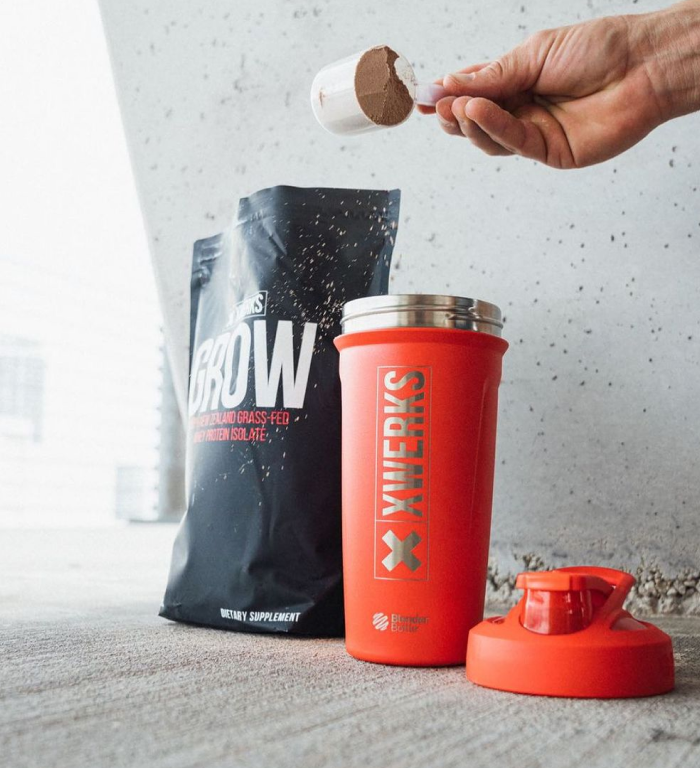
• Whey protein (1.6-2.2g/kg daily): XWERKS Grow. Higher than general recommendations due to high training volume and muscle damage from CrossFit's eccentric loading.
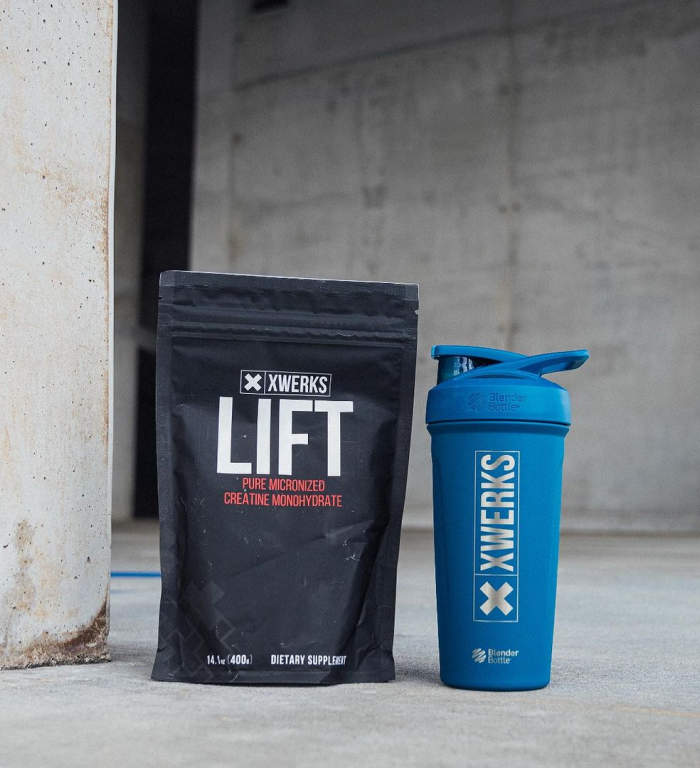
• Creatine (5g daily): XWERKS Lift for powder, Build for gummies. Most-researched performance supplement; particularly valuable for CrossFit's strength and power demands.
• Intra-workout carbs for long sessions: XWERKS Motion with Cluster Dextrin for Hero WODs, long chippers, multi-event competitions.
• Pre-workout (training days): XWERKS Ignite for moderate-stim CrossFit-appropriate dosing.
• Foundation supplements: Vitamin D3 (2,000-4,000 IU), omega-3 (2-3g EPA+DHA), magnesium glycinate (200-400mg evening for sleep).
• Optional adaptogenic support: Ashwagandha (XWERKS Ashwa) for cortisol management during high-volume training blocks.
XWERKS Ignite vs leading pre-workouts for CrossFit — head-to-head
Now that you understand what makes a CrossFit-appropriate pre-workout — moderate caffeine, transparent dosing, no mega-stim ingredients, supportive of skill work rather than disruptive — here's how Ignite compares to the most popular options targeting the CrossFit and functional fitness audience. Notice the caffeine spread: from 150mg moderate-stim through 388mg max-dose, with the trade-offs each represents.
| Criterion | XWERKS Ignite | Pre-Kaged Elite | Transparent Labs BULK | Bucked Up | Legion Pulse | 4 Gauge |
|---|---|---|---|---|---|---|
| Caffeine | 150mg | 388mg | 200mg | 200mg | 350mg | 150mg |
| L-Citrulline (research dose: 6-8g) | 3g (citrulline malate) | 8.5g | 8g | 6g | 8g | 6g |
| Beta-Alanine (research dose: 1.5-3g) | 1.5g (CarnoSyn) | 3.2g | 4g | 2g | 3.6g | None |
| L-Tyrosine (research dose: 1-2g) | 2g | 2g | 2.5g | None disclosed | None disclosed | None |
| Adaptogens / Additional | 500mg Rhodiola | Creatine, Coconut water | Theanine, Synephrine | Deer antler velvet, AlphaSize | Theanine, Betaine, Alpha-GPC | Coconut water, Acetyl L-carnitine |
| Transparent dosing | ✓ Full disclosure | ✓ Full disclosure | ✓ Full disclosure | Mostly disclosed | ✓ Full disclosure | ✓ Full disclosure |
| Third-party tested | No | ✓ Informed Sport | No | No | No | No |
| CrossFit-appropriate stim level | ✓ Moderate | High (potential jitters) | Moderate | Moderate | High (potential jitters) | ✓ Moderate |
| Cost per serving | ~$1.65 | ~$2.50 | ~$1.65 | ~$1.55 | ~$1.65 | ~$2.45 |
| Best for | Moderate-stim CrossFitters; coffee stackers | Drug-tested elite athletes | Full clinical doses across | Mid-stim with clinical citrulline | High-stim transparent value | Stim-conscious; clean labels |
Caffeine spread is the primary CrossFit differentiator. Pre-Kaged Elite and Legion Pulse push into mega-stim territory (350-388mg) — appropriate for pure powerlifters or larger athletes with high tolerance, but typically excessive for CrossFit's skill-heavy profile. Ignite, 4 Gauge, Transparent Labs BULK, and Bucked Up cluster at the moderate-stim level (150-200mg) better suited to technique-dependent training.
Citrulline disparity. Pre-Kaged Elite (8.5g), Transparent Labs BULK (8g), and Legion Pulse (8g) deliver full clinical citrulline doses. Ignite at 3g is meaningful but below clinical maximum. Bucked Up and 4 Gauge sit in the middle at 6g. For CrossFitters specifically prioritizing maximum pump and citrulline benefits, the higher-dose options have a measurable edge — though many athletes find Ignite's 3g sufficient for the metcon-focused training that drives most CrossFit programming.
Where Ignite wins for CrossFit: Moderate caffeine appropriate for skill work, full tyrosine clinical dose (2g), rhodiola for stress modulation, flexibility to stack with morning coffee for harder sessions. The "supports technique without compromising it" framing fits CrossFit better than pure-strength-focused products.
Where competitors win: Pre-Kaged Elite for drug-tested Games-track athletes (Informed Sport certified) at the cost of mega-caffeine. Transparent Labs BULK for full clinical doses across citrulline, beta-alanine, tyrosine, betaine. Bucked Up for moderate-mid stim with clinical citrulline. Legion Pulse for high-stim transparent value (caveat: high beta-alanine + caffeine combination produces more skill disruption). 4 Gauge for the cleanest small-list profile.
Drug-tested athletes: CrossFit Games qualifiers (Quarterfinals onward) face drug testing. Pre-Kaged Elite is the only Informed Sport certified option in this comparison. Other products are quality but lack third-party batch testing. For elite competitive CrossFitters, certification matters.
The honest framing: all six products in this table are quality choices. The best CrossFit pre-workout depends on your specific demands — skill-heavy training favors moderate-stim (Ignite, 4 Gauge, Bucked Up); pure strength and metcon focus can handle higher-stim (Pre-Kaged, Transparent Labs, Legion); drug-tested competitors prioritize Pre-Kaged Elite. Avoid mass-market proprietary blend products (C4 Original, N.O.-Xplode) regardless of which from this list you choose.
How to choose your CrossFit pre-workout
Step 1: Assess training demands
Skill-heavy programming (Olympic lifting focus, gymnastics development, technique-heavy work) → moderate-stim (150-200mg caffeine). Strength-focused programming (powerlifting hybrid, pure strength blocks) → can handle higher-stim. Conditioning-heavy programming → moderate caffeine + clinical beta-alanine.
Step 2: Match caffeine to body weight and tolerance
Target 3-5mg/kg from all caffeine sources. For a 170-lb (77kg) athlete: 230-385mg total daily. Most CrossFitters benefit from 150-200mg pre-workout caffeine + optional morning coffee.
Step 3: Consider drug-testing status
If you compete at Quarterfinals or beyond, prioritize Informed Sport certified products. Pre-Kaged Elite is the most accessible certified option in the CrossFit-appropriate category.
Step 4: Verify transparent labeling
Skip proprietary blends. Look for individual ingredient doses. Compare to research-backed ranges (3-8g citrulline, 1.5-3g beta-alanine, 1-2g tyrosine).
Step 5: Test in training before competition
Practice your exact pre-workout protocol during training for 2-4 weeks before the Open or any competition. Don't experiment in competition. The Friday-Night-Lights simulation is the right test environment.
The Bottom Line
CrossFit's combined demands respond well to pre-workout — but the profile matters. Look for moderate caffeine (150-250mg), citrulline malate (3-6g), beta-alanine (1.5-3g per serving), L-tyrosine (1-2g), and optional rhodiola.
Skip mega-stim products — jitters from 350mg+ caffeine wreck Olympic lifts and gymnastics technique. Total daily caffeine should stay below 6mg/kg body weight (around 400mg for most athletes). The mega-stim category serves powerlifters and bodybuilders, not CrossFit's skill-heavy profile.
Evening classes need lower caffeine — protect sleep with 75-100mg doses or skip caffeine entirely for late sessions. Sleep recovery matters more than the marginal evening boost.
For competitions: practice your exact pre-workout protocol during training for 2-4 weeks before the Open, Quarterfinals, or any major event. Don't experiment on competition day. Multi-day events require sleep-protective caffeine management.
For drug-tested athletes: third-party certified products (Informed Sport, NSF Certified for Sport) protect against contaminated supplement positives. Pre-Kaged Elite is the most accessible certified option in the CrossFit-appropriate moderate-stim category.
Quality options: XWERKS Ignite (moderate-stim, transparent, stack with coffee), Pre-Kaged Elite (Informed Sport certified, mega doses), Transparent Labs BULK (full clinical doses), Bucked Up (mid-stim with clinical citrulline), Legion Pulse (high-stim transparent value), 4 Gauge (clean minimalist).
Dig deeper: clinically dosed pre-workout guide · supplement guide for Hyrox athletes · pre-workout vs coffee · best pre-workout for men
Pre-Workout Built for Technical Sports
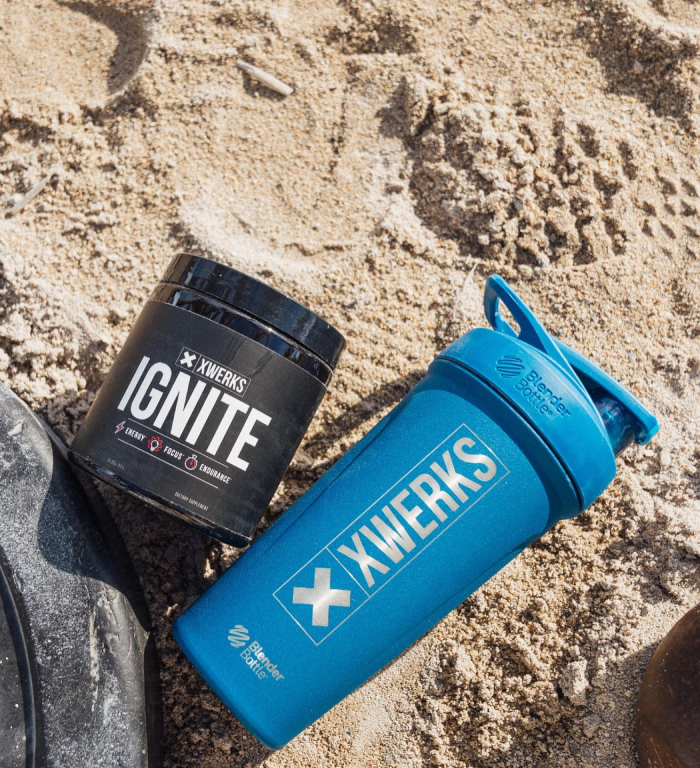
XWERKS Ignite — 150mg caffeine + 3g citrulline malate + 2g L-tyrosine + 1.5g beta-alanine + 500mg rhodiola + 200mg DMAE + 10mg BioPerine. Moderate caffeine that supports CrossFit's skill demands without the jitters that hurt Olympic lifts and gymnastics. Transparent doses, no proprietary blends, no banned stimulants. Designed for athletes who actually need to move under load.
Shop Ignite