

TL;DR
- Myostatin is a real biological target — a protein produced by muscle cells that limits muscle growth. Animals and humans with myostatin mutations show dramatic muscle hypertrophy. The biology is genuine and pharmaceutical research is active.
- Pharmaceutical myostatin inhibitors are monoclonal antibody drugs in clinical trials for muscular dystrophy and sarcopenia. These are not consumer supplements; they require physician supervision and have not been approved for performance enhancement.
- Supplement-form "myostatin inhibitors" sold OTC have dramatically weaker research support than marketing suggests. Epicatechin, fortetropin, creatine, and leucine are the most-discussed candidates.
- The honest research picture: some supplements modestly affect myostatin signaling, but effects are nowhere near pharmaceutical interventions. The dramatic muscle gain claims marketed by supplement brands aren't supported by current evidence.
- Skip: "natural myostatin inhibitor" supplement stacks at premium pricing, follistatin supplements with exaggerated claims, products marketed as "legal alternatives to anabolic steroids," multi-ingredient blends with sub-clinical doses.
"Myostatin inhibitors" is one of the most-searched topics in the bodybuilding and biohacking space — and one of the most poorly served by existing content. Supplement marketing positions various compounds as "natural myostatin inhibitors" with claims of dramatic muscle growth, while pharmaceutical research on actual myostatin inhibitors is happening in entirely different contexts (clinical trials for muscular dystrophy and sarcopenia in older adults). The honest picture: myostatin is a real biological target, the pharmaceutical research is genuinely interesting, but consumer supplement-form "myostatin inhibitors" have dramatically weaker evidence than marketing suggests. Animals and humans with rare myostatin gene mutations do show dramatic muscle hypertrophy — Belgian Blue cattle and rare cases of children with myostatin-related hypermuscularity demonstrate the protein's role. But translating this to consumer interventions is dramatically harder than supplement marketing implies. Pharmaceutical myostatin inhibitors are monoclonal antibody drugs being tested for muscular disease and age-related muscle loss; they're not absorbed orally and aren't appropriate for athletic enhancement. Supplement-form "myostatin inhibitors" — primarily epicatechin (from dark chocolate or extracted), fortetropin (from egg yolk), and various other compounds — show modest effects in research that don't translate to dramatic muscle gain. This guide covers what myostatin actually is, the pharmaceutical research landscape, the supplement candidates and their honest research support, what works for muscle growth (foundational nutrition and training matter substantially more than any "myostatin inhibitor"), and what to skip.
What myostatin actually is
Myostatin (also called GDF-8, growth differentiation factor 8) is a protein produced by muscle cells that acts as a "brake" on muscle growth. The protein circulates in the blood and binds to receptors on muscle cells, signaling them to limit growth. The biological role appears to be preventing excessive muscle mass that would create cardiovascular and metabolic burdens.
The natural experiments:
Belgian Blue cattle: A breed with naturally-occurring myostatin gene mutations showing dramatic hypermuscularity. The cattle have approximately twice the muscle mass of typical breeds. The "double-muscled" appearance demonstrates myostatin's importance in normal muscle limit-setting.
Whippet dogs ("bully whippets"): Some whippets carry myostatin mutations producing exceptional muscle mass and athletic performance. Heterozygous carriers (one copy of the mutation) often have superior racing performance; homozygous carriers have dramatic hypermuscularity.
Mice (knockout studies): Mice with myostatin gene removed show 2-3x normal muscle mass. The research has established the gene's central role in muscle limit-setting.
Humans with myostatin mutations: Rare cases documented. The most famous is a child born in Germany in 1999 who showed exceptional muscle development from birth due to a myostatin mutation. The genetic condition produces visible hypermuscularity from infancy with elevated strength as the child develops.
The implication: Myostatin is genuinely a "brake" on muscle growth. Removing or inhibiting it produces dramatic effects in animals and the rare humans with mutations. The pharmaceutical research is built on this validated biology.
The pharmaceutical myostatin inhibitor research
Pharmaceutical myostatin inhibitors are monoclonal antibody drugs designed to bind to circulating myostatin and prevent it from binding to muscle cell receptors. Several drugs have been or are being tested:
Bimagrumab: Acts on the activin receptor (which myostatin uses for signaling). Studied for sarcopenia, sporadic inclusion body myositis, type 2 diabetes (muscle wasting). Some phase 2 trials showed muscle mass increases of 2-10% in older adults; the clinical relevance and side effect profile led to stopping or modifying programs.
Stamulumab and other early-generation drugs: Tested in muscular dystrophy patients. Some showed modest benefits in muscle mass but limited functional improvements. Several programs discontinued.
Apitegromab: Currently in late-stage trials for spinal muscular atrophy. Targets specific myostatin precursor proteins.
The pharmaceutical reality:
• These are large protein drugs administered by injection — not oral supplements
• They're designed for medical conditions, not athletic enhancement
• Side effects include various inflammatory and metabolic concerns at therapeutic doses
• Real-world muscle gains in research are typically modest (2-10% mass increase)
• Functional improvements (strength, mobility) often don't match the muscle mass increase
• None are approved or available as performance-enhancement products
Why pharmaceutical effects are smaller than gene mutations:
Genetic myostatin loss (as in Belgian Blue cattle) produces dramatic effects because muscle development happens without myostatin signaling from conception. Adult interventions removing myostatin can't recreate this developmental effect — adult muscle is already established under normal myostatin signaling. Adding inhibition later produces modest additional growth, not the dramatic hypertrophy of genetic loss.
This biological reality limits what any pharmaceutical or supplement intervention can produce. Adults can't unlock the "Belgian Blue effect" by inhibiting myostatin in adulthood.
The supplement-form "myostatin inhibitors"
Supplement marketing has taken the legitimate pharmaceutical research and produced products marketed as "natural myostatin inhibitors." The honest research support for these compounds is dramatically weaker than the marketing suggests.
Epicatechin (from dark chocolate or extracted)
100-300mg standardized extract daily; ~30g dark chocolate (70%+) provides modest amountsEpicatechin is a flavonoid found in dark chocolate, green tea, and other plants. It's the most-marketed "natural myostatin inhibitor" supplement.
What research shows:
• Gutierrez-Salmean 2014 documented modest follistatin increase and myostatin reduction in older adults supplementing 75mg twice daily. Effects were real but modest in magnitude.
• Mcdonald et al. 2013 showed similar effects in research subjects.
• Most research uses small subject groups, short timeframes, and doesn't translate to demonstrated muscle mass increases at clinically meaningful levels.
What marketing claims that exceeds research: "Dramatic muscle growth," "natural alternative to anabolic compounds," "transforms physique," "explosive gains." None supported by research.
The honest take: Epicatechin produces modest changes in myostatin and follistatin markers. The translation to actual muscle gain in supplemented users is unclear and likely small. Worth knowing about; not worth dramatic claims.
Fortetropin (fertilized egg yolk extract)
6.6g daily (research-backed dose)Fortetropin is a proprietary egg yolk extract marketed as containing follistatin (a myostatin antagonist). It's the basis for the supplement Myo-T12 and similar products.
What research shows:
• White et al. 2014 showed reduced myostatin and increased lean body mass in trained subjects supplementing fortetropin. Effects were modest.
• Several follow-up studies have shown similar modest effects.
• Research is largely funded by the company producing fortetropin — independent replication is limited.
• The research dose (6.6g daily) is substantial — many commercial products contain less.
What marketing claims that exceeds research: "Dramatic hypertrophy," "transforms muscle building," "elite performance enhancement." Not supported by available research.
The honest take: Some research support, but cost ($60-100+ monthly for research dose) is substantial relative to modest benefits. Better to spend on foundational nutrition (whey protein, creatine, adequate calories) than premium fortetropin products.
Sulforaphane (from broccoli sprouts and supplements)
25-100mg standardized extract dailySulforaphane is a compound found in broccoli sprouts and other cruciferous vegetables. Some research suggests modest effects on myostatin signaling and muscle growth pathways.
What research shows:
• Animal research shows sulforaphane affects myostatin signaling pathways
• Limited human research on muscle growth effects specifically
• Other documented benefits (antioxidant, anti-inflammatory, NRF2 activation) are stronger than the muscle-specific evidence
The honest take: Sulforaphane has multiple documented health benefits beyond myostatin pathways. Worth supplementing for general health; the muscle-specific claims are weak.
Creatine monohydrate
3-5g dailyCreatine has documented effects on muscle myostatin signaling alongside its better-known effects on phosphocreatine availability and muscle hydration.
What research shows:
• Saremi et al. 2010 documented creatine reducing myostatin and increasing GASP-1 (a myostatin inhibitor) in resistance-trained subjects.
• Effects are modest but contribute to creatine's overall muscle-building support.
• Creatine's primary mechanisms (phosphocreatine system, cellular hydration) likely matter more for muscle growth than its myostatin effects.
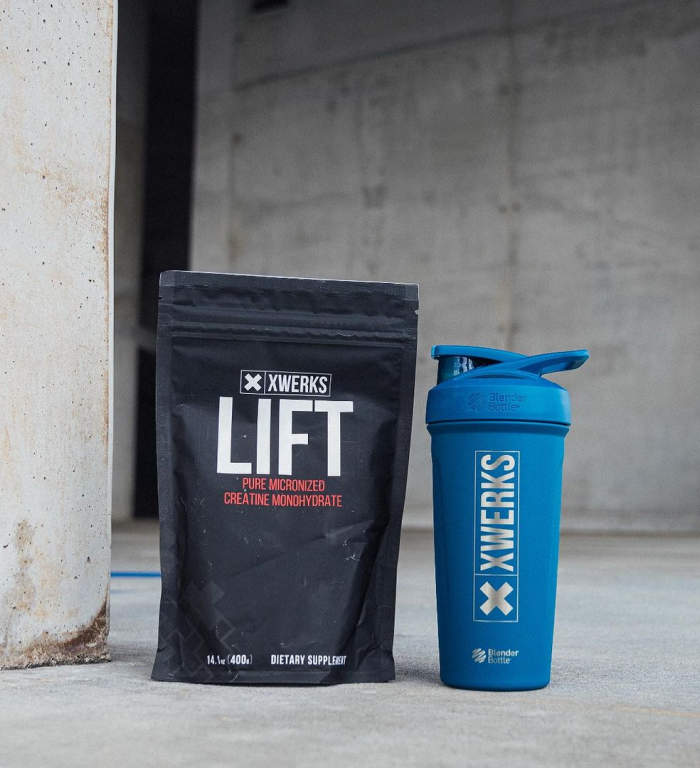
The honest take: Creatine is the most-researched muscle-building supplement available. Whether you frame it as "myostatin inhibitor" or "phosphocreatine support," the practical effect is meaningful muscle and strength gains in trained athletes. Far better evidence than premium "myostatin inhibitor" supplements at fraction of cost. XWERKS Lift for powder; Build for gummies.
Leucine (and HMB)
2.5-5g leucine per meal; 3g HMB daily for HMB specificallyLeucine is the muscle-protein-synthesis-triggering amino acid; HMB is a leucine metabolite with research support for reducing muscle protein breakdown.
What research shows:
• Leucine's effects work primarily through mTOR signaling rather than direct myostatin inhibition
• Some research suggests leucine and HMB can affect myostatin pathways modestly
• Adequate protein intake providing sufficient leucine (whey protein excellent source) covers this through normal nutrition
The honest take: Hit your daily protein target (1.6-2.2g/kg for serious lifters) primarily through whole foods plus whey protein. Standalone leucine or HMB supplementation produces modest additional benefit; the protein foundation matters more.
Other compounds with weaker evidence
Various, weak research supportYK-11: A SARM (selective androgen receptor modulator) with myostatin-affecting properties. Not legal as a dietary supplement. Black-market product with unknown safety profile and side effects. Avoid.
Trans-pterostilbene: A compound similar to resveratrol with some research on muscle pathways. Limited evidence for direct myostatin effects.
Various proprietary blends: Many "myostatin inhibitor" supplements are proprietary blends combining the compounds above with other unproven ingredients. Pay for individual ingredients with disclosed doses; skip proprietary blends.
What actually works for muscle growth
Before paying premium pricing for "myostatin inhibitor" supplements, ensure these foundational factors are optimized — they produce dramatically more muscle growth than any supplement:
1. Progressive resistance training (most important): Heavy compound lifts (squats, deadlifts, presses, rows, pulls) with progressive overload. Train muscle groups 2-3x weekly with adequate volume (10-20 sets per muscle group weekly). Compound movements drive most muscle growth.
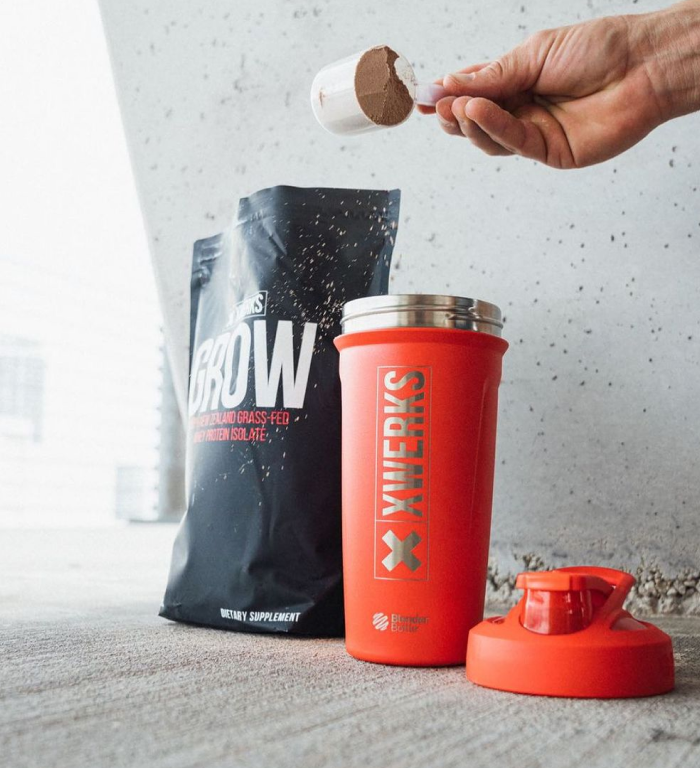
2. Adequate protein (1.6-2.2g/kg body weight daily): Most lifters under-consume protein. Whey protein, eggs, lean meats, fish, legumes. XWERKS Grow for fast-digesting whey isolate post-workout.
3. Sufficient calories: Building muscle requires caloric surplus or at minimum maintenance for "recomposition." Aggressive caloric deficit prevents muscle gain regardless of training quality.
4. Sleep (7-9 hours): Sleep is when muscle protein synthesis peaks. Poor sleep dramatically suppresses muscle growth despite adequate training and nutrition.
5. Creatine (3-5g daily): Most-researched muscle-building supplement. ~5-15% strength and size improvements documented. XWERKS Lift.
6. Stress management: Chronic cortisol elevation suppresses muscle growth. Sleep, recovery, life stress all matter.
7. Consistent training years: Muscle building is a years-long process. Dramatic short-term gains are largely water and glycogen, not muscle. Sustainable progress takes consistent training over years.
The reality check: Genetic potential matters substantially for muscle building. Most natural lifters can gain 30-50 lbs of muscle over 5-10 years of consistent training. Going beyond this requires either pharmaceutical intervention (testosterone replacement, anabolic agents) or genetic outliers. "Myostatin inhibitor" supplements don't unlock additional muscle gain meaningfully beyond what foundational factors produce.
Why the supplement claims exceed research
Several factors create the gap between marketing claims and actual research support for "myostatin inhibitor" supplements:
1. Confusion between pharmaceutical research and supplement research. Marketing materials reference legitimate pharmaceutical myostatin research, then imply the supplement produces similar effects. The supplement compounds and the pharmaceutical drugs work differently with dramatically different effect magnitudes.
2. Cherry-picking research. Small studies showing modest effects are positioned as "proven" while limitations and contradicting research are ignored. Research showing 5-10% myostatin reduction is presented as "dramatically reducing myostatin."
3. Conflating biomarker changes with outcomes. Reduced myostatin in blood doesn't automatically translate to muscle mass gains. Marketing implies the biomarker change equals the desired outcome.
4. Industry-funded research bias. Much of the supplement-specific research (particularly fortetropin) is funded by the companies producing the supplements. Independent replication is limited.
5. Anecdotal evidence overpresented. Customer testimonials with dramatic claims appear in marketing despite no controlled research showing such effects.
6. The "natural alternative" positioning. Products marketed as "natural alternatives to anabolic steroids" exploit users' desire for dramatic effects without actual pharmaceutical risks. The supplements don't produce anabolic-steroid-level effects.
7. Premium pricing creates expectation bias. Expensive products are perceived as more effective. Users who paid $80/month for a "myostatin inhibitor" stack often perceive results that aren't dramatically different from similar training/nutrition without the supplement.
What to skip
• "Natural myostatin inhibitor" stacks at premium pricing: $80-150/month products combining epicatechin, fortetropin, and other compounds at sub-clinical doses. The cost rarely matches the modest research-backed benefits.
• "Follistatin supplements" with exaggerated claims: Some products claim to deliver follistatin orally; protein-based ingredients largely don't survive digestion intact. The mechanism for oral follistatin doesn't work the way marketing claims.
• "Legal alternatives to anabolic steroids" via myostatin inhibition: Products positioned as steroid alternatives. The effect magnitudes aren't comparable to actual anabolic compounds; the marketing exploits user desire for dramatic effects.
• Multi-ingredient blends with sub-clinical doses: Proprietary blends combining 5-10 compounds at amounts below research-backed effective doses. Pay for adequate doses of individual research-backed ingredients; skip blend marketing.
• YK-11 and other SARMs marketed as supplements: Not legal dietary supplements. Black-market products with unknown safety profiles. Avoid regardless of marketing claims.
• Fortetropin products at sub-research doses: The research-backed dose is 6.6g daily — many products provide less. Verify dose before paying premium pricing.
• Skipping foundational training and nutrition for "advanced" supplements: Users sometimes prioritize exotic supplements over consistent training and adequate protein. The order matters: foundation first, then incremental supplement support.
• Expecting dramatic results from any single supplement: Muscle building is a long-term, multi-factorial process. Single supplements producing dramatic effects are exception (creatine for performance), not rule. Set realistic expectations.
The honest pricing reality
The pricing-to-benefit ratio of "myostatin inhibitor" supplements is poor compared to foundational alternatives:
"Myostatin inhibitor" stack: $80-150 monthly for a typical premium stack combining epicatechin, fortetropin, and other compounds. Modest research-backed benefits (small biomarker changes; unclear muscle mass impact).
Foundational alternative for same monthly cost:
• Quality whey protein isolate: $30-40 monthly
• Creatine monohydrate: $10-15 monthly
• Vitamin D3, omega-3, magnesium: $20-30 monthly
• Total: $60-85 monthly with substantially better evidence support
The foundational stack produces meaningfully more muscle growth than premium "myostatin inhibitor" stacks for most users. The cost difference can be redirected to additional whole food protein, gym membership, or better recovery sleep environment.
For users who specifically want to test "myostatin inhibitor" supplementation:
• Daily dark chocolate (30g of 70%+ cocoa) provides epicatechin at modest dietary doses
• Standardized epicatechin extracts at $20-30/month if specifically wanting elevated doses
• Skip premium fortetropin products in favor of maximizing whole food protein intake
This approach captures any modest myostatin-modulating effects without the cost premium of comprehensive "myostatin inhibitor" stacks.
The pharmaceutical research outlook
Pharmaceutical myostatin inhibitor research continues for medical applications:
Sarcopenia (age-related muscle loss): Older adults losing muscle mass face increased frailty and mortality. Drugs that produce 5-10% muscle mass increase could meaningfully improve outcomes for this population. Several drugs in development.
Muscular dystrophy: Various forms of muscular dystrophy involve progressive muscle loss. Myostatin inhibition could partially compensate for the genetic muscle-building deficit.
Cachexia (cancer-related muscle wasting): Severe muscle loss in cancer patients. Myostatin inhibition could preserve more muscle mass during treatment.
Inclusion body myositis: Inflammatory muscle disease. Some research support for myostatin inhibition.
Spinal muscular atrophy: Genetic muscle-wasting disease. Apitegromab in late-stage trials.
Type 2 diabetes (muscle quality): Type 2 diabetes affects muscle insulin sensitivity. Some research supports myostatin inhibition for metabolic outcomes.
What this means for athletes: Pharmaceutical myostatin inhibitors are being developed for medical conditions, not athletic performance. Approval pathways focus on disease populations, not enhancement. WADA (World Anti-Doping Agency) and other sports organizations would likely ban myostatin inhibitor drugs for athletic use given the unfair advantage potential. Even if approved for medical conditions, the drugs wouldn't be appropriate for healthy athletes seeking muscle gain.
The "myostatin inhibitors will revolutionize bodybuilding" framing common in supplement marketing assumes pharmaceutical drugs will become available for performance use. This isn't likely — the regulatory and ethical environment doesn't support that.
Common questions about myostatin inhibitors
"Will any supplement actually inhibit my myostatin enough to see results?"
Probably not at meaningful levels. Supplement-form compounds (epicatechin, fortetropin, others) produce modest biomarker changes. The translation to actual muscle mass gain is unclear and likely small. Don't expect dramatic results from any of these supplements.
"What about combining multiple 'myostatin inhibitors' for stacked effects?"
Stacking compounds doesn't produce synergistic effects beyond what individual research suggests. The combined cost of multiple supplements is substantial; the combined benefit is modest. Better to invest in the foundation (training, protein, calories, sleep, creatine) than in elaborate "myostatin inhibitor" stacks.
"Is myostatin testing available for athletes?"
Specialized labs offer myostatin blood tests, but the clinical utility is limited. Myostatin levels vary based on multiple factors (training status, sleep, stress, time of day) and don't reliably predict muscle building potential. Most athletes won't gain useful information from testing. Money better spent on training and nutrition.
"Are there genetic tests for myostatin mutations?"
Yes, but for the rare actual myostatin mutations causing hypermuscularity. The genetic variants that simply produce slightly higher muscle building potential aren't well-characterized for testing. If you're not naturally exceptionally muscular without significant training, you don't have a relevant myostatin mutation.
"What about gene therapy for myostatin in the future?"
Gene therapy approaches to myostatin are theoretical for medical conditions. Athletic gene therapy ("gene doping") would be banned by WADA and isn't being developed for athletic enhancement. The medical research pathway and athletic enhancement pathway are different.
"Should I eat lots of dark chocolate for the epicatechin?"
Modest amounts of high-quality dark chocolate (70%+ cocoa) provide epicatechin alongside other beneficial compounds. 30g daily is reasonable; more starts adding substantial calories that may not be beneficial. Don't pile on chocolate believing it'll dramatically affect myostatin — the effects are modest at supplement-relevant doses.
"What if I just take creatine and get better results than 'myostatin inhibitors'?"
That's actually the recommendation. Creatine has substantially stronger research support, lower cost, and better-documented muscle-building effects than premium "myostatin inhibitor" supplements. Combined with adequate protein, training, and recovery, creatine outperforms most exotic muscle-building supplement strategies.
The Bottom Line
Myostatin is a real biological target — a protein that limits muscle growth. The pharmaceutical research is genuinely interesting; consumer supplement-form "myostatin inhibitors" have dramatically weaker evidence than marketing suggests.
Pharmaceutical myostatin inhibitors are monoclonal antibody drugs in clinical trials for medical conditions (muscular dystrophy, sarcopenia). Not consumer supplements. Not appropriate for athletic enhancement.
Supplement-form candidates with some research support:
• Creatine monohydrate (most evidence; cheapest; effects through multiple mechanisms)
• Epicatechin (modest myostatin reduction; modest practical effect)
• Fortetropin (some evidence; expensive; research largely industry-funded)
• Sulforaphane (modest evidence; benefits beyond myostatin)
• Adequate leucine via protein intake (works through different pathways)
Skip: "natural myostatin inhibitor" stacks at premium pricing, follistatin supplements with exaggerated claims, "legal alternatives to anabolic steroids," YK-11 and other SARMs (not legal supplements), proprietary blends with sub-clinical doses, products promising dramatic transformation.
What actually works for muscle growth: progressive resistance training, adequate protein (1.6-2.2g/kg daily), sufficient calories, sleep (7-9 hours), creatine (3-5g daily), stress management, consistent training over years. These factors produce dramatically more muscle growth than any "myostatin inhibitor" supplement.
The cost-benefit reality: $80-150 monthly for premium "myostatin inhibitor" stacks delivers modest benefits. The same money invested in quality whey protein, creatine, foundational supplements, and gym membership produces substantially better muscle-building outcomes.
Set realistic expectations: Most natural lifters can gain 30-50 lbs of muscle over 5-10 years of consistent training. "Myostatin inhibitor" supplements don't unlock additional gains meaningfully beyond what foundational factors produce. Beware marketing implying otherwise.
Dig deeper: best supplements for men · protein for marathon runners · creatine: everything you need to know · how much muscle can you build with creatine