TL;DR
- Tongkat Ali (Eurycoma longifolia) is one of the most-researched botanicals for testosterone support — with documented benefits for testosterone levels in deficient men, fertility markers, mood, stress resilience, and possibly muscle and strength when paired with training.
- The research-backed dose: 200-400mg of standardized extract daily, ideally specifying 1-2% eurycomanone content. Rise uses 400mg per serving.
- Real benefits are modest but reproducible — most studies show 10-25% testosterone improvements in men with low or borderline-low T over 4-12 weeks. Not a miracle, but more research-supported than most "test boosters."
- Particularly valuable for: stressed men, men with declining testosterone (40+), men with fertility concerns, and men supporting overall hormonal health alongside lifestyle factors.
- Skip the hype: Tongkat Ali doesn't transform you in a week, doesn't replace TRT for clinically low testosterone, and won't override poor sleep, training, or nutrition. It's a legitimate supplement with modest effects, not a pharmaceutical.
Tongkat Ali (also called Eurycoma longifolia, longjack, or Pasak Bumi) has gone from obscure Southeast Asian traditional medicine to one of the most-discussed supplements in men's health over the past several years. Originally used in Malaysia, Indonesia, and Vietnam for general vitality, the herb has accumulated genuine research evidence — with multiple human studies documenting benefits for testosterone, fertility, mood, stress resilience, and possibly muscle and strength. Unlike many "T-booster" botanicals (Tribulus, fenugreek, D-aspartic acid) where research is mixed or contradictory, Tongkat Ali has accumulated more consistent positive evidence than its category peers. That said, it's not a miracle. Effects are modest. Quality varies enormously between products. The marketing surrounding Tongkat Ali has begun to outpace the actual research, with some brands promising effects that exceed what the studies demonstrate. This guide covers what Tongkat Ali actually does (research-backed), who benefits most, what to look for in quality products, what to avoid, and how it fits into a broader testosterone and stress-management strategy.

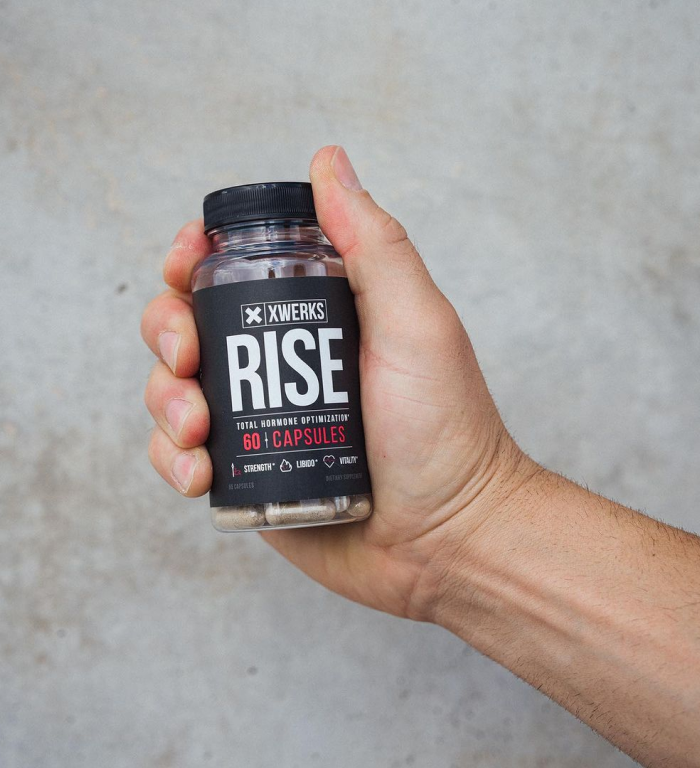
XWERKS Rise — 400mg standardized Tongkat Ali
A clinical 400mg dose of standardized Tongkat Ali extract, stacked with 15mg Zinc, 6mg Boron, 250mg Shilajit, and BioPerine for absorption. No proprietary blends, no underdosed kitchen-sink ingredients — just the research-backed dose.
Shop Rise →What Tongkat Ali is
Tongkat Ali is the root of the Eurycoma longifolia tree, a flowering plant native to Indonesia, Malaysia, Thailand, Vietnam, and parts of the Philippines. The medicinal compounds are concentrated in the root, which is harvested, dried, and processed into extract for supplementation.
The active compounds include:
Eurycomanone: The most-studied bioactive compound. Research suggests eurycomanone is responsible for much of Tongkat Ali's testosterone-supporting effects. Quality standardized extracts are typically standardized to 1-2% eurycomanone content.
Quassinoids: A family of bitter compounds with various biological activities including anti-inflammatory and adaptogenic effects.
Eurypeptides (proteins): Small protein fragments that may contribute to bioactive effects, particularly in fresh extracts.
Glycosaponins: Saponin compounds that may support various physiological functions.
The traditional use of Tongkat Ali in Southeast Asia has been for general vitality, libido, energy, and male reproductive health for centuries. Modern research has begun to validate several of these traditional uses while also clarifying what the herb does and doesn't do.
Research-backed benefits
Testosterone support
10-25% improvements in deficient/borderline menThe most-discussed benefit, and the one with the strongest research base. Multiple studies have documented testosterone improvements with Tongkat Ali supplementation:
Tambi et al. 2011 — A study on men with late-onset hypogonadism found Tongkat Ali supplementation increased testosterone levels in 90% of participants over the study period.
Henkel et al. 2014 — Showed testosterone increases and improvements in muscular strength in active senior men.
Talbott et al. 2013 — Found Tongkat Ali reduced cortisol and improved testosterone in moderately stressed individuals.
The pattern across studies: men with low or borderline-low testosterone tend to show meaningful improvements (10-25%); men with already-normal testosterone show smaller or no changes. This is consistent with the herb working as a regulator rather than a forced testosterone-elevator.
Fertility and sperm quality
Documented improvements in semen parametersTambi et al. 2010 documented improvements in sperm motility, concentration, and morphology in men with idiopathic infertility supplementing with Tongkat Ali. The 200mg daily dose over 3-9 months produced measurable improvements; some couples achieved pregnancy after previously failed conception attempts. This is one of the more practical and meaningful benefits — male fertility issues affect roughly 50% of infertility cases, and few interventions exist outside of medical treatment.
Cortisol and stress resilience
Reduced cortisol; improved stress markersTalbott et al. 2013 documented Tongkat Ali's effects on cortisol — a 16% reduction over 4 weeks in moderately stressed individuals — alongside improvements in tension, anger, and confusion measures. The cortisol reduction is particularly relevant because chronically elevated cortisol antagonizes testosterone production, so reducing cortisol indirectly supports testosterone in addition to direct effects. For men whose testosterone issues are stress-driven (the most common pattern in modern populations), this combined effect is particularly valuable.
For broader treatment of stress and cortisol, see our supplements for high cortisol guide.
Muscle and strength (when combined with training)
Modest enhancements in trained populationsSeveral studies have examined Tongkat Ali in combination with resistance training. Henkel et al. 2014 documented improvements in fat-free mass and muscular strength in active senior men. Hamzah & Yusof 2003 showed similar effects in men under physical training stress. The pattern: Tongkat Ali alone doesn't build muscle, but it appears to enhance training adaptations modestly when combined with resistance work — likely through the testosterone-supporting mechanism.
Mood and well-being
Improvements in mood markers in stressed populationsBeyond cortisol reduction, Tongkat Ali appears to support general mood and well-being. The Talbott 2013 study documented improvements in tension, anger, confusion, and total mood disturbance scores. The mechanism likely involves both the cortisol reduction and direct testosterone effects (testosterone has well-documented influences on mood, particularly in men with declining levels).
Libido and sexual function
Traditional use validated in modern researchThe most consistent benefit reported across cultures and studies. Multiple trials have documented improvements in libido, sexual function, and erectile function in men with declining testosterone. The mechanism is partly through testosterone elevation, but Tongkat Ali also appears to have direct effects on sexual function pathways. For men experiencing age-related declines in libido, this is one of the more reliable supplemental approaches available.
Body composition
Modest fat loss in some studiesHenkel 2014 and other studies suggest Tongkat Ali may support modest improvements in body composition — favoring lean mass over body fat — when combined with appropriate training and nutrition. The effects are not dramatic; this isn't a fat loss supplement. But the modest body composition improvements are consistent with the testosterone-elevating effects in deficient men.
Who benefits most
Men 35+ with declining testosterone
Testosterone declines naturally about 1% per year starting around age 30. For men in their 40s, 50s, and beyond, who are noticing energy decline, reduced motivation, slower recovery, and changes in body composition — Tongkat Ali is one of the better-researched botanicals to support natural testosterone alongside lifestyle interventions.
Stressed men with overlapping symptoms
Modern men commonly experience the trifecta of: chronic stress, elevated cortisol, and suppressed testosterone. Tongkat Ali addresses both ends — directly supporting testosterone while simultaneously reducing cortisol. For men whose testosterone issues are primarily stress-driven, this combined effect makes Tongkat Ali particularly valuable.
Men with documented borderline-low testosterone
Men whose lab work shows total testosterone in the 250-450 ng/dL range with classic low-T symptoms but who don't yet meet criteria for medical TRT. Tongkat Ali at clinical doses can produce meaningful improvements that move borderline-low men back toward optimal range — sometimes resolving symptoms without requiring medical intervention.
Active men supporting training adaptations
Recreational athletes, lifters, and active men in their 30s-50s who want modest enhancement of training adaptations without TRT or pharmaceutical interventions. Tongkat Ali combined with consistent resistance training and adequate nutrition produces modest but reproducible benefits.
Men with male factor fertility concerns
Couples experiencing fertility difficulties where male factor issues are suspected (low sperm count, motility, morphology). Tongkat Ali's documented effects on sperm parameters make it worth considering alongside medical workup. Always pair with full fertility evaluation rather than treating supplementation as a standalone solution.
What Tongkat Ali doesn't do
The hype around Tongkat Ali has begun to outpace the research. Setting realistic expectations:
It's not a TRT replacement. Men with clinically low testosterone (under 300 ng/dL with symptoms) often need medical intervention. Tongkat Ali can produce meaningful improvements but rarely takes a clinically low man into optimal range.
It doesn't work in 1 week. Most studies show meaningful effects over 4-12 weeks of consistent use. Day-one or week-one "effects" are more likely placebo than actual hormonal change.
It doesn't override poor lifestyle. Sleeping 5 hours, training inconsistently, eating poorly, drinking heavily — Tongkat Ali doesn't fix the underlying problems. It supports good lifestyle, not substitutes for it. Sleep alone produces larger testosterone changes than any supplement.
It's not the same as anabolic steroids. Some marketing positions Tongkat Ali as "natural test booster equivalent to TRT" — this isn't accurate. The effects are real but modest. Steroids and TRT produce dramatic effects; Tongkat Ali produces modest improvements within the natural physiological range.
Effects on already-optimal men are small. Men with already-high testosterone (700+ ng/dL) typically show smaller responses than men with declining or borderline T. The herb appears to work as a regulator rather than an elevator above natural levels.
Quality matters — what to look for
Standardization to eurycomanone content
1-2% eurycomanone is the quality standardThe most important quality marker. Quality Tongkat Ali products specify the eurycomanone percentage (the primary bioactive). Research has used products standardized to 1-2% eurycomanone. Products that don't specify standardization may contain dramatically lower bioactive content despite identical-sounding doses on the label.
Country of origin and harvesting
Indonesia, Malaysia preferredThe most-researched, highest-quality Tongkat Ali typically comes from Indonesia or Malaysia — the herb's native range. Quality producers maintain sustainable harvesting practices and proper drying/processing. Products without country of origin or with vague sourcing claims should be approached cautiously.
Extract ratio
100:1 or 200:1 typical for quality productsMany products specify extract ratios — for example, a "200:1" extract means 200kg of fresh root produces 1kg of finished extract. Higher ratios indicate more concentration. Standardization to eurycomanone matters more than ratio alone, but extract ratio gives you a sense of concentration level.
Contamination testing
Heavy metals, pesticides, microbialLike many traditional botanicals harvested from the wild, Tongkat Ali can carry heavy metal contamination, pesticide residues, or microbial issues from improper processing. Quality producers test finished products for contamination. Look for brands that specify testing results or third-party certifications.
Fresh extract vs old/aged products
Bioactive compounds degrade over timeTongkat Ali's bioactive compounds (particularly eurypeptides) degrade with age and improper storage. Quality products use fresh extract; cheap commodity products may use older material. This is harder to verify from the label but reputable brands typically have higher bioactive content than commodity products at similar protein percentages.
What to avoid
• Products without standardization disclosure: If the label doesn't specify eurycomanone content (typically 1-2% standardization), you don't know what you're getting. Quality varies dramatically.
• "Proprietary blends" with Tongkat Ali listed at sub-clinical doses: Multi-ingredient "test boosters" often include 50-100mg of Tongkat Ali — well below research-effective doses. Look for products that provide 200-400mg of standardized extract per serving.
• "Tongkat Ali" combined with Tribulus, fenugreek, D-aspartic acid at low doses: The kitchen-sink approach to T-boosters typically includes underdosed amounts of multiple ingredients, none at research-relevant levels. A single quality ingredient at proper dose beats six at sub-clinical doses.
• Products claiming dramatic week-one results: Real Tongkat Ali effects develop over 4-12 weeks. Marketing promising rapid transformations is overselling.
• "100x stronger" or "concentrated" claims without standardization data: Marketing language without lab verification means nothing. Look for actual standardization percentages.
• Stacks combining Tongkat Ali with banned substances: Some gray-market "test boosters" include actual SARMs, prohormones, or other banned compounds alongside legitimate herbs. For tested athletes especially, stick to single-ingredient or transparent multi-ingredient products from reputable brands.
• Overpriced "premium" products without quality differentiators: A 30-day supply at $80+ should provide premium quality (proper standardization, clean sourcing, third-party testing). Many premium-priced products are no better than mid-tier alternatives.
• Tongkat Ali for clinically low testosterone: Men with confirmed total T under 300 ng/dL and significant symptoms should work with a physician. Tongkat Ali alone often isn't enough to resolve clinically low T; medical evaluation is the right path.
Combining Tongkat Ali with other supplements
Synergistic combinations
• Zinc (15-25mg): Zinc deficiency suppresses testosterone; combining zinc with Tongkat Ali addresses both production and conversion factors
• Boron (3-10mg): Naghii 2011 documented boron's effects on free testosterone; complementary mechanism to Tongkat Ali
• Vitamin D3 (2,000-4,000 IU): Deficiency commonly co-occurs with low testosterone; Vitamin D supplementation supports baseline T
• Ashwagandha (300-600mg): Cortisol reduction supports indirect testosterone benefits; particularly relevant for stressed men
• Shilajit: Some research suggests modest testosterone benefits; included in XWERKS Rise alongside Tongkat Ali
The XWERKS Rise stack
Rise combines 400mg Tongkat Ali (standardized) + 15mg Zinc + 6mg Boron + 250mg Shilajit + 10mg BioPerine (for enhanced absorption). The combination of complementary mechanisms — Tongkat Ali for production, zinc for synthesis support, boron for free testosterone, shilajit for additional support — provides a more comprehensive approach than single-ingredient products.
Tongkat Ali in context — the broader testosterone picture
The interventions that produce the largest testosterone changes are lifestyle, not supplements. The hierarchy of impact:
1. Sleep: One week of 5-hour nights produces 10-15% testosterone reduction. Treating sleep apnea, prioritizing 7-9 hours, and addressing sleep quality have larger effects than any supplement.
2. Body composition: Body fat produces aromatase, converting testosterone to estrogen. Losing excess body fat is one of the most reliable testosterone-supporting interventions available.
3. Resistance training: Compound lifts with progressive overload acutely raise testosterone and chronically support healthier baseline levels.
4. Stress management: Chronic cortisol elevation antagonizes testosterone production. Managing stress through lifestyle and (when relevant) supplementation supports T.
5. Nutrition: Adequate dietary fat (25-35% of calories), avoiding extreme caloric deficits, sufficient micronutrient intake.
6. EDC reduction: Reducing exposure to endocrine-disrupting chemicals from plastics, fragrance products, and pesticides.
7. Targeted supplementation: Vitamin D, zinc, magnesium, Tongkat Ali, ashwagandha — supporting roles that work alongside lifestyle, not substitutes for it.
For the broader picture, see our testosterone overview and natural ways to boost testosterone guides.
How to use Tongkat Ali effectively
Start with the foundation
Before adding Tongkat Ali, address sleep (7-9 hours), resistance training (2-4x weekly), body composition (working toward healthy body fat), and stress management. Supplements amplify good foundation, not substitute for poor foundation.
Get baseline bloodwork
Total testosterone, free testosterone, SHBG, estradiol, vitamin D, and thyroid panel. This gives you a starting point to assess whether Tongkat Ali (and lifestyle changes) are producing meaningful effects. Retest at 12-16 weeks.
Use clinical doses
200-400mg of standardized extract daily. Quality matters more than dose — 200mg of properly standardized extract typically beats 600mg of low-quality material.
Give it time
4-8 weeks for noticeable effects in most users. Some studies show effects after 2 weeks; others require 12 weeks. Individual response varies. Don't judge effectiveness in the first month.
Cycling considerations
Some users cycle Tongkat Ali (8-12 weeks on, 2-4 weeks off) based on the theory that continuous use may reduce effectiveness. Research doesn't strongly support cycling necessity, but some users find it helpful. Continuous use for 6+ months is well-tolerated in research populations.
The Bottom Line
Tongkat Ali is one of the most-researched botanicals for testosterone support — with documented benefits for testosterone in deficient men (10-25% improvements over 4-12 weeks), fertility markers, cortisol reduction, mood, and possibly muscle/strength when combined with training.
Effects are modest but reproducible. Not a TRT replacement, not a one-week transformation, not a substitute for poor lifestyle. A legitimate supplement with research backing — different from most "test booster" botanicals where evidence is mixed.
Who benefits most: men 35+ with declining T, stressed men, men with borderline-low testosterone (250-450 ng/dL), active men supporting training adaptations, and men with fertility concerns.
Quality matters enormously. Look for standardization to 1-2% eurycomanone, country of origin (Indonesia/Malaysia preferred), extract ratios, and third-party testing. Avoid proprietary blends with sub-clinical doses, vague standardization claims, and products promising rapid transformation.
Combines well with: zinc, boron, vitamin D, ashwagandha, and resistance training. XWERKS Rise stacks 400mg Tongkat Ali with 15mg zinc + 6mg boron + 250mg shilajit for comprehensive support.
Dig deeper: testosterone overview · natural ways to boost testosterone · supplements for high cortisol
The research-backed Tongkat Ali stack
XWERKS Rise — 400mg standardized Tongkat Ali extract + 15mg Zinc + 6mg Boron + 250mg Shilajit + 10mg BioPerine. Clinical doses, transparent labeling, no proprietary blends, no underdosed kitchen-sink ingredients. The Tongkat Ali stack designed for men who actually want the research-backed benefits.
Shop Rise →