Women have been underrepresented in creatine research for decades. A newly accepted female-specific systematic review helps clarify the signal: creatine appears beneficial, but the average effects are small and the certainty is still limited.
Study at a glance
- Accepted: August 19, 2026
- Design: Systematic review and multilevel meta-analysis
- Evidence included: 34 studies; 21 studies and 424 participants in the quantitative analysis
- Population: Females engaged in exercise, sport or structured training
- Evidence strength: Preliminary
What the researchers found
Creatine produced small positive effects across female strength, power, high-intensity performance and lean-mass measures. The pooled exercise-performance effect was g = 0.30, which is considered small.
This is still meaningful: it supports the idea that creatine is relevant to women, not only to male strength athletes. But an average effect across many outcomes does not mean every woman will improve every lift, sprint or body-composition measurement.
Why the conclusion stays cautious
Evidence strength: preliminary. The review is the strongest female-specific synthesis available, yet the authors rated certainty low or very low. Studies differed in sport, training status, dose, duration and outcome selection. Women also remain underrepresented across different menstrual phases and life stages.
The safe takeaway is that creatine shows a small positive performance signal in exercising women. It is not evidence for guaranteed muscle gain, a cycle-specific dosing protocol or identical benefits across every sport and age group.
Practical takeaway for women athletes
Creatine monohydrate remains the research-standard form. A common maintenance approach is 3–5 grams daily, with consistency more important than precise timing. A loading phase is optional.
For broader guidance beyond this new paper, read:
- Creatine for Women
- Creatine for Menopause
- Does Creatine Make You Bloated?
- Should You Take Creatine on Rest Days?
The Xwerks angle
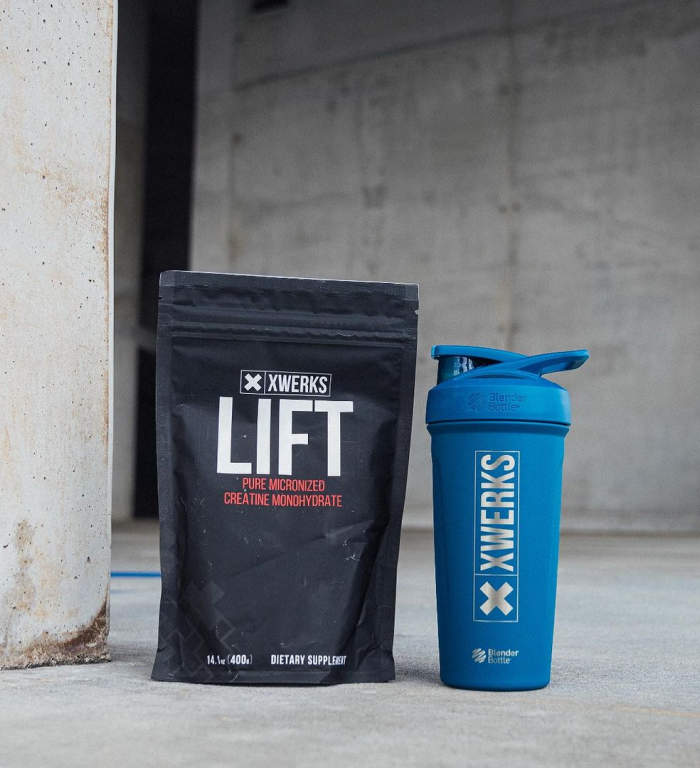
Xwerks Lift is pure micronized creatine monohydrate. This study supports a straightforward message: women can use the same evidence-based creatine form as men, without gendered formulas or exaggerated promises.
Explore Xwerks LiftPrimary paper
Lin Y, Wenfeng Z, Hong B. Effects of creatine supplementation on exercise performance, physiological outcomes, and body composition in females engaged in exercise or training: a systematic review and multilevel meta-analysis. Frontiers in Nutrition. Accepted August 19, 2026; final formatted version pending. doi:10.3389/fnut.2026.1921827.
This research summary is educational and is not medical advice. Pregnant or breastfeeding women and people with kidney disease should seek individualized guidance.