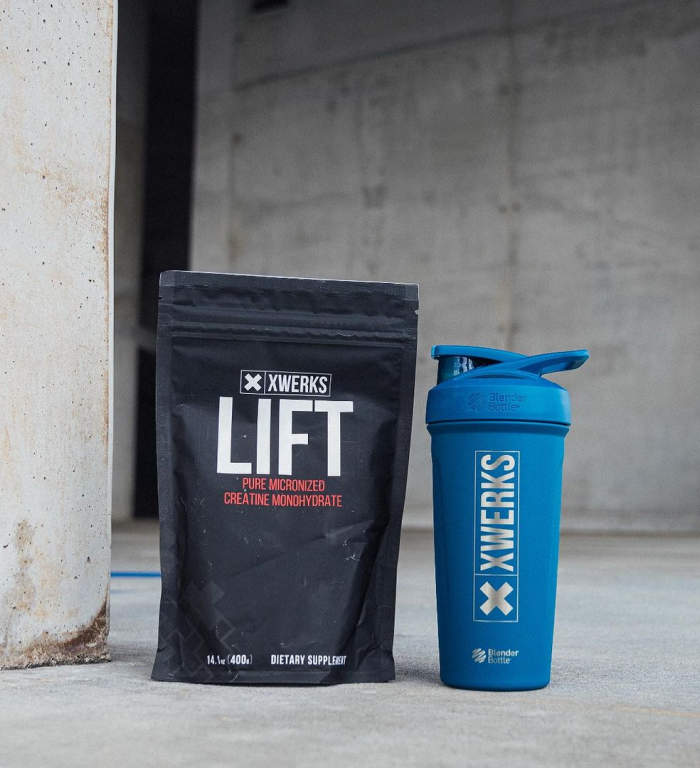


Our pick for adult swimmers who want a basic daily creatine powder is XWERKS Lift, with 5 grams of unflavored creatine monohydrate per scoop. Swimmers who need sport-certified supplements should put that requirement ahead of brand preference. The case for taking creatine should reflect your training program and event, not a promise of faster times in every race.
Swimming combines pool work with very different forms of dryland training. A sprint-focused program, a distance program, and a recreational swim schedule do not create identical buying needs. Start by identifying why you are considering the supplement.
Compare the powder, then consider your program
These products provide a useful label-based shortlist. They have not been tested against each other here for swim performance.
| Product | Label snapshot | Main reason to compare |
|---|---|---|
| XWERKS Lift | 5 g per scoop; unflavored; 80 servings | An uncomplicated daily powder |
| Momentous Creatine Monohydrate | 5 g; 90 servings; NSF Certified for Sport listed | Sport-certification priority |
| BulkSupplements Creatine Monohydrate | About 5 g per serving; unflavored option | Bulk purchasing and cost per gram |
What can general creatine evidence tell a swimmer?
Creatine supports high-intensity exercise and resistance-training adaptations. That makes dryland strength work and repeated hard efforts relevant areas to discuss with a coach, but does not establish a benefit in every swim event. The ISSN position stand reviews the broader evidence.
A product recommendation based on monohydrate should stay within that boundary. We do not have a brand comparison showing that Lift, Momentous, or BulkSupplements produces the fastest 50, 100, or 1,500 meters. Your event, training history, and individual response matter more than sport-specific wording on a tub.
Why Lift is our simple-routine pick
Lift contains a single ingredient, so it is easy to keep creatine separate from your poolside hydration, breakfast, and any caffeine you choose to use. The unflavored format is particularly practical if your first meal changes with early practice times.
Keep the dry container away from wet pool-deck conditions and use it where serving measurements are convenient. You do not need to transport a full tub to every session to maintain a routine. For purchasing, its 80 labeled servings are a clearer comparison point than the physical size of the container.
Set a goal before the first scoop
Choose an outcome you can discuss with your coach. That might be consistency in dryland sessions or performance in a repeatable training set. Keep the warm-up, rest intervals, and timing of the comparison as similar as practical. A race result also reflects tapering, pacing, starts, turns, and competition conditions.
For a distance swimmer, do not assume that evidence from high-intensity or strength tasks means better sustained race performance. For a sprint swimmer, do not assume that feeling stronger in the gym automatically transfers to faster water speed. A useful trial evaluates the athlete and the program together.
Plan around meets and product requirements
Introduce a new product during regular training, with time to assess tolerance and routine. If body-weight changes would affect how you evaluate the trial, record them under consistent conditions and discuss the interpretation with your support team. Avoid changing several supplements at once immediately before an important meet.
If your team or competition program prioritizes certification, verify the exact product in the current certification directory. Momentous lists NSF Certified for Sport on its product page. That is a purchasing distinction; it is not evidence that the product will produce a faster swim than another correctly labeled monohydrate powder.
Our creatine dosage guide covers general routine questions, and our rest-day guide addresses consistency between training days. For the ingredient itself, start with the complete monohydrate guide.
Separate a swimmer's supplement questions
Write down what you want the purchase to do. Supporting a daily training routine, carrying carbohydrate for a demanding session, and having a protein-containing meal afterward are separate planning tasks. Giving each task a name prevents one product from becoming the assumed answer to all of them.
This is especially useful when pool and dryland sessions share a day. You can keep a daily creatine routine stable while changing the food and drink plan around the actual workouts. More sessions do not automatically create more daily creatine servings.

Use a training reference you already understand
Choose a familiar set or dryland exercise that belongs in your program. Record the set description, rest intervals, and the training context. Pool length, the use of fins or paddles, and changes in the coach's instructions can make two apparently similar sessions different.
Keep technique and effort notes with the result. A faster repetition achieved with a different rest period is not the same comparison as repeating the original set. Likewise, an unusually good turn or better pacing can change a time without identifying a supplement effect.
The purpose is to make the routine easier to review with your coach. You do not need to add maximal efforts or alter a taper simply to create a supplement test. An ordinary training block provides plenty of practical information about consistency and tolerance.
Organize the pool bag so the doses stay clear
If you prepare more than one drink, label the bottles by purpose. A bottle intended to carry workout fuel and a drink used for a daily supplement should not become interchangeable because they look alike.
Keep track of what was actually consumed. If a creatine serving is placed in a large bottle that you do not finish, the planned serving and the consumed amount may differ. Choose a preparation that lets you follow the label and account for the routine without guessing at leftover liquid.
Store dry powder according to its directions and keep the scoop and packaging away from unnecessary moisture. Keep the label available when traveling with a team, especially if the program has documentation or product requirements.
Ask better questions before reordering
Was the serving easy to measure on early mornings? Did the format work on days without pool practice? Was the product available when travel or a camp changed the schedule? Those details directly affect whether the purchase is practical.
For performance questions, compare the training notes with the block's actual goal. A sprint-focused block, a technique phase, and a distance build may emphasize different outcomes. General creatine research should not be converted into a promised time improvement for your event.
Keep meet preparation familiar
Before a meet, review the products and food plan you already use. Confirm any current supplement requirements with the relevant team or competition program. If a product change is necessary, allow an ordinary training period to check the new format.
The daily supplement should fit around established preparation, including meals, warm-up, transport, and sleep. It should not force a new pre-race ritual or an extra serving every time you enter the water.
Frequently asked questions
Do swimmers need a special creatine formula?
There is no established swimmer-specific form to prioritize. Compare the actual monohydrate dose, quality information, and fit with your program.
Should creatine go in every poolside bottle?
Do not add servings automatically to each bottle. Know your total daily amount and keep hydration planning separate from your creatine routine.
Does creatine replace carbohydrates for swim training?
No. A creatine supplement is a different purchase from food or a carbohydrate drink. Plan meals and training fuel according to the demands of your schedule.
Can I put creatine in my largest poolside bottle?
Use a preparation that allows you to consume and account for the labeled serving. If you regularly leave that bottle unfinished, a different place in your daily routine may be easier to track.
Do pool and dryland sessions require separate creatine servings?
Do not count daily creatine by the number of workouts. Follow the product's daily directions and account for any creatine in other supplements.
Our recommendation
Choose XWERKS Lift for an unflavored daily powder when creatine fits your training plan. Prioritize verified certification where needed, and evaluate the decision against realistic, event-specific goals.
How we chose these products
This guide is published by XWERKS, which sells one of the products compared. We evaluated current manufacturer information for creatine form, dose, serving count, product simplicity, and sport-certification information. These are editorial recommendations based on labels and intended use; they do not represent hands-on testing or a clinical comparison of brands. Product details were checked on September 10, 2026. Check the current label for your chosen flavor and size.