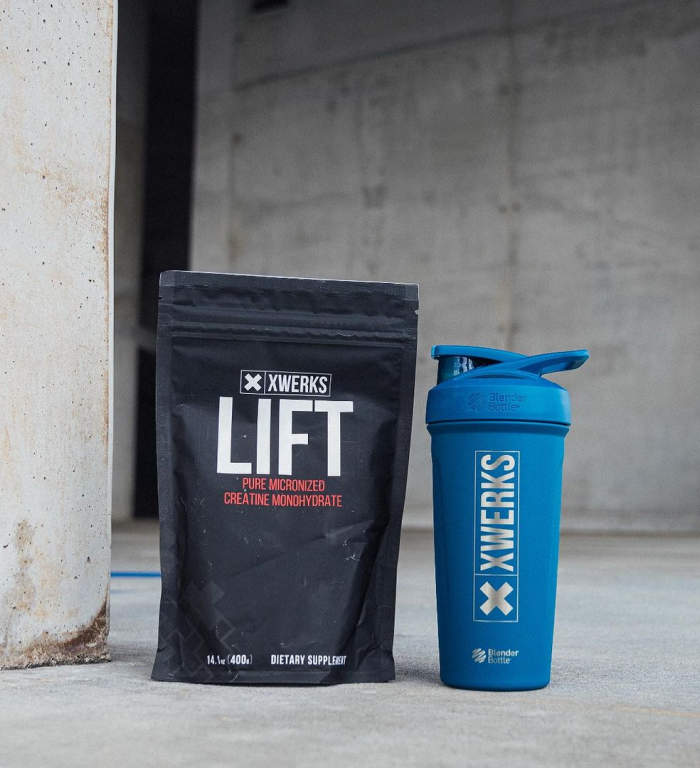


If an adult climber decides to use creatine, our pick for a simple powder is XWERKS Lift, which supplies 5 grams of unflavored creatine monohydrate per scoop. The bigger decision comes first: whether creatine fits your climbing and strength-training goals. No supplement can promise a better grade or a net improvement in your strength-to-weight ratio.
Bouldering, sport climbing, and long routes place different demands on a climber. A buyer guide should account for that difference instead of assuming that a supplement popular in the weight room automatically improves every day at the crag.
Which product makes sense if you choose to try creatine?
Favor a clearly labeled monohydrate product that you can use consistently. Compare the details below without treating them as a ranking of climbing performance.
| Product | Label information | Buying priority |
|---|---|---|
| XWERKS Lift | 5 g per scoop; unflavored; 80 servings | Simple dosing alongside an existing drink or meal |
| Momentous Creatine Monohydrate | 5 g; NSF Certified for Sport listed | Certification for athletes who prioritize screened supplements |
| BulkSupplements Creatine Monohydrate | About 5 g per serving; unflavored option | Package-size flexibility and cost-per-gram comparison |
Match the purchase to your actual climbing goal
Creatine has evidence for high-intensity exercise and resistance-training adaptations. The application to a climber’s strength work is an inference from that broader evidence, not proof of improved climbing grades. See the ISSN creatine review.
A boulderer doing structured gym work may evaluate a different outcome from a climber preparing for a long alpine objective. Before buying anything, write down what you want to improve: a repeatable strength exercise, the quality of planned sessions, or the ability to complete your training schedule. Avoid using “get better at climbing” as the only measure; it is too broad to interpret.
The strength-to-weight question deserves its own plan
Body weight is part of climbing, but chasing the lowest possible number is not a complete performance strategy. Under-fueling can undermine the training you are trying to support. Treat any supplement decision as part of adequate food intake and a sustainable program, rather than a reason to restrict meals.
Creatine can produce early water-related weight changes, and responses vary. That is one reason to avoid promises that a specific form gives every climber the same benefits without scale changes. The evidence review on creatine and body water provides context.
If weight changes are a concern, discuss them with a sports dietitian who understands climbing. Choose a trial period away from an important trip. You want enough ordinary training days to notice whether the product fits, without confusing travel fatigue, new rock, and weather with a supplement response.
Why Lift works as a simple purchase
Lift keeps the label straightforward. It does not require you to add a stimulant or commit to a flavored pre-workout every time you take creatine. That separation is useful if some of your climbing happens after work and other sessions happen early in the morning.
Its unflavored format also lets you keep your preferred drink. Follow the package’s mixing directions, and use its own serving measure rather than borrowing a scoop from a protein tub. If you are buying on price, compare the amount of creatine in the container and the total checkout cost.
How to make a personal trial informative
Keep your main training plan reasonably stable. Record a small number of repeatable observations: the planned work completed, perceived session difficulty, body weight if appropriate, and any tolerance problems. Use the same conditions when possible. A new outdoor grade on a single day cannot establish that one product caused the improvement.
Do not use a supplement trial as a reason to suddenly increase finger loading, add multiple new training tools, or ignore pain. The buying decision becomes much harder to evaluate when several parts of the program change together.
For background, read our creatine monohydrate guide and our guide to creatine and bloating. These explain the general supplement questions behind the climbing-specific choice.
Build a climbing trial around a repeatable task
Start with a question you can observe: is the daily routine convenient, does the product suit your tolerance, and does it fit the training block you are already doing? Those questions are more useful than expecting a supplement to produce a particular grade within a fixed number of weeks.
Pick a familiar reference task with your coach or training partner. A repeated gym circuit or an existing strength exercise may be easier to compare than a different outdoor project each weekend. Keep the reference within your established training; the supplement is not a reason to add an unfamiliar maximal test.

Record context that changes the interpretation
Note the route or exercise, rest periods, session length, and whether you arrived fresh or fatigued. For outdoor climbing, conditions and time spent trying the moves may make one session unlike another. For indoor climbing, a reset can change the difficulty of the comparison entirely.
Keep the supplement note simple: what you used, whether you followed the labeled routine, and whether any discomfort or inconvenience affected the day. Add relevant changes in meals, sleep, or training rather than treating every observation as a creatine result.
If body weight is part of a performance discussion, interpret it with your broader training and health needs in mind. A number on the scale does not by itself tell you whether a climbing session improved. Avoid trying to correct a short-term change with abrupt food or fluid restrictions.
Different climbing goals create different purchasing priorities
A strength-focused bouldering block. An uncomplicated daily monohydrate product may be easier to fit alongside an existing strength routine. Keep the training task and product amount clear so you can evaluate convenience and tolerance across ordinary sessions.
A route-climbing block with long sessions. Ask whether your immediate problem is actually food, fluid, pacing, or recovery logistics. Buying creatine does not answer those separate questions. The supplement can remain optional while you address a more obvious gap in session preparation.
A trip with limited kitchen access. Check where the daily serving will be measured and what drink you will use. A format that works at home may need a small practical adjustment when you live out of a bag. Preserve the label information when portioning supplies for travel.
Review patterns without inventing a performance score
After several comparable sessions, look at the notes together. Did the routine fit the training plan? Was it easy to remember on rest days and travel days? Did the preparation create a problem you would need to solve before reordering?
Keep performance observations descriptive. “Completed the planned circuit with the usual rests” is more transparent than giving a product a numerical power score. Improvements can come from practice, programming, motivation, and changing conditions as well as other factors.
If the log is too inconsistent to answer your question, improve the routine or choose a better reference task before drawing a strong conclusion. You can still decide that a product is convenient without claiming it caused a new grade.
Frequently asked questions
Is creatine guaranteed to improve bouldering?
No. General strength and exercise research does not establish a guaranteed improvement in bouldering performance or climbing grade.
Should a route climber choose a different creatine form?
There is no established climbing-specific form to seek out. First decide whether supplementation fits your training, then compare clearly labeled monohydrate products.
Is Lift useful only on climbing days?
Lift is sold as a daily creatine supplement, not a drink that must be tied to a particular climb. Build a routine around the label and your broader training plan.
Should I test creatine by trying a new maximum hang?
A new maximal test adds another variable. Use an appropriate task already in your established training and involve your coach when selecting a meaningful comparison.
What if I climb outside in different conditions every session?
Record those differences and avoid treating the sessions as equivalent. An existing gym or strength task may provide additional context, but no personal log isolates every cause of performance changes.
Our recommendation
If creatine fits your goals, XWERKS Lift is our pick for a straightforward powder. Judge the decision by how it fits your training and personal response, with realistic expectations about climbing-specific evidence.
How we chose these products
This guide is published by XWERKS, which sells one of the products compared. We evaluated current manufacturer information for creatine form, dose clarity, product format, and certification information, with attention to climbing goals. These are editorial recommendations based on labels and intended use; they do not represent hands-on testing or a clinical comparison of brands. Product details were checked on September 10, 2026. Check the current label for your chosen flavor and size.