The Importance of Post-Workout Carbs: What the Science Says About Recovery Fuel
Carbohydrates after training aren't optional — they're the raw material your muscles need to recover, adapt, and perform again. Here's what the research says about how much, how fast, and what type matters most.
There's a persistent myth in fitness culture that carbs are the enemy. Keto evangelists, carnivore dieters, and low-carb influencers have spent years convincing people that carbohydrates are something to fear. And for some sedentary individuals managing blood sugar, reducing carbs can make sense.
But if you train hard — CrossFit, distance running, cycling, Hyrox, competitive sports, or serious strength training — skipping post-workout carbs is actively sabotaging your recovery. The research on this is unambiguous.

What Happens to Your Muscles During Training
Your muscles store carbohydrates as glycogen — chains of glucose molecules packed into muscle tissue that serve as the primary fuel source for high-intensity exercise. Roughly 80% of ATP (the energy currency your cells use) during anaerobic exercise is generated from glycogen. It's not one of several fuel sources — it's the dominant one.
How fast you burn through glycogen depends on the type and intensity of training. Research shows that just three sets of 12 reps performed to muscular failure can reduce muscle glycogen stores by approximately 26%. A full CrossFit WOD, a 90-minute soccer match, or a hard cycling session can deplete glycogen by 50% or more. At that level of depletion, both your performance and your recovery are compromised.
Why Post-Workout Carbs Are Non-Negotiable
1. Glycogen Resynthesis
The primary reason to consume carbohydrates after training is to replenish the glycogen you just burned. Your body can resynthesize glycogen at a rate of approximately 5-6 mmol/kg wet weight per hour under normal conditions, but aggressive carbohydrate refeeding can accelerate this to roughly 10 mmol/kg/h for the first four hours after exercise — a period when the enzyme responsible for glycogen storage (glycogen synthase) is maximally active.
The ISSN Position Stand on Nutrient Timing recommends consuming 1.0-1.2 grams of carbohydrate per kilogram of body weight per hour if rapid glycogen restoration is needed (less than 4 hours between sessions). For a 180-pound (82kg) athlete, that's roughly 80-100 grams of carbs in the first hour after training.
This is especially critical if you're training twice a day, competing in tournaments with multiple events, or have less than 24 hours before your next hard session. The research by Burke, van Loon, and Hawley published in the Journal of Applied Physiology is the definitive review: glycogen depletion provides a strong drive for its own resynthesis in the first 0-4 hours post-exercise, but only if carbohydrate is available.
2. Cortisol Suppression
Training is a stress — that's the point. But the cortisol elevation that comes with hard exercise becomes counterproductive if it stays elevated too long. Chronically high cortisol promotes muscle protein breakdown, suppresses testosterone, impairs immune function, and slows recovery.
Research on carbohydrate and BCAA ingestion around training illustrates how large the effect can be: one study found that consuming carbs and BCAAs post-workout decreased cortisol levels by up to 11%, while the placebo group saw cortisol elevate by 105%. The same study observed a 27% reduction in skeletal muscle degradation in the carb/BCAA group, compared to a 56% increase in the placebo group.
Carbohydrates trigger an insulin response, and insulin is one of the most potent anti-catabolic signals your body has. Post-workout carbs don't just refuel you — they actively shut down the muscle-breakdown process.
3. Enhanced Muscle Protein Synthesis
While protein gets most of the credit for muscle growth, carbohydrates play a supporting role that matters more than most people realize. Research shows that consuming a supplement with carbs alongside protein and creatine immediately after training leads to greater muscle growth than consuming the same supplement later in the day — suggesting that the post-exercise insulin spike from carbohydrates enhances nutrient delivery to muscle tissue during the critical recovery window.
Additionally, glycogen availability itself mediates muscle protein breakdown. One study demonstrated that muscle breakdown more than doubled in a glycogen-depleted state compared to a glycogen-loaded state. In other words, if you don't replenish carbs, you're not just missing out on fuel — you're accelerating the breakdown of the muscle you just trained.
How Much and How Fast
The research converges on clear dosing guidelines depending on your situation:
If you train once a day with 24+ hours between sessions: Your total daily carbohydrate intake matters more than the exact timing. As long as you're consuming 6-10 grams of carbohydrate per kilogram of body weight per day, your glycogen will fully restore by the next session — even if you don't eat carbs immediately post-workout.
If you train twice a day or have less than 8 hours between sessions: Timing becomes critical. Start consuming carbs as soon as possible after your first session — the ISSN recommends 1.0-1.2g/kg/h for rapid glycogen restoration. A 2024 study in Acta Physiologica confirmed that delaying carbs impaired next-day exercise performance even when total 24-hour carb intake was matched.
If you can't hit those carb targets: Adding protein helps. The research shows that combining carbohydrates (0.8g/kg/h) with protein (0.2-0.4g/kg/h) enhances glycogen resynthesis when carbohydrate intake alone falls below the 1.2g/kg/h threshold. Protein + carbs is better than either alone.
Why the Type of Carbohydrate Matters
Not all carbohydrate sources are equally effective for post-workout recovery. The speed at which a carbohydrate exits the stomach, enters the bloodstream, and reaches muscle tissue determines how quickly glycogen resynthesis begins.
Standard sports drinks loaded with dextrose or maltodextrin get the job done — but they come with a cost. These simple sugars have high osmolality, meaning they create significant osmotic pressure in the stomach that slows gastric emptying. The result: bloating, GI distress, and a heavy-stomach feeling that's especially problematic if you're trying to eat a recovery meal soon after training.
This is where Cluster Dextrin (Highly Branched Cyclic Dextrin) stands apart. Despite having a molecular weight of roughly 400,000 g/mol — about 2,000 times greater than glucose — HBCD produces near-zero osmotic pressure. Research published in the International Journal of Sports Medicine showed that a 10% HBCD solution clears the stomach in about 26.7 minutes, compared to 39.9 minutes for glucose at the same concentration. That's 33% faster gastric emptying with virtually no GI distress. For the full molecular comparison, see our Cluster Dextrin vs. other carbs breakdown.
For post-workout recovery specifically, this means the carbohydrates from cluster dextrin reach your small intestine and bloodstream faster, begin replenishing glycogen sooner, and don't leave you feeling bloated when you're trying to eat your next meal.
The Optimal Post-Workout Stack
Based on the current evidence, the most effective post-workout nutrition protocol combines three elements:
Carbohydrates (25-50g minimum): Start with at least 25 grams for every hour of training completed. For high-volume or endurance sessions, aim for 1.0-1.2g/kg of body weight. XWERKS Motion delivers 25 grams of Cluster Dextrin per serving with BCAAs and electrolytes — purpose-built for intra and post-workout fueling.
Protein (20-40g): To maximize muscle protein synthesis and leverage the insulin response from carbohydrates for nutrient delivery. XWERKS Grow provides 25 grams of whey protein isolate per serving — fast-absorbing, zero lactose, and pairs perfectly with Motion.
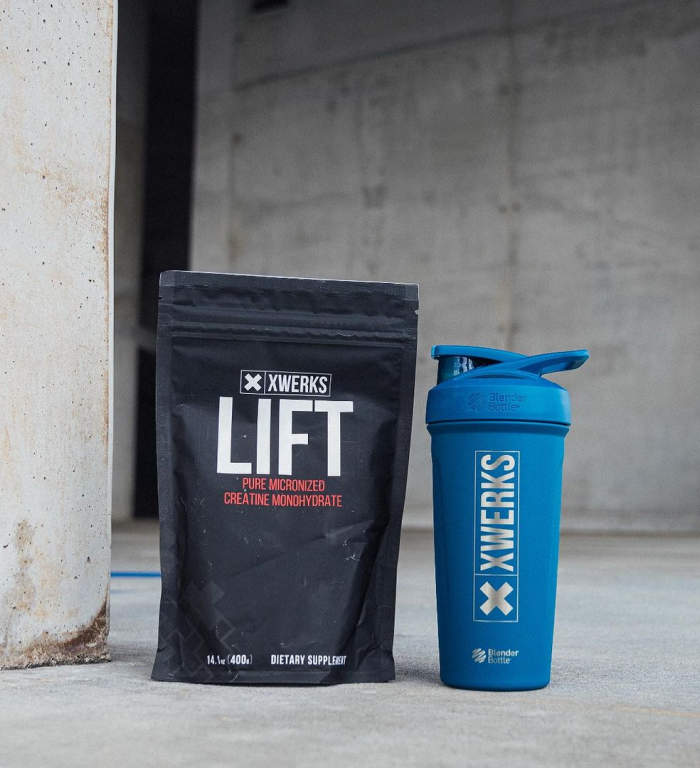
Creatine (5g): Evidence suggests that co-ingesting creatine with carbohydrates and protein post-workout may enhance creatine uptake due to the insulin-mediated transport. XWERKS Lift is unflavored and mixes seamlessly into your post-workout shake.
What happens when post-workout carbs are delayed?
A 2024 crossover study by Díaz-Lara and colleagues found lower next-day high-intensity interval capacity when carbohydrate intake was delayed three hours after exercise. Time to task failure fell by about 30% despite matched carbohydrate intake over the recovery period and no significant difference in measured muscle glycogen at the next session.
Interpret the result in context: it was a specific demanding exercise protocol, not proof that every delayed snack reduces every workout by 30%. The experiment also did not establish the speculative hormonal or central-nervous-system explanations sometimes attached to that result.
When rapid refueling deserves extra attention
The practical priority rises when another demanding session follows soon. A review of post-exercise carbohydrate and protein co-ingestion examines this recovery context. For food choices, see best carbs after a workout; that guide answers the separate question of what to eat.
The Bottom Line
Post-workout carbohydrates replenish the glycogen that fuels your training, suppress the cortisol response that breaks down muscle, and create the insulin environment that enhances protein synthesis and nutrient delivery. The ISSN position stand, multiple meta-analyses, and decades of exercise physiology research all converge on the same conclusion: if you train hard, post-workout carbs aren't optional — they're essential.
For rapid recovery, aim for 1.0-1.2g of carbs per kilogram of body weight in the first hour, ideally from a fast-absorbing source like cluster dextrin paired with protein. For standard 24-hour recovery, focus on total daily carb intake of 6-10g/kg. In both cases, adding protein improves outcomes.
The athletes who recover fastest are the ones who can train hardest. Fuel the recovery and the performance follows.
Further Reading
Cluster Dextrin vs. Every Other Workout Carb — The full head-to-head on molecular weight, osmolality, and GI tolerance.
Best Carb Source for Athletes — How to choose across training contexts.
The Vital Role of Carbohydrates in Hydration — How carb type affects fluid absorption during exercise.
References
1. Kerksick CM, et al. International Society of Sports Nutrition Position Stand: Nutrient Timing. JISSN. 2017;14:33.
2. Burke LM, van Loon LJ, Hawley JA. Postexercise muscle glycogen resynthesis in humans. J Appl Physiol. 2017;122(5):1055-1067.
3. Robergs RA, et al. Muscle glycogenolysis during differing intensities of weight-resistance exercise. J Appl Physiol. 1991;70(4):1700-1706.
4. Lemon PWR, Mullin JP. Effect of initial muscle glycogen levels on protein catabolism during exercise. J Appl Physiol. 1980;48(4):624-629.
5. Cribb PJ, Hayes A. Effects of supplement timing and resistance exercise on skeletal muscle hypertrophy. Med Sci Sports Exerc. 2006;38(11):1918-1925.
6. Bird SP, et al. Liquid carbohydrate/essential amino acid ingestion during a short-term bout of resistance exercise suppresses myofibrillar protein degradation. Metabolism. 2006;55(5):570-577.
7. Takii H, et al. Fluids containing a highly branched cyclic dextrin influence the gastric emptying rate. Int J Sports Med. 2005;26(4):314-319.
8. Díaz-Lara FJ, et al. Delaying post-exercise carbohydrate intake impairs next-day exercise capacity but not muscle glycogen or molecular responses. Acta Physiol. 2024;240(10):e14215.
9. Murray B, Rosenbloom C. Fundamentals of glycogen metabolism for coaches and athletes. Nutr Rev. 2018;76(4):243-259.