RPE describes how hard a set feels; RIR estimates how many more repetitions you could complete. On the RIR-based lifting scale, RPE 8 means about 2 reps in reserve. For many muscle-building sets, finishing with roughly 1–3 good reps left is a practical starting point. The right target depends on your goal, exercise, experience, and recovery.
What is the difference between RPE and RIR?
RIR asks a specific question: “How many more repetitions could I complete with the same technique?” RPE stands for rating of perceived exertion, while RIR stands for repetitions in reserve. In strength training, coaches often use a version of RPE anchored to RIR, making the two ways of expressing the same estimated distance from failure.
For example, eight repetitions with two more available is 2 RIR, or approximately RPE 8. Eight repetitions with none left is 0 RIR, or RPE 10. The weight and rep count alone do not tell you which set was harder.
This guide uses set-level, RIR-based RPE. The original Borg 6–20 scale, general 0–10 exertion ratings, and an overall session rating serve different purposes. Do not convert a running RPE of 8 into “two reps left.” The resistance-training scale was examined in a 2016 study of 29 experienced and novice squatters; it is a subjective estimate, not a direct measurement of muscle capacity.
RPE-to-RIR conversion chart
Near the end of a hard lifting set, RPE increases as the number of available repetitions decreases. Use the same range of motion and technique when judging the repetitions you have left.
| Lifting RPE | Estimated RIR | What it means |
|---|---|---|
| 10 | 0 | No additional complete repetition available. |
| 9 | 1 | One more good repetition available. |
| 8 | 2 | Two more good repetitions available. |
| 7 | 3 | Three more good repetitions available. |
| 6 or below | About 4 or more | Further from failure; precise estimates become less useful. |
The shorthand RPE ≈ 10 − RIR is most useful around RPE 7–10. Do not stretch it into a precise formula for easy warm-ups. RPE 8 also does not mean 80% of your one-repetition maximum: load and proximity to failure are different variables.
How close to failure should you train?
Muscle growth generally benefits from challenging sets, but failure is not a requirement for every set. A 2024 exploratory meta-regression found that muscle growth tended to improve as sets ended closer to failure, while strength gains were similar across a wider range of RIR. Researchers estimated RIR from study descriptions, so the analysis cannot establish one exact optimal stopping point.
A more direct eight-week trial in 18 resistance-trained adults compared each participant’s legs: one trained to failure, while the other stopped at an estimated 2 RIR on leg presses and 1 RIR on leg extensions. Participants trained twice weekly. Average quadriceps thickness increased similarly, while failure produced greater losses in repetition performance and lifting velocity. That supports stopping close to failure as a workable option; it does not prove identical outcomes for every muscle, exercise, or longer training block.
Use these as coaching starting points, then adjust to your program and response:
- Learning an exercise: keep several repetitions available and prioritize repeatable technique. A qualified coach can help you select an appropriate load.
- Routine muscle-building sets: start around 1–3 RIR. Track whether you can progress while maintaining performance across the week.
- Heavy compound lifts: leave a margin for technique and the remaining sets. Grinding to failure on every squat or press is not necessary to practice lifting heavy.
- Stable machine or isolation exercises: occasional closer-to-failure sets can be an option when technique is established and the setup permits a controlled stop.
- Power or speed work: follow the exercise’s speed and quality targets. An RIR target alone is a poor reason to continue once movement quality declines.
Stop if you develop sharp pain, dizziness, or loss of control. A high effort target is never an instruction to push through those symptoms.
A worked example: three sets of eight at RPE 8
Keep the intended effort consistent by adjusting the load when needed. The following is an illustrative machine-row session, not a prescription for a particular lifter. The goal is eight repetitions with about two good repetitions left.
- Set 1: 100 lb × 8 feels like 2 RIR. Record “100 × 8 @ 8.” Keep the same load after your planned rest.
- Set 2: 100 lb × 8 leaves only 1 RIR. Record RPE 9. Fatigue has made the same load harder.
- Set 3: reduce to the next suitable increment, such as 95 lb, and reassess. If eight reps now leaves about two available, you have returned to the intended effort.
The 5 lb reduction is an example, not a universal conversion between weight and RPE. Machine increments, exercise choice, rest, and individual response differ. If you realize during a set that another repetition would require poor technique, end the set instead of forcing the planned eight.
When all prescribed sets become easier than the target across comparable sessions, consider a small load increase within your program. Record load, reps, estimated RIR, and rest time so “progress” does not simply mean shorter repetitions or more momentum.
How can you make your RIR estimates more useful?
Use consistent technique and treat your rating as an estimate that needs practice. A meta-analysis of 12 studies involving 414 participants found that people underestimated their remaining repetitions by about one rep on average, with substantial variation. Training experience did not reliably remove that error. Do not automatically add one rep to every estimate; a group average is not a personal correction factor.
- Define a valid rep: keep range of motion and technique consistent. Count additional reps you could complete without changing those standards.
- Rate the set promptly: make your estimate before a long rest changes how difficult the set felt.
- Separate discomfort from capacity: a burning muscle or hard breathing does not reveal an exact number of repetitions remaining.
- Compare like with like: log the same exercise, setup, rep range, and rest interval over time.
- Get feedback: video or a coach can reveal shortening range of motion or technique changes. You do not need an unassisted failed barbell repetition to learn the scale.
A 2024 review of 31 studies, covering 855 mostly male adults, found RIR scales useful for selecting and adjusting training loads. Accuracy was generally better near task failure, but exercise selection and individual differences still matter. Beginners can practice the ratings alongside a structured program without relying on the number as their only guide.
What if your usual weights suddenly feel harder?
Use the change as feedback and reassess the session. Check whether rest periods shortened, technique changed, or earlier work was more demanding. A single difficult day does not diagnose overtraining. Repeated declines deserve a wider look at sleep, food intake, training demands, and health; persistent unexplained fatigue warrants clinical advice.
For the nutrition side of a flat session, see more carbs or more caffeine: how to troubleshoot a flat workout. For broader recovery habits, read how to recover after a workout.
Build a repeatable training routine
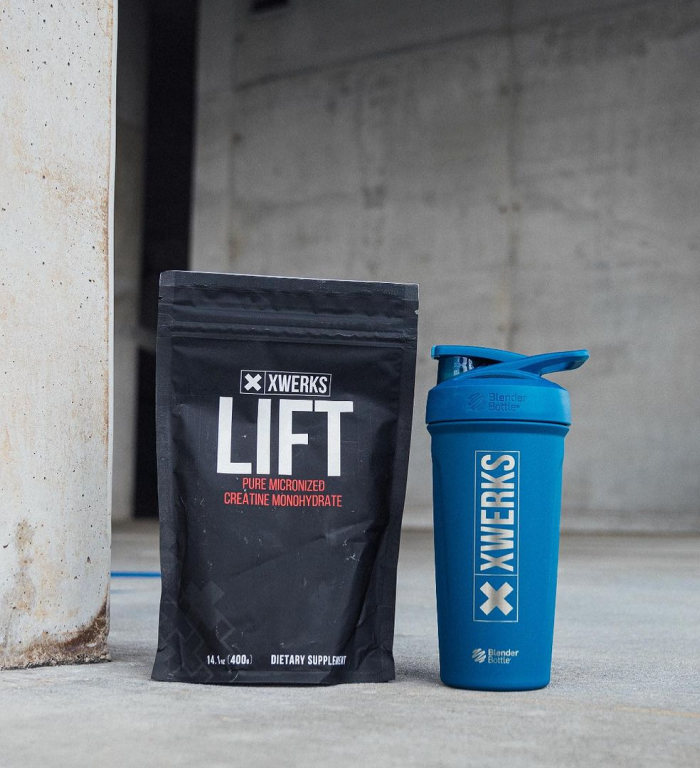
Choose an effort target, log what happened, and adjust from that evidence. RPE and RIR help you manage training; neither requires a supplement. If creatine is already part of your routine, XWERKS Lift’s current Supplement Facts list 5 g of creatine monohydrate per one-scoop serving.