TL;DR
- Rugby is a full-contact repeated-sprint sport — 80 minutes of alternating sprints, collisions, scrums, and sustained running.
- Target profile: moderate caffeine (200-300mg for most positions), citrulline (3-6g), beta-alanine (3-6g daily, loaded), L-tyrosine (1-2g). Position matters — forwards and backs have different needs.
- Check World Rugby and your national union's banned substance list — several stimulants and "fat burners" sold at sports shops are banned.
- Pre-workout is part of a larger stack: combine with creatine (5g daily), whey protein (1.6-2.2g/kg), and intra-match carbs for double sessions or tournament weekends.
Rugby demands an unusual combination: 80 minutes of repeated sprints, collisions, scrums, lineouts, and sustained running, all while maintaining cognitive engagement with complex set plays. Both forwards and backs face high-intensity efforts separated by brief recoveries, but the specific demands differ — forwards handle more collisions and scrums, backs more sustained sprints. Pre-workout helps meaningfully, but the right profile matters: moderate caffeine (200-300mg), citrulline malate (3-6g), beta-alanine loaded chronically (3-6g daily), and L-tyrosine (1-2g) for focus under impact stress. Take 30-45 minutes before training or match. Always check World Rugby and your national union's banned substance list before using new products — several "hardcore" pre-workouts contain banned stimulants. For match days with multiple games (7s tournaments, rugby sevens events) or back-to-back training sessions, pair pre-workout with creatine, whey protein, and intra-match carbohydrate fueling.
Rugby's physiological profile
Repeated-sprint with collision load
Research on rugby union match play shows players cover 5-7km per match (more for backs, less for props) with 100-200 discrete high-intensity efforts and 20-40 tackles/contact events. Energy demands are predominantly anaerobic during high-intensity efforts with aerobic recovery between.
Position-specific differences
Forwards (props, hookers, locks, flankers, 8s): More scrums, lineouts, collisions, rucks. Greater emphasis on strength and contact power. Beta-alanine's buffering matters for sustained scrum and ruck work.
Backs (scrum-half, fly-half, centers, wings, fullback): More sustained running, sprint efforts, and open-field work. Caffeine's reduced-RPE effects matter more here.
Both: Benefit from the full pre-workout profile, with slight adjustments to caffeine dose based on body weight (forwards typically need more absolute caffeine but similar mg/kg).
80-minute cognitive demand
Rugby is heavily tactical — set plays, defensive reads, scrum and lineout calls, territorial strategy. L-tyrosine and moderate caffeine support the cognitive load across 80 minutes.
Target pre-workout profile
Moderate caffeine: 200-300mg
3-6mg per kg body weightFor an 85kg (187-lb) center: 255-510mg total from all sources. For a 110kg (242-lb) prop: 330-660mg max, though most rugby players benefit from staying in the 3-4mg/kg range to avoid jitters during technical scrum and lineout work.
Citrulline malate: 3-6g
Blood flow and muscular enduranceSupports blood flow and muscular endurance during repeated-sprint work. Perez-Guisado 2010 showed benefits at 8g; 3g is the lower-effective dose.
Beta-alanine: loaded to 3-6g daily
Requires 4-6 weeks of loading for full saturationHobson 2012 meta-analysis confirms lactate buffering for 1-4 minute efforts — directly relevant to scrums, sustained ruck work, and extended attacking phases. Pre-workout typically provides 1.5-2g; athletes add standalone beta-alanine to reach full daily dose.
L-tyrosine: 1-2g
Focus and stress toleranceParticularly valuable for the cognitive demands of running set plays and reading defenses under fatigue.
What to avoid — and why compliance matters
World Rugby follows WADA prohibited list, which bans:
• DMAA, DMHA, methylsynephrine: Found in some "hardcore" pre-workouts marketed in retail stores
• Phenylpiracetam, modafinil: Sometimes marketed as "nootropics" but banned
• Higenamine: Found in some fat-burner style pre-workouts
• Clenbuterol: Obviously, but worth mentioning — can appear as a contaminant in low-quality products
A failed test can result in multi-year suspension. Stick to products from reputable manufacturers with transparent ingredient disclosure. When in doubt, check Global DRO database or your national anti-doping organization.
• Mega-stim products (400mg+ caffeine): Elevated HR on top of 80 minutes of contact work is risky.
• Niacin-flush products: Skin flushing under a jersey in heat is miserable.
• Diuretic ingredients: Rugby sweat loss is already high; diuretics worsen cramping and hydration.
Match-day protocol
Pre-match (2-3 hours before)
Carbohydrate-focused meal: ~75-125g carbs + 25-40g protein. Familiar foods, low fat/fiber. Begin hydration with electrolytes.
45-60 min before kickoff
Pre-workout: 200-300mg caffeine, citrulline, tyrosine. Small carb top-up if tolerated (banana, sports drink).
Halftime
Electrolyte drink + small carb (30-40g from sports drink, banana, or gel). Hydration refill. No new caffeine unless specifically planned and tested.
Full-time
20-40g protein (whey) + 0.8-1.2g carbs/kg within 60 minutes. Aggressive rehydration with electrolytes. If another match later in tournament (7s), treat as extended single-event recovery.
Pre-workout options for rugby players
No single product is right for every rugby player — position, body weight, caffeine tolerance, training timing, and whether you're drug-tested all factor into the choice. Here are legitimate options in the compliant, moderate-stim category, plus when each makes sense. For drug-tested players (elite and many academy levels), prioritize Informed Sport or NSF Certified for Sport certified products — these undergo batch testing for banned substances and give you the best protection against accidental positives.
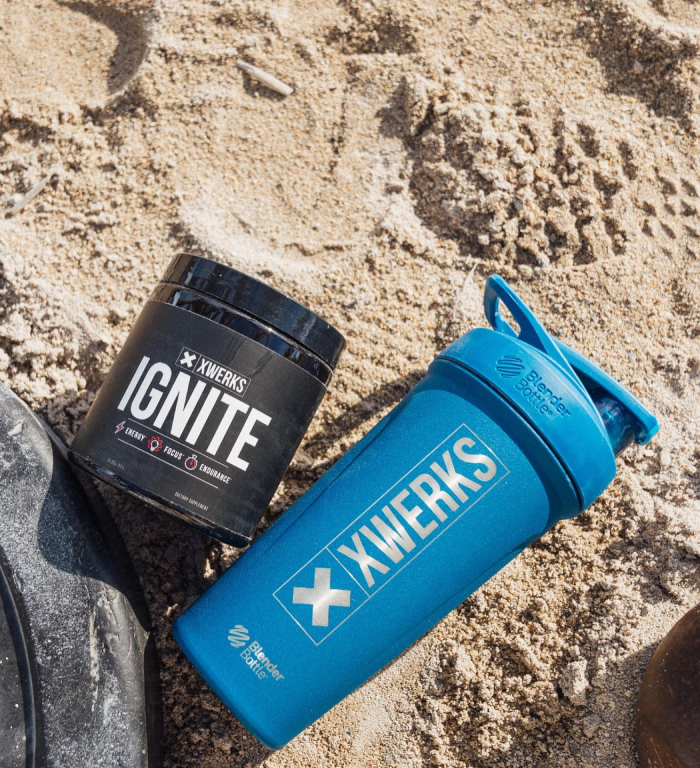
XWERKS Ignite
150mg caffeine · 3g citrulline · 2g tyrosine · 1.5g beta-alanine · 500mg rhodiolaBest for moderate-stim users and those training twice daily. Lower caffeine dose (150mg) is well-suited for players sensitive to stimulants, those stacking with coffee, or training late in the day. Includes rhodiola for stress adaptation — particularly relevant for the combined training + match load of serious rugby schedules. Transparent labeling, no proprietary blends, no banned stimulants. Lower beta-alanine than some alternatives means rugby players targeting full loading (3-6g/day) should add standalone beta-alanine to reach saturation targets.
Transparent Labs BULK (or STIM-FREE)
200mg caffeine · 8g citrulline · 4g beta-alanine · Informed Sport certifiedBest for drug-tested athletes seeking full clinical dosing. One of the most transparently dosed pre-workouts on the market. Clinical doses of citrulline and beta-alanine, reasonable caffeine for most positions, and Informed Sport certification means every batch is tested for banned substances. STIM-FREE version is available for afternoon/evening training without sleep disruption. Naturally sweetened. Among the safer choices for any rugby player, particularly those subject to drug testing.
Kaged Pre-Kaged Elite
388mg caffeine · 8.5g citrulline · 3.2g beta-alanine · creatine included · Informed SportBest for larger forwards with high caffeine tolerance. Higher caffeine dose suits 100kg+ players with established caffeine tolerance. Comprehensive profile including creatine, L-tyrosine, and taurine alongside the standard pre-workout ingredients. Informed Sport certified. Not ideal for caffeine-sensitive players or those who want to avoid evening stimulation — the 388mg caffeine dose will affect sleep if taken after midday.
Legion Pulse
350mg caffeine · 8g citrulline · 3.6g beta-alanine · naturally sweetenedBest for value-focused transparent dosing. Clinical doses, no proprietary blends, naturally sweetened with stevia and erythritol. Not third-party certified for sport (though ingredient sourcing is reputable), so less ideal for athletes in tested competition than Transparent Labs or Kaged Elite. Good choice for recreational rugby, club-level players, and training-only use.
Optimum Nutrition Gold Standard Pre-Workout
175mg caffeine · moderate dosing · Informed Choice certifiedBest for widely available, reliable basics. Gas station and supplement store ubiquity. Moderate caffeine, reasonable ingredient profile, Informed Choice certification provides reasonable banned-substance testing. Not the highest-clinical-dose option — citrulline and beta-alanine are moderate rather than full clinical doses — but solid as a starter or travel pre-workout when premium options aren't available.
DIY: Coffee + standalone ingredients
Coffee + 6-8g citrulline + 3-6g beta-alanine + 1-2g tyrosineBest for budget-conscious players and ingredient control. A cup of strong coffee (100-200mg caffeine) plus bulk citrulline malate, beta-alanine, and L-tyrosine powders delivers the same ingredient profile at roughly a third of the cost of branded pre-workouts. NOW Foods, BulkSupplements, and Nutricost sell quality single-ingredient powders. For drug-tested players, verify each ingredient supplier has reasonable quality control. Mix into water or your morning coffee 30-45 minutes before training.
What to skip — specific product categories
• Proprietary blend pre-workouts (C4 Original, N.O.-Xplode, Mesomorph, etc.): Proprietary blends hide individual ingredient doses and are one of the most common routes to accidental banned substance exposure. Some older Mesomorph formulations contained DMAA; similar products have repeatedly been reformulated after regulatory action. Not worth the risk for tested athletes.
• Mega-stim "hardcore" pre-workouts: Anything marketed with "extreme," "insane," "bomb," or similar language, often with 400mg+ caffeine and questionable additional stimulants. Elevated HR on top of 80 minutes of rugby contact work increases cardiovascular risk, and the ingredient transparency is usually poor.
• "Fat burner" pre-workouts: Products combining caffeine with yohimbine, synephrine, higenamine, and other "thermogenic" compounds. Higenamine is specifically WADA-banned. Not appropriate for rugby performance.
• "Nootropic" pre-workouts with racetams or unusual compounds: Phenylpiracetam, modafinil, and similar compounds appear in some "nootropic" pre-workouts and are WADA-banned. Stick to conventional sports nutrition ingredients.
• Underdosed "transparent" labels: Some products list ingredients individually but at ineffective doses (0.5g citrulline, 0.2g beta-alanine). Compare the label to clinical ranges (6-8g citrulline, 3-6g beta-alanine) before buying.
The Bottom Line
Rugby's repeated-sprint + collision profile responds well to moderate pre-workout — but position matters (forwards vs backs) and compliance matters (World Rugby WADA rules).
Target: moderate caffeine (200-300mg), citrulline (3-6g), beta-alanine (loaded to 3-6g daily over weeks), L-tyrosine (1-2g). Skip mega-stim products, banned stimulants, and niacin-flush ingredients.
Check banned substance lists before using any new product. World Rugby and your national union follow WADA rules — a dirty test can cost you multiple seasons. Stick to transparent, reputable formulations.
Pre-Workout for Rugby
XWERKS Ignite — 150mg caffeine + citrulline + tyrosine + beta-alanine + rhodiola. No banned stimulants, no proprietary blends, full dose disclosure.
Shop Ignite