TL;DR
- You don't need pre-workout to start training. If you're new to the gym, nail sleep, protein, and consistent training first — pre-workout is a minor optimization, not a requirement.
- If you want to try one, start with a half scoop of a moderately-caffeinated product (150-200mg caffeine per full scoop). Skip the 350mg+ "stim-loaded" formulas that dominate shelves — they're harder on beginners, not better.
- The ingredients that actually matter: caffeine (150-200mg), citrulline (6-8g), beta-alanine (2-3g), tyrosine (1-2g). Ignore anything with a "proprietary blend" that hides individual doses.
- Realistic expectations: pre-workout produces a noticeable energy boost and modest improvement in training capacity. It does not transform your physique, burn fat, or produce dramatic strength gains on its own.
- Red flags for beginners: mega-caffeine (350mg+), proprietary blends, stimulant-heavy "thermogenic" marketing, undisclosed ingredients (DMHA, DMAA, excess yohimbine), and any product promising rapid fat loss.
If you're new to training and thinking about pre-workout, you're walking into one of the most overmarketed categories in the supplement industry. Walk into any supplement store and you'll see dozens of products promising explosive energy, insane pumps, laser focus, and dramatic transformations — many featuring aggressive masculine branding, lightning bolt graphics, and ingredient names that sound like pharmaceuticals. Most of this is theater. The honest picture: pre-workout is a modest training aid with a few well-researched ingredients at proper doses. It can improve your training sessions meaningfully, but it won't transform your physique, burn fat on its own, or produce effects remotely proportional to the marketing hype. For beginners specifically, the bigger risks are buying a mega-stim formula as your first product (hello, jitters, anxiety, and sleep disruption), or expecting dramatic effects that set you up to feel disappointed. This guide covers what pre-workout actually does, whether you even need it as a beginner, how to start conservatively, what ingredients matter, and the red flags that identify products designed for experienced users or marketing rather than legitimate training support.

Do you even need pre-workout as a beginner?
If you're brand new to training, the foundations that actually drive progress are consistent training attendance, progressive overload (gradually increasing weights, reps, or volume), adequate sleep, adequate protein intake, and patience. Pre-workout doesn't substitute for any of these. Beginners often make dramatic progress in their first 6-12 months without any supplements at all — because the training stimulus itself is the driver.
Skip pre-workout initially if:
• You're in your first 2-3 months of consistent training (nail the habit first)
• You already drink coffee before training (you have your caffeine)
• You train in the evening (caffeine may affect your sleep)
• You're sensitive to stimulants (pre-workout can feel awful for sensitive people)
• You have high blood pressure, heart conditions, or anxiety disorders (talk to your physician first)
Pre-workout becomes more useful when:
• You've been training consistently for 3-6+ months and want to push harder in specific sessions
• You're training early morning and can't rely on natural energy
• You're doing longer sessions (60+ minutes) or more demanding training (high-rep work, intense conditioning)
• You want the non-caffeine benefits (pumps from citrulline, endurance from beta-alanine)
What pre-workout actually is
Pre-workout is a generic term for supplements taken 15-45 minutes before training to enhance performance. Most pre-workout products are powders mixed with water, though ready-to-drink versions exist. Despite the marketing variety, most legitimate pre-workouts contain some combination of 4-6 ingredients that have research support for training performance.
What pre-workout does
• Increases alertness and focus (caffeine, tyrosine)
• Improves perceived effort during training — the same workout feels less grueling
• Supports more reps or sets before fatigue (caffeine, citrulline, beta-alanine)
• Produces the "pump" feeling — increased blood flow to muscles (citrulline)
• May slightly reduce perceived muscle soreness during training (beta-alanine at full saturation)
What pre-workout does NOT do
• Does not burn fat directly. Some products add stimulants marketed as "fat burners," but the effect on fat loss is minimal — caloric balance drives fat loss, not pre-workout ingredients.
• Does not build muscle on its own. Building muscle requires progressive resistance training + adequate protein + adequate calories + recovery over months and years. Pre-workout helps you train better; it doesn't build the muscle.
• Does not produce dramatic strength or size gains week-to-week. The effects are real but modest — maybe 5-15% more training volume across a session, which contributes to better long-term progress, not overnight changes.
• Does not give you "natural" abs, cuts, or transformation. That's marketing, not physiology.
The ingredients that actually matter
Caffeine
100-200mg for beginners · up to 3-6mg/kg for experienced usersWhat it does: The most-researched ergogenic supplement in history. Reduces perceived effort, improves focus, supports endurance, and enhances strength output.
Beginner-specific notes: Start with 100-150mg if you're new to caffeine. This is roughly equivalent to a standard cup of coffee. Anything over 250mg in a single dose is too much for most beginners. If the pre-workout you're considering has 300mg+ caffeine, look elsewhere. Your tolerance will build over time — don't start at the ceiling.
Side effects to watch for: Jitters, anxiety, elevated heart rate, sleep disruption if taken too late in the day. Caffeine has a half-life of ~5 hours — a 2pm pre-workout has significant caffeine in your system at 7pm, which affects sleep.
L-Citrulline (or Citrulline Malate)
6-8g citrulline OR 8-10g citrulline malateWhat it does: Increases nitric oxide, which causes vasodilation — the "pump" feeling and improved blood flow to working muscles. Research supports modest improvements in training volume (more reps before failure), particularly for resistance training.
Beginner-specific notes: This is what produces the pleasant "my muscles feel fuller" sensation during training. Not harmful; no stimulant effects. One of the safer, more useful non-caffeine pre-workout ingredients. If the pre-workout has only 1-2g of citrulline, it's underdosed — the effective range is 6-8g.
Beta-Alanine
1.5-3g per serving · 3-6g daily for 4-6 weeks to "load"What it does: Increases muscle carnosine, which buffers hydrogen ion accumulation during high-intensity efforts. Translates to better performance in work lasting 1-4 minutes — high-rep lifting sets, CrossFit metcons, sprints, combat sports.
Beginner-specific notes: Beta-alanine causes harmless tingling (paresthesia) on your skin, particularly face and hands. This is NOT the pre-workout "working" — it's just a neurological side effect. Some people find it pleasant; others find it uncomfortable. Beta-alanine effects build up over 4-6 weeks of consistent daily use — you won't feel performance benefits on day one. If the tingling bothers you, look for a pre-workout with lower beta-alanine (under 1g) or none.
L-Tyrosine
1-2g per servingWhat it does: Amino acid precursor to dopamine and norepinephrine. Supports mental focus and cognitive performance under stress — particularly useful for complex movements (Olympic lifts, technique-heavy work) or when training while tired.
Beginner-specific notes: Subtle effect. You probably won't "feel" tyrosine the way you feel caffeine, but it supports the focus component of pre-workout. Nothing to worry about on the side-effect front.
Electrolytes (sodium, potassium, magnesium)
VariesWhat it does: Hydration and muscle function support during training. Particularly useful for longer sessions, hot environments, or if you're sweating heavily.
Beginner-specific notes: Nice to have, not essential for pre-workout specifically. Most beginners don't need dedicated electrolyte loading before typical 45-60 minute training sessions unless training in extreme heat.
Rhodiola Rosea
200-500mg standardized extractWhat it does: Adaptogenic herb with research support for reducing fatigue and supporting cognitive performance under stress. In pre-workout context, may help when training under-recovered.
Beginner-specific notes: Subtle effect. Legitimate ingredient in premium pre-workouts. Not a dealbreaker if absent.
Creatine monohydrate (sometimes included)
3-5g (if included in pre-workout)What it does: Supports ATP regeneration for strength and power output. The most-researched sports supplement; works via saturation over weeks, not acute pre-workout dosing.
Beginner-specific notes: Creatine works whether you take it before, after, or between workouts — what matters is consistent daily intake of 5g. If your pre-workout includes creatine, it counts toward your daily dose. If not, take it separately. Creatine is arguably more important than pre-workout for most beginners — it's cheap, safe, well-researched, and produces meaningful benefits.
How to start conservatively
This is where most beginners go wrong. The right approach isn't "take the scoop on the label" — it's starting low and building up as you learn your tolerance.
Week 1-2: Half scoop (or less) 20-30 minutes before training. Assess how you feel — too stimulated? Just right? No effect at all?
Week 3-4: If half scoop felt good, continue. If too mild, move to three-quarters scoop. If too intense, stay at half.
Week 4+: Build to a full scoop only if your body handles it well. Many people find their "sweet spot" is actually half to three-quarters of a scoop, not the full serving the label suggests.
Labels are designed for maximum effect (and maximum consumption of your bag) — not for your individual tolerance. Starting low and titrating up is standard smart practice.
Timing
Take pre-workout 20-45 minutes before training. Caffeine peaks in blood around 30-60 minutes post-ingestion. Beta-alanine tingling usually peaks around 15-20 minutes if the product contains enough to produce it. Citrulline effects peak around 60 minutes post-ingestion.
If you train early morning, take pre-workout right when you wake up and train 30-45 minutes later. If you train evenings, consider whether caffeine will affect your sleep — for some people, a 4pm pre-workout is fine; for others, it wrecks sleep. Know yourself.
Don't stack caffeine sources
A common beginner mistake: morning coffee + pre-workout + another caffeinated drink = way too much caffeine. Decide on one primary caffeine source on training days. If you drink coffee habitually, start with a pre-workout that contains less caffeine (100-150mg) or use coffee alone and skip pre-workout entirely.
What to realistically expect
20-30 minutes after taking: Mild alertness, maybe a slight warming sensation or flushed feeling from beta-alanine (tingling on your face/hands). Not dramatic — if you're expecting feeling "amped up," you may be disappointed or take too much trying to feel more.
During training: Improved focus, slightly more energy than usual, ability to push a little harder on difficult sets, feeling of fuller muscles ("pump") from citrulline. Your training session feels modestly better — not transformative.
Post-training: The caffeine effect fades over 3-5 hours. The pump feeling fades within an hour of training. No dramatic post-workout crash if the product isn't overloaded with stimulants.
Over weeks of consistent use: Modest training improvements that compound — maybe 5-15% more training volume across a session. Beta-alanine effects build over 4-6 weeks as muscle carnosine saturates.
What it won't feel like: Dramatic "rush" sensations, feeling invincible, dramatic fat-burning effects, massive strength jumps in one session. If the product produces overwhelming effects, you've taken too much (or it contains ingredients it shouldn't).
Red flags for beginners
• Mega-stim products (350mg+ caffeine per serving): These are designed for experienced users with high caffeine tolerance. For beginners, they produce anxiety, elevated heart rate, jitters, and sleep disruption — not better workouts.
• Proprietary blends: Ingredient lists that show something like "Energy Matrix: 5,200mg" without disclosing individual doses. This hides underdosing. Avoid any product that doesn't show individual ingredient amounts on the label.
• "Fat-burning" pre-workouts with added stimulants: DMHA, synephrine, yohimbine in combination with high caffeine. These stacks can cause serious side effects (anxiety, heart palpitations, elevated blood pressure) with questionable performance benefit.
• Undisclosed or illegal stimulants: DMAA (1,3-dimethylamylamine), DMHA (2-aminoisoheptane), and similar compounds have been found in pre-workouts despite FDA action. Stick to products from reputable brands with transparent labeling.
• "Nootropic" pre-workouts with 8+ ingredients marketed for focus: Usually racetams, alpha-GPC at high doses, and other compounds that add complexity without clear benefit for training. Keep it simple.
• Products making transformation claims: "Melt fat while you train," "explosive muscle gains," "shred weeks off your cut" — this language signals marketing over science. Quality pre-workouts don't need to make these claims.
• "Hardcore" or "extreme" branding: Lightning bolts, skulls, aggressive masculine marketing, and names with multiple exclamation points correlate poorly with quality formulation. This isn't a hard rule but it's a useful heuristic.
• Unusually cheap products: Quality ingredients at clinical doses cost money. A $15 tub of pre-workout with 50 servings usually means underdosed ingredients and filler.
How to read a pre-workout label
What a quality label looks like
A good pre-workout label lists each ingredient individually with its exact dose in milligrams or grams. For example:
• L-Citrulline Malate: 6,000mg
• Beta-Alanine: 2,000mg
• L-Tyrosine: 1,500mg
• Caffeine Anhydrous: 150mg
• Rhodiola Rosea Extract: 500mg
You can compare these doses to research-backed amounts and see whether you're actually getting effective quantities.
What a proprietary blend looks like (red flag)
• "Extreme Pump Matrix: 8,000mg (L-Citrulline Malate, Beta-Alanine, Agmatine, Glycerol)"
• "Focus & Energy Complex: 500mg (Caffeine, L-Tyrosine, Theanine, Alpha-GPC)"
You can't tell how much of each ingredient you're actually getting. The label could be 7,900mg of one ingredient and 100mg split between the others. Proprietary blends exist specifically to hide underdosing.
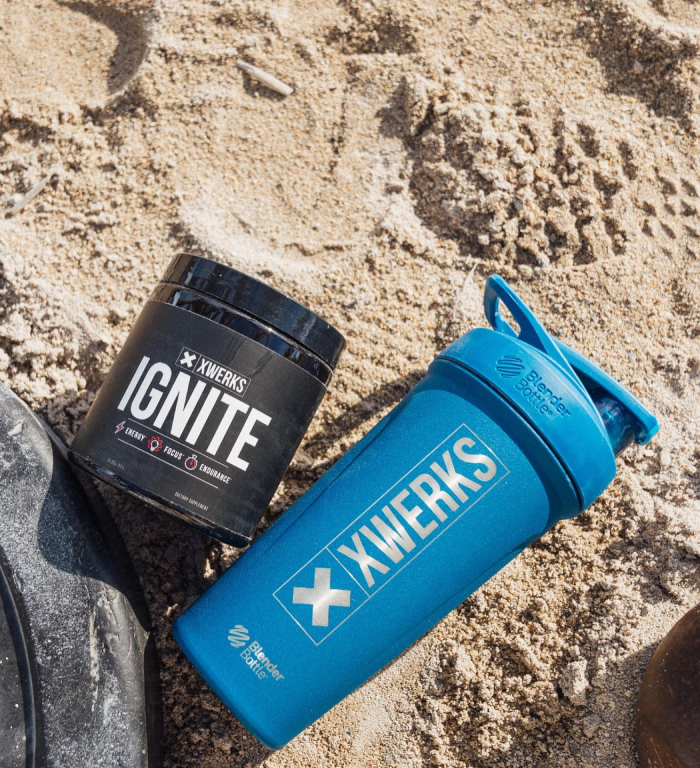
XWERKS Ignite vs the most popular beginner pre-workouts — head-to-head
Now that you can read a label and recognize quality formulation, here's how Ignite compares against the most common beginner-accessible options on the variables that actually matter for new lifters: caffeine moderation, transparent dosing, GI-safe formulation, and avoiding mega-stim ingredients.
| Criterion | XWERKS Ignite | C4 Original | Cellucor C4 Sport | ON Gold Standard Pre | Bucked Up | Ghost Pre-Workout |
|---|---|---|---|---|---|---|
| Caffeine | 150mg | 150mg | 135mg | 175mg | 200mg | 202mg |
| L-Citrulline (research dose: 6-8g) | 3g (citrulline malate) | None disclosed | None disclosed | 1.5g (Creapure blend) | 6g | 4g |
| Beta-Alanine (research dose: 1.5-3g) | 1.5g (CarnoSyn) | 1.6g | 1.5g | 1.5g | 2g | 2g |
| L-Tyrosine (research dose: 1-2g) | 2g | None disclosed | None disclosed | 500mg | None disclosed | 1g |
| Adaptogens / additional | 500mg Rhodiola | None | None | None | Deer antler velvet, AlphaSize | NeuroFactor, Astragin |
| Transparent dosing | ✓ Full disclosure | "Explosive Energy Blend" | Mostly disclosed | Mostly disclosed | Mostly disclosed | ✓ Full disclosure |
| Beginner-friendly stim level | ✓ Moderate (150mg) | ✓ Moderate (150mg) | ✓ Moderate (135mg) | Moderate (175mg) | Moderate (200mg) | Moderate (202mg) |
| Half-scoop friendly | ✓ Yes | ✓ Yes | ✓ Yes | ✓ Yes | ✓ Yes | ✓ Yes |
| Cost per serving | ~$1.65 | ~$0.80 | ~$1.00 | ~$1.10 | ~$1.55 | ~$1.65 |
| Sweetener | Stevia, sucralose | Sucralose, ace-K | Sucralose, ace-K | Sucralose, ace-K | Sucralose, ace-K | Sucralose, ace-K |
Caffeine: similar across the category. All these beginner-friendly options stay in the 135-202mg range — appropriate for new lifters. Ignite's 150mg is right in the sweet spot. Mega-stim formulas (350mg+) appear later in the supplement aisle and aren't appropriate as a first product.
The performance ingredient gap: C4 Original — by far the most popular beginner pre-workout — uses a "Explosive Energy Blend" proprietary formulation, hiding individual doses of citrulline, beta-alanine, and other ingredients. You can't tell what you're actually getting. Ignite, Bucked Up, and Ghost Pre-Workout disclose individual doses.
Citrulline disparity: Among the disclosed-dose products, Bucked Up's 6g citrulline is the only one hitting research-backed full dose. Ignite at 3g, Ghost at 4g, and ON at 1.5g are below clinical doses but still meaningfully present. C4 hides the amount entirely, which usually correlates with sub-clinical dosing.
Cost: pre-workout is generally affordable. C4 at ~$0.80/serving is dramatically cheaper than premium options, but the proprietary blend is the tradeoff — you pay less but don't know what you're getting. Ignite, Bucked Up, and Ghost cluster around $1.55-1.65/serving with transparent labels.
The half-scoop strategy works for any of these. If you're brand new to pre-workout, start with half a serving regardless of which product you choose. Assess your tolerance over 1-2 weeks before moving to a full serving. This is more important than picking the "perfect" first product.
A simple decision tree for beginners
If you're new to training (first 3 months)
Recommendation: Skip pre-workout entirely. Focus on consistency, progressive overload, protein intake, and sleep. Add creatine monohydrate (5g daily) — cheap, safe, well-researched, bigger effect than pre-workout. Coffee before training if you want a caffeine boost.
If you've been training 3-6 months and want to try pre-workout
Look for: Transparent label, caffeine 150-200mg per serving, citrulline 6g+, beta-alanine 2-3g, moderate ingredient list (6-8 ingredients total). Start with half a scoop; work up gradually.
Example of what this looks like: XWERKS Ignite — 150mg caffeine, 3g citrulline malate, 2g L-tyrosine, 1.5g beta-alanine, 500mg rhodiola, 200mg DMAE, 10mg BioPerine. Moderate caffeine, transparent doses, no proprietary blends.
If you're caffeine-sensitive or train late in the day
Recommendation: Stimulant-free or low-caffeine pre-workout (under 100mg caffeine). You still get the citrulline and beta-alanine benefits without the sleep-disrupting effects of higher caffeine doses.
If you only drink coffee and don't want to add another product
Recommendation: Coffee + 6-8g citrulline powder (sold plain, inexpensive). You get the caffeine you already like plus the pump/volume benefits of citrulline without adding another branded product to your routine. Simpler, cheaper, and 90% of the effect. See pre-workout vs coffee for the detailed comparison.
Frequently asked beginner questions
Can I take pre-workout every day?
Physically, yes — but caffeine tolerance builds quickly. After 2-3 weeks of daily high-caffeine use, you need more to feel the same effect. Consider taking pre-workout only on harder training days (3-4x per week), using lower-caffeine options on other days, or taking periodic "deload" weeks (1-2 weeks at half dose or caffeine-free) to restore sensitivity.
Is pre-workout bad for your heart?
Moderate-caffeine pre-workouts used sensibly are fine for healthy adults. The concerning products are mega-stim formulas (350mg+ caffeine) plus additional stimulants like yohimbine and synephrine — these can cause palpitations, elevated blood pressure, and worse outcomes in people with heart conditions. If you have high blood pressure, heart conditions, anxiety disorders, or are pregnant or breastfeeding, talk to your physician before starting pre-workout.
Can I take pre-workout if I'm trying to lose weight?
Yes — pre-workout doesn't interfere with fat loss. But don't expect it to cause fat loss. Weight loss requires caloric deficit. Pre-workout may help you train harder (burning more calories per session), but the effect is small relative to daily nutrition choices. Don't waste money on "fat-burning" pre-workouts — the marketing promises vastly exceed reality.
Should I cycle pre-workout?
Cycling off (1-2 weeks at half dose or no caffeine every 8-12 weeks) restores caffeine sensitivity and can be useful. Cycling off non-caffeine ingredients (citrulline, beta-alanine) isn't necessary — they work on different mechanisms and don't build tolerance. If you want simplicity, just cycle caffeine.
Is the tingling normal?
Yes. Beta-alanine at 1.5-3g per serving commonly causes paresthesia — tingling on the face, hands, and sometimes the scalp, starting 15-20 minutes after ingestion and lasting 30-60 minutes. It's harmless. It's not an allergic reaction. Some people enjoy it; others find it uncomfortable. If you dislike it, choose pre-workouts with lower beta-alanine (under 1g) or split your dose into half-scoop servings.
What if pre-workout makes me feel anxious or jittery?
You've probably taken too much caffeine for your tolerance, or the product contains stimulants beyond your sensitivity threshold. Reduce to a smaller serving, switch to a lower-caffeine product, or stop using pre-workout entirely — your workouts will still improve with consistent training and good nutrition. Don't push through uncomfortable stimulant effects "because it's working."
Your beginner protocol
First 3 months of training: no pre-workout needed
• Focus on showing up consistently (3-4x per week)
• Nail the basics — progressive overload, good form, enough protein (1.6-2.2g/kg)
• Sleep 7-9 hours
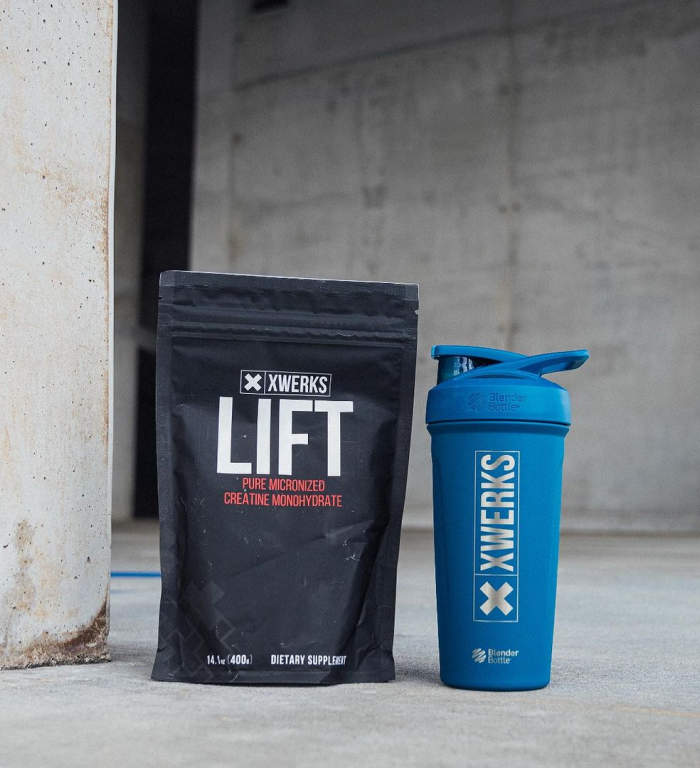
• Add creatine monohydrate 5g daily (XWERKS Lift or any Creapure-certified product)
• Coffee before training if you want caffeine
Months 3-6: If you want to experiment
• Choose a transparent-labeled pre-workout with moderate caffeine (150-200mg) — XWERKS Ignite or equivalent
• Start with half a scoop 20-30 minutes before training
• Use only on harder training days (not every workout)
• Assess how you feel; adjust up or down based on your tolerance
• Don't expect dramatic effects — modest improvements that compound over months
Month 6+: Established protocol
• Use pre-workout strategically on your hardest sessions
• Take planned deload weeks (1-2 weeks reduced/no caffeine) every 8-12 weeks
• Consider simpler approaches if pre-workout isn't adding meaningful value (coffee + citrulline powder, for example)
• Train late? Choose low-stim or stim-free options
The Bottom Line
You don't need pre-workout to start training. Consistency, sleep, protein, and progressive overload drive beginner progress. Pre-workout is a minor optimization, not a requirement.
If you want to try pre-workout: start with a transparent-labeled moderate-caffeine product (150-200mg caffeine), half scoop initially, and assess your response. Look for ingredients that matter: caffeine, citrulline (6-8g), beta-alanine (2-3g), tyrosine (1-2g).
Avoid as a beginner: mega-stim products (350mg+ caffeine), proprietary blends that hide doses, "fat-burning" pre-workouts with multiple stimulants, "hardcore" branded products, and anything making transformation claims.
Realistic expectations: modest improvements in focus, energy, and training capacity. No dramatic physique transformation, no magical fat loss, no overnight strength gains. The effects are real but small — they compound over months of consistent training, not a single session.
Simpler alternative: coffee + creatine monohydrate (5g daily). Cheaper, simpler, and captures most of the benefit of pre-workout for most beginners.