Does Zinc Increase Testosterone?
Yes — zinc is directly involved in testosterone synthesis, and zinc deficiency reliably reduces testosterone levels. Supplementing zinc in deficient men reliably restores testosterone. However, supplementing zinc when you're already zinc-sufficient does not boost testosterone above normal levels. The key question isn't whether zinc works — it's whether you're deficient, and many men are.
Why zinc matters for testosterone
Zinc is required at multiple points in the testosterone production pathway. It's necessary for the function of enzymes involved in steroid hormone synthesis, plays a structural role in the androgen receptor (the receptor testosterone binds to in target tissues), supports Leydig cell function in the testes (where testosterone is produced), is involved in the conversion of androstenedione to testosterone, and helps regulate GnRH (gonadotropin-releasing hormone) from the hypothalamus, which triggers the LH signal that drives testosterone production.
Without adequate zinc, these processes slow down — and testosterone production drops accordingly.
The evidence: Deficiency and restoration
The most cited study is Prasad et al. (1996), which demonstrated a clear relationship between zinc and testosterone. When young healthy men were placed on a zinc-restricted diet for 20 weeks, their serum testosterone dropped significantly. When older men with marginal zinc deficiency were given zinc supplements (30mg/day), their testosterone increased from 8.3 nmol/L to 16.0 nmol/L — nearly doubling.
Hunt et al. (1992) demonstrated that zinc depletion in healthy men led to reduced testosterone and reduced sperm count, both of which recovered with zinc repletion.
Hemodialysis patients with zinc deficiency who received 50-57mg supplemental zinc showed significant testosterone increases (Mahajan 1982). Similarly, men with sickle cell anemia given zinc supplementation showed testosterone improvement.
The pattern is consistent: zinc deficiency → low testosterone → zinc supplementation → testosterone restoration.
The honest limitation: Zinc doesn't boost beyond normal
If your zinc status is already optimal, supplementing more zinc will not push testosterone above your natural ceiling. Zinc is a necessary cofactor — not a direct hormonal stimulant. Think of it as fuel for the engine: running low impairs performance, but overfilling the tank doesn't make the engine go faster. This is different from compounds like Tongkat Ali, which can stimulate LH and increase testosterone production even in men with adequate baseline levels.
That said, the practical significance is enormous: zinc deficiency is extremely common.
How common is zinc deficiency?
An estimated 12% of the US population is at risk for zinc inadequacy, and 40% of adults worldwide have suboptimal zinc status. Groups at highest risk include men who eat high-processed-food diets (zinc is abundant in whole foods but scarce in processed foods), vegetarians and vegans (plant-based diets contain phytates that inhibit zinc absorption, and the best zinc sources — red meat, oysters, poultry — are excluded), athletes and heavy sweaters (zinc is lost through sweat — athletes can lose significant zinc during training), men on restrictive diets or caloric deficits (reduced food intake = reduced zinc intake), and heavy alcohol consumers (alcohol impairs zinc absorption and increases zinc excretion).
For these populations — which collectively include a large percentage of young, active men — zinc supplementation can produce meaningful testosterone improvement simply by correcting a deficit they didn't know they had.
How much zinc do you need? The RDA for adult men is 11mg/day. Most testosterone-support formulations use 15-30mg, which corrects marginal deficiency while staying well below the tolerable upper limit (40mg/day).
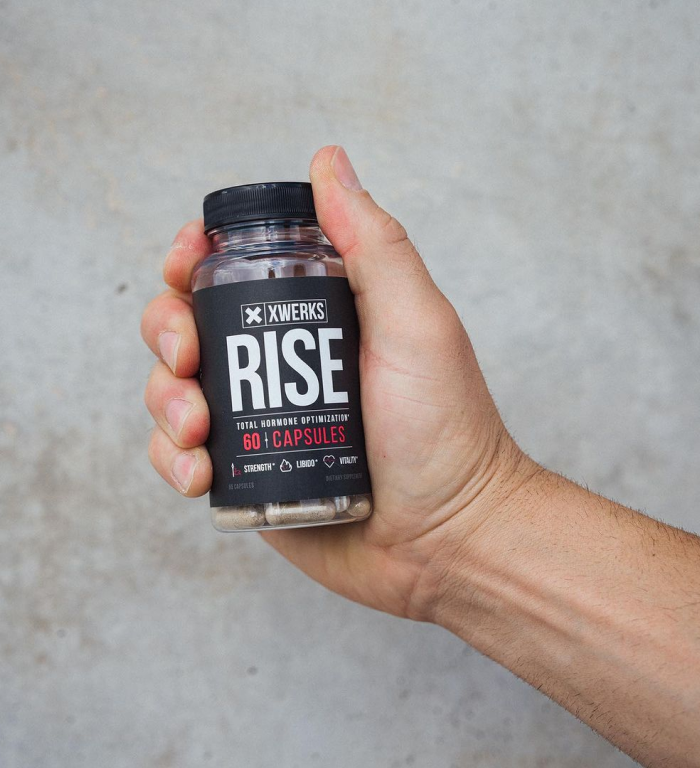
XWERKS Rise contains 15mg — enough to reliably correct the most common deficiency levels without risk of toxicity or copper depletion (excess zinc can interfere with copper absorption).
Food sources
The richest dietary zinc sources are oysters (74mg per 3 oz — by far the richest food source), red meat (beef provides 5-7mg per serving), poultry (3mg per serving), crab and lobster (6.5mg per 3 oz), pork (3mg per serving), beans and lentils (1-2mg per serving, with lower bioavailability due to phytates), and pumpkin seeds (2.2mg per oz). If your diet is rich in animal protein, you may be getting adequate zinc from food. If your diet is plant-heavy, processed-food-heavy, or calorically restricted, supplementation is warranted.
Zinc in the context of full testosterone support
Zinc is one piece of a multi-pathway testosterone support strategy. On its own, zinc corrects deficiency and restores baseline testosterone. Combined with Tongkat Ali (LH stimulation + SHBG reduction), Boron (free testosterone increase, SHBG reduction), and Ashwagandha (cortisol reduction), it forms part of a comprehensive approach that addresses testosterone from multiple angles.
The Bottom Line
Zinc is a direct cofactor in testosterone synthesis. Deficiency reliably reduces testosterone; supplementation in deficient men reliably restores it. It does not boost testosterone above normal in zinc-sufficient men. But zinc deficiency is common (especially in athletes, dieters, plant-based eaters, and men eating processed food diets), making supplementation a high-value, low-risk intervention for many men.
At 15mg/day (as in XWERKS Rise), zinc corrects the most common deficiency levels, supports the enzymatic machinery of testosterone production, and combines with Tongkat Ali, Boron, and Shilajit for multi-pathway hormonal support.
15mg Zinc + 400mg Tongkat Ali + 6mg Boron
XWERKS Rise — the multi-pathway testosterone support formula that includes zinc at the dose that matters.
SHOP RISE →
References
1. Prasad AS, et al. Zinc status and serum testosterone levels of healthy adults. Nutrition. 1996;12(5):344-348.
2. Hunt CD, et al. Effects of dietary zinc depletion on seminal volume and zinc loss, serum testosterone, and sperm morphology in young men. Am J Clin Nutr. 1992;56(1):148-157.
3. Mahajan SK, et al. Effect of oral zinc therapy on gonadal function in hemodialysis patients. Ann Intern Med. 1982;97(3):357-361.
4. Te L, et al. Effects of zinc supplementation on sexual behavior of male rats. J Nutr. 2011;141(4):610-614.