Creatine helps your muscles supply energy; creatinine is a waste product your kidneys clear from your blood. Taking creatine can raise a creatinine blood-test result and make a creatinine-based estimate of kidney filtration look lower. But an abnormal result still needs medical interpretation: supplement use does not rule out kidney disease or an acute kidney problem. NIH: creatine overview; National Kidney Foundation: creatinine.
If you use creatine and have an upcoming blood test—or a result flagged high—the useful next step is to give your clinician an accurate supplement and training history. This guide explains the terms, the evidence, and what to bring to that conversation. It cannot diagnose the cause of your result.
What is the difference between creatine and creatinine?
They are related compounds with different roles. Your body makes creatine, and you also obtain it from foods such as meat and fish. Stored creatine and phosphocreatine help replenish ATP, the immediate energy source used during hard muscular efforts. Some creatine converts to creatinine during normal turnover; the kidneys remove that waste product. NIH Office of Dietary Supplements.
| Question | Creatine | Creatinine |
|---|---|---|
| What is its role? | Supports rapid energy supply in muscle. | Waste product cleared through the kidneys. |
| Where will you see it? | Foods and sports supplements, commonly creatine monohydrate. | Blood and urine testing used to assess kidney health. |
| What should you track? | The product, form, daily amount, and dates you started or changed it. | Your result and trend, interpreted with other findings by your clinician. |
Creatinine on a lab report is not a measurement of how much creatine is stored in your muscles, and it is not a score of how well your supplement is working.
Can creatine raise creatinine without damaging the kidneys?
Yes, it can—but the blood-test number alone cannot tell you why it rose. A July 2026 systematic review pooled 26 trials involving 1,036 participants. Creatine supplementation increased serum creatinine by an average of 0.14 mg/dL. Creatinine-based filtration estimates fell, while filtration measured using a separate tracer method, Cr-EDTA, did not change significantly. The review included different populations, including people receiving hemodialysis, so its average is not a prediction for an individual athlete. Almeida et al., 2026.
A separate April 2026 review of 19 randomized trials and one randomized crossover study also found a small average creatinine increase, but no statistically significant difference in estimated filtration overall. Its authors called for more trials lasting beyond one year. These reviews support careful interpretation of the marker; they do not establish that every dose, product, or personal situation is risk-free. Tsiaras et al., 2026.
One useful example is a 12-week placebo-controlled trial in healthy, resistance-trained men consuming at least 1.2 g of protein per kilogram of body weight daily. The creatine group took 20 g/day for five days, then 5 g/day. Researchers found no significant adverse change in filtration measured by Cr-EDTA clearance. That specific population, dose, and duration matter: this was not a test of lifelong use or a reason for someone with kidney disease to self-prescribe creatine. Lugaresi et al., 2013.
Why can eGFR look lower after starting creatine?
A creatinine-based eGFR is a calculation, not a direct measurement of filtration. It uses blood creatinine along with factors such as age and sex. If creatinine rises for a reason other than reduced filtration, the calculated eGFR can look lower. Muscle mass, recent intense exercise, large amounts of cooked meat, creatine, and some medicines can affect the marker. Their effects vary between people. National Kidney Foundation guidance.
Worked example: A lifter starts creatine, changes training volume, and later sees a higher creatinine result and lower eGFR. That sequence creates useful questions, not a diagnosis. The clinician can compare earlier results, review the timing of each change, and decide what testing is appropriate. Neither “the supplement caused kidney damage” nor “it is definitely just the supplement” follows from that sequence alone.
What other tests can help clarify the result?
Your clinician may use cystatin C and urine testing to add context. Cystatin C is another blood marker used to estimate filtration. It can be useful when creatinine is difficult to interpret, including in people with substantial muscle mass. It also has limitations: untreated thyroid conditions and steroid use can affect its accuracy. National Kidney Foundation: cystatin C.
An eGFR equation combining creatinine and cystatin C is generally more accurate than either marker alone. Ask whether it would help in your situation; it is not a test everyone needs. National Kidney Foundation: interpreting creatinine.
A urine albumin-to-creatinine ratio, or uACR, checks for albumin leakage into urine. It answers a different question from a blood filtration estimate. Clinicians use blood and urine findings together, sometimes with repeat testing. Feeling well does not settle the question: early kidney disease often has no symptoms. NIDDK: kidney disease tests and diagnosis.
A blood-test checklist for people who take creatine
Bring a clear record, then follow the testing instructions you are given. This checklist is a way to organize the conversation—not a protocol for changing your lab result.
- Photograph the label. Include the ingredient form, serving size, and everything else in the supplement.
- Write down your actual intake. Record grams per day, start date, any loading phase, and recent changes. Include pre-workouts or blends that may also contain creatine.
- Describe the surrounding week. Note unusually hard exercise, recent illness, and changes in food or fluid intake. Bring a complete medicine and supplement list, including nonprescription pain medicines.
- Bring earlier results if available. Ask how the new creatinine and eGFR compare with your previous measurements.
- Get a specific follow-up plan. Ask whether repeat blood work, cystatin C, or urine testing would clarify the finding—and when it should happen.
This approach draws on NKF guidance on assessment and medication history and NIDDK guidance on blood and urine testing. Do not stop prescribed medicines, force extra water, or improvise a supplement “washout” to try to improve the number. Ask the ordering clinician what to do before testing and whether to pause creatine.
When should you seek medical advice?
Contact the clinician who ordered the test about a new abnormal result or an unexplained change. Do not wait for symptoms or assume creatine explains it. If you already have kidney disease, discuss supplementation with your kidney-care team before starting or continuing it.
Seek urgent medical assessment for markedly reduced or absent urine, new swelling, or other concerning symptoms. Trouble breathing, chest pain, or confusion warrant emergency care. Acute kidney injury can develop over hours or days and sometimes causes no obvious symptoms. National Kidney Foundation: acute kidney injury.
Common questions about creatine and blood tests
Should I stop creatine before a blood test?
Ask the ordering clinician. Whether to pause it, and for how long, depends on the purpose of the test and your circumstances. Disclose your use before testing; do not delay follow-up of an abnormal result while trying an online washout schedule.
What is a normal creatinine level for someone who lifts?
There is no universal “lifter range” that makes a flagged result safe to ignore. Use the lab's units and reference interval as starting information, then have your clinician interpret the result alongside your history and other tests. MedlinePlus: understanding creatinine results.
Is creatinine a supplement I should take?
No. The sports-nutrition ingredient discussed here is creatine, usually creatine monohydrate. Creatinine is the related waste product measured in kidney-health testing.
Know exactly what is in your scoop
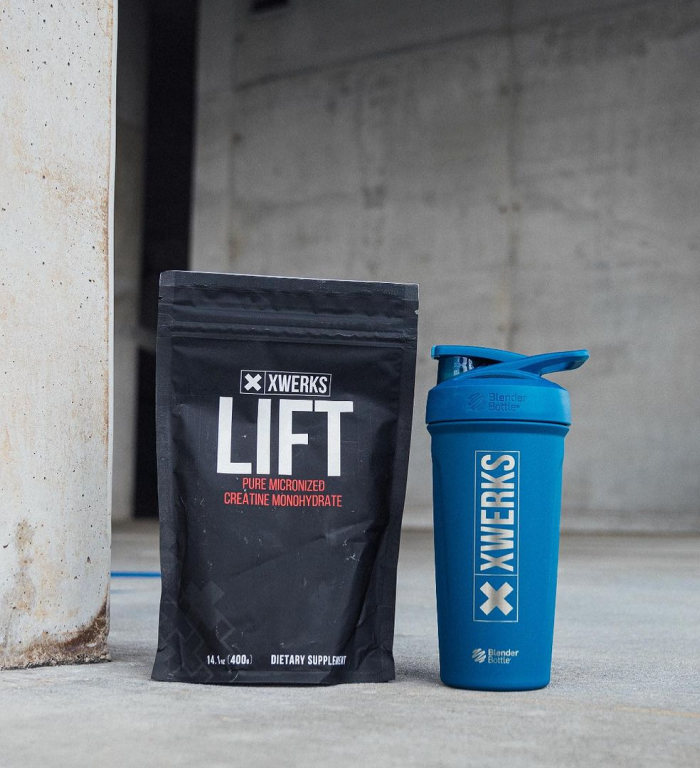
XWERKS Lift's current Supplement Facts label lists 5 g of creatine monohydrate per one-scoop (5 g) serving, with 80 servings per container. That gives you a specific amount and ingredient form to record for your clinician. The research above concerns creatine supplementation; it is not a clinical trial of the finished Lift product.
If creatine fits your training plan and any medical guidance you have received, see Lift's ingredients and serving size. An unexplained abnormal blood test calls for clinical follow-up, not a different supplement.
For the separate question of whether adding another ingredient improves training outcomes, read our creatine + HMB vs. creatine monohydrate comparison.