

Is Muscle Memory Real?
Yes — and the science behind it is stronger than most people realize. When you build muscle, your muscle fibers acquire new nuclei (myonuclei). When you stop training, the fibers shrink but the nuclei persist — potentially for 15+ years. When you resume training, those retained nuclei allow your muscles to regrow faster than they were built the first time. Your muscles literally remember being bigger.
Two types of muscle memory
The term "muscle memory" actually describes two distinct phenomena that work together:
1. Neural motor patterns (brain-based). When you practice a movement repeatedly — a squat, a deadlift, riding a bike, playing piano — your brain creates and strengthens neural pathways between your motor cortex and the involved muscles. These pathways become so efficient that the movement becomes largely automatic. This is why you can get back on a bike after 20 years and ride without thinking about it. For lifting, this means your brain "remembers" how to recruit muscle fibers efficiently for exercises you've practiced, even after a long break. This component comes back very quickly — often within 1-2 weeks of resuming training.
2. Myonuclear retention (muscle-based). This is the more recently discovered and more fascinating mechanism. Muscle cells are unique in the body because they're multinucleated — each fiber contains many nuclei (myonuclei), not just one. When you build muscle through resistance training, your body adds new myonuclei to the growing fibers. These nuclei are what control protein synthesis and muscle growth.
The critical discovery: when you stop training and your muscles atrophy, the myonuclei don't disappear. The muscle fibers shrink (they lose protein and water), but the nuclei remain. This was demonstrated in a landmark study that found "the old and newly acquired nuclei are retained during severe atrophy caused by subsequent denervation lasting for a considerable period of the animal's lifespan."
Why regaining is faster than gaining
When you start training again after a break, your muscles don't need to build new nuclei from scratch. The retained myonuclei are already in place, ready to ramp up protein synthesis immediately. Building new nuclei (through satellite cell donation) is one of the slowest parts of muscle growth. Bypassing that step is why regaining muscle happens significantly faster than the initial building.
Research consistently confirms this. A study examining 7 weeks of training, 7 weeks of detraining, and 7 weeks of retraining found that strength came back significantly faster in the second training period. Separate research showed that a 3-week training pause followed by retraining produced comparable results to continuous 15-week training — the detraining period barely set participants back.
The practical rule of thumb: it takes roughly half as long to regain lost muscle as it took to lose it. If you take 4 months off, expect to need about 2 months to get back to where you were.
The epigenetic layer
Beyond myonuclear retention, research by Seaborne et al. (2018) demonstrated that human skeletal muscle possesses an "epigenetic memory" of hypertrophy. When muscles are trained, specific DNA methylation patterns change — genes related to muscle growth get "turned on." During detraining, the muscle fibers shrink, but many of these epigenetic changes persist. When retraining begins, these pre-modified genes respond more quickly than genes that were never trained.
In a mouse study, animals that were trained for 8 weeks, detrained for 12 weeks, and then retrained for 4 weeks showed accelerated muscle growth compared to a control group that only trained for 4 weeks. The previously trained mice retained epigenetic modifications that gave them a head start.
Why this matters for you
If you've trained before and stopped: the barrier to getting back is lower than you think. Your muscles haven't forgotten. The neural pathways are dormant but intact. The myonuclei are still there. Start back at moderate intensity, progress quickly (your body can handle it), and expect to return to your previous level in roughly half the time it took to build.
If you're young and building now: the muscle you build today creates myonuclei that persist for years or decades. The more fit you are when you're younger, the larger your "myonuclear bank" — and the easier it will be to maintain or regain muscle as you age. This is one of the strongest arguments for starting resistance training early and consistently.
If you're older and worried about decline: Creatine and protein become even more important. Muscle memory gives you a head start if you've trained before, but maintaining that head start requires adequate protein for MPS stimulation and creatine for training capacity preservation.
What happens when you stop training?
Week 1-2: Glycogen and water leave the muscles, making them look smaller. Actual muscle protein hasn't significantly decreased. Strength may drop slightly due to neural detraining.
Weeks 2-4: Muscle protein synthesis slows. Some actual muscle fiber atrophy begins. Strength declines more noticeably, particularly in movements you don't perform in daily life.
Months 1-3: Measurable muscle mass loss occurs. However, myonuclei are retained, and neural patterns remain largely intact. Cardiovascular fitness declines more rapidly than muscle.
Months 3+: Continued atrophy, but the myonuclear "bank" persists. Even after years of detraining, research suggests the regaining advantage remains.
The Bottom Line
Muscle memory is real, backed by multiple independent mechanisms: neural motor patterns that make movements automatic, myonuclear retention that keeps the growth machinery in place for years, and epigenetic modifications that prime genes for faster reactivation.
Every training session you do creates a biological investment that persists far longer than the visible muscle. If you've trained before, your comeback will be faster than your initial build. If you're training now, you're building a myonuclear bank account that pays dividends for decades. And the best way to maximize both the initial investment and the comeback is adequate protein (for MPS) and creatine (for training capacity) — every day.
Maximize Your Investment — Build It Right
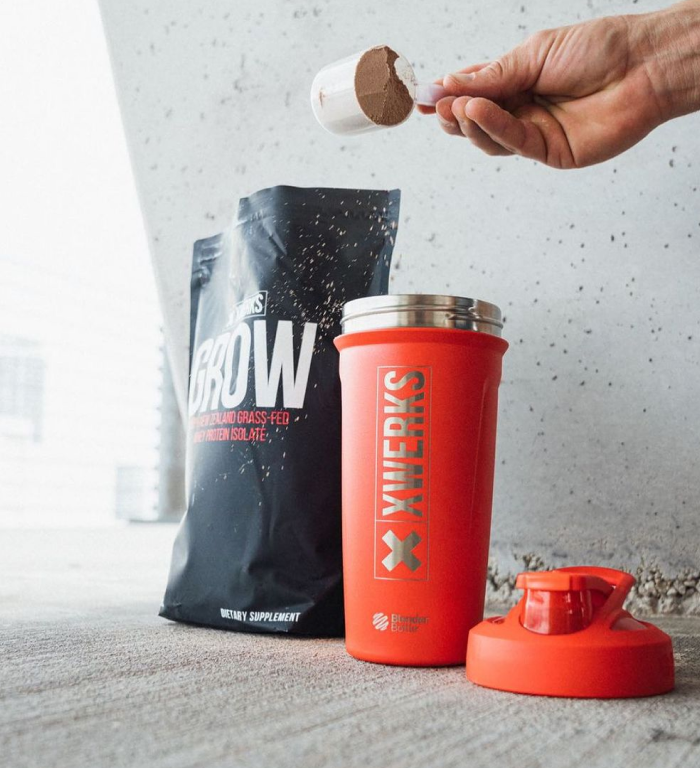
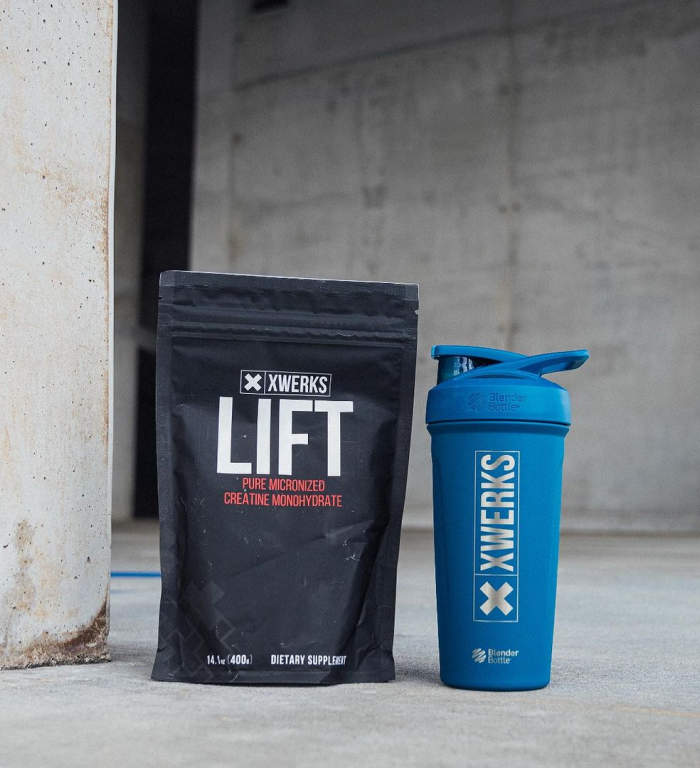
XWERKS Grow (protein for recovery) + XWERKS Lift (creatine for training capacity) — the foundation that makes every rep count, now and years from now.
SHOP GROW → SHOP LIFT →References
1. Bruusgaard JC, et al. Myonuclei acquired by overload exercise precede hypertrophy and are not lost on detraining. PNAS. 2010;107(34):15111-15116.
2. Seaborne RA, et al. Human skeletal muscle possesses an epigenetic memory of hypertrophy. Sci Rep. 2018;8:1898.
3. Staron RS, et al. Strength and skeletal muscle adaptations in heavy-resistance-trained women after detraining and retraining. J Appl Physiol. 1991;70(2):631-640.
4. Gundersen K. Muscle memory and a new cellular model for muscle atrophy and hypertrophy. J Exp Biol. 2016;219:235-242.
5. Egner IM, et al. A cellular memory mechanism aids overload hypertrophy in muscle long after an episodic exposure to anabolic steroids. J Physiol. 2013;591:6221-6230.