When an injury stops training, avoid automatically cutting protein along with your workouts. Reduced activity can lower energy expenditure, but maintaining muscle and supporting recovery still require adequate nutrition. Keep regular protein-containing meals, reassess the food that supported your previous training volume, and adapt the plan to your injury and rehabilitation advice.
A minor training modification, a limb in a cast, and recovery from surgery are different situations. Nutrition should reflect that difference rather than apply one “injury diet” to everyone.
Why less training does not mean protein is unimportant
Immobilization and disuse can contribute to muscle loss, while the injury and healing process change the demands on the body. A review of exercise-related injury nutrition discusses both the importance of adequate protein and the difficulty of finding an optimal dose for every recovery situation. More is not automatically better, and supplementation cannot remove the effects of immobilization. Read the review by Tipton on nutritional support for exercise-induced injuries.
The practical first step is to prevent an avoidable drop in food quality and protein intake when your routine changes. If training used to trigger a meal or shake, decide where that nutrition belongs now instead of letting it disappear by accident.
Start with the type of restriction
| Situation | Useful nutrition focus | What to individualize |
|---|---|---|
| You can train around a minor injury. | Maintain regular protein meals and fuel the exercise you still perform. | How much overall activity and training energy have changed. |
| A limb is immobilized or activity is greatly reduced. | Avoid an unplanned drop in protein and overall food intake. | Protein target, energy needs, appetite, and practical food access. |
| You are recovering from surgery or have a complex injury. | Follow the care team's nutrition and medication instructions. | Clinical needs, symptoms, restrictions, and any prescribed nutrition support. |
| Rehabilitation is becoming more demanding. | Bring food and carbohydrate intake back in line with the growing workload. | Progression, body-composition goals, and tolerance around sessions. |
How much protein should you aim for?
There is no single injury-specific target that fits all athletes. For context, the ISSN describes roughly 1.4–2.0 g/kg per day as sufficient for most healthy exercising people. That is a general exercise range, not a prescription for surgery, immobilization, or a medical condition. See the ISSN position stand on protein and exercise.
Injury-nutrition reviews discuss circumstances where higher protein intakes may be considered, but the evidence and needs vary. If you were already eating an adequate amount, a sensible starting conversation is whether to maintain it while activity changes—not whether to double it immediately. A sports dietitian or your care team can set a target when the injury is substantial. Read the review of nutrition strategies for injury recovery and rehabilitation.
If you have a condition that requires protein restriction or another medical diet, follow that individualized advice. General fitness targets should not override it.
Adjust the meals in four steps
- Keep a protein source at regular meals. Examples include eggs, dairy, fish, poultry, meat, tofu, tempeh, beans, or an appropriate combination of foods.
- Review training-specific extras. Fuel used for a long run or a very high training volume may no longer serve the same purpose during a less active period.
- Retain the rest of a balanced diet. Include produce, carbohydrate sources, fats, and enough overall food. Protein does not replace these.
- Reassess as rehabilitation changes. A plan that fits the first week of restricted activity may underfuel a later week of demanding rehab.
Think in terms of deliberate adjustments, not a crash diet. Healing has nutritional demands, and sharply reducing food because you are worried about body fat can make it harder to meet them. Reviews of musculoskeletal rehabilitation emphasize the broader diet alongside specific nutrients. Read the review of nutritional strategies during musculoskeletal rehabilitation.
A practical meal pattern during recovery
The following is a menu framework, not a calculated meal plan or a promise of faster healing:
- First meal: Eggs or a tofu scramble, toast, and fruit.
- Middle meal: A rice or potato bowl with chicken, fish, tofu, or beans and vegetables.
- Snack if useful: Yogurt, cottage cheese, a suitable plant-based option, or a protein shake.
- Evening meal: A protein-containing main dish, vegetables, and a carbohydrate portion suited to appetite and activity.
Portions depend on your needs and the foods you choose. If cooking or shopping is difficult with crutches, a sling, or fatigue, simplify preparation and arrange help. Accessibility can matter as much as the theoretical “perfect” menu.
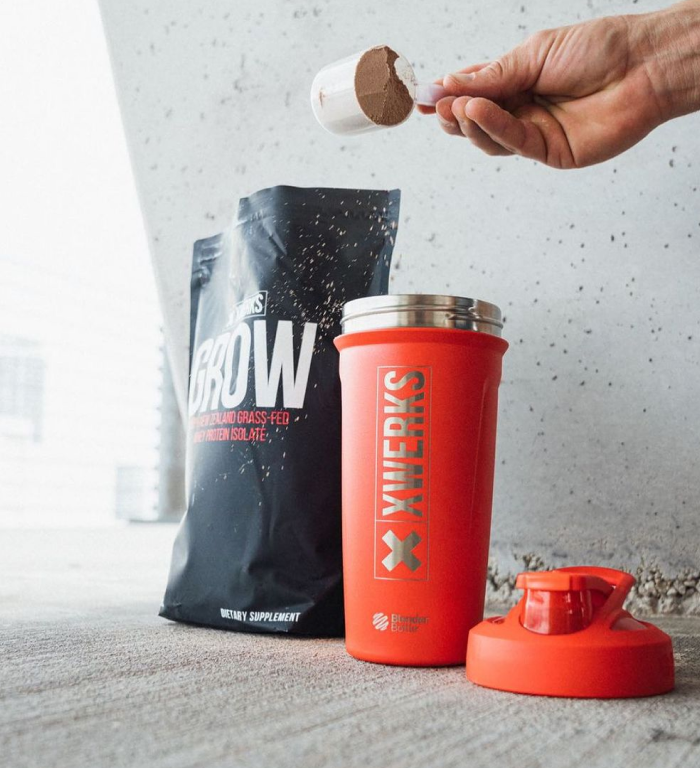
Xwerks Grow can be a convenient whey-protein option when it fits your diet. It is not a treatment for an injury or a replacement for rehabilitation. As a milk-derived product, it is unsuitable for someone with a milk allergy.
Frequently asked questions
Should I still drink a protein shake if I cannot work out?
You can use one if it helps meet your food and protein needs. The decision depends on your overall diet, not on whether you exercised immediately beforehand. See protein on rest days for the routine rest-day context.
Can I eat all my protein in one meal?
Regular meals are often a more practical way to maintain intake, especially when appetite is reduced. Avoid making one oversized meal responsible for the entire day. Read more about protein in a single meal.
Will more protein make a tendon or ligament heal faster?
Adequate nutrition supports recovery, but a larger protein serving does not guarantee a faster healing timeline. Tissue, injury severity, treatment, and rehabilitation all matter.
When should I revise the plan?
Revisit it when activity, appetite, weight trend, or rehabilitation demands change, and whenever your care team gives new instructions. Treat recovery nutrition as a changing routine rather than a fixed supplement schedule.