For night-shift lifters, the most useful nutrition routine protects sleep, provides enough food and protein across the waking period, and places training where it is realistically repeatable. Plan around your actual bedtime and work demands rather than copying a conventional breakfast-lunch-dinner schedule.
A 2 a.m. meal can fall in the middle of your working day. That does not make it nutritionally equivalent to a daytime meal in every respect, but it does mean a rigid rule to “never eat after dinner” may be impractical. Build a workable routine, then adjust it for appetite, digestion, performance, and sleep.
Choose the training slot before arranging the meals
For many people, training after waking and before an overnight shift makes it easier to keep the workout away from the main sleep period. Others have childcare, commute, or gym constraints that make a post-shift session more realistic.
Choose the option that leaves enough time to sleep and does not require you to lift heavily while dangerously sleepy. If training after work leaves you wired or delays bed, shorten it, lower the demand, or move it. NIOSH advises workers who have difficulty falling asleep to consider finishing exercise at least three hours before bedtime. See NIOSH guidance on night work, alertness, and sleep.
An example schedule for a 7 p.m. to 7 a.m. shift
This is an illustrative schedule, not a clinical meal-timing protocol. It assumes a stable overnight shift, a manageable commute, and training before work. Move the times to fit your circumstances.
| Time | Activity | Nutrition focus |
|---|---|---|
| 3:30 p.m. | Wake | Have a meal with protein, carbohydrate, and fluid. |
| 5–6 p.m. | Lift | Use familiar pre-workout food; avoid arriving hungry or overly full. |
| 6:15 p.m. | Main meal before work | Include protein, a carbohydrate source, and produce. |
| 7 p.m. | Shift starts | Bring planned food and water instead of relying on what is available later. |
| 10–11 p.m. | Meal break | Eat a prepared meal sized for appetite and work demands. |
| 2–3 a.m. | Optional snack | Use a manageable snack if hungry; avoid turning fatigue into continuous grazing. |
| 7:30 a.m. | After work | Have a smaller meal if needed so hunger does not interfere with sleep. |
| 8:30 a.m. | Main sleep period | Protect enough time in bed and a suitable sleep environment. |
If you train after the shift instead, pack a familiar snack for before the session and leave room for food afterward. The workout, meal, commute, and wind-down all count toward the time you are taking from sleep. On a particularly exhausting shift, rescheduling a session may be more useful than forcing it into the morning.
Spread protein across your waking period
For healthy exercising adults, the International Society of Sports Nutrition describes a general protein range of about 1.4–2.0 g/kg per day. That is a broad sports-nutrition reference, not a night-shift-specific requirement. Needs vary with goals, diet, and medical circumstances. Read the ISSN position stand on protein and exercise.
You do not have to reset your food plan at midnight. Use a consistent day-to-day tracking window and distribute protein among the meals and snacks you can actually eat. A packed meal before work, a protein-containing break meal, and a snack can be easier to maintain than one very large meal after the shift.
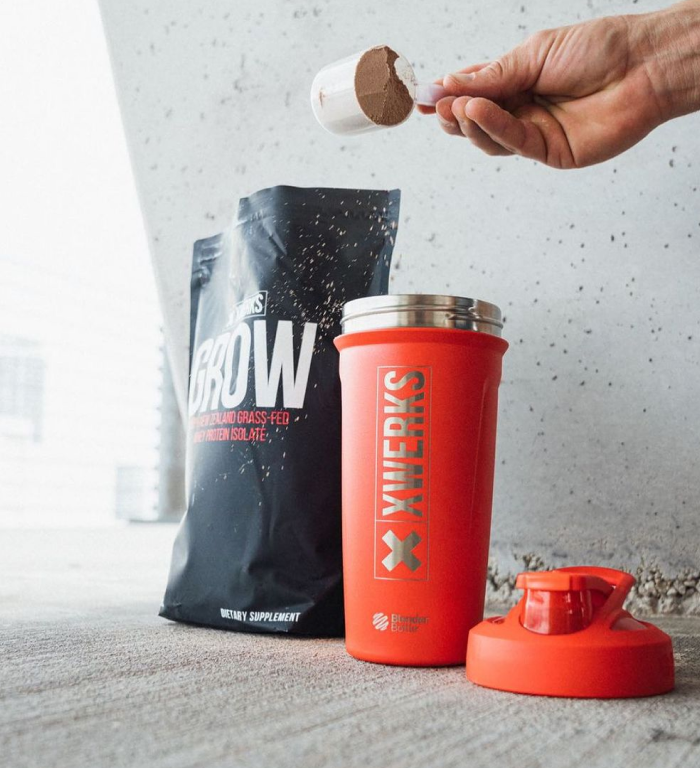
Xwerks Grow can provide a convenient whey-protein option when a full meal is difficult. It is one component of the day, not a substitute for all the energy, fiber, and variety in meals. Keep prepared shakes refrigerated as appropriate and follow storage directions. See protein timing for athletes for broader context.
What does research say about eating overnight?
A controlled study of simulated night work found that keeping meals in the daytime prevented the glucose intolerance seen with nighttime eating under those study conditions. It was a laboratory study, not a trial of strength training in long-term shift workers. It does not establish that every overnight worker should fast throughout a physically demanding shift. Read the study on daytime eating during simulated night work.
A practical starting point is to make planned meals do most of the work and adjust overnight portions to tolerance and hunger. Very heavy meals can be uncomfortable during work or near bed. If metabolic health, medication timing, or a medical condition complicates the plan, a clinician or dietitian can help adapt it.
Set your caffeine cutoff from bedtime
NIOSH notes that caffeine commonly has a half-life around five to six hours, with substantial individual variation. Someone sleeping at 8:30 a.m. should therefore think carefully about caffeine late in the shift, even if the clock says “morning.” Keep it earlier when possible and adjust for your sensitivity. Read NIOSH's caffeine guidance.
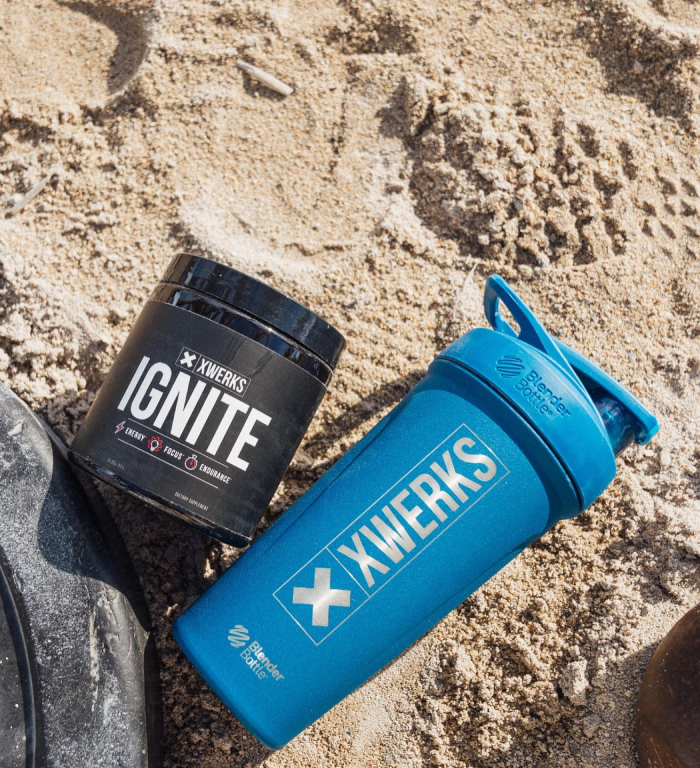
Xwerks Ignite contains caffeine. Account for it alongside coffee, energy drinks, and other sources; a post-shift workout does not make late caffeine disappear faster. For more detail, see how long caffeine takes to wear off.
Frequently asked questions
Is lifting before or after a night shift better?
The better slot is the one you can repeat while protecting sleep and training safely. Before-shift training is a useful option, but work and family constraints matter.
Should I avoid carbohydrates at night?
There is no universal rule in the evidence above requiring all night-shift lifters to remove them. Consider overall intake, meal size, medical needs, and how the meal affects your comfort and sleep.
What should I track for a week?
Record sleep opportunity, workout timing, meals, caffeine, hunger, and session quality. Look for one recurring problem—such as a late energy drink delaying bed—and adjust that first.