Pre-Workout Without Creatine: Why It's Often the Smarter Choice
TL;DR
- Plenty of people specifically want a pre-workout without creatine — and there are good reasons for it, not just preference.
- The main reason: creatine works best as a consistent daily 5g dose, not a pre-workout-only ingredient. Putting it in pre-workout means you only get it on training days, and often at an underdosed amount.
- Keeping creatine separate lets you dose each correctly — take your creatine daily (including rest days) and use pre-workout purely for the energy, focus, and pump ingredients.
- A good creatine-free pre-workout focuses on caffeine, citrulline, beta-alanine, and tyrosine — the ingredients that actually drive the pre-workout "feel" and performance boost.
- Others want creatine-free pre-workout to avoid extra water retention, control total creatine intake, or cycle ingredients independently. All valid.
Search for "pre-workout without creatine" and you'll find a lot of people asking the same thing — and it's a smarter question than it first appears. Creatine is one of the best supplements in existence, but that doesn't mean it belongs in your pre-workout. In fact, there's a strong case that the two should be separate. Here's why a creatine-free pre-workout is often the better setup, who it's ideal for, and what to look for instead.

Why creatine doesn't actually belong in pre-workout
This is the key insight most people miss. Creatine works through saturation, not acute timing. It builds up in your muscles over time with consistent daily dosing, and once your muscles are saturated, that's what delivers the strength and power benefits. Taking creatine right before a workout offers no special advantage over taking it at any other time of day.
That creates two problems when creatine is baked into a pre-workout:
Problem 1: You only get it on training days
If your creatine comes from your pre-workout, you skip it on rest days — which undermines the daily consistency that makes creatine work. Saturation depends on taking it every day, not just when you train.
Problem 2: It's usually underdosed
The research-backed creatine dose is 5g per day. Many pre-workouts include only 1–3g of creatine — enough to list it on the label, not enough to do much. You end up thinking you're "covered" on creatine when you're actually getting a sub-effective amount on training days only.
What actually makes a pre-workout work (no creatine required)
The pre-workout "feel" and performance boost come from a handful of well-researched ingredients — none of which is creatine:
Caffeine — energy, focus, performance
The backbone of any effective pre-workout. Caffeine is one of the most evidence-backed performance aids, improving energy, focus, endurance, and perceived effort. A moderate, effective dose is around 150–200mg — enough to perform without the jitters and crash of 300mg+ mega-stim products.
Citrulline malate — blood flow and pump
L-citrulline boosts nitric oxide production, improving blood flow and creating the "pump" sensation while supporting endurance and reducing fatigue. Effective doses are in the 3–6g range.
Beta-alanine — muscular endurance
Beta-alanine buffers acid buildup in working muscles, supporting higher-rep and sustained efforts. It causes the harmless tingling sensation many associate with pre-workout. (Note: like creatine, beta-alanine also works through saturation — daily consistency matters — but it's commonly included in pre-workout too.)
L-tyrosine — focus under stress
Tyrosine supports the production of focus-related neurotransmitters, helping with mental clarity and concentration during demanding training. Typically dosed at 1–2g.
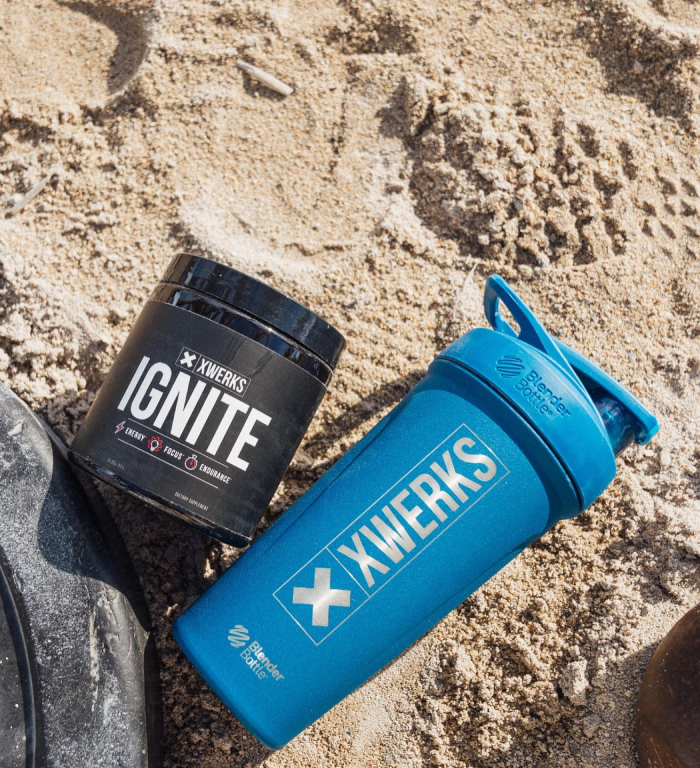
That's the core of an effective pre-workout: XWERKS Ignite delivers all four — 150mg caffeine, 3g citrulline malate, 1.5g beta-alanine, 2g L-tyrosine — transparently dosed, with no creatine taking up label space.
Who should choose a creatine-free pre-workout?
Anyone who already takes creatine separately
If you take a daily 5g creatine dose (as you should for it to work), you don't want — or need — more creatine in your pre-workout. A creatine-free pre-workout avoids doubling up and keeps your dosing clean.
People who want to control total creatine intake
Some people prefer to know exactly how much creatine they're getting and when. Keeping it out of pre-workout makes that simple — your creatine dose is one clean 5g, not a mystery 1–3g spread into a multi-ingredient formula.
Those minimizing extra water retention on certain days
Creatine draws a small amount of water into muscle. Some people prefer to manage that through a steady daily dose rather than a variable pre-workout amount — keeping it separate gives more control.
People who want to cycle or adjust ingredients independently
Maybe you want to take a break from caffeine but keep creatine going, or vice versa. Separate supplements let you adjust each one without affecting the other — impossible with an all-in-one.
The bottom-line setup for most lifters
For the majority of people who lift and take both, the optimal, no-compromise system is straightforward:
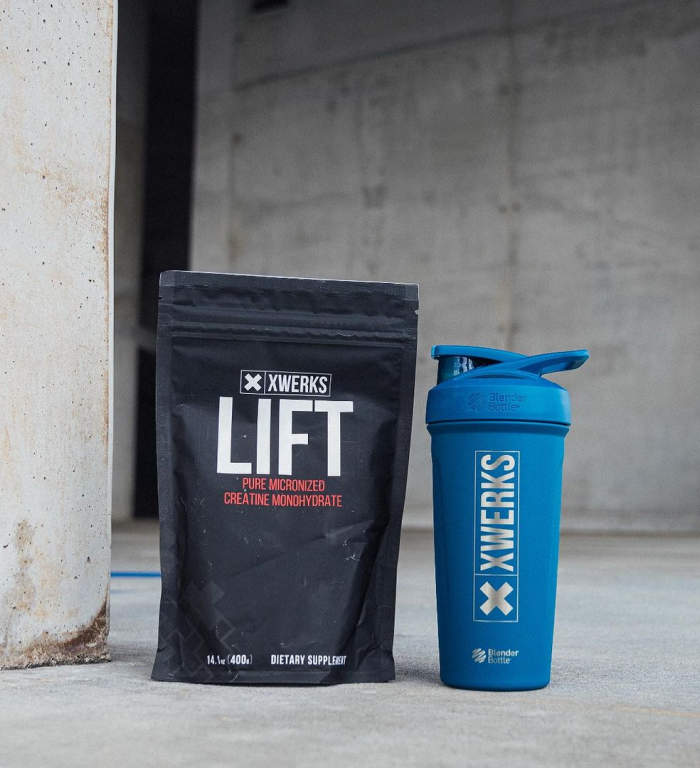
1. Daily creatine: 5g of micronized monohydrate (XWERKS Lift) every day, training or not, at whatever time you'll remember.
2. Creatine-free pre-workout: a focused formula (XWERKS Ignite) 30–45 minutes before training for energy, focus, pump, and endurance.
You get a properly-dosed, consistently-taken creatine and a clean, effective pre-workout — each doing exactly what it's supposed to, neither compromised by being crammed into the other.
The Bottom Line
A pre-workout without creatine is often the smarter choice — not a compromise. Creatine works through daily saturation, not acute pre-workout timing, so putting it in your pre-workout means you only get it on training days and usually at an underdosed 1–3g.
Keep them separate and dose each correctly: a full 5g of creatine daily (like XWERKS Lift), and a focused, creatine-free pre-workout for the ingredients that actually drive the pre-workout effect.
What makes a pre-workout work isn't creatine — it's caffeine, citrulline, beta-alanine, and tyrosine. XWERKS Ignite delivers all four, transparently dosed and creatine-free, so you can build the cleaner two-product system the right way.
Further Reading
Does Creatine Make You Bloated?
References
1. Kreider RB, et al. International Society of Sports Nutrition position stand: safety and efficacy of creatine supplementation. J Int Soc Sports Nutr. 2017;14:18.
2. Goldstein ER, et al. International Society of Sports Nutrition position stand: caffeine and performance. J Int Soc Sports Nutr. 2010;7(1):5.
3. Trexler ET, et al. International Society of Sports Nutrition position stand: beta-alanine. J Int Soc Sports Nutr. 2015;12:30.
4. Bendahan D, et al. Citrulline/malate promotes aerobic energy production in human exercising muscle. Br J Sports Med. 2002;36(4):282-289.