Sip Carbs While You Lift: The Cortisol-Cutting Case for Intra-Workout Fuel
TL;DR
- A well-known but underrated 2001 study found that sipping carbohydrate during lifting dropped the cortisol response from +99% to +7% — nearly eliminating the exercise-induced cortisol spike.
- Over 12 weeks, the same protocol produced ~19-22% greater muscle fiber growth (Type I and Type II) compared to training with placebo. The cortisol response accounted for 74% of the variance in fiber growth.
- Caveats: small study (n=7 acute, small 12-week groups), hasn't been broadly replicated, body comp changes only trended. The mechanism is real; the magnitude may or may not generalize.
- Practical protocol: 30-50g of fast-digesting carbs sipped during longer lifting sessions (60+ min or high-volume workouts). Cluster Dextrin or maltodextrin beats sugar water — same cortisol effect, less GI distress.
Most lifters never think about what they drink during the workout. Pre-workout, sure — caffeine, citrulline, beta-alanine. Post-workout, obvious — protein and carbs. But the 60-90 minutes you're actually training? Most people drink water and call it done. Research from 2001 suggests this may be a mistake for hypertrophy-focused lifters, particularly those doing long, high-volume sessions. The study (Tarpenning et al., PMID 11905937) found that sipping a carbohydrate solution during weight training almost completely blunted the cortisol spike that lifting normally produces — dropping it from +99% above baseline to just +7%. Over 12 weeks, that modified hormonal environment translated to meaningfully greater muscle fiber hypertrophy. Now, the study is small and hasn't been broadly replicated, so the specific magnitude of the effect is uncertain. But the mechanism is defensible, the cost is minimal, and for serious lifters doing long or high-volume training, intra-workout carbs are a reasonable addition to the stack. The honest framing: it's not guaranteed to add 20% to your gains, but it's a low-risk, moderate-upside addition backed by plausible physiology.
What the study actually found
Tarpenning et al., 2001 — the foundational study
Two-part study at USC Department of Exercise Sciences. Part 1 (acute): 7 young men (21 ± 3.5 years) completed a 9-station weight training protocol (3 sets of 10 at 75% 1RM) on two occasions — once with a 6% carbohydrate solution, once with non-caloric placebo.
Part 2 (chronic): two groups of young men completed a 12-week progressive resistance training program. One group consumed a 6% CHO solution during training; the other consumed placebo.
Cortisol response: +99% with placebo vs +7% with CHOType I fiber growth: 19.1% greater with CHO
Type II fiber growth: 22.5% greater with CHO
Cortisol explained 74% of Type I variance, 52% of Type II
What the study did NOT show: statistically significant changes in total body fat loss or total lean mass between groups (these were trending but didn't reach significance in this small sample). The findings were specifically about muscle fiber cross-sectional area, not whole-body composition.
The mechanism: why cortisol matters for hypertrophy
Cortisol is catabolic
Cortisol is the body's primary stress hormone. During resistance training, cortisol rises because exercise is acute physical stress. In short doses, this is fine and normal. But elevated cortisol signals protein breakdown — it mobilizes amino acids from muscle tissue to support energy demands and the stress response. Sustained high cortisol is one of the well-established catabolic influences on muscle mass.
Why carbs blunt the cortisol response
The proposed mechanism: resistance training produces cortisol release partly as a response to glycogen depletion and falling blood glucose during longer sessions. When you consume carbs during training, blood glucose stays stable and muscle glycogen gets sparing support. The body's cortisol response downregulates because one of its triggers (energy stress) is removed.
Supporting this, the same study measured insulin: intra-workout CHO produced roughly 3x higher insulin levels post-training than placebo — consistent with the expected glucose/insulin response.
Less cortisol → less protein breakdown → net muscle gain
Muscle growth is a balance between protein synthesis and protein breakdown. Training drives both up. If you can reduce breakdown (via lower cortisol) without reducing synthesis, the net balance favors growth. The Tarpenning study's fiber-growth findings are consistent with this mechanism over a 12-week window.
Why this isn't a slam dunk — the honest caveats
• Small sample size: n=7 in the acute phase, small groups in the 12-week phase. Small studies often produce large effect sizes that don't replicate at scale.
• Inconsistent replication: Subsequent research on intra-workout carbs and cortisol has produced mixed results. Oliveira et al. 2012 (8% CHO solution during resistance training, n=7) found no cortisol differences between CHO and placebo groups. Other studies have similarly struggled to reproduce the strong cortisol-blunting effect.
• Body composition was not the primary finding: The study found significant muscle fiber growth, but fat loss and total lean mass changes only trended toward favoring the CHO group — they weren't statistically significant. Don't conflate fiber cross-sectional area changes with whole-body recomposition.
• "20% more gains from Gatorade" isn't quite what the study showed: The 19-22% figures are the percentage difference in fiber growth between groups — not an absolute 20% boost to hypertrophy. Framing it as "Gatorade makes you 20% bigger" oversells what the data actually demonstrated.
So is it worth doing anyway?
The honest case for intra-workout carbs
Even accounting for the caveats, here's why it's still reasonable for many lifters:
• The mechanism is defensible. Blood glucose stability during long sessions makes physiological sense. Even if the cortisol effect is smaller than Tarpenning showed, it's probably not zero.
• Downside is minimal. 30-50g of fast-digesting carbs is 120-200 calories during the workout — easy to fit in a training-day caloric budget. No side effects for most people.
• Performance benefits are separate and well-established. Intra-workout carbs measurably improve work capacity during long or high-volume sessions, independent of any cortisol effect. Bodybuilding-style workouts with 20+ sets often benefit from in-session fuel.
• Glycogen preservation matters for the next session. For lifters training 5-6 days/week with overlapping muscle groups, starting the next session with fuller glycogen is a real advantage.
When it matters most
• Sessions over 60 minutes. Glycogen depletion is meaningful during long sessions; intra-workout carbs directly address it.
• High-volume bodybuilding-style training. 20+ sets per session produces more cumulative glycogen demand than heavy low-volume sessions.
• Fasted or low-carb training. If you're training fasted (early morning) or on a low-carb diet, intra-workout carbs have an even larger theoretical benefit because you're starting from lower substrate availability.
• Hypertrophy-focused blocks. When muscle growth is the specific goal (not strength peaking, not fat loss as primary focus), anything that favors anabolism is worth considering.
When it probably doesn't matter
• Short sessions under 45 minutes — glycogen isn't the limiting factor
• Strength-focused low-volume training (e.g., 5x5 protocols with long rests)
• When you've eaten a full meal 90-120 minutes pre-workout — your glycogen and blood glucose are already handled
• During aggressive cuts where fitting in calories matters more than marginal anabolic signaling
What to actually drink — not sugar water
Cluster Dextrin (highly branched cyclic dextrin)
The gold standard for intra-workout carbs. Cluster Dextrin has a high molecular weight and low osmolality, which means it empties from the stomach fast (won't sit in your gut while squatting) and doesn't produce the blood sugar spike-and-crash cycle of simple sugars.
XWERKS Motion uses 25g of Cluster Dextrin plus 3g BCAAs and electrolytes per serving — designed for exactly this use case.
Maltodextrin
Cheaper alternative to Cluster Dextrin. Digests fast, stable blood glucose response, less GI-friendly than Cluster Dextrin for some lifters but works fine for most. Available as plain powder from most supplement shops.
Dextrose (simple glucose)
Fastest glucose delivery available. Budget option. Downsides: pronounced insulin spike, possible GI issues, and some people feel the blood sugar crash 30-45 minutes post-workout. Works, but Cluster Dextrin solves most of these problems.
Gatorade and similar sports drinks
Functional but not optimized for lifting. Gatorade is designed for endurance athletes — the sugar ratio and flavor are calibrated for sustained cardiovascular work, not 90-minute lifting sessions. It works; it's just not the best tool.
Practical intra-workout carb protocol
Dose
30-50g of fast-digesting carbs per session is the research-informed range. Start at the lower end — 30g is usually enough to support blood glucose during a 60-minute session.
For longer sessions (90+ min) or very high-volume days (20+ working sets), 45-60g is reasonable.
Delivery
Mix the carbs in 16-24 oz of water and sip across the entire session. Don't slam it pre-workout — that produces a spike-and-crash pattern that defeats the stable-glucose goal.
For Cluster Dextrin (Motion) specifically, 1 scoop (25g) mixed into 16 oz of water, sipped every 10-15 minutes through the workout.
Timing within the session
Start sipping as soon as you begin your warm-up sets. Continue through the entire workout. The point is to maintain blood glucose across the full training window — front-loading or back-loading the drink defeats the purpose.
Add electrolytes
Long lifting sessions produce meaningful sweat loss, particularly in hot gyms or during high-volume hypertrophy sessions. Intra-workout carbs are a natural vehicle to add sodium (400-800mg) and potassium — preventing the late-session fatigue and cramping that pure water can't address. XWERKS Motion includes these; DIY powders need electrolyte addition.
The complete "anti-catabolic" lifting stack
Before the session
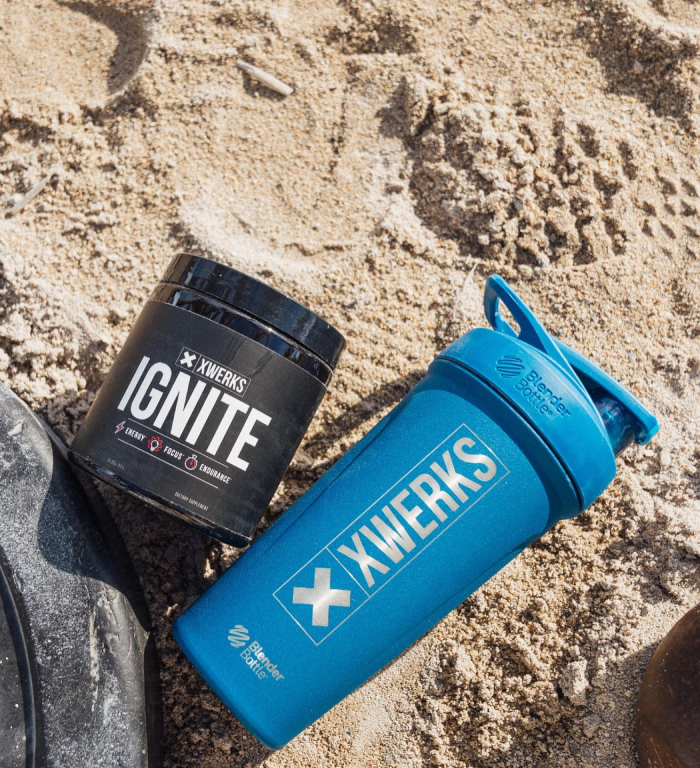
• Pre-workout 30-45 min before: XWERKS Ignite — 150mg caffeine + citrulline + tyrosine + beta-alanine + rhodiola
• Optional: 20-30g whey protein pre-workout if training 3+ hours since last meal
During the session
• Intra-workout carbs + electrolytes: XWERKS Motion — 25g Cluster Dextrin + 3g BCAAs + electrolytes
• For longer sessions, 1.5-2 scoops or supplement with additional fast-digesting carbs
After the session
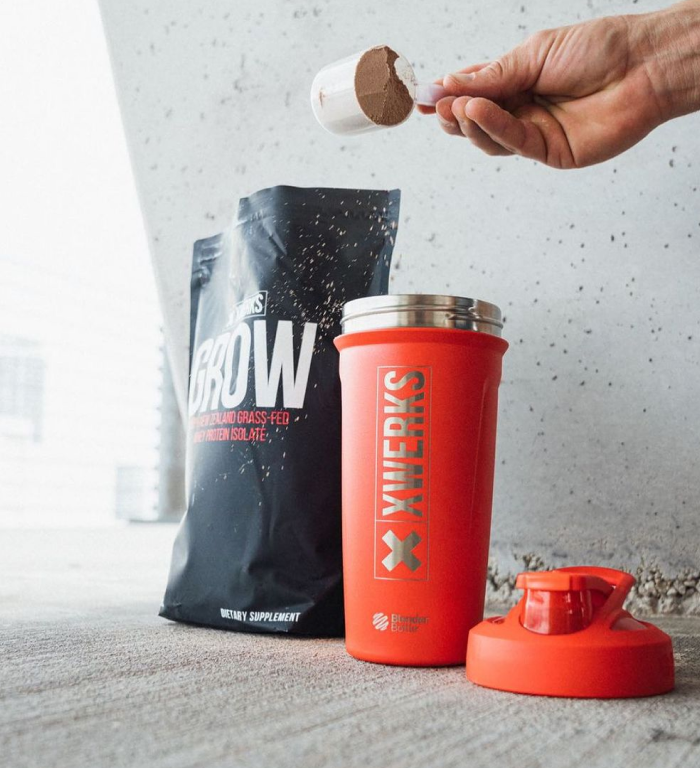
• 25-30g whey isolate within 60 min: XWERKS Grow — 2.5-3g leucine hits the muscle protein synthesis threshold
• Carb-rich meal within 2 hours to restore glycogen (0.8-1.2g/kg body weight)
Daily foundation
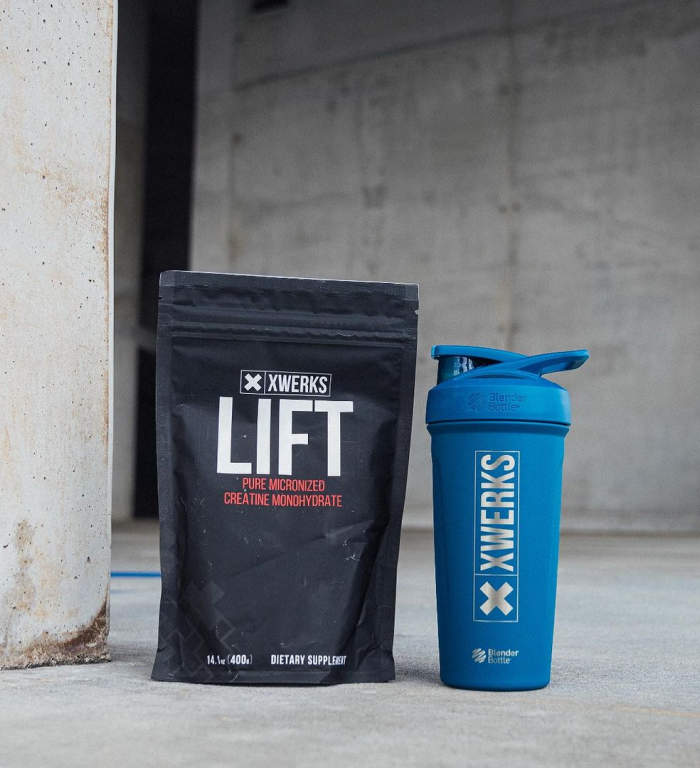
• Creatine monohydrate: 5g daily (XWERKS Lift)
• Total protein: 1.6-2.2g/kg body weight daily distributed across 4-5 meals
• Calculate your target: XWERKS Protein Calculator →
The Bottom Line
A 2001 study found that sipping carbs during lifting dropped the cortisol response from +99% to +7% and produced ~20% greater muscle fiber growth over 12 weeks. The mechanism — blood glucose stability reducing exercise-induced cortisol release — is physiologically defensible.
The finding hasn't been broadly replicated at scale, so the magnitude is uncertain. But the downside of intra-workout carbs is minimal, and the performance benefits during long sessions are well-established independent of any cortisol effect.
Practical protocol: 30-50g of fast-digesting carbs (Cluster Dextrin, maltodextrin, or dextrose) sipped across lifting sessions over 60 minutes. XWERKS Motion is built for this — Cluster Dextrin + electrolytes, no GI distress, no insulin crash.
The Intra-Workout Built for Lifting
XWERKS Motion — 25g Cluster Dextrin + 3g BCAAs + electrolytes per serving. Stable blood glucose, no GI distress, no insulin crash. The intra-workout drink that does what sugar water tries to do.
SHOP MOTION →Further Reading
Protein Powder for Bodybuilders Over 40
Intra-Workout for Trail Running
Clinically Dosed Pre-Workout Guide
References
1. Tarpenning KM, Wiswell RA, Hawkins SA, Marcell TJ. Influence of weight training exercise and modification of hormonal response on skeletal muscle growth. J Sci Med Sport. 2001;4(4):431-446. PMID: 11905937.
2. Oliveira EL, Gonçalves M, Coutinho de Oliveira CV, et al. Influence of carbohydrate supplementation during resistance training on concentrations of the hormones cortisol and insulin. Sport Sci Health. 2012;7:93-97.
3. Kraemer WJ, Ratamess NA. Hormonal responses and adaptations to resistance exercise and training. Sports Med. 2005;35(4):339-361.
4. Haff GG, Lehmkuhl MJ, McCoy LB, Stone MH. Carbohydrate supplementation and resistance training. J Strength Cond Res. 2003;17(1):187-196.