Grass-fed whey protein is whey made from the milk of cows whose diet is primarily grass and other forage. “Grass-fed” describes the milk's sourcing. “Whey protein isolate” describes how the whey is processed. A powder can be both, but those terms answer different questions about what is in your scoop.
If you want to choose a grass-fed protein powder, start with the source, then check the protein per serving, ingredients and product-specific testing. Those details tell you more than a pasture image on the bag.
What matters most: Grass-fed sourcing can be a reason to choose a whey powder when pasture-based dairy matters to you. For nutrition and training, also compare the finished product's label and how it fits your daily protein intake. Research on grass-fed milk does not automatically establish extra benefits from a low-fat whey isolate.
What does grass-fed whey protein mean?
Whey is a protein-containing component of milk. To make a whey powder, manufacturers separate and concentrate those proteins. Calling that whey “grass-fed” refers to the feeding system used for the dairy cows supplying the milk.
The useful question is how a supplier defines and verifies the claim. Look for an explanation of the animals' diet, time on pasture and sourcing location, plus the name of any standard or certification being claimed.
For example, New Zealand's Ministry for Primary Industries has a voluntary grass-fed dairy standard. Its individual-farm criteria include, on average, at least 90% qualifying grass-fed feed types by fresh weight and grazing pasture or forage crops for at least 340 days a year, for at least eight hours a day. The standard defines which feeds count and how those averages are calculated.
That is an example of a defined standard, not a certification claim for every New Zealand whey product. A brand should identify the scheme behind any certification it advertises. Our guide to New Zealand grass-fed whey covers the sourcing question in more detail.
Grass-fed, isolate and organic: what is the difference?
These labels describe different aspects of production. Read them separately when comparing powders.
| Label | What to check |
|---|---|
| Grass-fed | The cows' diet and the supplier's sourcing standard. Check the definition and any supporting certification. |
| Whey protein isolate | The protein ingredient and its processing. Check the finished powder's protein, carbohydrate and fat amounts per serving. |
| Organic | Compliance with a separate organic production standard. Look for the applicable certification rather than treating “grass-fed” as a substitute. |
The American Dairy Products Institute defines whey protein isolate as a whey ingredient with at least 90% protein on a dry-matter basis, made by removing enough non-protein components. That ingredient specification does not mean every flavored scoop is 90% protein: flavorings and other ingredients also contribute to the finished serving's weight.
You can find grass-fed whey in concentrate or isolate form. Isolate is typically selected when a formula calls for relatively little lactose and fat. Compare the actual labels, especially if the products use different scoop sizes. See our whey isolate vs. concentrate guide for the fuller comparison.
Organic is a separate question. USDA organic livestock rules address feed, living conditions, production practices and verification. A grass-fed claim alone does not establish organic certification or prove that a finished powder is free of every possible contaminant.
What are the benefits of grass-fed whey protein?
A sourcing choice you can evaluate
Grass-fed whey gives you a way to choose protein from a pasture-based dairy system when that sourcing approach matters to you. Its value is strongest when a brand explains where its whey comes from and what its grass-fed claim means. Country of origin and supporting documentation make that choice easier to evaluate.
A convenient way to add protein
A whey powder can help fill a gap between the protein you eat and the amount you plan to consume. A measured serving is easy to add to a shake, yogurt or breakfast, and the label lets you count the amount accurately.
Protein supplementation can also support the results of resistance training. A meta-analysis of 49 studies involving 1,863 participants found that adding protein improved gains in muscle size and strength during resistance-training programs in healthy adults. That research evaluated protein supplementation; it did not establish that grass-fed whey builds more muscle than an otherwise comparable whey from a different feeding system.
The practical priority is a product you can use consistently alongside your food and training. Choosing grass-fed sourcing can be part of that decision without turning it into a promise of superior results.
Does grass-fed whey have more omega-3s or CLA?
A cow's diet can affect its milk's fatty-acid composition. In a 2016 study comparing pasture and indoor feeding systems, researchers found differences in raw milk, including higher amounts of a particular conjugated linoleic acid, or CLA, in the pasture groups.
That study examined raw milk from cows. It did not test a finished whey supplement or health outcomes in people taking one.
Our takeaway: you should not assume that a whey isolate delivers a meaningful amount of omega-3s or CLA simply because its milk source was grass-fed. Isolate has much of the non-protein material removed. If a brand makes a claim about a specific fatty acid, look for an amount measured in the finished product. Total fat on the nutrition label does not tell you its omega-3 or CLA content.
How to choose a grass-fed whey protein powder
- Check the sourcing explanation. Look for the milk's country of origin and a clear account of the grass-fed claim. If there is a certification logo, check which product and supply chain it covers.
- Compare the same amount of protein. A larger scoop is not necessarily a better value. Compare protein grams, calories, carbohydrates and fat for the exact flavor you plan to buy.
- Read the full ingredient list. Confirm whether the protein is isolate, concentrate or a blend. Then check sweeteners, flavorings and allergens against your preferences.
- Look at what testing actually covers. A useful report identifies the product or batch, test date, laboratory and substances measured. A result for one contaminant does not answer every question about a formula.
- Calculate value by protein delivered. Divide the bag price by its total labeled protein, then multiply by 25 to compare the cost of 25 grams of protein. Use the same purchase option for both products.
For example, a $69 bag with 30 servings and 25 grams of protein per serving works out to $2.30 per 25 grams of protein. This is the current one-time-purchase example for Grow Chocolate, checked November 10, 2026, before any tax or shipping. Prices and flavor-specific nutrition can change.
For a deeper look at the price decision, read whether grass-fed whey is worth the extra cost.
Where XWERKS Grow fits
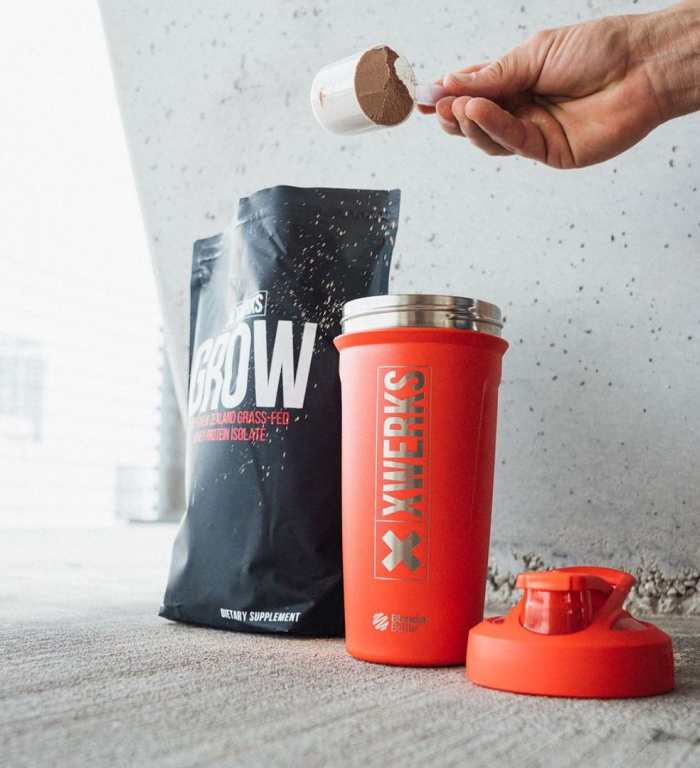
XWERKS Grow combines New Zealand grass-fed sourcing with a whey protein isolate formula. Its protein source is isolate, with no whey concentrate blended in, and it is sweetened with stevia.
Explore our best grass fed whey protein page for Grow’s flavor-by-flavor ingredients, serving details, and customer reviews.
For Grow Chocolate, the current label lists the following per scoop of approximately 32 grams:
- 25 grams of protein
- 110 calories
- 1 gram of carbohydrate
- 0.5 grams of fat
The Chocolate ingredient list is whey protein isolate, cocoa powder, natural flavors, xanthan gum and stevia. It contains milk. Check the label for your chosen flavor because ingredients and nutrition can differ.
Grow is a straightforward option if you want New Zealand grass-fed sourcing and an isolate formula with little carbohydrate and fat. You can mix it into a shake or use it in whey protein recipes to make it part of a breakfast or snack.
Common questions about grass-fed whey
Is grass-fed whey dairy-free?
No. Whey is a milk protein, including when it is grass-fed or processed into isolate. The FDA identifies whey as a milk-derived ingredient. Grass-fed sourcing does not make whey suitable for someone with a milk allergy.
Does grass-fed mean lactose-free?
No. Grass-fed describes the cows' diet, not the amount of lactose in the powder. Isolate processing typically reduces lactose, but you should check the product's specific information rather than treating either term as a guarantee of zero lactose.
Is grass-fed whey better for building muscle?
Grass-fed sourcing alone is not evidence of greater muscle growth. Evaluate the amount of protein you actually consume, your overall diet and your training. The resistance-training research discussed above supports protein supplementation in that context, not a special advantage from the grass-fed label.
Choose the source and formula that fit your priorities. If New Zealand grass-fed whey isolate is what you are looking for, explore XWERKS Grow and compare the flavors.
Product details and sources reviewed November 10, 2026. Nutrition and price examples refer to Grow Chocolate unless stated otherwise.