TL;DR
- Egg white protein powder is dehydrated egg whites processed into a powdered form. It's a complete protein with the full essential amino acid profile — unlike collagen or many plant proteins.
- It's a legitimate alternative protein source, particularly for people who are lactose-intolerant, dairy-allergic, or avoiding dairy for other reasons. The amino acid profile is genuinely good.
- The catch: egg white protein typically has lower leucine content than whey (the key amino acid for muscle protein synthesis), often costs more per gram of protein than whey, and many users find the taste and mixability less appealing.
- For people who tolerate whey well, there's no clear performance or nutritional advantage to switching to egg white protein — whey isolate generally wins on leucine content, cost, taste, and convenience.
- The honest framework: egg white protein is a real, complete protein and a valid alternative for dairy-avoiders. For everyone else, it's an option, not an upgrade.
Egg white protein powder has been a quietly persistent niche in the protein supplement category for decades — favored by bodybuilders before whey isolate became dominant, and now positioned as a clean, allergen-conscious alternative to dairy-based proteins. The honest picture: egg white protein is a real, complete protein with an excellent amino acid profile and a legitimate use case for people avoiding dairy — but for users who tolerate whey well, it's an option rather than an upgrade. Whey isolate generally wins on leucine content (the key muscle protein synthesis trigger), cost per gram of protein, taste, and mixability. This guide covers what egg white protein actually is, where it fits, how it compares to whey, what to know about taste and mixability, and how to think about the category honestly.
What egg white protein powder actually is
Egg white protein powder is exactly what it sounds like: liquid egg whites that have been pasteurized, dried, and ground into a powder. The process concentrates the protein content significantly:
• Fresh egg whites are about 88-90% water, with the remainder being mostly protein
• Dried egg white powder is roughly 80%+ protein by weight — comparable to whey isolate in concentration
• A typical scoop of egg white protein powder delivers 20-25g of protein at roughly 100-110 calories, with minimal fat and minimal carbs
This makes egg white protein compositionally similar to whey isolate in macronutrient profile — high protein percentage, low fat, low carbs, no lactose. The amino acid profile is what differs.
Egg white amino acid profile:
• Complete protein — contains all 9 essential amino acids
• Excellent overall protein quality — egg protein has historically been considered the "gold standard" reference protein and is rated highly on protein quality scales
• Lower leucine percentage than whey — egg whites contain roughly 8-9% leucine by weight; whey isolate is closer to 10-12%
• Higher sulfur-containing amino acid content (methionine, cysteine) than whey
Where egg white protein genuinely fits
For people avoiding dairy
The strongest use caseThis is egg white protein's main legitimate niche. If you're lactose-intolerant in a way that even whey isolate triggers (most whey isolate is very low lactose, but extreme sensitivity exists), milk-allergic, or avoiding dairy for ethical or dietary reasons (while still eating eggs), egg white protein is a strong dairy-free option. It delivers a complete amino acid profile and high protein density without any milk-derived ingredients.
For variety in protein sources
Rotational useSome people prefer to vary their protein sources rather than rely on a single one. Rotating in egg white protein alongside whey, casein, or other sources gives you a different amino acid profile and — honestly — a different flavor experience. This is a preference choice, not a performance necessity, but it's a legitimate use case.
For baking and cooking applications
Different functional propertiesEgg white protein has different cooking and baking properties than whey — it can foam and stabilize in ways whey can't. For homemade protein bars, baked goods, meringue-style applications, and certain recipes, egg white protein performs in ways whey isolate doesn't. If you're doing a lot of protein cooking, having both on hand can be useful.
Egg white protein vs. whey — the honest comparison
Whey isolate advantages over egg white protein:
• Higher leucine content — the key amino acid for triggering muscle protein synthesis. Whey isolate delivers roughly 25-30% more leucine per gram of protein than egg white.
• Faster digestion and absorption — whey is one of the fastest-digesting complete proteins, with a quicker rise in blood amino acid levels post-consumption
• Lower cost per gram of protein — whey isolate is typically meaningfully cheaper than egg white protein, often by 30-50% or more on a per-protein-gram basis
• Better taste profile, generally — whey isolate's flavor base is generally easier for flavoring to work with; egg white protein often has a more challenging flavor base
• Better mixability — whey isolate generally dissolves more cleanly than egg white protein, which can be harder to mix smoothly
• More research base — whey has been studied far more extensively for athletic and muscle-building outcomes
Egg white protein advantages over whey:
• Dairy-free — the key advantage for people avoiding dairy entirely
• No lactose — same advantage applies for severe lactose intolerance (though whey isolate is already very low lactose)
• Higher methionine and cysteine content — sulfur-containing amino acids that play various biological roles. Most people aren't deficient in these, but the difference is real.
• Different baking and cooking properties for specific applications
• Preference for some users — some people simply prefer egg-based protein for ethical, dietary, or personal reasons
Honest summary: for the average person tolerating whey, whey isolate is the better tool on every meaningful performance and practical metric except the dairy-avoidance question. For people avoiding dairy, egg white protein is the strongest non-dairy complete protein option — better than collagen (incomplete), better than most plant proteins on amino acid profile alone (though pea + rice blends can come close).
The leucine issue
The leucine content gap between whey (10-12% by weight) and egg white (8-9%) is real, but its practical significance depends on context:
For maximum muscle protein synthesis per scoop: leucine is the trigger amino acid for the mTOR signaling pathway that activates muscle protein synthesis. Hitting the leucine threshold (~2.5-3g per dose) is what produces the strongest MPS response. A 25g scoop of whey isolate delivers ~2.5-3g leucine; a 25g scoop of egg white protein delivers ~2-2.5g — still adequate for most users at standard serving sizes, but closer to the threshold.
For most realistic eating patterns: if you're eating multiple protein-rich meals across the day and using protein powder as one component, the leucine difference per scoop is unlikely to be the limiting factor. Total daily protein and leucine intake matter more than any single dose's profile.
Where leucine difference matters more:
• Older adults who experience anabolic resistance and need higher per-dose leucine to trigger MPS
• People consuming protein in smaller, more frequent doses where reaching the leucine threshold per meal matters
• Athletes pushing for maximum hypertrophy stimulus per training session
Where it matters less:
• Healthy adults eating 25-40g protein per meal multiple times per day from varied sources
• People for whom protein supplementation is one piece of a generally high-protein diet
For most users, the leucine gap is a real difference but not a dealbreaker. For users who need to maximize MPS stimulus per dose, whey's higher leucine content is a meaningful advantage.
Taste, texture, and mixability
Egg white protein powder has a reputation for being harder to work with than whey isolate in the practical day-to-day:
• Mixability — egg white protein often doesn't dissolve as cleanly as whey isolate. Many users find they need a blender (not just a shaker) to get smooth mixing.
• Texture — even when well-mixed, egg white protein can have a slightly thicker, sometimes foamy texture due to the natural egg-protein foaming properties
• Flavor base — unflavored egg white protein has a more challenging flavor base than unflavored whey — it's often described as more eggy or sulfurous. Flavored versions (vanilla, chocolate) need to work harder to mask the base flavor than equivalent whey products
• Aroma — some users find the smell less appealing than whey, particularly when mixing
• Per-batch variability — quality and mixability can vary significantly between brands and batches
None of this makes egg white protein bad. It's just less practically convenient than whey for many users, particularly those who'd otherwise just throw a scoop in a shaker with water and drink it quickly.
Cost considerations
Egg white protein typically costs more per gram of protein than whey isolate, sometimes substantially more. The reasons are real:
• Whey is a high-volume byproduct of dairy/cheese production with massive global supply
• Egg white protein requires dedicated egg processing infrastructure
• The market for egg white protein is smaller than the whey market, so economies of scale are weaker
For dairy-avoiders, this cost premium is the price of the dairy-free option — reasonable in that context. For people who tolerate whey, paying a premium for egg white protein doesn't deliver meaningful additional benefit and isn't worth the cost.
Notable: even within the current global whey shortage (see our whey protein shortage post), whey isolate generally remains cheaper than egg white protein on a per-protein-gram basis.
How to evaluate an egg white protein product
Check the protein per scoop
Aim for at least 20g per scoopQuality egg white protein delivers 20-25g of protein per scoop with most of the scoop being actual protein (80%+ protein by weight). Lower-protein-percentage products are usually padded with fillers and aren't worth the price.
Read the ingredient list
Watch for blendsPure egg white protein should list egg white (or dried egg white) as the primary ingredient. Be cautious of blends labeled "egg protein" or "egg white blend" that include whole egg powder, plant proteins, or other additions. If you want pure egg white protein, the ingredient list should reflect that.
Check for added sugars and fillers
Same rules as wheyQuality protein powders — egg or whey — should have minimal added sugar, no unnecessary fillers, and a short ingredient list. Long ingredient lists with multiple sweeteners, gums, and flavor additives often indicate cheaper protein bases being masked.
Consider the sourcing
Egg quality variesEgg white protein comes from eggs of varying quality — commodity caged-hen eggs vs. cage-free, pasture-raised, or organic. If the egg quality matters to you (for ethical or nutritional reasons), check the product's sourcing claims and certifications.
What to skip in egg white protein marketing
• "Better than whey for muscle building": the leucine content and digestion research generally favor whey for MPS-per-dose. Egg white is comparable, not superior.
• "Highest biological value": egg protein historically scored very high on the older Biological Value scale, but modern protein quality scales (like DIAAS) show whey and egg as comparable.
• "Cleaner than whey": both well-made products are clean. Egg white protein isn't inherently cleaner unless dairy avoidance is the actual concern.
• "Better recovery": not supported by research over whey at equivalent protein doses.
• "For sensitive stomachs": can be true if dairy is the cause of GI issues; not true if the issue is something else.
• Premium pricing positioned on "superior protein" claims — the actual functional difference vs. whey isolate is small for most users.
Common questions about egg white protein powder
"Is egg white protein better than whey?"
For users tolerating whey, no — whey isolate generally wins on leucine content, cost, taste, mixability, and convenience. For dairy-avoiders, egg white protein is a strong alternative with a complete amino acid profile. Each has its niche; egg white protein isn't an upgrade over whey for the average user.
"How much protein is in an egg vs. egg white protein powder?"
A large egg contains about 6g of protein total, with about 3.5g coming from the white and the rest from the yolk. Egg white protein powder concentrates and dries the white portion — a 25g scoop delivers about 20-25g of protein, equivalent to the egg whites from 6-7 eggs. For more on eggs as a protein source, see how much protein in an egg.
"Can I build muscle with egg white protein?"
Yes — it's a complete protein with adequate leucine for muscle protein synthesis at standard serving sizes. Total daily protein and training matter more than the specific source. For maximum MPS-per-dose, whey isolate has a slight edge.
"Is egg white protein good for people who can't have dairy?"
Yes — this is the strongest use case. For people with milk allergies, severe lactose intolerance (where even whey isolate is problematic), or dairy avoidance for other reasons, egg white protein is one of the best non-dairy complete protein options.
"Why does egg white protein taste different from whey?"
The underlying protein base has different flavor properties. Egg white protein has a more challenging flavor base — sometimes described as eggy or sulfurous — that flavor masking has to work harder to cover. Whey's flavor base is generally easier to flavor cleanly. This is a real, consistent user experience difference.
"Should I buy egg white protein if I have egg allergy?"
Obviously no — egg white protein is dehydrated egg whites. For people with egg allergies, the relevant non-dairy options are pea protein, rice protein (often in blends to balance amino acid profiles), or other plant-based complete protein blends.
The Bottom Line
Egg white protein powder is dehydrated egg whites processed into a powdered form. It's a complete protein with the full essential amino acid profile and a high protein percentage (80%+ by weight, comparable to whey isolate).
The strongest use case is dairy avoidance. For people who are lactose-intolerant (in a way that even whey isolate triggers), milk-allergic, or avoiding dairy for other reasons, egg white protein is one of the best non-dairy complete protein options — better than collagen (incomplete) and generally a stronger amino acid profile than most single-source plant proteins.
For users who tolerate whey, egg white protein isn't an upgrade. Whey isolate generally wins on leucine content (the key MPS trigger), cost per gram of protein, taste, mixability, and convenience. Egg white protein is an option, not an advantage.
What's overstated in marketing: claims that egg white protein is superior for muscle building, recovery, or general nutritional quality over whey. The evidence supports parity at best, with whey having a slight edge on MPS-per-dose.
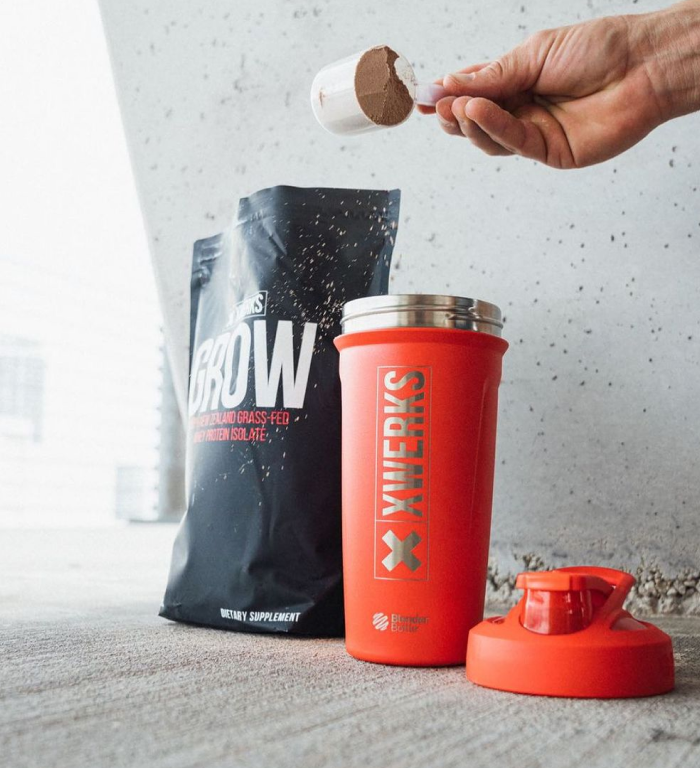
The honest framework: if you avoid dairy, egg white protein is a legitimate and high-quality choice — build it into your routine without feeling like you're settling. If you tolerate whey, there's no clear reason to pay the price premium and accept the taste/mixability tradeoffs of egg white protein — whey isolate (like XWERKS Grow) delivers more leucine per dose at lower cost with better practical convenience.
Dig deeper: 11 high-protein foods · whey protein isolate vs concentrate · whey protein isolate benefits · whey protein for sensitive stomachs · how much protein in an egg · are protein gummies worth it