TL;DR
- The honest answer: whey protein can contribute to acne in susceptible people, but it doesn't cause acne in most users. The dairy-acne connection has real research behind it; the effect is individual, not universal.
- The proposed mechanism: whey raises insulin and IGF-1, and its leucine content activates mTOR signaling — pathways involved in sebum production and skin cell turnover. Several small studies and case series link whey supplementation to acne flares, mostly in teenage and young-adult males.
- If you're acne-prone: run a 4-6 week elimination test. Drop whey completely, keep everything else constant, photograph weekly. If skin improves, reintroduce and watch. That's better evidence about your own skin than any study.
- Practical variables that may matter: isolate over concentrate (less lactose and dairy fat), total daily dairy load, sugar in your shakes, and hygiene basics (wash shaker bottles, shower after training, don't let sweat + pre-workout sit on your face).
- If whey is a confirmed trigger for you: egg white protein, beef protein isolate, or a quality plant blend deliver comparable protein without dairy signaling.
"Does whey protein cause acne" gets asked constantly on Reddit, in dermatologist offices, and in gym locker rooms — usually by someone who started a muscle-building phase, added a daily shake or two, and broke out three weeks later. Most supplement-industry content answers with either denial ("no studies prove causation!") or panic ("dairy is poison!"). The research supports neither extreme. There is a legitimate, mechanistically plausible, research-supported link between dairy proteins — whey specifically — and acne in a subset of susceptible people. There is also a large majority of whey users who never experience any skin effect at all. This guide covers what the research actually shows, the mechanism, who's most likely to be affected, how to test whether whey is *your* trigger, and what to do about it either way — without giving up your protein target.

What the research actually shows
The dairy-acne connection (established, moderate)
Multiple observational studies and meta-analyses have found associations between dairy intake and acne, particularly in adolescents and young adults. A 2018 meta-analysis covering 78,000+ participants found dairy consumption associated with higher acne odds, with the association appearing for milk (interestingly, often stronger for skim than whole) but not consistently for cheese or yogurt. Association isn't causation, and effect sizes are modest — but the signal is consistent enough that the American Academy of Dermatology acknowledges the dairy-acne link as an area with growing evidence.
Whey supplementation specifically (suggestive, smaller evidence)
Several case series and small studies have documented acne onset or worsening in gym-going young men after starting whey protein supplementation, with improvement after discontinuation — including reports where acne was resistant to standard treatment until the whey was removed. These are small studies without placebo controls, so they establish plausibility rather than proof. But combined with the mechanism below, dermatologists increasingly ask acne patients about protein supplements for good reason.
The mechanism — why whey plausibly affects skin
Insulin and IGF-1: Whey is strongly insulinotropic — it raises insulin more than its carb content would predict — and dairy consumption raises circulating IGF-1 (insulin-like growth factor 1). IGF-1 stimulates sebum production and keratinocyte proliferation, both central to acne formation.
Leucine and mTOR: Whey's high leucine content — the exact property that makes it excellent for muscle protein synthesis — also activates mTORC1 signaling in skin, which is elevated in acne-affected tissue.
In other words: the same signaling that makes whey great for building muscle is mechanistically connected to the pathways that drive acne in people predisposed to it. Which is why the effect is real for some and absent for most — the predisposition is the deciding variable, not the powder.
Who's most likely to be affected
Risk factors from the available evidence
• Age 16-25 — most reported cases are teenage and young-adult males with already-active hormonal acne pathways
• Personal or family history of acne — the predisposition matters more than the dose
• High total dairy load — whey shakes stacked on top of milk-based smoothies, cheese, and ice cream
• High overall glycemic-load diet — high-sugar diets independently associate with acne; a whey shake blended with sugary ingredients hits both pathways at once
If none of these describe you and your skin is clear, the probability that whey causes you problems is low. If several describe you, whey is a legitimate suspect worth testing.
The elimination test — how to know if whey is YOUR trigger
The 4-6 week protocol
Weeks 1-4 (minimum): Remove whey completely. Keep total protein constant using whole foods (chicken, eggs, fish, Greek yogurt if you want to isolate whey vs all dairy — or remove all dairy to test the broader category). Change nothing else: same skincare, same diet, same training.
Document: Weekly front/side photos in consistent lighting. Skin memory is unreliable; photos aren't.
Reintroduce: If skin improved, add whey back at your normal dose for 2-3 weeks and watch. A flare on reintroduction after improvement during elimination is the strongest personal evidence you can generate.
Interpret honestly: Acne cycles naturally over 4-6 week timescales — one clear week means nothing. That's why the reintroduction step matters; a single elimination can coincide with a natural clear phase.
If you tolerate whey — stack the deck anyway
Practical variables that reduce risk
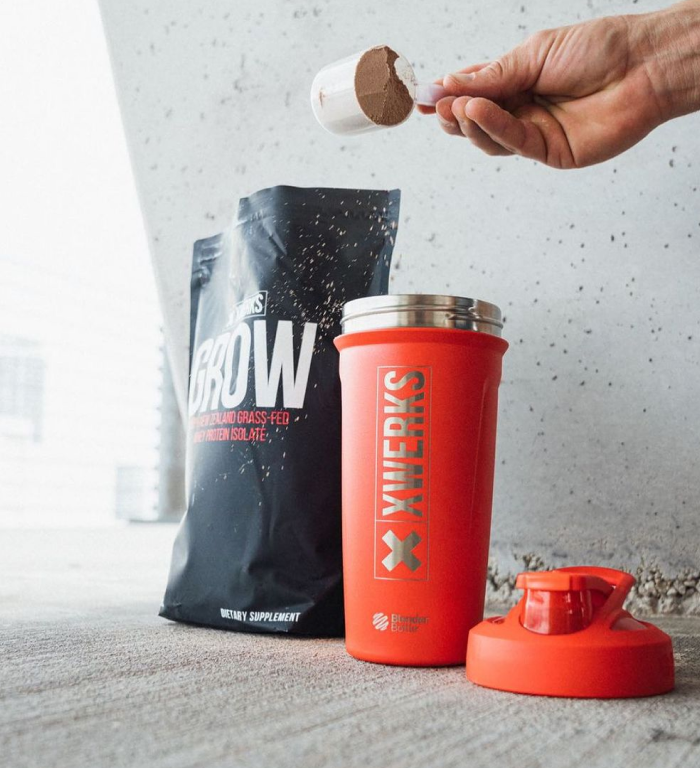
• Choose isolate over concentrate. Whey concentrate carries more lactose and dairy fat. Micro-filtered isolate (like Grow) is the cleaner dairy signal — anecdotally many users who break out on cheap concentrate blends tolerate isolate fine. Not guaranteed, but the right first variable to change before abandoning whey entirely.
• Audit the rest of the shake. A whey shake blended with sugary peanut butter, flavored milk, and honey is a glycemic bomb. High-glycemic diets independently associate with acne. Whey + water or whey + unsweetened almond milk removes the confound.
• Audit total dairy. If you're drinking two shakes plus a quart of milk daily, the whey may be the visible scapegoat for total dairy load. Reduce the base before blaming the supplement.
• Hygiene basics that get overlooked: wash your shaker bottle properly (bacterial soup is real), shower promptly after training, don't touch your face with gym-glove hands, wash pillowcases. Several "whey acne" cases are actually gym-hygiene acne with coincidental timing.
If whey is a confirmed trigger — your alternatives
Non-dairy proteins that still hit your target
• Egg white protein: Complete amino profile, well-tolerated, neutral taste. The closest whole-food-derived substitute.
• Beef protein isolate: Dairy-free, complete protein; texture and flavor vary by brand.
• Quality plant blends (pea + rice): Combined, they form a complete amino profile. Slightly lower leucine per gram than whey — compensate with a modestly larger serving (30-35g protein per feeding).
• Whole foods: The zero-supplement route — chicken, fish, eggs, lean beef. More prep, same protein. See our high protein snacks guide for hitting targets without shakes.
What doesn't change: your protein target. Acne management never requires under-eating protein — it requires changing the source.
FAQ
Does whey isolate cause less acne than concentrate?
Plausibly, for some people. Isolate carries less lactose and dairy fat, and anecdotal reports of tolerating isolate after breaking out on concentrate are common. The IGF-1/mTOR mechanism applies to both, though — so isolate is a variable worth testing, not a guaranteed fix.
How long after stopping whey does acne improve?
Skin cell turnover runs 4-6 weeks, so meaningful change takes at least that long. Judging an elimination in one week tells you nothing.
Does creatine cause acne?
No good evidence links creatine to acne. It has no dairy signaling, no meaningful insulin/IGF-1 effect at standard doses. The association usually comes from starting creatine and whey simultaneously — the whey (or the increased training and dairy intake) is the more plausible variable.
Should I just take Accutane and keep the whey?
That's a dermatologist conversation, not a blog decision. If your acne is significant, see one — and mention your supplement stack, because dermatologists increasingly factor whey into treatment-resistant acne workups.
The Bottom Line
Whey can contribute to acne in a susceptible subset of users — mostly young men with existing acne predisposition — via insulin/IGF-1 and mTOR pathways. It does not cause acne for most people.
Test, don't guess: 4-6 weeks off whey with constant everything else, weekly photos, then reintroduce. Your own reintroduction flare (or lack of one) beats any study for deciding what you personally should do.
Before abandoning whey: switch concentrate → isolate, cut the sugary shake add-ins, audit total dairy, and fix gym hygiene. These variables resolve a large share of "whey acne" cases.
If whey's a confirmed trigger: egg white, beef isolate, or pea+rice blends replace it without sacrificing your protein target. Acne management changes the source, never the target.