TL;DR
- For healthy adults, 1-3 scoops of whey per day (25-75g protein) is completely fine — the practical ceiling is about total daily protein and food displacement, not toxicity.
- The rule that matters: supplements fill the gap between what you eat and your target (1.6-2.2g/kg for active people). If whole food covers 100g and you need 150g, that's two scoops. If food covers your target, that's zero scoops.
- The "protein damages kidneys" claim does not apply to healthy kidneys — research consistently shows high protein intakes are safe for people without pre-existing kidney disease. People with kidney disease should follow physician guidance.
- Real downsides of too many scoops: displacing whole-food nutrition (fiber, micronutrients), GI discomfort past individual tolerance, wasted money past your MPS-relevant needs, and for some, dairy load effects.
- Practical sweet spot for most lifters: 1-2 scoops daily, with whole food carrying the rest.
Somewhere between "one scoop post-workout" and the guy drinking five shakes a day, there's a line — and "how many scoops of protein a day is too much" is really asking where it is. The refreshing answer: for healthy adults, there is no toxicity cliff at any realistic scoop count — the limits are practical, not medical. Total daily protein target, whole-food displacement, digestion, and budget draw the real line. This guide gives you the actual math: how to compute your target, how many scoops that implies at different diets, what the research says about high protein intakes and kidneys, and the genuine downsides of over-relying on powder.

Start with the target, not the scoops
Daily protein targets by goal
• Sedentary adult (RDA baseline): 0.8g/kg — the minimum to prevent deficiency, not an optimum
• Active adults / general fitness: 1.2-1.6g/kg
• Building muscle / strength training: 1.6-2.2g/kg
• Dieting while training (muscle retention): 2.0-2.4g/kg — higher protein is protective in a deficit
For a 180-lb (82kg) lifter: 130-180g daily. For a 140-lb (64kg) person: 100-140g.
The scoop math
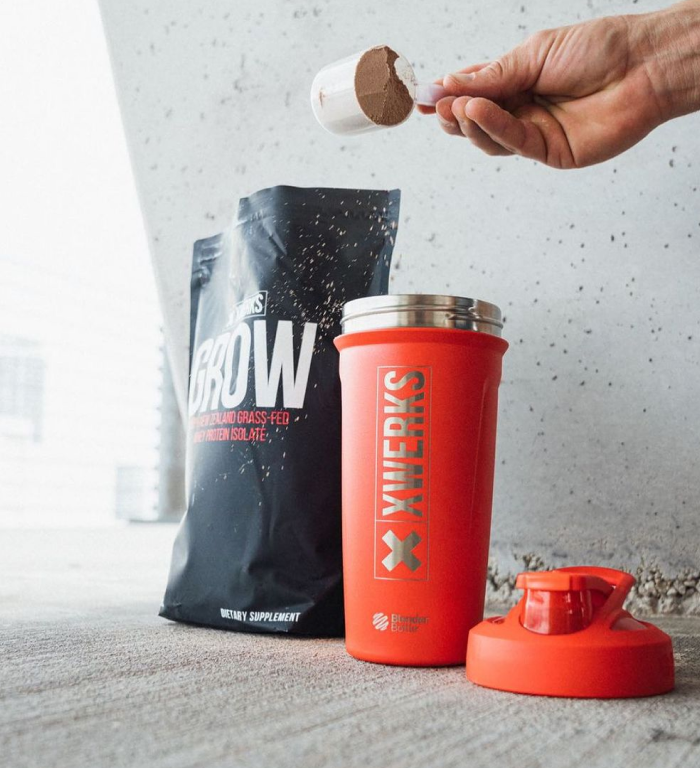
A quality whey isolate scoop delivers ~25g protein. So:
• Whole food provides 120g, target is 150g → 1 scoop closes it
• Whole food provides 100g, target is 160g → 2 scoops plus a snack tweak
• Whole food provides 160g, target is 160g → 0 scoops needed — supplements supplement; they aren't mandatory
Count your typical food day once (any tracking app, 3 representative days) and the right scoop count falls out of the arithmetic. It's rarely more than 2-3.
Is there a medical ceiling?
The kidney question, answered by research
The persistent claim that high protein damages kidneys stems from the fact that damaged kidneys benefit from protein restriction. Reversing that logic — protein restriction helps sick kidneys, therefore protein harms healthy ones — is the error. Controlled research on healthy adults, including studies with intakes of 3g/kg and beyond over months, consistently shows no adverse effects on kidney function markers. A 2018 meta-analysis of randomized trials concluded higher-protein diets do not adversely affect kidney function in healthy adults.
The real caveat: people with existing kidney disease, a single kidney, or related conditions should set protein intake with their physician. That's a genuine medical constraint — for that population, not the general one.
Is there a muscle-building ceiling per day?
Above roughly 2.2g/kg daily, additional protein doesn't produce additional muscle in most research — the surplus is oxidized for energy. Not dangerous, just expensive. Per feeding, roughly 25-40g maximally stimulates muscle protein synthesis; distributing intake across 4-5 feedings beats cramming it into fewer.
The real downsides of too many scoops
• Whole-food displacement: Shakes carry no fiber, minimal micronutrients, and low satiety per calorie. A diet where 4-5 shakes replace meals is functionally a liquid diet with the deficiencies that implies. Powder should top up a food-first diet, not become it.
• GI tolerance: Individual lactose and dairy tolerance varies. Isolate minimizes lactose, but 3+ shakes daily pushes some digestive systems past comfort — bloating and gas are the signals.
• Satiety and dieting: Liquid calories are less filling than chewed ones. If you're cutting, eating your protein beats drinking it for hunger management — save the shake for the spot where convenience matters most.
• Money past the target: Every scoop above your daily target is protein your body burns as expensive fuel. Two scoops closing a real gap is money well spent; five scoops on top of a met target is not.
• Skin, for a subset: Dairy signaling can matter for acne-prone users at higher dairy loads — see our whey and acne guide.
Scoop counts by scenario
| Scenario | Typical food protein | Target | Scoops |
|---|---|---|---|
| Office worker, 3 solid meals, training 3x/wk | 110-130g | ~140g | 0-1 |
| Lifter bulking, big appetite | 140-170g | ~170g | 0-1 |
| Lifter cutting, smaller meals | 90-120g | ~160g | 2 |
| Busy traveler, unreliable meals | 70-100g | ~140g | 2 (occasionally 3) |
| Small appetite / older adult building | 60-90g | ~120g | 1-2 |
| Hardgainer chasing surplus calories | 120-150g | ~170g | 1-2 in calorie shakes |
Notice no scenario lands above 3. If you're routinely at 4+, either your food protein is unusually low (fix that first) or the powder is doing a job food should be doing.
FAQ
Can I drink 3 protein shakes a day?
Safely, yes — for healthy adults there's no medical issue at 75g of supplemental protein. Practically, 3 shakes suggests your food protein is low; you'll usually feel and eat better fixing meals and dropping to 1-2 scoops.
Is 2 scoops at once too much?
No harm — but per-feeding MPS maxes out around 25-40g, so a 50g double-scoop partly "wastes" the anabolic signal versus splitting it into two feedings. If a double scoop is your calorie strategy (weight-gain shakes), that's a legitimate different job.
Does protein powder count the same as food protein?
For muscle protein synthesis, quality whey is actually among the best sources (fast digestion, high leucine). What food adds is everything else — fiber, micronutrients, satiety. Count the grams equally; don't count the meals equally.
How many scoops for weight loss?
Same math, higher target: 2.0-2.4g/kg protects muscle in a deficit, and smaller meals usually mean a bigger gap — typically 1-2 scoops. Prioritize eating protein for satiety; use the shake where convenience wins (post-training, afternoon crash window).
The Bottom Line
There's no medical ceiling at realistic scoop counts for healthy adults. The kidney claim doesn't apply to healthy kidneys; the muscle ceiling (~2.2g/kg/day) makes extra scoops wasteful, not dangerous.
Do the math once: target (1.6-2.2g/kg) minus typical food protein = gap. Divide by 25. That's your scoops — almost always 0-3, usually 1-2.
The real limits are practical: whole-food displacement, GI comfort, satiety while dieting, and cost past the target. Powder tops up a food-first diet; it shouldn't become the diet.